

San Francisco has spent years building software that helps companies sell products, attract customers, and solve problems. Now, a new generation of artificial intelligence is changing what that software can actually do. Instead of simply helping employees finish their work faster, AI agents are beginning to complete entire tasks, from answering customer questions and qualifying sales leads to preparing marketing campaigns and following up with potential buyers.
This shift matters because most companies have the same problem. Their employees spend too much time on repetitive tasks that are important but do not always need human judgment. Sales representatives update customer records instead of building relationships. Marketing teams spend hours preparing reports instead of improving campaigns. Customer support employees answer the same questions hundreds of times while more complicated customer problems wait in line.
AI agents offer a different way to organize that work. A well-designed agent can receive a request, gather the information it needs, make decisions within clear limits, take approved actions, and report what happened. That makes it more useful than a chatbot that simply generates an answer or a traditional automation system that follows a fixed set of instructions.
San Francisco is becoming an important center of this change. Companies such as Salesforce, Sierra, Decagon, and Intercom are developing tools that let businesses automate increasingly complicated customer interactions. Other companies are applying similar ideas to sales research, lead qualification, marketing operations, and business reporting.
The important question is no longer whether AI can write an email or answer a customer. It is whether businesses can trust AI to complete useful work without creating expensive mistakes.
This article examines how San Francisco companies are deploying AI agents across sales, marketing, and customer support. It also presents original SFTechScene analysis of publicly reported deployments, a transparent financial model, and practical steps businesses can use to decide where automation will create the greatest value.
The Short Version: AI Agents Are Turning Sales, Marketing, and Customer Support Into Connected Systems
The biggest change happening in business AI is the move from generating information to completing work. A chatbot might explain how to return a product, while an AI agent can check the order, confirm whether the return is allowed, start the process, update the customer record, and send a confirmation.
The same difference appears in sales and marketing. A writing assistant can create a sales email, while an agent can research a prospect, check whether the company matches the target customer profile, prepare a personalized message, and schedule a follow-up after approval.
This matters because businesses are not primarily paying for words generated by software. They are paying for customer problems to be solved, sales opportunities to progress, and marketing campaigns to produce profitable results.
Three developments are making this possible.
First, AI models have become more capable of understanding complicated requests and working through tasks that require several steps. Second, business software companies are making their systems easier for AI agents to use through controlled connections to customer records, order information, support tools, and other applications.
Third, companies are learning that agents work best when their responsibilities are narrow, their data is reliable, and their decisions can be checked. The most effective deployments are not necessarily the ones with the greatest autonomy. They are often the ones with the clearest boundaries.
Public results already show why businesses are interested. Salesforce reported in April 2025 that Agentforce was resolving more than 84% of questions entering its own AI-powered help experience. In a separate deployment, San Francisco financial technology company Chime has been featured in a Decagon case study reporting 70% resolution across chat and voice, along with a 60% reduction in customer support costs. Those are company-reported results for specific deployments, not guarantees that another business will achieve the same performance.
Salesforce
+1
The commercial opportunity is considerable, but there is an important lesson beneath the headlines: a successful AI agent must improve the result of a business process, not merely increase the number of tasks performed automatically.
Why San Francisco Is Becoming a Center for Business AI Automation
The City Has Both AI Builders and Enterprise Software Expertise
San Francisco’s advantage comes from having companies that develop advanced AI capabilities alongside businesses that understand how large organizations actually operate. Building an impressive language model is one challenge. Connecting that model to invoices, customer records, sales approvals, account permissions, and support processes is another.
The second challenge is where much of the commercial value lies. Enterprise customers need software that can follow company rules, protect sensitive information, and produce reliable results across thousands of interactions.
Salesforce is an especially useful example because its platform already manages customer relationships, sales opportunities, service cases, and marketing data. An AI agent connected to those systems can potentially act on information that employees previously had to gather and update manually.
Specialized companies approach the opportunity differently. Decagon and Sierra focus on customer interactions, while Intercom develops customer service AI through Fin. Rather than attempting to automate every activity inside an organization, these businesses have concentrated on the tasks and information used by customer-facing teams.
San Francisco’s Startup Economy Creates a Strong Testing Environment
The Bay Area has many technology companies that sell complex products through online channels, inside sales teams, and customer success organizations. These businesses regularly deal with questions about software features, billing, subscriptions, onboarding, renewals, and integrations.
Those activities create useful opportunities for automation because many requests follow recognizable patterns. A customer asking about an invoice may need information from a billing system. A prospect asking about product features may need accurate documentation, pricing rules, and a meeting with a salesperson.
The challenge is combining those sources without giving AI unlimited freedom to change business records.
San Francisco’s technology industry is also highly competitive, which creates pressure to improve the amount of useful work each employee can complete. For a young software company, increasing revenue without hiring at the same pace can improve its ability to grow. For a larger company, reliable automation can help employees spend more time on high-value customer interactions.
The Market Is Moving From Software Features to Completed Outcomes
Traditional business software usually gives employees a place to do their jobs. Customer relationship management systems store information about prospects. Marketing platforms help teams build campaigns. Support systems organize customer requests.
AI agents are introducing a different model. Instead of giving an employee another screen to manage, the software may complete a clearly defined activity directly.
A sales agent might turn an incoming inquiry into a qualified meeting. A marketing agent might collect campaign data, prepare a report, and identify performance changes that deserve attention. A support agent might resolve an order-status question without requiring a person to open the ticket.
The software is still important, but its role changes. It becomes the system through which work is completed rather than merely the place where work is recorded.
What Makes an AI Agent Different From Traditional Business Automation?
Traditional Automation Follows Rules
Traditional automation works well when a process is highly predictable. For example, when someone submits a form, the system can add their contact details to a mailing list and send a confirmation email.
That process does not need much judgment. The software follows a predefined sequence, and the correct action is usually clear.
Problems arise when the customer’s request does not match the expected pattern. A buyer might ask three questions in one message. A customer might want to change an order but also ask whether the new product can arrive before a particular date.
Traditional systems often struggle when a conversation moves outside the paths their developers anticipated.
AI Agents Can Interpret Requests and Select Actions
An AI agent uses a language model to interpret what someone is asking and determine which approved tools or actions could help. It may consult several information sources before deciding what to do next.
Consider a customer asking whether an annual software subscription can be changed to a monthly plan. An agent could retrieve the subscription details, check the company’s billing rules, calculate whether a change is available, and prepare the next action.
If the policy allows the change and the agent has permission, it may complete the request. If the decision involves a contract exception or a large financial adjustment, the agent should escalate the matter to an employee.
This ability to choose among actions makes AI agents more flexible than simple rules, but it also creates new risks. An agent that misunderstands a policy may confidently take the wrong action unless the system includes appropriate restrictions.
The Best Systems Combine Rules, AI, and Human Judgment
Businesses should not treat traditional automation and AI agents as competing approaches. In many cases, the best workflow uses both.
Fixed rules can determine whether a customer qualifies for a refund. AI can understand the customer’s message, identify the relevant order, and explain the decision clearly. An employee can review exceptional situations that fall outside company policy.
This division of responsibilities improves reliability because the agent does not need to invent its own rules. The business decides what actions are allowed, while AI helps customers move through the process.
The result is a controlled system that combines software speed with human accountability.
How San Francisco Companies Are Automating Sales With AI Agents
Sales teams have several activities that are both time-consuming and important. Researching prospects, updating records, replying to incoming leads, arranging meetings, and preparing follow-ups can consume a considerable share of the workday.
AI agents are becoming useful because these activities often require gathering information from several places and moving it into a structured process.
AI Sales Agents Are Researching Prospects Before Representatives Reach Out
A good salesperson needs to know whether a company is likely to need the product being offered. That means understanding the prospect’s industry, size, technology, possible business problems, and relationship with the seller.
An AI agent can collect information from approved sources and organize it into a short research brief. It can compare the findings against a target customer profile and explain why the prospect may or may not be a good fit.
For example, a San Francisco cybersecurity startup might sell software to companies with more than 200 employees that manage sensitive customer information. The AI agent could identify publicly available evidence about a prospect’s industry, hiring activity, and relevant technology needs.
However, research automation requires careful checks. The agent should show where important facts came from and distinguish verified information from guesses. It should not invent employee counts, purchasing plans, or personal details about decision-makers.
The purpose is to reduce research time while improving sales preparation, not to create an unlimited stream of poorly researched outreach.
AI Agents Are Qualifying Inbound Leads
One of the strongest sales use cases begins when a potential customer visits a company’s website and asks a question. The visitor may want to know whether the product supports a particular integration, how pricing works, or whether it is suitable for their business.
Without automation, the visitor might complete a form and wait for a response. An agent can provide approved information immediately, ask relevant questions, and determine whether the person should be connected to sales.
Salesforce has published a case study of its own website deployment. The company said its agent used information from more than 2,000 webpages and 400 product records and could create a qualified lead in Sales Cloud when a visitor wanted to contact sales. The company reported more than 100,000 conversations after launching the experience in February 2025.
Salesforce
This example shows how lead qualification can become part of a live conversation rather than a separate administrative task.
What a Useful Lead Qualification Agent Should Ask
A well-designed agent does not need to collect every possible piece of information. It needs to understand enough to identify the next useful action.
For a business software company, that might mean learning the customer’s main problem, approximate company size, timeline, and whether the product has the required capabilities. The agent can then offer the right next step, such as a product demonstration, technical documentation, or a conversation with a representative.
The key is keeping the interaction helpful. A prospect who asks about pricing should receive available pricing information before being forced through a long series of sales questions.
AI Agents Are Preparing Sales Follow-Ups
Sales follow-up is another useful application because representatives often need to summarize meetings, answer questions, and identify the next action.
An agent connected to approved meeting notes and customer records can prepare a concise summary, draft a follow-up email, and suggest updates to the opportunity record. It can also flag missing information that could prevent the deal from progressing.
The safest approach is to let salespeople approve external communication, especially when a message includes pricing, contract terms, product promises, or statements about competitors.
Automating preparation can still create meaningful value. A representative who spends less time organizing notes can devote more attention to understanding customer needs.
AI Agents Are Helping Sales Teams Prioritize Opportunities
Not every interested prospect is equally likely to buy. Some are researching products for a future project, while others are actively comparing vendors and preparing a purchase decision.
An AI system can analyze observable signals such as meeting activity, requested demonstrations, unanswered questions, and changes in deal status. It can then suggest which opportunities deserve attention.
The danger is treating an AI score as an unquestionable prediction. A prospect may appear inactive because the buyer is working through an internal approval process that the software cannot observe.
Businesses should therefore use agent recommendations as decision support. Sales managers should examine the underlying evidence, compare outcomes over time, and avoid allowing unsupported predictions to determine which customers receive attention.
How AI Agents Are Changing Marketing Operations in San Francisco
Marketing teams have already used AI to draft copy, generate ideas, and summarize information. AI agents extend that capability by helping coordinate the work that surrounds campaign creation.
This includes gathering customer research, checking content against approved brand rules, building reports, identifying performance changes, and preparing campaign improvements.
The biggest opportunity is not producing more content. It is helping marketers make better decisions with less administrative effort.
AI Agents Can Coordinate Marketing Campaign Preparation
Consider a software company planning a campaign for a new product feature. The marketing team needs to understand the audience, identify common questions, prepare messages, choose channels, and measure results.
An agent could collect approved customer research, summarize recurring problems, and propose campaign themes. It could also prepare initial versions of landing-page copy, email sequences, and paid advertising messages based on the company’s existing positioning.
A human marketer should review those materials before publication. Product claims must be accurate, customer promises must match what the company can deliver, and advertising needs to comply with applicable rules.
An agent can make preparation faster, but it cannot replace the need for a clear marketing strategy.
AI Agents Can Improve Campaign Reporting
Many marketing teams spend hours collecting data from advertising platforms, analytics systems, and customer databases. The information is often available, but turning it into a useful explanation requires additional work.
An AI agent can collect authorized data, compare performance across periods, and prepare a report that highlights meaningful changes.
For example, it might identify that a paid campaign generated more website traffic but fewer qualified leads. That observation could prompt a marketer to investigate whether the audience changed, the landing page attracted the wrong visitors, or the sales qualification process became stricter.
The agent should show the actual numbers behind its findings. It should also distinguish a possible explanation from a proven cause.
A report that says conversion rates declined is useful. A report that confidently blames a particular campaign message without enough evidence can lead a business to make the wrong decision.
AI Agents Can Support Content Marketing and SEO
SEO teams can use agents to organize large amounts of information and identify opportunities that require human review. An agent could inspect approved search performance data, compare page topics, identify outdated information, and prepare content update recommendations.
For a San Francisco technology publication, this might involve tracking changes in AI software categories, reviewing articles that have lost search visibility, or identifying questions that readers are asking about new products.
The important distinction is between research assistance and automatic publication.
An agent may help a writer collect sources and structure an article, but it should not publish unsupported statistics, invented interviews, or claims that have not been checked. Publishing large volumes of weak content can damage reader trust even if the production process is inexpensive.
Search visibility should be measured through qualified traffic, reader engagement, and business results rather than the number of AI-generated pages.
AI Agents Can Connect Marketing Activity to Sales Outcomes
One of the most valuable opportunities comes from improving how marketing and sales share information.
Marketing platforms may show that a campaign produced hundreds of leads, but that number reveals little about whether those people became paying customers. An AI agent can help connect campaign activity to records showing qualification, meetings, opportunities, and revenue.
It can then identify patterns worth investigating. For example, a campaign with fewer leads may produce more valuable sales conversations than another campaign with much higher traffic.
This helps businesses move away from judging marketing through activity alone.
The goal is to understand which campaigns attract the right customers, which messages lead to useful conversations, and where potential buyers become stuck.
How San Francisco Companies Are Automating Customer Support
Customer support has become one of the clearest early markets for AI agents because businesses can measure the results directly. They can track whether a customer received the right answer, whether the issue was resolved, how long the interaction took, and whether a person needed to intervene.
Unlike many marketing activities, support automation often provides a clear connection between the work completed and the cost of delivering that work.
AI Agents Are Resolving Questions Without Human Intervention
Modern support agents can handle common questions about accounts, subscriptions, orders, product features, and troubleshooting. When connected to approved systems, they can also take limited actions rather than merely explain what a person should do.
For an online retailer, that might mean checking shipping information and starting a permitted return. For a software company, it could involve answering a product question, guiding a customer through setup, or collecting the details needed for technical support.
The difference between a useful support agent and a frustrating chatbot often comes down to whether it can finish the task.
A customer who wants to change an address does not necessarily want a detailed explanation of the company’s address-change policy. They want their address changed correctly, or a clear explanation of why the request cannot be completed.
Decagon and Chime: Automating Financial Services Support
San Francisco’s Chime provides a valuable example because financial services support can involve sensitive information, account-specific questions, and a strong need for customer trust.
According to Decagon’s published customer case study, Chime achieved resolution rates around 70% across chat and voice. The case study also reports a 60% reduction in customer support costs and describes voice deployments handling more than one million calls per month.
Decagon AI
REPORTED DEPLOYMENT RESULTS — CHIME / DECAGON
70%
Reported chat and voice resolution
60%
Reported support cost reduction
1M+
Voice calls per month at reported scale
Source: Decagon customer case study. These are vendor-published claims and have not been independently audited for this article.
The result is important because support automation in financial services must handle more than simple greetings. Customers may ask questions that require account information, transaction context, or an understanding of what an agent is allowed to do.
The broader lesson is that a high-volume support operation can benefit from AI when the company carefully defines which requests can be resolved automatically and which require specialized employees.
Notion: Making Customer Support Faster and Better Organized
Notion, a software company with a strong San Francisco presence, illustrates a slightly different advantage. Its Decagon case study reports ticket resolution time improvements of up to 34%, a doubling of deflection, and an average rate of 3.4% for customers asking for a human.
Decagon AI
These metrics describe different aspects of the customer experience. Faster ticket resolution measures speed, while deflection measures interactions handled without the usual human support path. The percentage asking for a human does not, by itself, prove that every other conversation was successfully resolved.
That distinction is important because businesses sometimes combine several AI performance indicators as though they mean the same thing.
Notion’s example suggests that agents can create value even when they do not complete every customer request. Better routing, more accurate information gathering, and clearer handoffs can also improve the work of human teams.
Intercom and Fin: Why Measurement Matters as Much as Automation
Intercom’s Fin illustrates how support companies are refining the way they measure agent performance.
In August 2026, Intercom published an explanation of changes to its Fin reporting definitions. The company distinguished between conversations where the agent was active and conversations where it actually had an opportunity to answer. That change affected reported involvement and resolution rates but did not change the overall automation rate.
Intercom Help
Consider a business with 1,000 incoming conversations. If an AI agent attempts to answer 500 and resolves 250, it has a 50% resolution rate among the conversations where it had an opportunity to answer.
However, only 25% of all incoming conversations were resolved by the agent. Both numbers can be correct, but they answer different questions.
A business owner deciding whether to invest in automation should care about the second number because it describes the share of total customer demand the agent actually handled.
Gorgias: Combining Customer Support and Shopping Assistance
Gorgias provides another example of how the boundary between support and sales is becoming less clear.
Its AI Agent supports both post-purchase tasks and pre-purchase shopping conversations. According to its September 2026 documentation, the product can help customers with order tracking, returns, cancellations, product questions, and shopping decisions across supported communication channels. It can also take authorized actions in connected systems.
Gorgias Help Center
For an ecommerce business, this creates an opportunity to use one connected service experience across more of the customer journey.
A buyer may first ask whether a product is available in a certain size. Later, the same customer might need delivery information or want to start an exchange. Those conversations involve different business activities, but both depend on accurate product and order information.
The advantage comes from connecting customer service to the underlying business systems. The risk comes from giving an agent permission to make changes without sufficiently clear rules.
Original SFTechScene Research: What Public AI Agent Deployments Actually Show
Most AI automation discussions focus on eye-catching percentages. A company announces a 70% resolution rate, another reports faster response times, and a third describes millions of automated interactions.
Those figures are useful, but they are difficult to compare without understanding what each company measured.
To create a more useful picture, SFTechScene reviewed six publicly available company deployment reports and analyzed the kinds of outcomes being measured. The goal was not to declare a universal winner. It was to identify what the available evidence can and cannot tell San Francisco businesses about deploying AI agents.
Research Methodology: Six Publicly Reported Deployments
The review used a purposive sample of six named deployments documented in publicly accessible company or vendor materials available by October 13, 2026. Cases were selected because they described an identifiable organization, a deployed AI system, and at least one numerical result.
The analysis uses a fixed extraction method: identify the customer, record the published result and metric wording, distinguish customer-level outcomes from task-level outcomes, and flag where different definitions prevent direct comparison.
The sample is not a random selection of all AI deployments in San Francisco. It includes a mix of San Francisco companies and companies using products from San Francisco-based software providers. The reports are primarily vendor-published case studies, which creates a strong possibility that successful implementations are overrepresented.
| Deployment | Publicly reported outcome | What the outcome tells us |
|---|---|---|
| Salesforce customer help | Over 84% of incoming Agentforce questions resolved | Reported question-resolution performance |
| Chime / Decagon | Around 70% chat and voice resolution | Reported ability to resolve customer interactions |
| Notion / Decagon | Up to 34% faster ticket resolution | Change in support speed |
| Rippling / Decagon | Chat deflection increased from 38% to over 50% | Change in the share using self-service |
| Salesforce internal IT | 9,500 support requests resolved; nearly $57,000 saved | Reported support volume and savings |
| OpenTable / Agentforce | 40% improvement in resolution rate over previous tool | Relative improvement against an earlier system |
Sources: company and vendor case studies.
Salesforce
+5
Original Finding #1: Resolution, Deflection, Speed, and Cost Are Four Different Measures
The first finding is methodological but commercially important. The six reports do not provide six directly comparable measurements of the same outcome.
Some describe resolution rates, while others measure deflection, faster handling, or cost savings. Treating these figures as interchangeable would produce a misleading ranking.
SFTechScene coding of six public deployment reports
Primary headline outcome category, cases counted once each. Not a market-wide survey.
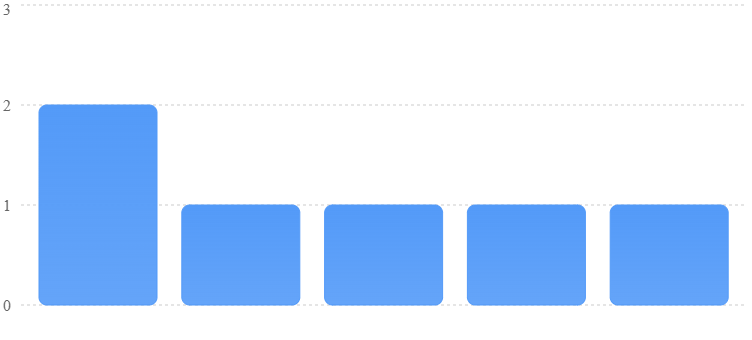
The chart classifies the main numerical result chosen for each case in the table. It does not mean that the deployments measured only one metric or that these categories represent market-wide adoption.
The practical lesson is simple. Businesses should establish a consistent measurement framework before comparing vendors.
A 70% resolution rate among selected conversations cannot automatically be compared with a 70% share of all support requests. A faster response is not necessarily a complete resolution, and an automated conversation does not always represent a satisfied customer.
A Better Set of Core Metrics
| Metric | Calculation | Why it matters |
|---|---|---|
| Overall automation rate | Verified AI resolutions ÷ all incoming cases | Shows the share of total work completed |
| Agent resolution rate | Verified AI resolutions ÷ eligible agent-attempted cases | Shows performance on work the agent attempted |
| Reopen rate | Reopened AI cases ÷ resolved AI cases | Reveals cases that were not truly finished |
| Cost per resolution | Total attributable cost ÷ completed resolutions | Measures financial efficiency |
| Customer satisfaction | Positive customer feedback ÷ valid responses | Helps measure customer experience |
| Escalation quality | Correct handoffs ÷ audited escalations | Measures whether humans receive the right cases |
These metrics should be viewed together. A rising automation rate is not a success if customers are repeatedly reopening tickets or if agents are making expensive account changes incorrectly.
Original Finding #2: The Data Supports Real Operational Benefits, but Not One Universal ROI Number
The reviewed deployments show reported improvements in several different parts of support operations. Some describe agents completing customer requests, while others show faster handling or reduced workload.
What the evidence does not support is a single average return on investment that can reasonably be applied to every business.
The cases were selected and published by vendors or their customers. They vary in workload, industry, measurement period, and implementation. Some lack a full cost breakdown or a comparable predeployment baseline.
An arithmetic average of their headline percentages would be easy to calculate but would be statistically misleading. A stronger analysis preserves the differences and tests financial outcomes using an explicit set of assumptions.
That leads to the next part of the research.
Original Finding #3: A Support Agent Can Create Financial Value at Much Lower Automation Rates Than Most Headlines Suggest
To examine the economics, SFTechScene built a scenario model for a hypothetical San Francisco business receiving 10,000 customer support conversations each month.
This is an original financial analysis, not a claim about the actual performance or costs of any company in the deployment sample.
The model assumes each resolved conversation avoids seven minutes of human handling, that human support capacity is valued at $30 per hour, and that the agent costs $0.80 per successful resolution. It also assumes that 10% of AI-resolved cases require three minutes of paid human review and that fixed operating costs total $1,500 per month.
Research Assumptions
| Variable | Modeled value |
|---|---|
| Monthly incoming support conversations | 10,000 |
| Human handling time per case | 7 minutes |
| Fully loaded human cost | $30/hour |
| Human capacity value per case | $3.50 |
| AI variable cost per resolved case | $0.80 |
| Cases requiring human quality review | 10% |
| Review time for selected cases | 3 minutes |
| Fixed monthly AI operating cost | $1,500 |
These values are illustrative planning assumptions. They are not presented as observed San Francisco wage rates, verified vendor prices, or measured industry averages.
Under these assumptions, each automated resolution creates $3.50 of avoided human handling capacity. After deducting $0.80 in agent costs and an average $0.15 in review costs, the contribution is $2.55 per resolved case, before fixed operating costs.
The financial model becomes:
\[ \text{Monthly net capacity value} = (\text{AI resolutions}\times \$2.55)-\$1,500 \]
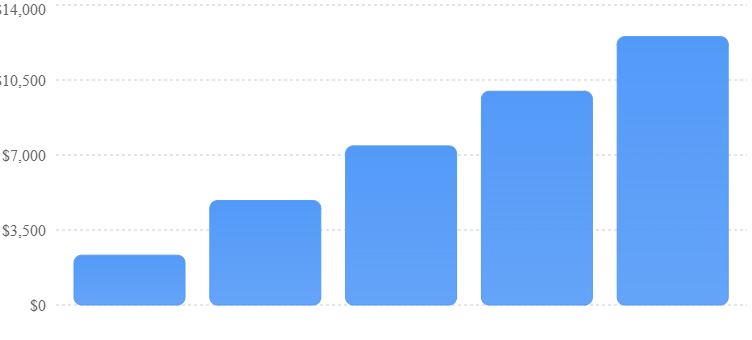
Scenario Analysis: What Happens as Automation Improves?
Modeled monthly net capacity value by automation rate
10,000 conversations per month; illustrative assumptions, not observed company results.
| Share of all conversations resolved | Monthly AI resolutions | Net modeled monthly value |
|---|---|---|
| 15% | 1,500 | $2,325 |
| 25% | 2,500 | $4,875 |
| 35% | 3,500 | $7,425 |
| 45% | 4,500 | $9,975 |
| 55% | 5,500 | $12,525 |
The model produces a break-even point of approximately 589 successful resolutions per month, or about 5.9% of total conversation volume.
That result is not a promise that any provider will deliver profitable automation at this rate. It shows that, under the stated assumptions, even a relatively modest amount of successful automation could justify the modeled ongoing costs.
A company with more expensive software, shorter human handling times, higher review needs, or lower case volumes could experience a very different result.
Why These Savings Are Not Necessarily Cash Savings
There is another important distinction. Avoiding 3,500 cases worth of human work does not automatically reduce a company’s payroll or create $7,425 in additional bank balance.
Employees might remain on the payroll and use the freed capacity to handle more complicated issues, improve customer relationships, or support business growth.
Those benefits can be commercially valuable, but they are different from immediately reducing operating expenses.
The modeled value becomes an actual cash saving only when the company can remove or avoid a cost, such as overtime, outsourcing, temporary staffing, or planned additional hiring. Businesses should report cash savings and capacity value separately rather than combining them into one attractive number.
Original Finding #4: Contact Volume Can Matter More Than an Impressive Automation Percentage
The model also shows why business size and workload volume are critical.
At a 25% overall automation rate, an operation with 2,000 monthly conversations produces only 500 successful resolutions. Under the same assumptions, that creates $1,275 in contribution before fixed costs, leaving a monthly modeled shortfall of $225.
At 10,000 monthly conversations, the same 25% automation rate produces $4,875 in net modeled capacity value.
This means a smaller business should pay careful attention to fixed costs. It may need a lower-cost deployment, a shared platform, or an agent that performs several related tasks before the economics become attractive.
Modeled monthly value at 25% overall automation
The same automation rate produces different results as conversation volume changes.
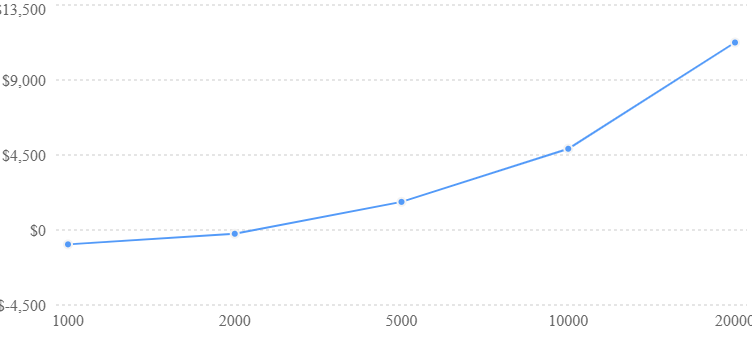
Businesses should therefore evaluate AI automation against the number of tasks they actually need completed. Vendor demonstrations may highlight sophisticated capabilities, but a useful business case begins with real workload volumes.
Original Finding #5: The Best First Agent Is Usually the One With Clear Rules and Measurable Results
The deployment review and financial model point toward a broader strategy: businesses should prioritize repeatable activities where a correct result can be checked.
This conclusion is not a statistical ranking of all possible AI tasks. It is a decision principle drawn from the reported implementation patterns and the economics of automating measurable work.
To make the principle practical, SFTechScene developed an editorial prioritization framework for common sales, marketing, and support tasks.
Each task is judged on four questions: how often it occurs, whether the company has reliable information to support it, whether success is easy to verify, and how much damage a wrong action could create.
| Workflow | Ease of checking results | Consequence of an error | Suggested starting approach |
|---|---|---|---|
| Order-status questions | High | Low to moderate | Controlled automation |
| Product FAQ support | High | Low to moderate | Controlled automation |
| Sales meeting summaries | High | Low | Draft with human review |
| Lead research | Moderate | Moderate | Source-linked drafts |
| Campaign performance reports | High | Moderate | Automated reporting with validation |
| Website lead qualification | Moderate | Moderate | Agent-assisted qualification |
| Subscription changes | High when rules are clear | Moderate to high | Limited, permission-based actions |
| Personalized sales outreach | Moderate | Moderate to high | Human approval before sending |
| Refund exceptions | Moderate | High | Human decision |
| Contract negotiation | Low | High | Human-led process |
| Advertising budget changes | High for spend, lower for results | High | Approval-gated recommendations |
| Sensitive account disputes | Variable | High | Human-led resolution |
This table is an SFTechScene analytical framework, not a measured dataset of real-world agent performance. It provides guidance for selecting pilot projects rather than proof that one workflow will always outperform another.
The strongest starting points tend to combine high repetition, reliable data, straightforward rules, and low risk. That explains why common customer support questions and internal information gathering are attractive early uses.
A business can expand into more sensitive activities after it has demonstrated that its agents are accurate, traceable, and able to escalate problems correctly.
Original Finding #6: AI Agents Become More Valuable When Sales, Marketing, and Support Share Information
Most companies manage sales, marketing, and customer support as separate departments. Each has its own tools, goals, reports, and processes.
Yet customers do not experience a business that way. They may discover a product through an advertisement, speak with sales, complete a purchase, and contact support shortly afterward.
When those activities are disconnected, customers often have to repeat information. Employees also miss opportunities to understand why people buy, why they leave, and what problems occur after purchase.
AI agents could help reduce those gaps, provided the company’s data systems and permissions allow the relevant information to be shared responsibly.
Customer Support Can Become a Source of Marketing Research
Customer conversations contain useful information about what people find confusing, which features they value, and what prevents them from getting the results they expect.
An agent can organize support conversations into recurring themes and prepare summaries for product and marketing teams. For example, it might identify a growing number of questions about one integration after a product launch.
Marketing employees can then examine whether the website explains the integration clearly enough. Product teams can investigate whether the setup process needs improvement.
This creates a feedback loop in which support information helps improve the customer experience before people need to ask for help.
Sales Conversations Can Improve Marketing Messages
Sales representatives often hear objections that never appear in marketing reports. Prospects may misunderstand pricing, worry about implementation time, or ask for a feature that the product already provides.
With appropriate access and privacy controls, an AI agent can identify recurring themes in sales notes and approved call records. Marketing teams can use those findings to improve website explanations, product pages, and campaign messages.
The agent should not turn a few comments into sweeping conclusions about the entire market. Recurring themes should be checked against enough conversations to establish that they represent a meaningful pattern.
The goal is to help marketers identify questions worth answering, not to replace customer research with automated guesses.
A Shared Customer History Can Improve Handoffs
Imagine a prospect who asks a website sales agent whether a software product supports a particular data connection. After purchasing, the customer contacts support with a problem setting up that same connection.
If the business has a connected and properly governed customer history, the support agent may be able to identify the original requirement and provide more relevant help.
This avoids asking the customer to explain everything again. It also gives employees a better understanding of the account when they need to intervene.
However, unified customer data is only useful when access is appropriate. A support agent should not automatically receive sensitive sales notes or unrelated personal information simply because the company stores those records in the same system.
The AI Agent Operating Model: Why Good Processes Matter More Than Impressive Demos
Businesses often focus on how intelligent an AI agent sounds during a demonstration. That is understandable because fluent conversation makes technology feel capable.
But the real test begins after the agent is connected to everyday business systems.
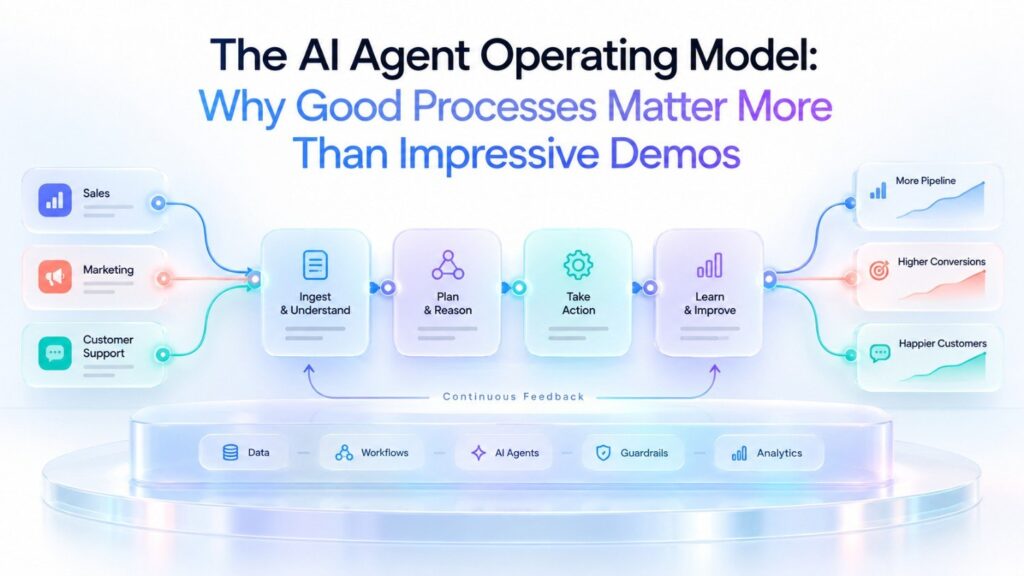
A production agent must know where accurate information comes from, what actions it can perform, what happens when something goes wrong, and how a person can inspect its decisions.
Start With a Specific Business Outcome
A company should define the task before choosing the model or software platform.
For example, the goal should not simply be to deploy an AI customer support assistant. A more useful objective is to resolve eligible account and billing questions without a human while keeping incorrect account changes below a strict internal limit.
That definition tells the team which records the agent needs, which actions it may perform, and how performance will be measured.
For a sales agent, the objective might be to qualify inbound website leads and arrange meetings without creating duplicate customer records. For a marketing agent, it might be to prepare accurate weekly campaign reports and flag unusual changes for review.
Clear outcomes make testing easier and prevent a pilot from becoming a vague technology experiment.
Build the Agent Around Reliable Information
AI agents cannot reliably solve business problems when the company’s information is incomplete or contradictory.
A support agent might encounter outdated refund rules on the website, newer instructions in an internal document, and a different policy inside the order system. Without a defined source of authority, the agent may choose the wrong answer.
Businesses should therefore identify which systems control each decision.
Billing systems should determine actual charges. Order systems should provide current delivery information. Approved product documentation should support feature claims. Company policies should determine what actions are permitted.
An agent can explain and act on that information, but it should not invent facts to fill gaps.
Give Agents the Minimum Permissions They Need
An AI agent that answers order-status questions generally needs permission to read relevant order information. It does not necessarily need permission to issue refunds, change payment details, or cancel subscriptions.
Separating permissions reduces the damage that can occur if an agent misunderstands a request.
A company might allow an agent to prepare a refund request but require employee approval before releasing money. Another business might permit small refunds under a strict rule while routing unusual cases to a supervisor.
The correct boundary depends on the company, the customer impact, and the risks involved.
Design Human Handoffs Before Launch
An agent should recognize when it cannot complete a task safely or correctly. It should also provide employees with enough context to continue without making the customer restart the conversation.
A useful handoff includes the customer’s request, verified account information, actions already attempted, relevant policy restrictions, and the reason human help is required.
Businesses should test these handoffs using real historical cases. An agent that transfers difficult conversations without a useful summary may simply move work from one place to another.
The goal is not to eliminate human support. It is to ensure that human attention is used where it adds the most value.
How San Francisco Businesses Can Deploy Their First AI Agent in 90 Days
Companies do not need to automate an entire department to start seeing the benefits of AI agents. A carefully planned 90-day pilot can provide enough information to determine whether a specific workflow deserves further investment.
The most important part of the process is measuring current performance before introducing automation. Without a baseline, businesses cannot know whether the AI system improved the process or simply changed how the work was recorded.
90-DAY IMPLEMENTATION ROADMAP
- Days 1–15: Identify the best workflowReview recent support tickets, sales tasks, or marketing reports. Choose a repeated activity with reliable data, clear success criteria, and limited consequences when something goes wrong. Record current volume, completion time, error rates, and costs.
- Days 16–30: Prepare data and permissionsIdentify the approved source of information, remove outdated instructions, and define allowed actions. Create clear rules for when the agent must stop or hand the task to a person.
- Days 31–45: Build and test the agentStart with historical cases rather than live customer actions. Test common requests, unusual wording, incomplete information, conflicting instructions, and situations where the agent should refuse to act.
- Days 46–60: Run a limited pilotIntroduce the agent to a small, controlled share of eligible work. Keep a comparable group using the current process where practical. Review failures frequently and require human approval for higher-risk actions.
- Days 61–75: Compare performanceMeasure verified completion, customer satisfaction, reopens, employee handling time, and fully loaded costs. Compare the agent with the baseline using the same definitions, and examine whether the types of cases being handled have changed.
- Days 76–90: Decide whether to expandBroaden the deployment only when results support it. Document approved workflows, ownership, monitoring rules, escalation paths, and a process for disabling the agent if quality falls.
A More Reliable Way to Test Results
A common mistake is comparing a new AI agent’s best week against the previous system’s average month. Customer volume, issue complexity, staffing, and seasonal changes can all affect the result.
A stronger pilot compares similar requests during the same period. For example, eligible incoming support conversations could be assigned between the new agent workflow and the existing support process, with customers still able to reach human assistance.
Businesses should document which conversations were eligible, which were excluded, and whether the agent successfully completed the intended task.
They should also inspect cases that the agent marked as resolved. Customer silence is not always proof of success, especially when the person may have abandoned the conversation.
What Businesses Should Expect After 90 Days
A successful pilot should produce more than an attractive dashboard.
The company should understand which requests the agent can handle reliably, how much human work it avoids, what customers think of the experience, and whether the financial value justifies the operating costs.
It should also understand the failure patterns. For example, the agent may perform well on simple product questions but struggle with account-specific billing requests.
That information determines the next phase. Businesses can expand reliable workflows, improve weak areas, or decide that an activity is better handled by existing software and employees.
The Biggest Mistakes Companies Make With AI Agent Automation
Measuring Messages Instead of Completed Work
An AI agent can generate thousands of messages without solving thousands of customer problems. High activity does not necessarily indicate high value.
Sales teams should measure qualified meetings and opportunities rather than the volume of outreach alone. Marketing teams should measure meaningful business outcomes rather than the number of reports or content drafts generated.
Support teams should focus on verified resolution, not merely the number of conversations that ended without a human response.
The same principle applies to cost savings. A company should include platform charges, integrations, maintenance, monitoring, human review, and the cost of correcting mistakes.
Automating a Broken Business Process
If a company’s support policies are confusing, its customer records are inaccurate, or its sales qualification process is inconsistent, an agent may make those problems more visible.
Automation does not automatically create a better operating process. It can simply make an inefficient process run faster.
Before deploying an agent, businesses should identify unnecessary steps, conflicting rules, and missing information. Fixing those problems may create immediate value even before any AI is introduced.
Giving AI Too Much Authority Too Early
Businesses often want agents that can complete entire workflows without asking for help. That is a reasonable long-term goal for suitable tasks, but unrestricted autonomy can create financial and reputational risks.
A marketing agent should not freely increase advertising budgets. A sales agent should not promise discounts that have not been approved. A support agent should not disclose account information without appropriate verification.
The safest approach is to increase autonomy only when the company has evidence that the workflow is reliable and that its controls work under unusual conditions.
Ignoring Customer Trust
Customers care about getting useful help, being treated fairly, and knowing what happened to their request. They may not care which underlying AI model the company uses.
Businesses should be clear when customers are interacting with AI and make human assistance accessible when appropriate. Sensitive information should be protected, and automated actions should be recorded so that mistakes can be investigated.
Marketing automation also needs careful review. The Federal Trade Commission explains that advertising claims must be truthful, supported by evidence, and not deceptive or unfair. AI-generated promotional content is not exempt from those obligations.
Federal Trade Commission
An agent that saves money but repeatedly gives misleading answers can become more expensive than the work it replaces.
How AI Agents Will Change Sales, Marketing, and Customer Support Jobs
AI agents are likely to change the mix of work performed by employees before they make human roles unnecessary.
In sales, routine research, follow-up preparation, and record updates may require less manual effort. Salespeople can then devote more attention to understanding customers, handling objections, negotiating appropriate terms, and developing relationships.
In marketing, agents can reduce time spent gathering reports and preparing repeated campaign materials. Marketers will still need to decide which customers to serve, what messages matter, how to position products, and whether campaigns are producing profitable growth.
In customer support, agents can take on a larger share of routine questions while employees concentrate on technical cases, dissatisfied customers, complex account problems, and situations requiring empathy or discretion.
These changes will not affect every organization in the same way. Some businesses may use AI to grow without proportionally increasing headcount, while others may reorganize existing teams.
The larger opportunity is to improve the amount of meaningful work people can complete, not simply count how many tasks a machine can perform.
What San Francisco Founders Should Build as the AI Agent Market Grows
The expansion of business automation also creates opportunities for startups.
Large enterprise software companies already have strong positions in customer databases, service platforms, and marketing systems. New founders may find it difficult to compete by offering another general-purpose chatbot.
A stronger opportunity may be to solve one specific, expensive business problem more effectively than existing products.
Build for a Clearly Defined Customer Problem
An agent that handles complex billing questions for subscription software companies has a more defined purpose than a product that claims to automate all customer operations.
Specialization allows a startup to understand the relevant rules, integrations, failure cases, and customer expectations more deeply.
It also makes the product easier to evaluate. A buyer can test whether the agent resolves the intended requests accurately and whether the savings justify the price.
Make Reliable Actions the Product
Many businesses already have access to powerful language models. The difficult part is connecting those models to real systems safely.
A useful startup might focus on accurate account changes, insurance document collection, appointment coordination, subscription administration, or industry-specific customer support.
These products create value by completing necessary work correctly rather than simply producing fluent answers.
Treat Evaluation and Monitoring as Core Features
Customers need to know what their agents are doing, which tasks are succeeding, and where the system is making mistakes.
Founders should therefore build clear reporting, testing, and oversight into their products. Customers should be able to inspect actions, correct failures, and update rules without rebuilding the entire system.
Over time, a strong reputation for reliability may become a more important competitive advantage than having the most impressive demonstration.
What Business Leaders Should Watch Through 2027
Several developments will help determine which AI agent businesses create durable value.
The first is whether AI systems can reliably complete more complicated tasks. Moving from answering a question to changing a customer record is meaningful progress, but completing work involving several systems and approvals is more difficult.
The second is how well software providers measure performance. Businesses will increasingly need consistent reporting that separates conversation handling, verified resolution, customer satisfaction, and actual financial returns.
The third is the quality of integration with existing business tools. Companies do not want to rebuild their entire software infrastructure every time they adopt a new agent. Products that work reliably with established systems may have an advantage.
Finally, businesses should watch how human teams adapt. Successful adoption depends on employee training, clear ownership, thoughtful escalation, and a willingness to redesign outdated processes.
The next stage of AI automation will likely be less about impressive conversations and more about dependable execution.
Final Takeaway: San Francisco’s AI Agent Revolution Will Be Won by Companies That Automate Results, Not Activity
San Francisco’s AI agent industry is moving business software toward a more active role in everyday operations. Instead of only storing information and helping employees prepare work, software is beginning to complete well-defined tasks across sales, marketing, and customer support.
The strongest public deployment examples already show meaningful benefits in specific settings. Salesforce has reported substantial question resolution through Agentforce. Decagon’s customer stories describe improved support outcomes for companies including Chime, Notion, and Rippling. Intercom’s evolving measurement definitions demonstrate why businesses need to examine what reported automation numbers actually mean.
SFTechScene’s original financial model adds another lesson. Under a transparent set of illustrative assumptions, an AI agent does not need to resolve most customer conversations to create positive operating capacity value. But those modeled benefits should never be confused with verified cash savings or guarantees about vendor performance.
For business owners, the practical path is clear. Start with work that happens frequently, uses reliable information, and has a measurable definition of success. Give agents narrow permissions, test them against real cases, and expand only when the evidence supports doing so.
For San Francisco startups, the biggest opportunity is not necessarily building AI that talks more naturally than competing systems. It is building AI that can complete valuable work accurately, explain what it has done, and earn the trust of the businesses using it.
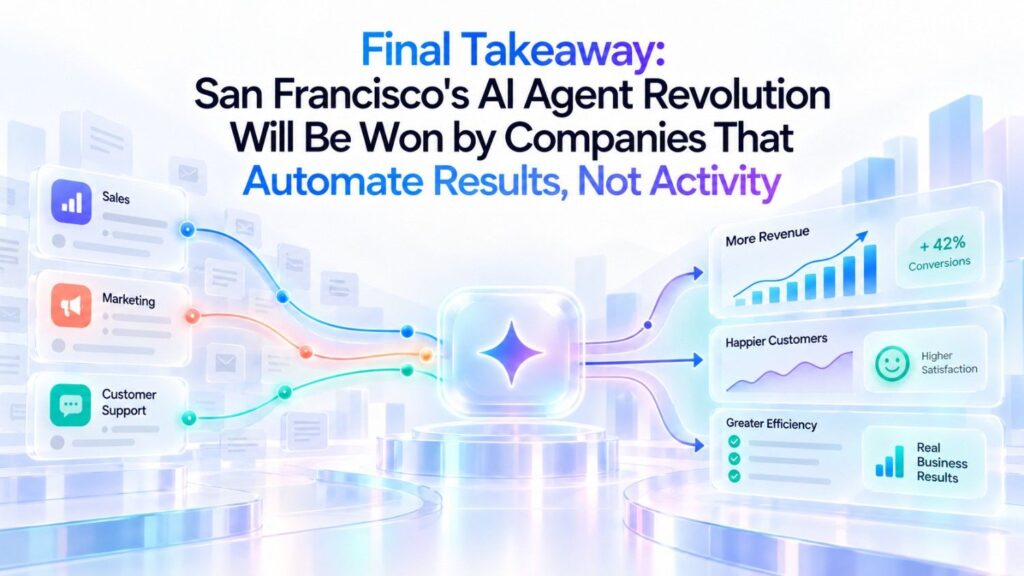
The companies that succeed will understand a simple principle: the future of AI automation is not about replacing every human interaction. It is about removing unnecessary work so businesses can serve customers better, sell more effectively, and grow without making every process more complicated.
Research note: This article uses publicly available product documentation and company-reported deployment results retrieved for an October 13, 2026 research cutoff. SFTechScene’s original contribution consists of case-study classification, a reproducible financial scenario model, and an operational prioritization framework. These are desk-research analyses, not an independently audited market survey. The charts and financial scenarios should not be represented as measured outcomes from San Francisco businesses.