
San Francisco has spent decades building software that helps people work faster. Now, two of its most closely watched AI companies are trying to change something much bigger: how businesses serve their customers.
Imagine calling an airline because your flight was canceled. Instead of waiting on hold, repeating your booking number, and being transferred between departments, an AI agent checks your reservation, finds another flight, explains your options, and completes the change. You finish the conversation with a new ticket rather than another support case number.
That is the future that Sierra and Decagon are helping businesses build.
Both companies emerged from the San Francisco technology ecosystem in 2023. Both are attracting major investors and enterprise customers. And both believe customer service should move beyond chatbots that answer questions toward AI agents that actually solve problems.
The numbers show why this market deserves attention. In May 2026, Sierra announced a $950 million funding round at a valuation above $15 billion. Decagon announced a $250 million round in January 2026 at a $4.5 billion valuation. These are significant figures for two relatively young companies operating in a market long served by traditional customer support software.
Sierra
+1
But the more important story is happening inside customer service operations.
Businesses are beginning to use AI for work that once required human agents, including tracking orders, handling account changes, managing subscriptions, resolving billing questions, and assisting customers over the phone. Some deployments are reporting substantial improvements, although results vary by company, the tasks being automated, and how success is measured.
For San Francisco startups, this change creates an important opportunity. A small company can potentially offer fast, always-available support without building a large support team first. A growing business can handle more customer questions without increasing staffing at the same rate. Established companies can give human employees more time for problems that require judgment and care.
However, customer service AI introduces new risks. A wrong refund, an incorrect account change, or a misleading answer can damage customer trust much faster than a traditional chatbot that simply provides unhelpful information.
To understand what is really happening, SFTechScene examined public company announcements, customer case studies, product documentation, and industry research available through October 13, 2026. We also developed original calculations to study the economics of AI customer support, the effect of resolution rates, and the business conditions under which automation creates measurable value.
The findings suggest that the winners in AI customer service will not necessarily be the companies that automate the most conversations. They will be the ones that resolve the most customer problems correctly, safely, and at a sustainable cost.
The Short Version: San Francisco Is Moving From Customer Service Chatbots to AI That Gets Things Done
Traditional customer support software mainly helps companies organize incoming problems. A customer asks a question, the software creates a ticket, and someone or something provides an answer. Even when a chatbot is involved, the customer may still need a person to complete the actual task.
AI customer service agents promise a different experience. They can understand a request, find relevant information, use approved business systems, and complete certain tasks without requiring a human to perform every step.
Sierra and Decagon are competing to become the technology behind this change. Although their products overlap considerably, their public positioning highlights different strengths. Sierra emphasizes customer relationships, brand experiences, and paying for successful outcomes. Decagon emphasizes configurable work processes, operational control, and continuously improving AI agents.
The broader industry is moving in the same direction. Salesforce’s 2025 State of Service research surveyed 6,500 professionals and found that service teams estimated AI handled about 30% of cases in 2025. Respondents expected that figure to reach 50% by 2027. These are survey estimates and forecasts, not independently measured results across the entire industry.
Salesforce
+1
Share of customer service cases handled by AI
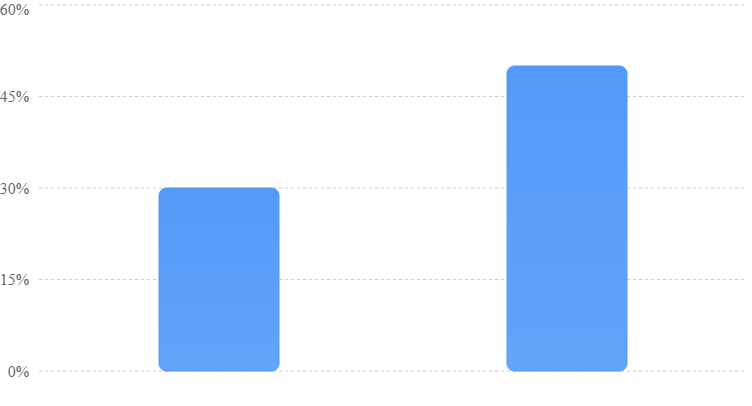
Source: Salesforce 2025 State of Service survey. 2027 is a respondent forecast, not an observed outcome.
This projected increase amounts to 20 percentage points in two years. Relative to the 2025 figure, it represents roughly 67% growth in the expected share of cases handled by AI.
For a company receiving 100,000 support requests annually, that difference would represent 20,000 additional cases handled by AI if the company’s results matched the survey’s estimates. Whether those cases translate into lower costs depends on the number truly resolved, the expense of running the AI, and the work that still reaches human employees.

The central business lesson is simple: AI customer service is becoming an operating decision, not just a software purchase.
Why San Francisco Has Become a Center of the AI Customer Service Revolution
Customer Service Is an Ideal Starting Point for AI Agents
Customer support produces a large amount of repeatable work. Customers ask where their orders are, when their payments will arrive, why a charge appeared, or how to change an account setting.
Many of these requests involve information already available inside company systems. They follow business rules, require a limited number of actions, and have outcomes that can be checked.
These characteristics make customer service a strong candidate for automation.
Consider a retail company receiving thousands of questions about deliveries. A large share of those questions might be answered by checking an order number and delivery status. The task is repetitive, but the answer must still be accurate and specific to the customer.
An AI agent can potentially check that information, explain the latest status, and offer approved next steps. If the system is connected to the right tools, it may also help with address corrections, cancellations, or returns.
The technology becomes more valuable when it completes the customer’s task instead of merely explaining what the customer should do next.
San Francisco Combines AI Talent With Enterprise Software Experience
The Bay Area has an unusual combination of AI research, software engineering talent, business customers, and venture capital.
Building a reliable customer service agent requires far more than a powerful language model. Companies need secure connections to business systems, ways to check responses, tools to manage errors, and processes for improving the agent after launch.
Those requirements are closely connected to skills developed across the region’s software industry.
Sierra and Decagon are examples of companies trying to turn advanced AI models into products that large businesses can trust. Their growth also shows that investors increasingly see value in businesses that apply AI to specific commercial problems, rather than simply offering general-purpose chat tools.
The Market Is Moving Beyond Simple Cost Reduction
Customer service automation has traditionally been sold as a way to reduce support expenses.
That remains important, but it is no longer the only reason companies are investing.
A business with faster support may retain more customers. An online retailer may convert more shoppers when product questions are answered immediately. A financial services company may strengthen trust by helping members resolve stressful account problems without long delays.
These opportunities change how businesses should evaluate AI.
A support agent that saves money but frustrates customers might be a poor investment. Another agent that costs more to operate but prevents valuable customers from leaving could produce a much stronger business return.
That is one reason both Sierra and Decagon increasingly discuss the entire customer experience rather than only ticket reduction.
Inside Sierra: Building AI Agents That Represent the Brand
How Sierra Entered the Market
Sierra was founded by Bret Taylor and Clay Bavor, two technology leaders with experience building widely used software products.
Taylor previously served as co-CEO of Salesforce and held senior leadership roles at other major technology companies. Bavor spent many years at Google, where he worked on consumer products and emerging technologies.
Their backgrounds matter because enterprise customer service requires an unusual balance of product design, business understanding, and technical reliability.
An AI agent must answer questions naturally, but it also has to work inside the business rules of the company deploying it.
Sierra approaches this challenge by helping organizations create AI agents that can communicate with customers and carry out approved work across business systems.
Its public customer references span financial services, retail, healthcare, telecommunications, travel, and other industries.
Sierra
+1
Sierra Wants AI to Become a Customer-Facing Representative
The traditional chatbot often feels like a barrier between the customer and a human employee.
Sierra’s approach is built around a different idea: the AI agent should become a useful part of the company’s customer experience.
A customer should be able to explain a problem naturally. The agent should understand the request, retrieve the relevant details, and complete the task when authorized.
For example, a travel company could use an agent to explain booking rules and help process eligible changes. A retailer could connect its agent to order records and return policies. A financial company could help customers navigate approved account processes.
The agent’s usefulness depends heavily on the quality of these connections.
Without access to trusted business information, even the most convincing AI conversation can produce an inaccurate result.
Sierra’s Outcome-Based Pricing Changes the Business Model
One important part of Sierra’s approach is its emphasis on outcome-based pricing.
Traditional support software often charges for licenses, users, or usage. Sierra promotes agreements that can connect payment to completed tasks, such as resolving an issue or achieving another defined customer outcome.
The company explains that outcome definitions are agreed with customers and that blended pricing arrangements may also be appropriate. This means buyers should not assume every Sierra contract follows one universal price structure.
Sierra
Consider two ways a company could pay for AI support.
Under a usage-based agreement, it might pay whenever the system handles a conversation. Under an outcome-based agreement, it might pay when the agent completes a qualifying task.
The difference can be substantial.
If an AI system responds to 10,000 customers but successfully resolves only 4,000 cases, a usage-based arrangement may bill for 10,000 interactions. An outcome-based arrangement may instead focus charges on the 4,000 verified resolutions, depending on the contract.
Neither approach is automatically cheaper. What matters is the agreed price, the definition of success, and the cost of failures and escalations.
The deeper change is that software providers may increasingly be rewarded for completed work rather than access to software.
Sierra Is Expanding Beyond Single Customer Conversations
Sierra’s product announcements throughout 2026 show that its ambitions extend beyond answering individual support requests.
The company has introduced capabilities designed to support longer-running work, create and improve agents, and give businesses more control over customer interactions.
Its Horizon announcement in July 2026 described agents that could coordinate customer interactions across days or weeks. Its Ghostwriter initiatives focused on making agent development and improvement easier.
Sierra
+1
This direction matters because many customer problems do not end in one conversation.
A refund may depend on a warehouse receiving a return. A repair may require an appointment. A complex account problem may involve several internal departments.
If AI agents can track this work across multiple steps, they may reduce one of the most frustrating parts of customer service: making people start over whenever they contact a company.
However, longer-running agents also require better controls. Businesses need to know what the agent has promised, which steps have been completed, and when a human should take over.
Inside Decagon: Making Customer Service Workflows Easier to Automate
Decagon’s Approach Starts With Business Processes
Decagon was founded by Jesse Zhang and Ashwin Sreenivas in 2023.
Like Sierra, it builds AI agents for customer-facing work. Its product direction places particular emphasis on giving teams ways to define, test, monitor, and improve those agents.
This distinction is important because customer support is not just a conversation.
A customer might ask for a refund, but the business may need to check the purchase date, product category, payment status, return condition, and account history before approving it.
A correct answer is only one part of the task. The company must also follow its policies and record the action accurately.
Decagon’s platform is designed around making these processes manageable.
Agent Operating Procedures Turn Business Rules Into AI Instructions
One of Decagon’s best-known product ideas is Agent Operating Procedures, or AOPs.
These are structured instructions that describe how an AI agent should complete a task. They are designed to connect plain-language business procedures with validated workflows.
Instead of simply telling an AI agent to be helpful, a business can define the steps required for particular types of customer requests.
For instance, an agent handling a subscription cancellation might need to verify the account, check whether a billing period has started, explain any refund conditions, and record the change before confirming success.
Decagon says AOPs help companies create agents that can handle actions such as account changes, refunds, and subscription management within defined rules.
Decagon
+1
This approach is especially relevant for companies with complicated support policies.
A growing business may have different refund rules for different products, customer groups, countries, or payment methods. Without clear procedures, an AI agent can make mistakes even when its underlying language skills are strong.
Decagon Wants Customer Service Teams to Improve AI Without Constant Engineering Work
Many companies discover that building an AI demo is much easier than operating an AI system.
Policies change. New products launch. Customers find unusual situations. Existing processes stop working as expected.
If every improvement requires software engineers to rewrite code, the support team becomes dependent on a long development process.
Decagon is trying to reduce that dependence.
Its templates, natural-language operating procedures, and Duet tools are intended to help business teams make changes, inspect problems, and improve performance more directly.
In April 2026, Decagon introduced automatic optimization and Root Cause Analysis to help identify problems in live conversations. In June, it announced Duet Autopilot, which aims to turn production feedback into proposed improvements that can be reviewed before release.
Decagon
+2
The strategic advantage is not simply faster deployment.
It is faster learning.
A company that can identify a recurring support failure, understand its cause, test a change, and deploy a safer process quickly may improve much faster than one relying on occasional manual updates.
Decagon Is Targeting Large Enterprise Workloads
Decagon’s January 2026 funding announcement reported that more than 100 new global enterprise customers had joined during its preceding fiscal year.
The company identified customers including Avis Budget Group, Block, and Deutsche Telekom. Its publicly featured customer stories also include Chime, Duolingo, Rippling, ClassPass, Faire, and others.
Decagon
+1
These customers operate across industries with very different support problems.
Travel companies face booking questions, payment issues, delays, and last-minute changes. Financial services companies need accurate account information and strict security controls. Software companies manage technical requests that may require detailed product knowledge.
Serving these different industries requires more than a general chatbot.
It requires a system that can be adapted to each company’s work, rules, and customer expectations.
Sierra vs. Decagon: What Actually Makes Them Different?
A simple comparison makes the two companies look almost identical.
Both offer conversational AI. Both support customer service automation. Both work with large businesses, connect to company systems, and provide tools to improve agents.
Their differences are better understood as differences in product emphasis, not absolute capabilities.
| Comparison area | Sierra | Decagon |
|---|---|---|
| Core positioning | AI agents for customer experiences and outcomes | AI concierge platform with controlled workflows |
| Founders | Bret Taylor and Clay Bavor | Jesse Zhang and Ashwin Sreenivas |
| Publicly emphasized strength | Brand experience and customer outcomes | Process control and continuous improvement |
| Agent development | Agent Studio and Ghostwriter capabilities | AOPs, templates, and Duet |
| Pricing emphasis | Outcome-based pricing, with blended options | Enterprise commercial agreements; verify quoted terms |
| Improvement tools | Experiments and agent optimization | Duet, Root Cause Analysis, Watchtower |
| Typical buyer priorities | Customer experience, outcomes, connected journeys | Workflow control, visibility, improvement speed |
| Important buying question | What counts as a successful outcome? | How much control does the business have over changes? |
Based on publicly described capabilities through October 13, 2026. This is not a controlled product benchmark or a claim that either company lacks the capabilities emphasized by its competitor.
Sierra
+3
Which Platform Is Better for a San Francisco Startup?
There is no reliable public benchmark showing that one platform consistently performs better across every industry and task.
A company with a strong focus on customer experience may find Sierra’s outcome-based approach attractive. A business with complicated processes and a support team that wants direct control over improvements may be interested in Decagon’s workflow tools.
But those are reasons to investigate, not reasons to sign a contract.
A proper comparison needs to use the same customer problems, the same success rules, similar integrations, and the same evaluation period.
A platform that performs well on simple order-status questions might struggle with complex billing disputes. Another platform might be more expensive on basic support but deliver better results on high-value cases.
The correct choice depends on the work the business actually needs to complete.
Original Research: What Public Data Reveals About Sierra and Decagon
To go beyond company announcements, SFTechScene conducted a structured analysis of publicly available financial figures, product documentation, customer case studies, and industry survey data.
The objective was to answer four questions: How quickly is the market developing? What do published customer results actually demonstrate? How sensitive are the economics to automation quality? And what should a San Francisco business measure before investing?
Research Methodology: How We Analyzed the Market
Our research uses information publicly available as of October 13, 2026.
We prioritized dated company announcements for funding and product releases, named-customer case studies for operational results, and published industry surveys for wider market context. We treated company-reported figures as claims unless an independent source verified them.
We also applied several rules to avoid misleading comparisons.
First, we did not compare different companies’ resolution rates as though they came from the same experiment. A 70% result for banking support and an 80% result for software support may involve different tasks, customer populations, and counting rules.
Second, we kept funding, valuation, revenue, and operating performance separate. Valuation measures investor expectations, not customer service quality.
Third, our financial scenarios use explicit assumptions rather than pretending to know private customer contracts. The calculations are original SFTechScene models, not audited savings from Sierra or Decagon customers.
Finally, we distinguish between observed figures, publicly reported claims, arithmetic derived from published data, and hypothetical estimates. This matters because AI customer service is changing quickly, and not every impressive number means what readers might initially assume.
The result is a research framework that other businesses can reproduce using their own support data.
Original Finding #1: Investor Valuations Have Become Enormous, but They Do Not Establish Which Platform Performs Better
The investment figures associated with Sierra and Decagon reflect strong interest in AI customer service.
Sierra announced a $10 billion valuation in September 2025 and a valuation above $15 billion in May 2026. Decagon announced a $1.5 billion valuation in June 2025 and a $4.5 billion valuation in January 2026.
Sierra
+3
Selected publicly announced valuations, $ billions
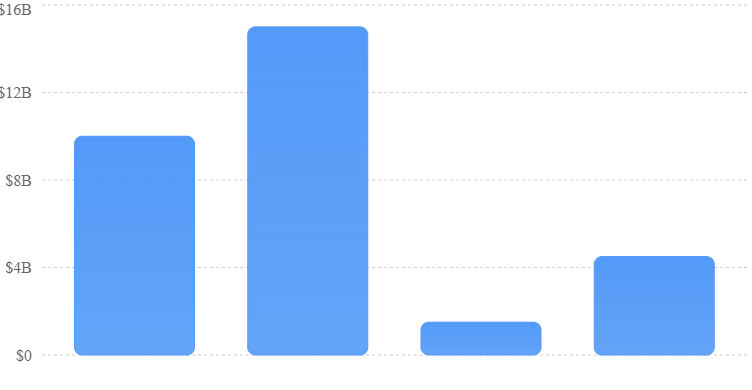
Sources: Company funding announcements. Dates differ; Sierra’s May 2026 valuation is reported as over $15B, so $15B is shown as a conservative floor.
The latest publicly announced funding valuations in these sources place Sierra at more than 3.3 times Decagon’s January 2026 valuation. This is a comparison of financing events from different dates, not a synchronized October 2026 market appraisal.
The growth between each company’s two announcements is also notable.
| Company | Earlier announced valuation | Later announced valuation | Growth between announcements |
|---|---|---|---|
| Sierra | $10B, Sep. 2025 | Over $15B, May 2026 | More than 50% |
| Decagon | $1.5B, Jun. 2025 | $4.5B, Jan. 2026 | 200% |
Decagon’s announced valuation tripled between the two funding events. Sierra’s rose by more than half from a much larger starting point.
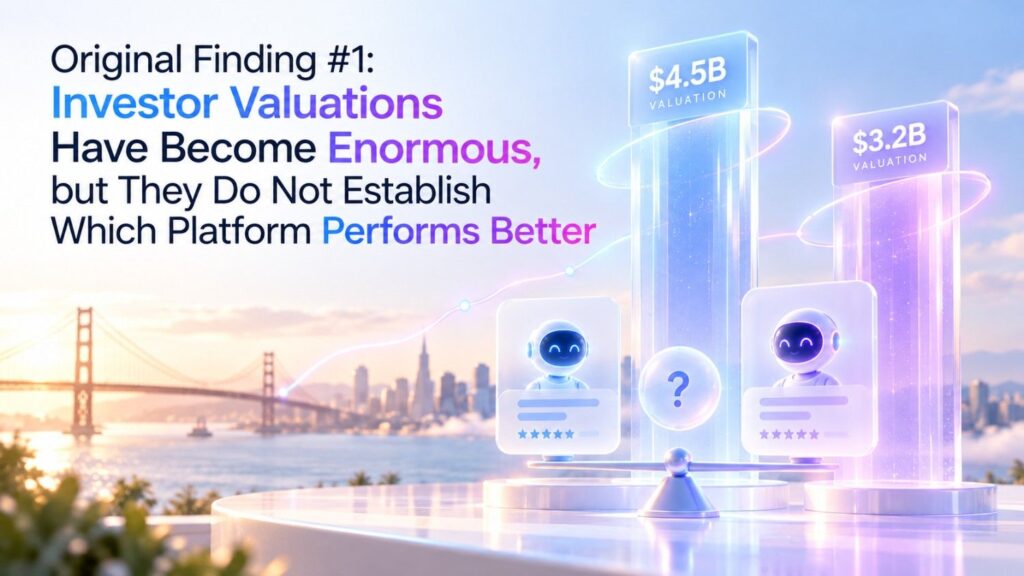
These observations tell us investors have been willing to assign substantial value to both businesses. They do not tell us whether either platform achieves better resolution rates, lower costs, or higher customer satisfaction.
What Revenue Data Adds to the Picture
In February 2026, Sierra reported exceeding $150 million in annual recurring revenue, or ARR. It also said it had reached $100 million in ARR in seven quarters. These figures are company-reported, rather than independently audited financial disclosures.
Sierra
Revenue matters because it provides evidence that customers are paying for the product, rather than only experimenting with free demonstrations.
However, even revenue growth cannot settle the product comparison. Businesses may buy a platform for its integrations, security requirements, vendor support, or long-term strategy.
The important conclusion for San Francisco founders is that customer service AI has moved beyond being a small feature inside support software. Investors are funding companies that aim to own a major part of how enterprises interact with customers.
Original Finding #2: Published Customer Results Show Real Potential, but the Metrics Cannot Be Put on One Leaderboard
Customer case studies offer a more useful view of AI’s operational impact.
Decagon’s public customer stories include reported outcomes such as approximately 70% resolution across chat and voice for Chime, 80% deflection for Duolingo, and a 32% increase in deflection for Rippling.
Sierra’s customer materials highlight an 80% resolution rate for Airtable, along with outcomes from businesses in financial services, retail, travel, and other markets.
Decagon AI
+2
These are encouraging results, but they measure different things.
| Customer | AI provider | Publicly reported result | What it measures |
|---|---|---|---|
| Chime | Decagon | About 70% | Chat and voice resolution |
| Duolingo | Decagon | 80% | Deflection rate |
| Rippling | Decagon | 32% increase | Change in deflection |
| Airtable | Sierra | 80% | Resolution rate |
| ClassPass | Decagon | 95% reduction | A reported cost metric |
Source: Public customer case study pages. Definitions, time periods, baselines, and populations are not uniform. These figures must not be used as a head-to-head vendor ranking.
Decagon AI
+1
Why Resolution and Deflection Are Different
A resolution rate should ideally measure the share of customer problems that the AI actually solves.
A deflection rate often describes the share of support interactions that do not reach a human agent. The two measures may overlap, but they are not necessarily the same.
Suppose 1,000 customers contact a business. An AI system prevents 800 of those conversations from reaching the support team.
That produces 80% deflection.
But imagine 100 of those customers give up because the AI cannot help them. Another 50 leave without realizing the problem is unresolved.
The true number of successful resolutions could be considerably lower than 800.
This is why businesses should verify completion using evidence beyond the chat transcript.
For an order refund, confirmation might require a successful transaction record. For an account change, the updated status should appear in the underlying system. For technical support, the business might check whether the problem returns within a defined period.
Why These Case Studies Cannot Prove a Universal Success Rate
The public case studies do not provide enough standardized information to calculate a reliable pooled resolution rate across both vendors.
Doing so would require consistent definitions, case volumes, observation periods, and details about what types of customer requests were included.
There is also a selection problem. Vendors naturally publish customers with results worth showcasing. These stories can demonstrate what is possible, but they are not a random sample of every deployment.
Therefore, our original research does not assign either company an invented average performance score.
That restraint is important. A comparison that looks precise but uses incompatible data would be less useful than a careful explanation of what the evidence actually supports.
Original Finding #3: A 70% AI Resolution Rate Does Not Mean a 70% Reduction in Support Costs
One of the biggest mistakes businesses can make is assuming that automation rates translate directly into financial savings.
To test this, SFTechScene built a financial model for a hypothetical San Francisco company handling 100,000 customer service requests annually.
We assumed the company spends $6 to handle a request through its existing human support operation. That makes its starting annual cost $600,000.
Next, we modeled three AI adoption scenarios.
Every interaction sent to AI costs an assumed $1.50, whether the AI succeeds or eventually transfers the customer to a human. When AI fails to resolve a case, the business still pays the original $6 human handling cost.
These figures are illustrative research assumptions, not actual Sierra or Decagon prices or established San Francisco market averages.
Financial Model: 100,000 Annual Support Cases
| Metric | Cautious rollout | Moderate rollout | Strong rollout |
|---|---|---|---|
| Total annual cases | 100,000 | 100,000 | 100,000 |
| Cases routed to AI | 30,000 | 50,000 | 70,000 |
| AI resolution rate on routed cases | 60% | 70% | 80% |
| Cases resolved by AI | 18,000 | 35,000 | 56,000 |
| Cases requiring human handling | 82,000 | 65,000 | 44,000 |
| AI processing expense | $45,000 | $75,000 | $105,000 |
| Human support expense | $492,000 | $390,000 | $264,000 |
| Total modeled annual expense | $537,000 | $465,000 | $369,000 |
| Gross annual savings | $63,000 | $135,000 | $231,000 |
| Reduction in modeled costs | 10.5% | 22.5% | 38.5% |
Original model: Annual support costs under three AI scenarios
■ Human support
■ AI processing
SFTechScene scenario analysis. Baseline: $600,000 per year. These are illustrative calculations, not vendor-reported results.
What the Financial Model Reveals
In the moderate scenario, the AI successfully resolves 70% of the 50,000 cases routed to it.
However, across the entire business, AI resolves only 35% of all cases. The reduction in modeled annual spending is 22.5%, not 70%.
That distinction is crucial.
There are two important rates: the share of all cases that reach AI, and the share of those cases the AI resolves.
A business needs both numbers to estimate its real financial impact.
The model also excludes implementation, integration, monitoring, quality assurance, and ongoing management expenses. As a result, the savings shown are gross operating savings before those additional costs.
The Mathematical Formula Behind the Model
For businesses that want to reproduce the calculation, the model uses:
\[ S=N\left(arc_h-ac_a\right) \]
Here, \(S\) is annual gross savings, \(N\) is total support requests, \(a\) is the share routed to AI, \(r\) is the share of routed requests successfully resolved by AI, \(c_h\) is the human handling cost, and \(c_a\) is the AI cost per routed request.
This formula assumes that every successful AI resolution avoids one full human-handled case. It also assumes failed AI cases still require normal human handling.
That is a useful starting model, but not a complete business forecast.
For a real implementation, businesses should add fixed platform fees, setup costs, extra escalation time, refunds caused by errors, and the cost of maintaining human capacity.
They should also verify whether reduced workload actually produces cash savings. Employees whose time is freed may move to other work rather than leave the payroll.
Original Finding #4: Improving Resolution Quality Can Be More Valuable Than Increasing AI Traffic
The next question is whether a business should focus on sending more conversations to AI or helping AI resolve a greater share of the work it already receives.
Our analysis suggests that resolution quality deserves at least equal attention.
Consider the same company with 100,000 annual support cases.
Assume 50% of requests go to AI, human handling costs $6 per case, and AI processing costs $1.50 per attempt.
Now hold the number of AI interactions constant while changing only the AI’s resolution rate.
Original model: Annual savings at different AI resolution rates
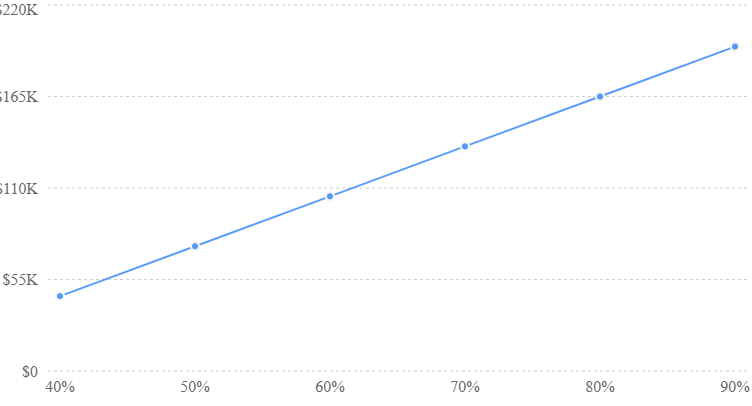
SFTechScene calculation: 50,000 AI attempts per year, $6 human handling cost, $1.50 AI cost per attempt. Excludes fixed costs.
Every ten-percentage-point increase in resolution produces another 5,000 successful cases in this example.
At $6 of avoided human handling expense per additional successful case, that creates $30,000 of extra annual gross savings.
The result is particularly useful for businesses planning their second year of AI deployment.
After the initial launch, they may discover that improving the agent’s handling of common problems offers a stronger return than immediately expanding automation to more complicated cases.
Why Higher Coverage Can Sometimes Make Performance Worse
The easiest customer requests are usually automated first.
Order-status questions, store hours, basic account information, and straightforward subscription changes often follow clear rules.
As a business expands automation, it may begin including complicated billing disputes, emotional complaints, technical failures, or requests involving several departments.
Those additional cases are harder.
A company might increase the share of cases routed to AI from 50% to 80%, while seeing its resolution rate fall sharply because the new requests are more difficult.
This is why AI coverage should not be treated as the main success metric.
A stronger operating target is the number of verified successful outcomes across all incoming requests, measured alongside customer satisfaction, error rates, and total cost.
Original Finding #5: AI Can Become Financially Attractive at Surprisingly Low Resolution Rates
An important result emerges when we look at the cost of AI attempts compared with the cost of human support.
Under the original model, the company spends $1.50 every time AI attempts a case and avoids $6 of human handling when that attempt succeeds.
The simple operating break-even resolution rate is therefore:
\[ r_{\text{break-even}}=\frac{c_a}{c_h} =\frac{1.50}{6.00}=25\% \]
This means the AI would need to resolve more than 25% of its attempted cases to generate positive variable-cost savings under these assumptions.
That is not the same as saying a 25% resolution rate is operationally acceptable.
Customers may become frustrated when three out of four AI conversations require escalation. They may have to repeat information, wait longer, or lose confidence in the business.
The result simply shows why some support automation projects can appear financially promising before they deliver a great customer experience.
Sensitivity Analysis: What Happens When AI Costs Change?
A business should not rely on one assumed AI price.
To test the sensitivity of the calculation, we modeled different per-attempt costs while holding human handling at $6.
| AI cost per attempt | Resolution rate required for variable-cost break-even |
|---|---|
| $0.50 | 8.3% |
| $1.00 | 16.7% |
| $1.50 | 25.0% |
| $2.00 | 33.3% |
| $3.00 | 50.0% |
| $4.00 | 66.7% |
These are calculated break-even points, not observed vendor prices or performance benchmarks.
The more expensive each AI attempt becomes, the more often the system must resolve a problem to justify itself on direct operating costs alone.
This calculation becomes particularly important for voice AI, where phone connections, speech processing, and longer conversations may create different expenses than text-based support.
The Hidden Cost of Bad Escalations
Our basic model assumes a failed AI case costs the business the same to handle as a normal human case.
In practice, a poor AI experience can make the human portion more expensive.
Suppose a human agent normally needs six minutes to resolve a problem. If the customer spends several minutes with an unsuccessful AI agent, becomes frustrated, and then requires nine minutes with a human, the business has not simply added an AI processing expense.
It has also increased the work required to complete the case.
That is why businesses should measure total customer time to resolution, not only the time spent inside the AI system.
A good escalation should transfer the customer’s identity, conversation history, actions already taken, and the reason the AI could not complete the task.
The customer should not have to explain everything again.
Original Finding #6: Customer Support Quality Is Becoming a Product Improvement System
One of the most interesting changes in customer service AI is not automation itself.
It is the ability to study customer problems at scale.
Every support conversation contains information about what customers find confusing, what is going wrong, and which parts of a product create unnecessary work.
Traditionally, businesses review a small sample of conversations, examine complaint categories, and rely on support managers to identify common patterns.
AI systems can potentially analyze far more interactions.
Decagon describes tools that identify recurring conversation problems and suggest improvements. Sierra has introduced capabilities aimed at using customer context and feedback to improve its agents.
Decagon
+2
The larger opportunity is to connect these insights to product decisions.
Imagine a San Francisco subscription startup receiving 20,000 customer questions every month.
If 3,000 questions involve uncertainty about billing dates, the business might assume it needs better automated billing support.
But the stronger conclusion may be that its billing page is confusing.
Fixing the product could prevent those questions from happening in the first place.
A Practical Method for Turning Customer Conversations Into Product Decisions
Companies can group customer conversations into problems such as unclear pricing, delayed deliveries, failed account actions, and confusing subscription rules.
For each group, they should measure how often the issue occurs, how much support time it consumes, and how much customer frustration it creates.
The team can then compare the likely value of improving the product against the value of simply automating the existing support request.
This changes the purpose of customer service data.
Instead of using conversations only to answer questions faster, businesses begin using them to remove the reasons customers need help.
That can create lasting savings because a problem eliminated through better product design never needs to be handled by a human or an AI agent.
What Real Customer Deployments Reveal About AI Customer Service
Chime: AI Support in a High-Trust Financial Environment
Chime provides one of the clearest publicly described examples of enterprise-scale AI customer service.
According to Decagon’s customer case study, Chime has used the platform across chat and voice. The published results include around 70% resolution, more than one million calls per month, and a reported 60% reduction in support costs.
The case study also describes improvements in member satisfaction. However, Chime works with multiple technology partners, so the broader cost and satisfaction changes should not be credited solely to Decagon without further evidence.
Decagon AI
+1
The most useful lesson is the choice of tasks.
Chime’s examples include card replacement guidance, deposit status questions, and communication preference changes.
These are common member needs, but they can also be stressful and sensitive. They require accurate information and careful handling of customer identity.
For a San Francisco fintech, this suggests that AI can be useful even in demanding support environments, provided the business invests in secure integrations and strict rules.
Airtable: The Value of Resolving Software Support Requests
Sierra’s customer materials report an 80% resolution rate for Airtable.
That figure highlights the opportunity for software companies whose customers regularly ask product questions or need guidance completing tasks.
Sierra
Software support presents a different challenge from retail or banking.
A customer might not know whether a problem comes from a product setting, an integration, an account permission, or a bug.
A useful AI agent needs enough product knowledge to identify the likely cause and recommend an appropriate next step.
Businesses should distinguish requests that can be solved with instructions from problems requiring engineering work.
A confident but incorrect answer to a technical problem can waste far more time than an immediate referral to a knowledgeable employee.
Duolingo: Why Support Team Independence Matters
Decagon’s published customer materials report an 80% deflection rate for Duolingo.
They also feature feedback about reduced maintenance work compared with a previous vendor.
Decagon AI
This illustrates a point that often gets overlooked in AI purchasing decisions.
An automated system has ongoing operating costs beyond the invoice. Employees must review conversations, update policies, test changes, and manage exceptions.
A platform that requires constant engineering attention may be difficult for a small business to maintain.
The ability for support managers to make safe, controlled improvements can therefore have meaningful financial value, even when that benefit does not appear in the published deflection rate.
Faire: Customer Support Data as Business Intelligence
Faire’s use of Decagon’s Watchtower shows how support analysis can extend beyond automation.
Decagon describes Faire using the system to examine conversation quality and identify patterns across large volumes of interactions, including changes in customer questions associated with tariffs.
Decagon
The opportunity here is broader than answering support tickets.
A wholesale marketplace needs to understand how changing prices, policies, shipping conditions, and business rules affect customers.
If support conversations reveal confusion before it appears in sales reports, the company can potentially respond earlier.
For San Francisco marketplaces, this may become a valuable reason to invest in AI customer experience technology even when support cost reduction is not the main goal.
The Next Big Shift: AI Voice Agents Are Changing How Customers Use the Phone
Why Voice Support Is Harder Than Chat
Text-based support gives an AI system time to process a question and prepare an answer. Voice conversations are more demanding because customers expect natural timing.
People interrupt. They change their minds. They speak with different accents, use incomplete sentences, and ask several questions at once.
A useful voice agent must handle those conditions while staying connected to business systems.
For example, a customer calling about a delayed delivery may first ask for the latest status, then request an address change, and finally ask whether a refund is possible.
The agent needs to remember the conversation and understand that each new request is connected to the same order.
Both Sierra and Decagon are developing voice customer service capabilities. Sierra’s 2026 product announcements also include Voice Personas and newer approaches to conversations between personal AI agents and business systems.
Sierra
+1
Why Voice AI Could Change Business Economics
Telephone support can be expensive because each conversation consumes time and may require several transfers.
AI voice agents offer the possibility of handling common requests without keeping customers on hold for simple answers.
However, voice automation introduces its own costs and risks. Speech processing, long conversations, identity verification, background noise, and failed transfers can reduce its financial value.
Businesses should therefore measure voice AI separately from text support.
A single blended automation figure can hide major differences between channels.
Voice teams should track completed tasks, call duration, customer interruptions, successful transfers, repeat calls, and satisfaction after resolution.
The goal is not to make every call shorter. It is to resolve problems with less unnecessary effort.
What San Francisco Businesses Should Automate First
Not every customer service task is equally suitable for AI.
The most promising early opportunities tend to have clear rules, reliable information, frequent demand, and outcomes that the business can verify.
A San Francisco online retailer might begin with order tracking and return eligibility. A software startup might prioritize account guidance and subscription changes. A marketplace might automate status updates and simple booking questions.
The key is to evaluate each task independently.
A Practical Automation Priority Matrix
SFTechScene developed the following decision model using four criteria: repeat frequency, rule clarity, error impact, and how easily successful completion can be checked.
Scores range from one to five. A higher score means the task appears more suitable for early automation. These are illustrative editorial scores, not measured performance results from either vendor.
| Customer service task | Frequency | Rule clarity | Low error risk | Easy verification | Total /20 |
|---|---|---|---|---|---|
| Order status | 5 | 5 | 5 | 5 | 20 |
| Store or service information | 4 | 5 | 5 | 5 | 19 |
| Appointment changes | 4 | 5 | 4 | 5 | 18 |
| Subscription changes | 5 | 4 | 4 | 5 | 18 |
| Basic technical guidance | 5 | 4 | 3 | 4 | 16 |
| Standard refunds | 4 | 4 | 3 | 5 | 16 |
| Complex billing disputes | 4 | 2 | 2 | 3 | 11 |
| Fraud investigations | 3 | 2 | 1 | 3 | 9 |
The scores illustrate a general principle rather than a universal ordering. A company with poor order data may find tracking requests difficult to automate, while another with excellent records and clear procedures may handle them easily.
Why Early Automation Choices Matter
Launching AI on the wrong task can make an otherwise capable system appear ineffective.
A company might choose complicated complaints because those cases consume the most employee time. But these requests may involve emotional customers, unclear policies, and decisions that require human judgment.
A better approach is often to start with common tasks that have well-defined outcomes.
This allows the company to validate its integrations, escalation process, and measurement system before introducing higher-risk work.
Successful early deployments also give support employees time to learn how to work alongside the technology.
How San Francisco Startups Can Build Their First AI Customer Service Agent in 90 Days
A good implementation does not begin with a vendor demonstration.
It begins with understanding why customers contact the business, how problems are resolved today, and which tasks can be completed safely by software.
The following 90-day plan gives growing companies a practical starting point.
Days 1–15: Understand the Existing Support Operation
Begin by collecting a representative sample of recent support conversations.
For a business with enough volume, examining several thousand conversations can reveal useful patterns. Smaller startups can work with fewer cases, but should include different customer groups, support channels, and types of problems.
Group requests by the customer’s real objective rather than broad categories such as billing or technical support.
For example, distinguish between checking a refund’s status, asking whether a purchase is refundable, and disputing a rejected refund. These may require very different processes.
Calculate the current number of cases, time to resolution, human handling cost, repeat contacts, and customer satisfaction.
This becomes the baseline for the AI project.
Without a reliable baseline, it is difficult to prove that a new system improves anything.
Days 16–30: Select Workflows and Define Success
Choose two or three tasks with high frequency and manageable risk.
Write down the exact steps a human employee follows when handling each request.
Identify which systems contain the necessary information, what permissions are required, and which situations must be referred to a person.
Next, define what counts as a successful outcome.
For an appointment change, success might mean that the appointment record was updated correctly and the customer received confirmation.
For a refund request, success might mean that the payment system accepted the approved refund and generated a transaction reference.
An AI response stating that something is complete should never be the only evidence that it happened.
Days 31–45: Evaluate Sierra, Decagon, and Other Suitable Platforms
Create a common evaluation set using the same tasks for every vendor.
Include normal requests, unusual requests, missing information, unclear customer statements, and attempts to persuade the AI to ignore company rules.
The evaluation should also test how agents behave when business systems fail.
A customer service agent must know when to stop rather than invent a successful outcome.
Ask vendors to demonstrate how their agents access business data, handle permissions, report errors, and transfer cases.
The most impressive demonstration is not necessarily the one with the smoothest conversation. It is the one that consistently handles difficult situations correctly.
Days 46–60: Run a Controlled Pilot
Begin with a limited share of real support traffic.
Keep an appropriate human support path available, particularly for sensitive transactions or customers who ask for a person.
Measure every attempted task, including failures.
Use independent records to verify that completed actions actually took place.
Review customer complaints and repeat contacts. A case should not be counted as successful simply because the customer stopped replying.
During this stage, teams should also test how quickly they can pause the agent, change a rule, or fix an incorrect process.
Days 61–75: Improve the Workflows
Study the most common failure patterns.
Some problems may come from missing information. Others may be caused by unclear company policies, incorrect access permissions, or customer requests the system was never designed to handle.
Separate these causes before making changes.
For example, improving the AI’s language instructions may not help if the underlying order database contains outdated information.
Use a fixed test set to check that improvements solve the intended problem without damaging previously successful workflows.
The business should also measure whether the human team is receiving better escalations or simply spending time correcting AI mistakes.
Days 76–90: Decide Whether to Expand
At the end of the pilot, compare actual results against the baseline.
Review verified resolution rates, customer satisfaction, total costs, error rates, repeat contacts, and support team workload.
If the system performs well on the selected tasks, consider expanding to adjacent workflows.
If it does not, investigate the causes before increasing traffic.
A company that reaches day 90 with a reliable agent for two valuable tasks may be in a stronger position than one that launches a broad agent capable of answering many questions but completing few tasks correctly.
The Metrics Every Business Should Track After Launch
A customer service AI dashboard should focus on the entire customer outcome.
Traditional support metrics remain useful, but businesses need additional measures that show whether automation is genuinely working.
| Metric | What it reveals | Why it matters |
|---|---|---|
| AI routing rate | Share of cases sent to AI | Shows how widely AI is being used |
| Verified AI resolution rate | Share of AI attempts completed correctly | Measures actual task success |
| Overall AI resolution share | Share of all incoming cases resolved by AI | Shows company-wide impact |
| Escalation rate | Share of AI attempts transferred to humans | Helps plan support capacity |
| Repeat contact rate | Customers returning about the same issue | Detects incomplete resolutions |
| Customer satisfaction | Customer experience after support | Identifies quality problems |
| Cost per verified resolution | Actual expense for successful work | Tests business economics |
| Incorrect action rate | Frequency of harmful or inaccurate actions | Monitors operational risk |
| Time to final resolution | Total time until the problem is solved | Measures customer effort |
| Human correction workload | Work required to fix AI errors | Reveals hidden costs |
Why Verified Resolution Should Be the Main Performance Measure
An AI system can sound helpful while failing to complete a task.
That creates a measurement problem.
Suppose a customer asks an AI agent to cancel a subscription. The agent responds politely and says the subscription has been canceled.
If the cancellation never reaches the billing system, the customer may be charged again.
The conversation may look successful, but the business has created a new problem.
A reliable measurement system checks the underlying transaction rather than trusting the conversational response.
This is especially important for financial services, healthcare, payments, travel, and other businesses where incorrect actions can create significant consequences.
Why Businesses Must Track Customer Satisfaction Separately
Operational success does not guarantee a good customer experience.
An AI agent could complete a task accurately but take too long, ask unnecessary questions, or make the process confusing.
Similarly, customers may prefer speaking to a person for certain sensitive situations even when automation is technically possible.
Businesses should collect satisfaction feedback from customers whose cases are resolved by AI and those whose cases are escalated.
They should also examine complaints from customers who leave conversations before completion.
Those missing responses can hide important weaknesses in reported performance.
The Biggest Risks in AI Customer Service
Incorrect Actions Are More Dangerous Than Incorrect Answers
Traditional chatbots generally operate within a narrow range of actions.
They might provide a misleading answer or fail to identify the correct support article.
AI agents can create more serious problems because they may have permission to change business records or start transactions.
An agent that issues an incorrect refund, changes the wrong account, or cancels an unauthorized service can create direct financial harm.
Companies should restrict permissions based on the task.
An agent answering delivery questions should not automatically have access to payment changes. A system handling subscription updates may need approval before processing unusually large refunds or account changes.
The safest approach is to provide only the access required for each workflow.
Customer Data Must Remain Protected
Customer service often involves personal information, payment details, account records, and sensitive conversations.
AI agents may need access to some of this information to do their work.
Businesses should therefore examine how vendors handle data storage, access controls, encryption, retention, monitoring, and deletion.
They should also ask which information is sent to external AI model providers and under what contractual protections.
For companies serving customers in multiple states or countries, privacy and recordkeeping obligations may differ.
Security reviews should be completed before the agent receives production access, rather than after the pilot begins.
AI Agents Must Recognize When They Cannot Help
A reliable agent needs clear limits.
It should recognize when a customer request is outside its permitted tasks, when important information is missing, or when an action requires human approval.
It should also handle uncertainty without inventing facts.
If a payment system is unavailable, the AI must not tell the customer that a refund succeeded.
If a travel booking cannot be modified under the existing policy, the agent should explain the available options or escalate appropriately.
Being able to stop safely is part of successful automation.
Human Support Still Has an Important Role
AI can make customer service teams more productive, but businesses should not assume every customer problem belongs in an automated workflow.
Complicated complaints may require judgment. Customers dealing with fraud, health concerns, financial hardship, or other stressful situations may need greater care and flexibility.
Human employees also play an important role in reviewing AI performance and discovering problems in the company’s policies.
Salesforce’s research found that service professionals using AI reported spending less time on routine work, while employees using agentic AI spent more time handling complex cases. These findings are self-reported survey results and should not be interpreted as proof that every company will experience the same workforce changes.
Salesforce
+1
The strongest operating model is likely to combine AI for well-defined work with human expertise for the situations that require it.
Why the Rise of Sierra and Decagon Matters for San Francisco’s Startup Economy
Small Teams May Be Able to Serve Much Larger Customer Bases
A growing startup often faces a difficult tradeoff.
More customers create more support requests. Hiring enough people to maintain fast service can become expensive, especially when demand rises unpredictably.
AI agents may weaken the link between customer growth and support staffing growth.
A company might double its customer base without doubling the number of routine questions requiring human attention.
That does not mean the business can eliminate its support team.
It means employees may be able to focus on complicated requests, valuable relationships, and improving the underlying product.
For San Francisco startups trying to grow without taking on excessive fixed costs, that flexibility could become a meaningful advantage.
Customer Service Data May Become a Competitive Advantage
Many businesses already have years of customer conversations.
These records contain information about customer needs, repeated problems, product confusion, and successful resolutions.
When managed with proper privacy and data permissions, they can help businesses design more useful AI workflows.
A company with clear policies, accurate records, well-tested processes, and effective feedback systems may achieve better results than a competitor using the same underlying AI model.
This changes the meaning of competitive advantage in customer support.
The winning business may not have the most advanced language model. It may have the best understanding of its customers and the strongest system for turning that understanding into correct actions.
AI Customer Service Could Create New Startup Opportunities
Sierra and Decagon are building broad platforms, but that does not eliminate opportunities for smaller companies.
In fact, platform growth may create demand for specialized tools and services.
Some businesses will need help connecting AI agents to older systems. Others will need independent testing, privacy controls, performance reporting, or industry-specific workflows.
There may also be opportunities to build software that checks whether AI agents actually completed transactions correctly.
For example, a startup could focus on verifying AI-driven refunds, monitoring subscription changes, or identifying failures across multiple customer service systems.
These are potential business opportunities identified from the operational requirements discussed in this article, not confirmed market forecasts.
The larger platforms may handle general conversation and workflow management, while specialized companies solve narrow problems requiring deeper industry knowledge.
What Could Change in the AI Customer Service Market Through 2027?
Customer Service Agents May Become More Proactive
Today, many AI support agents begin working after a customer starts a conversation.
The next phase may involve agents identifying problems earlier.
A business could potentially notify customers about delayed orders, help reschedule appointments, or flag account issues before they trigger a complaint.
Sierra’s Horizon initiative and Decagon’s proactive customer experience work point toward this direction.
Sierra
+1
The challenge will be deciding when proactive contact is helpful rather than intrusive.
Businesses must respect communication preferences and avoid creating unnecessary messages simply because automation makes outreach inexpensive.
Personal AI Agents Could Start Talking to Business AI Agents
Another important development emerged during Sierra’s October 2026 announcements.
Sierra described a Personal Agent Protocol initiative intended to help personal AI agents interact with businesses. The company also discussed collaboration with partners including Meta and other technology firms.
Sierra
+1
The idea has significant implications.
Instead of personally contacting every business about an account change, delivery, or booking, a consumer might authorize a personal AI assistant to handle the request.
That assistant could then communicate with the company’s customer service agent.
In such a world, some customer service conversations would occur between software systems rather than directly between people.
The difficult questions would involve authorization, identity, privacy, and accountability.
A business must be certain that a personal agent has permission to act for the customer. It also needs reliable records of what was requested, approved, and completed.
This is an emerging direction, not a claim that agent-to-agent customer service is already standard across the industry.
Pricing May Shift Further Toward Completed Work
If AI agents become better at completing measurable tasks, more software pricing may become tied to business outcomes.
A customer service provider could charge for a successfully resolved case rather than a software seat. Other providers may use usage-based charges, subscriptions, or combinations of these models.
For buyers, the important issue will be understanding exactly what each pricing arrangement rewards.
An outcome-based contract needs clear definitions for disputes, repeat requests, partial resolutions, refunds, and cases that appear completed but later fail.
The strongest agreements will connect payment to outcomes that both the business and the provider can verify.
Competition Will Expand Beyond Sierra and Decagon
Sierra and Decagon are important companies in this market, but they are not the only options.
Existing customer support software companies are adding AI capabilities, while model providers and specialized startups continue developing new automation tools.
This means businesses should avoid assuming that the market has already settled on two permanent winners.
A vendor’s current strengths may change as products improve, partnerships develop, and customers demand new features.
For San Francisco founders, the practical lesson is to keep the underlying customer data, procedures, and performance records organized in ways that make future changes possible.
A business should not become dependent on one vendor’s private reporting system to understand whether its customers are receiving good service.
How to Choose an AI Customer Service Platform Without Making an Expensive Mistake
Start With Your Business Problem, Not the Technology
A company considering Sierra or Decagon should begin by describing the problem it wants to solve.
Perhaps customers wait too long for account support. Maybe refund requests consume hours of employee time. Or perhaps the team struggles to maintain service quality during seasonal demand.
Each problem suggests a different evaluation.
A business concerned about cost should focus on verified resolution expense and total operating savings.
A company concerned about customer experience should measure satisfaction, repeat contacts, and successful completion.
A regulated company may place greater weight on permissions, audit records, and process control.
The best platform is the one that solves the company’s real problem under acceptable financial and operational conditions.
Demand Evidence From Comparable Workflows
Vendor case studies can help identify what is possible, but buyers should request evidence that resembles their own business.
A retailer should ask about similar order systems and return policies. A financial services company should examine identity verification and transaction controls. A software company should test technical questions against its actual product documentation.
For every claimed resolution rate, ask what was counted in the denominator.
Did the measure include every incoming customer request, only requests selected for automation, or only conversations that met certain conditions?
Also ask how outcomes were checked and whether customers contacted support again about the same problem.
Without that information, a high resolution percentage can be difficult to interpret.
Make the Contract Match the Operating Reality
A company should understand its costs under both successful and unsuccessful scenarios.
For outcome-based pricing, that means reviewing what qualifies as a billable completion.
For usage-based pricing, it means estimating conversations, messages, calls, duration, and the cost of failed attempts.
Buyers should also evaluate implementation fees, support arrangements, minimum commitments, data access, and termination terms.
A platform that looks inexpensive during a small pilot may become costly if traffic grows or a large share of attempted cases still requires human help.
Financial models should therefore include conservative, moderate, and strong operating cases before the company commits to a larger rollout.
Final Takeaway: Sierra and Decagon Are Changing Customer Service, but Reliable Resolutions Will Decide the Winners
Sierra and Decagon represent an important shift in San Francisco’s technology industry.
For years, customer service software mainly helped businesses organize questions, tickets, and support teams. The emerging generation of AI agents is designed to go further by understanding requests, using business systems, and completing tasks.
Both companies have attracted substantial investment, developed enterprise customer relationships, and introduced products that move beyond basic chatbot functionality.
Their public customer stories show that meaningful automation is already possible. But the available data also makes one thing clear: it is too early to declare a universal winner based on funding, valuation, or selected resolution rates.
Our original analysis shows why the economics deserve careful attention.
For a hypothetical company handling 100,000 annual support requests, AI adoption could produce substantial gross operating savings under favorable assumptions. Yet those savings depend on how many cases reach AI, how many are actually resolved, and the cost of every attempted interaction.
Higher automation is not automatically better.
A business that directs too many complicated problems to an unreliable agent may increase customer frustration and human correction work. Another business that carefully automates a smaller set of tasks could deliver better service and stronger financial results.
The opportunity for San Francisco startups is therefore bigger than reducing support costs.
AI customer service can help small teams operate at greater scale, give employees more time for difficult customer problems, identify product weaknesses, and create more consistent experiences across different channels.
The companies that benefit most will not simply install an AI agent and assume the job is finished. They will define clear processes, connect accurate data, test difficult situations, monitor real customer outcomes, and keep improving the system.
Sierra and Decagon are helping turn this new operating model into a commercial reality.
But the lasting winners in San Francisco’s AI customer service revolution will be the businesses that understand a simple truth: customers do not care how advanced the AI is. They care whether their problem gets solved.
Research Notes and Source Transparency
This article’s original quantitative work consists of publicly sourced valuation comparisons, normalization of customer performance definitions, financial scenario analysis, break-even calculations, and a proposed task-priority framework. It does not include a proprietary survey, access to private customer transactions, or an independently run trial of Sierra against Decagon.
The financial models are reproducible using the assumptions shown. They are designed for decision-making and sensitivity testing, not as forecasts of Sierra’s or Decagon’s actual customer returns. The customer case studies are vendor-published and do not establish representative market-wide performance.
The principal source groups are Sierra’s official financial and product announcements, Decagon’s official financial and product announcements, named customer case studies, and Salesforce’s 2025 State of Service survey. Publication dates and differing metric definitions were considered when drawing conclusions.
The figures are current to the research cutoff of October 13, 2026.