


San Francisco’s artificial intelligence industry has spent the past few years racing to build smarter AI models. Startups have raised money to develop agents that write code, answer customer questions, manage business operations, research markets, and complete tasks without constant human help. Yet a major problem is becoming harder to ignore as these systems move into real businesses: AI agents can be remarkably capable at solving a problem today and still struggle to remember the information they need tomorrow.
Imagine a sales agent that spends three weeks helping a San Francisco startup negotiate with a potential customer. It reads emails, studies the customer’s needs, prepares proposals, and learns that the buyer cannot sign a contract until the company’s legal team approves specific terms. A week later, the same agent recommends a deal structure that the customer already rejected. The AI has the ability to understand the negotiation, but it has lost an important part of the business context.
That gap is creating an emerging market for AI agent memory and context infrastructure. Companies are developing technology that helps agents preserve useful information, recognize changes, find past decisions, and use the right knowledge at the right time. The opportunity extends beyond making chatbots remember names or preferences. It involves building systems that allow AI software to carry out complicated business work over days, weeks, or months without repeatedly starting from scratch.
For Silicon Valley startups, this represents a potential shift in where the most valuable AI products will be built. Better models remain important, but businesses also need reliable systems that connect those models to company knowledge, past actions, customer history, and ongoing work.
Research from academic teams, including UC Berkeley researchers, shows why this problem matters. Long-term memory benchmarks reveal meaningful weaknesses in how AI systems find, update, and use information across extended interactions. Meanwhile, San Francisco companies such as Mem0 are attracting investment to turn memory into a commercial infrastructure product.
ICLR Proceedings
+2
The next generation of successful AI agents may therefore be defined not simply by how much they know, but by how reliably they remember what matters.
The Short Version: AI Agents Need More Than Intelligence to Become Reliable Digital Workers
An AI model can answer difficult questions, analyze thousands of words, and generate detailed plans. However, most business tasks do not begin and end with a single question. They depend on decisions made earlier, information stored in different systems, and events that change over time.
AI agent memory addresses this problem by giving software a way to preserve and retrieve useful information between interactions. Context management decides which information the agent should use for a particular task. Together, these capabilities help agents work with greater continuity.
A customer service agent, for example, should know that a customer has already reported the same problem three times. A financial agent should remember which expense was previously rejected and why. A coding agent should understand which technical approach failed last week instead of trying it again.
This is becoming commercially important for three reasons.
First, long-running work exposes weaknesses that are easy to miss in short demonstrations. An agent may appear reliable during a five-minute test but make serious mistakes after working through dozens of tasks, updates, and conversations.
Second, repeatedly sending large amounts of historical information to an AI model can become expensive. Companies need ways to find the small amount of information that matters without paying to process everything.
Third, businesses increasingly want agents that handle complete workflows rather than isolated requests. These agents need to track what has happened, what remains unfinished, and which actions they are allowed to take.
Research offers evidence that memory remains difficult. The 2025 LongMemEval study introduced 500 questions designed to test long-term memory across changing conversations. The researchers reported that commercial assistants and long-context models experienced an accuracy decline of about 30% in sustained memory settings studied. This is a reported research finding, not a universal failure rate for today’s agents.
ICLR Proceedings
Our SFTechScene analysis also finds that memory could create substantial economic value without requiring a dramatic improvement in model intelligence. In a modeled workload of one million agent requests, reducing average input context from 25,000 tokens to 7,000 tokens cuts input volume by 72%. At an illustrative input price of $2 per million tokens, that represents $36,000 in gross input-processing savings before memory-system costs, caching discounts, and other operating expenses.

The bigger opportunity, however, may come from preventing expensive business mistakes rather than reducing token bills.
What AI Agent Memory and Context Actually Mean
AI memory is not the same as a long conversation
When someone uses an AI chatbot, it can often refer to earlier messages within the current interaction. This creates the feeling that the model remembers what happened. Technically, the application generally supplies relevant earlier information to the model as part of its input.
That information forms the model’s context. A context window is the amount of material the model can process during a request, including instructions, conversation history, retrieved documents, and other supporting information.
Modern models can process very large inputs, but a large window does not solve every memory problem. Information can become outdated. Important details can be buried among less useful material. Sensitive facts may reach an agent that should not have access to them.
Long-term memory systems add another capability. Instead of relying entirely on the material currently supplied to a model, the application stores important information and brings it back when needed.
The difference becomes clear when an AI assistant is asked to resume a project after several weeks. A system without persistent memory may need the user to explain the project again. A system with useful memory can retrieve earlier goals, decisions, preferences, and unfinished work.
The five types of memory businesses need
Not all memory performs the same job. An effective enterprise AI system may need several kinds of stored information working together.
| Memory type | What it stores | Business example |
|---|---|---|
| Working memory | Information needed for the current task | Steps in an active insurance claim review |
| Conversation memory | Earlier discussions and instructions | A customer’s previous support conversations |
| Factual memory | Known facts, rules, and relationships | Contract terms and approved company policies |
| Experience memory | Results of previous actions | Why an earlier sales campaign failed |
| Task-state memory | Progress, status, and pending actions | An invoice awaiting manager approval |
These categories are a practical design framework rather than a single industry standard. A real system may store overlapping information across several categories.
The distinction matters because storing information is only one part of the challenge. An agent must also understand what kind of information it is retrieving and how that information should influence its next action.
A customer preference can guide the tone of a response. A signed contract can establish a binding business requirement. A failed experiment can warn the agent against repeating an approach. Treating these three records as equally authoritative would create serious problems.
Context management decides what deserves attention
Memory and context are closely connected, but they are not interchangeable.
Memory concerns what information survives over time. Context management concerns what information is selected, arranged, and presented to the AI model when it needs to make a decision.
Consider a financial operations agent reviewing a vendor payment. The company’s database may contain years of invoices, contracts, emails, approval records, and previous disputes. The agent does not need all that history to process one invoice.
It needs the correct vendor identity, applicable contract, current payment terms, relevant approval policy, and any unresolved issues. A strong context system retrieves those details while excluding unrelated material.
This is why context management is becoming an important product category of its own. The strongest systems will not necessarily give agents the most information. They will help agents use the right information, with the right authority, at the right time.
Why Silicon Valley Is Becoming an Important Center for AI Memory Startups
The AI agent boom is creating demand for a new infrastructure layer
San Francisco has a dense ecosystem of companies building AI models, developer tools, enterprise applications, and specialized agents. These companies are experimenting with software that can interact with business systems, use external tools, and carry out multi-step work.
As those applications become more capable, memory becomes a practical requirement.
A customer service startup needs agents that understand customer history. An AI sales platform needs to preserve deal context. A software engineering agent needs to track previous code changes and decisions. An AI operations company needs to know which tasks have already been completed.
Each application could build a custom memory system internally. But that creates duplicated engineering work, especially when different teams face similar technical problems.
A specialized memory infrastructure startup can offer reusable components for storing records, extracting important facts, updating knowledge, and finding relevant information.
That creates an opening for developer platforms that serve many AI companies rather than competing in a single industry.
Mem0 shows that investors are taking this category seriously
Mem0 is a particularly relevant example.
The company is listed by Y Combinator as a San Francisco-based startup focused on building a memory layer for AI agents. Its technology is designed to preserve useful context across interactions so applications can deliver more consistent and personalized experiences.
In October 2025, Mem0 announced $24 million in funding across its seed and Series A financing. The company identified investors including Basis Set Ventures, Kindred Ventures, Peak XV Partners, and Y Combinator.
Y Combinator
+1
The financing is evidence of investor interest, not proof that memory infrastructure is already a large or profitable standalone market. Still, it demonstrates that investors see a potential business in helping other companies solve persistent agent-memory problems.
Mem0’s broader approach is also important. Its work addresses not only whether an agent can remember something, but also the cost and accuracy of finding useful information.
This distinction matters commercially. A memory system that successfully retrieves customer history but substantially increases operating costs may be hard to justify. A system that retrieves important facts using fewer tokens and less processing time has a clearer path to delivering value.
UC Berkeley’s research ecosystem is helping shape the technical foundations
The memory opportunity is also connected to research emerging from the Bay Area.
The MemGPT project began as research at UC Berkeley and helped popularize ways of managing information across different memory layers. The project later developed into the foundation of Letta, which focuses on persistent, stateful AI agents.
Letta’s approach treats an agent as an entity that can preserve its identity, tools, configuration, and memory across conversations. Rather than viewing every interaction as a separate request, the system maintains continuity between sessions.
Letta
+1
This research-to-startup pattern is familiar in Silicon Valley. Universities explore difficult technical problems, open-source projects make the solutions accessible, and startups attempt to turn those ideas into products that businesses can operate at scale.
Agent memory fits that pattern particularly well because the technical challenges are shared across many industries.
The wider memory ecosystem is exploring different approaches
Not every company is trying to solve memory in the same way.
| Company or project | Main approach | Business problem it addresses |
|---|---|---|
| Mem0 | Extracting and retrieving useful memories | Persistent context and personalization |
| Letta | Agents that maintain state and memory | Continuity across long-running work |
| Zep | Time-aware knowledge relationships | Finding facts that change over time |
| Graphiti | Linking entities, facts, and historical changes | Understanding connected business information |
| LongMemEval | Structured testing of memory abilities | Measuring recall and reasoning quality |
The technologies have different scopes, and the table should not be read as a ranking of product performance.
One especially interesting direction is time-aware memory. Zep’s published research describes a system that combines ongoing conversations and structured data while tracking how relationships change. Its authors report improvements on memory benchmarks, although those results should be independently reproduced before being treated as general performance guarantees.
DOI
The commercial lesson is that the market is likely to develop several distinct products rather than one universal memory database.
A startup that solves memory for regulated financial work may need very different features from a platform designed for consumer AI companions or coding agents.
Original SFTechScene Research #1: How Much Does Poor Memory Increase AI Agent Costs?
One of the clearest business opportunities in agent memory comes from the amount of information AI systems process.
A traditional implementation may repeatedly send a large conversation history, project notes, instructions, and previous results to a model. A more selective system attempts to retrieve only the information needed to complete the current task.
The potential savings can be significant, particularly when a company runs hundreds of thousands or millions of agent requests.
Our research question
We wanted to answer a practical question for San Francisco founders:
How much could a business reduce AI input-processing costs by using smaller, more selective context instead of repeatedly sending extensive historical information?
To investigate, SFTechScene combined publicly reported token-usage evidence with an independently calculated workload model.
Mem0 reported in its April 2026 research update that its newer memory algorithm averaged fewer than 7,000 tokens per retrieval call across several benchmark evaluations, while full-context approaches often processed more than 25,000 tokens per query.
The company also made an important qualification: its reported results reflect its managed platform, include proprietary optimizations, and may not match the results of its open-source version. The figures should therefore be treated as vendor-reported benchmark observations rather than independent measurements of all memory products.
Mem0
Research methodology
Our calculation uses three illustrative context sizes: 25,000 tokens, 15,000 tokens, and 7,000 tokens per request.
We modeled workloads of 100,000, 500,000, and one million requests. For clarity, we used a constant hypothetical input-processing price of $2 per million tokens across all scenarios.
The price is a modeling assumption, not a quote for a particular model. Actual costs vary by model, contract, caching behavior, and workload.
The calculation is:
\[ \text{Input cost}=\frac{\text{Requests}\times\text{Tokens per request}}{1,000,000}\times\text{Price per million tokens} \]
We held output length constant and excluded output tokens, embedding generation, memory extraction, storage, retrieval, network costs, and retries. That isolates the effect of changing the number of input tokens.
Finding #1: Selective context can reduce modeled input-processing costs by 72%
| Requests | 25,000 tokens | 15,000 tokens | 7,000 tokens |
|---|---|---|---|
| 100,000 | $5,000 | $3,000 | $1,400 |
| 500,000 | $25,000 | $15,000 | $7,000 |
| 1,000,000 | $50,000 | $30,000 | $14,000 |
SFTechScene original scenario calculations. All costs use an assumed uncached input rate of $2 per million tokens. These are gross model-input costs, not complete system costs.
Modeled monthly input cost at one million requests
Illustrative calculations at $2 per million input tokens, excluding caching and memory infrastructure.
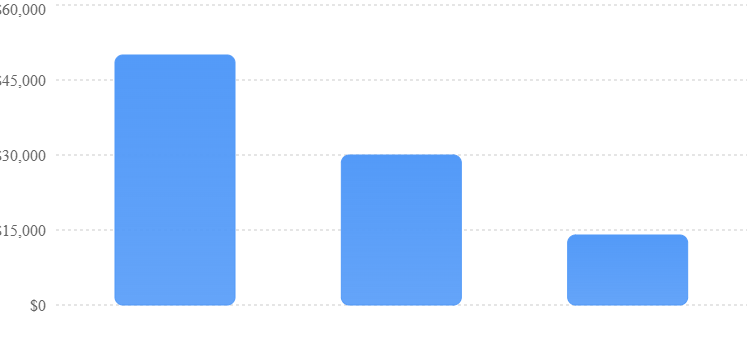
The difference between the largest and smallest context scenarios is $36,000 per million requests.
The 7,000-token system processes 72% fewer input tokens than the 25,000-token system. Under the assumption of identical uncached per-token pricing, that produces a 72% reduction in the modeled input bill.
However, this does not establish a 72% reduction in total operating costs. An agent may need extra model calls to create memories, additional database searches to retrieve them, and periodic processing to remove outdated records.

Prompt caching further changes the picture. OpenAI and Google both offer mechanisms for reusing previously processed context at different prices, with provider-specific terms and storage charges. A large-context system receiving substantial caching discounts may be cheaper than this simplified comparison suggests.
OpenAI API
+1
Finding #2: The size of the opportunity grows with usage
A company handling a few hundred agent requests each day may not save enough money to justify building an elaborate memory layer.
The economics change when the same application processes large volumes of work.
Modeled gross savings from reducing context to 7K tokens
Compared with 25K tokens per request at an illustrative $2 per million input tokens.

This creates a useful distinction between two customer groups.
Smaller companies may buy memory infrastructure primarily because it improves the quality of their products. Larger companies may be able to justify investment based on both reliability and processing costs.
For San Francisco infrastructure founders, this suggests a pricing strategy tied to usage and measurable results rather than simply charging customers for the number of memories stored.
A platform that saves a customer $20,000 per month in verified operating expenses has a much stronger business case than one that promises more sophisticated memory without showing how it changes outcomes.
Finding #3: Memory needs to pass a full-cost break-even test
The next question is whether the new memory system costs less than it saves.
For the one-million-request scenario, our modeled gross input savings are $36,000. That means additional memory-related expenses must remain below $36,000 for the selective-context approach to produce a positive net processing-cost benefit, assuming task quality remains unchanged.
| Additional monthly memory cost | Net monthly savings | Result |
|---|---|---|
| $2,000 | $34,000 | Positive |
| $8,000 | $28,000 | Positive |
| $18,000 | $18,000 | Positive |
| $30,000 | $6,000 | Positive |
| $40,000 | -$4,000 | Negative |
The table reveals why infrastructure pricing matters.
A provider might deliver impressive retrieval accuracy but use so much processing power that customers struggle to achieve a positive return. Another might offer a simpler system that retrieves slightly less information but works at a fraction of the cost.
The right choice depends on business impact. A medical or legal workflow may justify higher costs to obtain more reliable evidence, while a low-risk personalization application may prioritize speed and price.
What founders should learn from this research
The market opportunity is not simply to store more information. It is to increase the amount of useful information delivered per dollar of processing cost.
Founders should measure relevant evidence retrieved, accuracy of downstream decisions, memory-system overhead, and cost per successfully completed task.
The strongest products will show improvement across these measures rather than focusing on one impressive benchmark result.
Why Bigger Context Windows Do Not Eliminate the Need for Memory
More capacity does not guarantee better recall
One argument against dedicated memory systems is that AI models are becoming capable of processing increasingly large amounts of text.
If a model can read an entire project history, why build separate technology to store and retrieve selected facts?
The answer is that capacity and reliable use of information are different problems.
A large context window tells developers how much material they can submit to a model. It does not guarantee that the model will consistently identify the correct evidence, notice contradictions, or determine which facts remain valid.
The problem becomes especially difficult when a project includes hundreds of conversations and thousands of events.
A financial agent may encounter several different payment terms for the same vendor. A sales agent may find earlier pricing proposals that have since been rejected. A coding agent may read documentation that refers to a system architecture the company no longer uses.
The issue is not whether the information fits inside the input. The issue is whether the agent can select the correct facts and interpret them accurately.
LongMemEval provides important evidence
The LongMemEval research project examined five abilities that are especially relevant to long-running AI systems: finding information, combining facts across sessions, reasoning about time, updating knowledge, and recognizing when the available information is insufficient.
Its 500-question benchmark was designed to test the kinds of memory challenges that emerge during sustained conversations. The researchers reported that memory performance could fall significantly as interaction histories became more demanding.
ICLR Proceedings
This is important because real businesses constantly change.
Employees join or leave. Contracts are renewed. Customers update preferences. Projects shift direction. Approval rules change, and new information can replace old assumptions.
A memory system that treats every stored fact as permanent will eventually make mistakes.
The difference between remembering and understanding change
Consider a sales agent working with a San Francisco enterprise software company.
In January, a customer agrees to a six-month trial. In February, the customer requests a shorter three-month agreement. In March, the company’s procurement department rejects both proposals and asks for annual pricing.
A basic memory store might contain all three pieces of information. But an effective memory system must understand that the latest approved position is different from the earlier proposals.
This requires more than simple keyword matching.
The system needs to preserve dates, identify the source of each statement, understand which decisions replaced others, and determine whether a proposal was merely discussed or formally approved.
That is one reason time-aware knowledge systems are attracting attention.
Original SFTechScene Research #2: How Much Does Memory Accuracy Affect Business Economics?
Reducing token costs is useful, but reliability may create a larger financial opportunity.
An AI agent that produces an incorrect answer can waste more than the price of its model call. Someone may need to investigate the mistake, contact a customer, reverse an action, or redo the task.
A more complete economic model must therefore consider both operating expenses and the cost of correcting errors.
Research methodology
For this analysis, SFTechScene modeled a company processing 100,000 agent tasks per month.
We compared three hypothetical task success rates: 85%, 90%, and 95%. These rates are scenario assumptions, not measured performance figures from any specific model or memory provider.
We then examined two questions: How many tasks succeed at each rate, and how much economic value could a small improvement create if unsuccessful tasks require human review?
For the review calculation, we assumed that every avoided failure saves four minutes of employee time and that the fully loaded labor cost is $35 per hour.
These assumptions are intentionally transparent so founders can replace them with their own data.
Finding #4: A five-point improvement can prevent 5,000 failed tasks each month
| Successful completion rate | Successful tasks | Failed tasks |
|---|---|---|
| 85% | 85,000 | 15,000 |
| 90% | 90,000 | 10,000 |
| 95% | 95,000 | 5,000 |
Business task failures under three success-rate scenarios
Illustrative workload of 100,000 tasks per month, not observed benchmark performance.
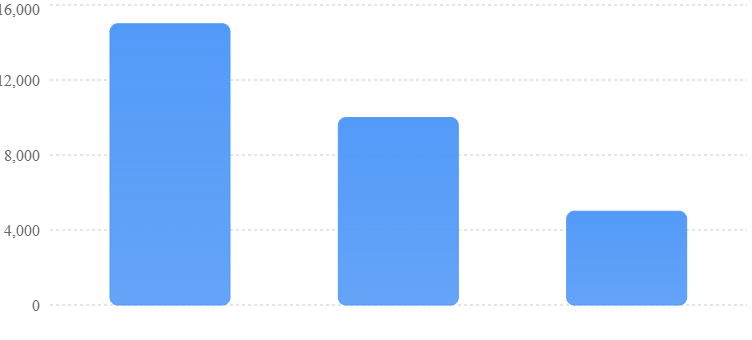
Improving the successful completion rate from 85% to 90% reduces failed tasks by one-third. An improvement from 90% to 95% cuts the remaining number of failures in half.
This does not mean that a memory product will automatically deliver either improvement. Actual gains must be measured against a comparable system without that memory component.
However, the analysis demonstrates why relatively small improvements in task reliability can become economically important at scale.
Finding #5: A two-point improvement can justify meaningful infrastructure spending
Suppose a memory system raises successful completion from 90% to 92% on the same 100,000-task workload.
That produces 2,000 additional successful tasks per month.
If each avoided failure saves four minutes of human review, the company saves 8,000 minutes, or approximately 133.3 labor hours.
At $35 per hour, that represents about $4,667 in avoided review labor each month.
Now suppose the memory system adds $0.01 in processing and infrastructure cost per task. Across 100,000 tasks, the additional expense is $1,000.
The modeled net benefit is approximately $3,667 per month before implementation, maintenance, and other costs.
Additional successful tasks
2,000
Labor value saved
$4,667
Extra infrastructure expense
$1,000
Modeled monthly net benefit
$3,667
SFTechScene scenario model: 100,000 tasks, a two-percentage-point increase in success, four minutes saved per avoided failure, $35 hourly labor cost, and $0.01 added infrastructure cost per task.
The sensitivity of this result matters. If each avoided failure saves only one minute rather than four, labor savings fall to about $1,167, leaving only $167 after the modeled infrastructure expense.
If the improved memory system prevents mistakes that require 20 minutes of correction, the economics become much stronger.
Therefore, founders should not sell memory solely on claims about accuracy. They should connect improvements in accuracy to the actual cost of failure in the customer’s workflow.
The most useful metric is cost per correct task
A simple way to compare agent systems is to divide their total operating cost by the number of correctly completed tasks.
\[ \text{Cost per correct task}= \frac{\text{Total operating cost}}{\text{Correctly completed tasks}} \]
A system with a low model bill may be expensive if it makes frequent mistakes. A slightly more costly system may offer better overall economics if it avoids human intervention.
For business buyers, this can be more meaningful than tokens processed, memory records stored, or model benchmark scores.
The best memory startup may ultimately be the one that can demonstrate a lower cost per correct business outcome.
The Five Technical Problems AI Memory Startups Must Solve
1. Deciding what information deserves to be remembered
An AI agent encounters enormous amounts of information during normal work. Some facts remain useful for months. Others matter for only a few minutes.
Storing everything permanently creates clutter, increases privacy risk, and can make retrieval less accurate.
A useful memory system must identify which information has lasting value.
A customer saying that their company requires purchase orders is potentially important. The same customer asking whether a meeting room is available at 2 p.m. may not deserve long-term storage once the meeting has passed.
The difficulty is that importance depends on the application. A temporary scheduling detail could be critical for an event-planning agent but irrelevant to a financial reporting assistant.
Startups need memory-selection tools that can consider business purpose, information type, source reliability, and expected lifetime.
Why memory selection is a product opportunity
Most developers do not want to create custom rules for every possible conversation.
An infrastructure provider that can reliably identify and categorize useful information could reduce the effort required to build persistent AI applications.
However, the provider must let customers control those rules. Some companies will want aggressive personalization, while regulated businesses may prohibit storing particular categories of personal information.
The commercial advantage comes from making memory useful without making it uncontrolled.
2. Retrieving the right information when it matters
A system can preserve millions of accurate facts and still fail if it retrieves the wrong ones.
Suppose a support agent receives a question about a delayed shipment. It finds an earlier discussion involving the same customer’s name but a different order. If the agent uses that record, it may provide incorrect delivery information.
Good retrieval requires more than matching similar words.
The system should consider the correct customer, order number, date, issue type, and source system. It should also recognize when there is not enough evidence to answer confidently.
Why this matters for enterprise software
Businesses frequently maintain similar records across multiple systems. Sales information may exist in a CRM, billing details in accounting software, and customer conversations in support tools.
The memory provider must connect these records without accidentally mixing them.
This makes identity resolution, source linking, and permission checks important features.
For startups building enterprise products, these capabilities may create greater long-term value than simple semantic search.
3. Updating facts without losing history
Information changes constantly.
A contract may be amended. A customer may change their shipping address. An employee may receive new approval rights. A project deadline may move.
If an AI agent retrieves an outdated record, it could make an incorrect recommendation even when the original memory was accurate.
One solution is to keep separate records of what was known, when it became valid, and when it stopped being valid.
An agent can then answer both current and historical questions.
For example, it should distinguish between the person authorized to approve payments today and the person who held that responsibility last quarter.
Time-aware memory could become a major category
Zep’s research on temporal knowledge graphs is one example of this direction. The system is designed to represent connected information while preserving relationships and historical changes.
DOI
For enterprise buyers, this creates potential uses in compliance, customer management, financial operations, and legal workflows.
The value comes from understanding how a business reached its current state, not simply knowing its latest state.
4. Preventing memory from becoming a security problem
Persistent memory introduces risks that short-lived interactions may not create to the same degree.
A stored customer conversation could contain confidential financial details. Internal project notes might reveal product plans. A previous instruction could include a request that was valid for one task but dangerous when reused later.
A memory system must therefore enforce access rules at the point of retrieval, not only when data is first stored.
An agent assisting a junior employee should not retrieve executive compensation information simply because both users work for the same company.
The system also needs safeguards against malicious information being stored as trusted instructions.
A webpage, email, or document could contain text instructing the agent to ignore its rules or send information elsewhere. Such text should remain untrusted source content, even if it is summarized into memory.
Memory permissions must survive across agents
The challenge becomes greater when companies deploy multiple agents.
A research agent might gather public company information. A finance agent might access private payment records. A management agent might coordinate work between them.
The company needs clear rules determining what information can move between those agents.
Memory infrastructure that handles permission inheritance, restricted sharing, deletion, and audit records could become particularly valuable to enterprise customers.
5. Knowing when to forget
Permanent storage is not always desirable.
Some information loses value over time. Other records must be deleted because of customer requests, company policy, or applicable law.
An effective memory platform needs ways to expire records, remove incorrect information, and prevent deleted facts from resurfacing through summaries or copied memories.
This is more complicated than deleting one database row.
A fact may have been copied into multiple summaries, linked to other records, or used to create new conclusions. Removing it safely may require tracking where that information traveled.
For a business, trustworthy forgetting can be just as important as trustworthy remembering.
Original SFTechScene Research #3: Which Memory Startup Opportunities Have the Strongest Business Case?
Not every application needs a sophisticated memory platform. Some tasks are completed in one interaction and have little need for historical information.
Others depend heavily on records that change over weeks or months.
To identify promising markets, SFTechScene developed a structured opportunity assessment across six agent use cases relevant to San Francisco’s business technology ecosystem.
Research methodology: A transparent opportunity scoring framework
We evaluated each use case across five factors, assigning each a score from one to five.
The factors were continuity needs, financial consequences of errors, frequency of changing information, amount of information shared across systems, and ability to measure the value of memory improvements.
Each factor received equal weight. The maximum score was 25.
These scores are SFTechScene’s editorial assessments, not statistically estimated market demand or observed customer purchasing behavior. They should be treated as a framework for deciding where to conduct customer research, rather than a validated ranking of market size.
Finding #6: Long-running business operations offer especially attractive starting points
| Agent use case | Continuity | Error cost | Changing facts | Cross-system needs | Measurable value | Total /25 |
|---|---|---|---|---|---|---|
| Financial operations | 5 | 5 | 5 | 5 | 5 | 25 |
| Enterprise customer support | 5 | 4 | 5 | 5 | 5 | 24 |
| Software engineering | 5 | 4 | 5 | 5 | 4 | 23 |
| Enterprise sales | 5 | 4 | 5 | 4 | 4 | 22 |
| Recruiting and HR | 4 | 5 | 4 | 4 | 4 | 21 |
| General content creation | 3 | 2 | 3 | 3 | 3 | 14 |
SFTechScene opportunity scores by business use case
Original qualitative scoring framework, not a survey or measured market ranking. Maximum 25 points.
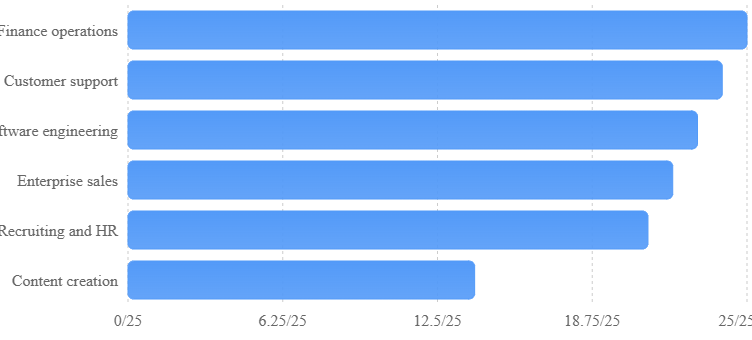
Financial operations scores highly because tasks frequently depend on prior decisions, changing policies, and information from multiple systems. Mistakes can also require costly correction, and businesses can measure improvements using processing time, exception rates, and review costs.
Customer support presents a similarly strong opportunity. Agents need customer history to resolve repeated problems, identify past promises, and avoid asking users to provide information they have already shared.
Software engineering is another promising field because coding agents work with changing codebases, previous errors, design decisions, and project requirements.
However, a high score does not automatically mean an attractive startup market. Financial customers may demand extensive compliance controls, expensive integrations, and lengthy procurement reviews. A smaller opportunity with faster adoption may generate better returns for an early-stage company.
Finding #7: The best first customer may not be the largest company
Enterprise customers often have the greatest need for reliable memory, but they can also be difficult to sell to.
A large bank may require security assessments, extensive testing, internal approvals, and integration with older systems before adopting a new memory platform.
A mid-sized software company might deploy the same technology much more quickly.
This suggests a practical strategy for Silicon Valley founders. Start with customers that experience serious memory-related problems but have enough engineering flexibility to test solutions rapidly.
A startup serving AI customer support companies, for example, could begin with a narrow product that preserves case history and identifies unresolved issues. Once the product demonstrates value, it could expand into broader customer knowledge management.
The goal should be to prove that memory produces a measurable business improvement before attempting to become a general enterprise platform.
Original SFTechScene Research #4: Why Memory Is Also a Revenue Opportunity
Most discussions about agent memory focus on technical performance. But better continuity can influence the revenue potential of AI-powered products.
An application that forgets useful information forces users to repeat work. That creates friction, especially when customers expect the software to become more helpful over time.
A product that reliably retains relevant history may offer a stronger customer experience and a more compelling reason to remain subscribed.
Modeling the value of lower customer churn
Consider a hypothetical San Francisco AI software company with 2,000 paying customers. Each customer pays $150 per month, creating $300,000 in monthly recurring revenue.
Suppose monthly customer churn declines from 4% to 3.5% after the company improves several aspects of its product, including memory and continuity.
That half-percentage-point reduction means 10 fewer customers leave during a single month.
At $150 per customer, the company retains $1,500 in monthly recurring revenue from that month’s avoided cancellations.
| Scenario | Monthly churn | Customers leaving | MRR lost that month |
|---|---|---|---|
| Baseline | 4.0% | 80 | $12,000 |
| Improved retention | 3.5% | 70 | $10,500 |
| Difference | 0.5 percentage points | 10 fewer | $1,500 less |
This is a one-month illustration, not a forecast of annual recurring revenue or company valuation. It assumes unchanged customer count at the start of the month, subscription price, and customer mix.
Most importantly, it does not show that memory caused the lower churn rate. A company would need controlled experiments or another credible evaluation design to establish that relationship.
Nevertheless, the example explains why some businesses could value memory for reasons beyond reduced computing expenses.
Memory can make an AI product harder to replace
An application that consistently understands customer workflows may become more useful as it accumulates approved knowledge.
A sales agent could learn a company’s preferred deal process. A coding assistant could retain documented architecture decisions. A customer service system could preserve recurring issues and successful resolutions.
However, this benefit must not depend on preventing customers from exporting their own information.
The strongest long-term advantage is likely to come from better workflow integration, reliable information management, and measurable performance rather than making memories difficult to move between platforms.
For infrastructure startups, this creates an opportunity to become the trusted system that helps applications manage business context across different AI models.
What a Reliable AI Agent Memory System Should Look Like
Businesses evaluating memory infrastructure need to understand its basic architecture.
A reliable system should make it possible to trace information from its original source to the agent decision that used it.
A practical enterprise agent-memory architecture
Business informationConversations, documents, CRM records, approvals, and application events
Memory processingExtract facts, attach sources, label dates, identify owners, and check permissions
Fact storeRecords and sources
RelationshipsEntities and changes
Task stateProgress and approvals
Context selectionRetrieve relevant and permitted evidence for the current task
AI agentMake a recommendation, complete an approved action, and record the result
The architecture separates several tasks that are often mixed together in early AI applications.
Information extraction determines what should be saved. Storage preserves information. Retrieval identifies what is useful. Permission controls determine what the agent can see. The AI model then uses that context to make a decision.
Separating these functions gives developers more control over reliability and security.
Every important memory should have a source
A system should not store important business claims as unsupported text.
For example, a memory stating that a customer has approved a contract should include a link to the approval record, the date of approval, and the identity of the authorized person or system.
Without this information, the agent may treat an informal conversation as a confirmed business decision.
Source records also make it easier for employees to review questionable actions and correct mistakes.
Memory should include confidence and validity
Some information is confirmed. Other information is estimated, inferred, or disputed.
An effective platform should preserve those differences.
For example, a customer expressing interest in a product is not the same as a signed purchase commitment. A manager discussing a possible deadline change is not the same as an officially approved change.
The memory system should help the agent distinguish facts from assumptions and recognize when fresh confirmation is necessary.
Human approval remains important
Persistent memory does not remove the need for human oversight.
A finance agent may remember a vendor’s approved payment details, but a new bank account should still trigger appropriate verification. A hiring agent may remember interview feedback, but consequential employment decisions need human review and applicable safeguards.
The most useful memory infrastructure will support existing accountability rather than allowing AI systems to bypass it.
How San Francisco Startups Can Build Their First Memory-Powered AI Agent in 90 Days
For founders entering this market, the first goal should not be building a universal memory platform.

A better approach is to solve one expensive problem, measure the improvement, and expand only when the evidence supports it.
Days 1–15: Choose one workflow and measure the baseline
Begin by selecting a business process that repeatedly depends on historical information.
Customer support is a reasonable starting point because businesses already have conversations, cases, and resolution data that can be used in carefully controlled testing.
Select a narrow workflow, such as helping support agents handle recurring billing questions. Document what information is currently available, how often employees search earlier cases, and which errors occur when previous history is missed.
Measure the existing task completion rate, processing time, input token usage, human intervention, and correction costs.
Without a baseline, it will be difficult to establish whether the memory system actually improves performance.
Days 16–30: Build the simplest useful memory layer
Start with a limited set of memory records rather than attempting to summarize every historical interaction.
For a billing support system, useful records could include the current subscription, previous billing disputes, approved refunds, and unresolved support cases.
Each record should include a source, timestamp, customer identifier, and access restrictions.
Use ordinary structured storage when possible. Not every application needs a complex knowledge graph or specialized vector database.
The right design depends on the type of information and the retrieval questions the agent needs to answer.
Days 31–45: Build a controlled evaluation dataset
Create a test set based on representative tasks, including cases where the agent must remember earlier information, identify an updated fact, combine information from multiple records, or refuse to answer because evidence is missing.
For a credible test, separate the examples used to develop the system from those used in final evaluation.
Each test should have a verified expected result. Where possible, use actual historical cases with appropriate privacy protections and independent expert review.
Also include deliberately difficult cases, such as customers with similar names, outdated payment policies, and conflicting records.
A system that performs well only on easy examples will provide limited value in production.
Days 46–60: Compare memory against simpler alternatives
This is one of the most important phases.
Compare the memory-powered agent with a baseline agent using the same model, tools, and task set. The baseline could use ordinary document retrieval, a fixed conversation summary, or a longer context window.
Keep other factors as consistent as possible.
Measure whether the memory system retrieves correct evidence, improves completed-task accuracy, reduces human corrections, and changes operating costs.
Track latency and permission failures as well.
| Metric | What to measure | Why it matters |
|---|---|---|
| Evidence recall | Share of required facts retrieved | Shows whether memory finds what matters |
| Evidence precision | Share of retrieved facts that are relevant | Detects unnecessary or misleading context |
| Task completion | Share of tasks completed correctly | Connects memory to actual work |
| Update accuracy | Correct use of changed information | Tests stale-memory risk |
| Safe abstention | Correct refusal when evidence is missing | Reduces unsupported answers |
| Cost per correct task | Total operating cost divided by correct tasks | Measures business efficiency |
| Permission violations | Unauthorized information disclosures | Tests enterprise safety |
| End-to-end latency | Time to complete a task | Measures user experience |
Days 61–75: Test security and unexpected behavior
Before wider deployment, test the ways memory can fail.
Try inserting misleading information into a document. Test whether one customer can access another customer’s history. Delete a record and check whether it remains accessible through related summaries.
Verify that the system does not mistake retrieved text for trusted instructions.
Check whether outdated facts are replaced appropriately and whether the original records remain available for authorized audits.
Run tests for failed database connections, missing evidence, and interrupted agent workflows.
The aim is not simply to show that memory works in a demonstration. It is to understand what happens when the environment becomes messy.
Days 76–90: Run a limited pilot and measure business value
Choose a small group of users and a clearly defined workflow.
Monitor the system closely, especially when its recommendations influence payments, contracts, customer commitments, or other consequential actions.
Compare results with the earlier baseline using the same success criteria.
If the pilot demonstrates a meaningful improvement, prepare a business case that connects the results to costs and operational outcomes.
For example, a company may find that memory reduces repeat support investigations or allows employees to resolve more cases without searching historical records.
If the results are weak, investigate whether the problem comes from poor information extraction, inaccurate retrieval, outdated records, or incorrect use of retrieved context.
A failed pilot can still produce valuable evidence about where the next product improvement should focus.
The Business Models That Could Work for AI Memory Startups
Managed memory infrastructure
One model is to offer memory storage, retrieval, updates, and management through developer APIs.
Customers pay based on usage, stored information, or service tiers. The provider handles much of the technical work required to maintain useful agent context.
This approach can serve developers building customer support, productivity, and automation products.
However, the provider must offer a clear advantage over basic databases and retrieval tools.
Enterprise context platforms
A second model focuses on integrating multiple company systems and providing governed access to business information.
These platforms could connect CRM systems, document repositories, internal databases, and workflow applications.
The product would help agents retrieve trustworthy information while following company access rules.
Enterprise buyers may value security, administration, and reliability more than the raw number of memory records supported.
Vertical memory products
A third approach is to build memory for one industry or business function.
An insurance-focused system could preserve claim events and review decisions. A legal system could track changing document versions and approval history. A financial system could maintain records of exceptions and authorized actions.
Vertical products may offer stronger differentiation because they understand the specific information and processes customers care about.
The tradeoff is a smaller initial market and potentially greater responsibility for domain-specific accuracy.
Memory testing and observability
A fourth opportunity is helping companies evaluate the quality of memory systems.
As more businesses deploy agents, they will need tools that explain which records were retrieved, why they were used, when information became outdated, and how memory affected task outcomes.
This creates a market for testing, monitoring, and debugging tools that work across different models and memory providers.
Such tools may be especially valuable to companies that operate multiple agents and cannot rely on a single vendor’s built-in evaluation reports.
The Biggest Risks Facing AI Memory Startups
Foundation model providers may absorb basic memory features
OpenAI, Google, Anthropic, and other major AI providers have strong reasons to improve how their systems handle context and persistent information.
If basic memory storage and retrieval become standard platform capabilities, startups that offer only a simple memory API may struggle to defend their pricing.
The strongest independent businesses will need capabilities that remain valuable across multiple AI models.
These could include enterprise access controls, source tracking, historical reasoning, cross-system integrations, independent evaluations, and specialized workflows.
Open-source software can reduce differentiation
Memory systems can be built using existing databases, retrieval libraries, and open-source agent tools.
That is good for developers, but it creates pressure on startups selling generic infrastructure.
A commercial provider must demonstrate that its managed service improves reliability, reduces operational work, or provides capabilities customers cannot easily reproduce.
Convenience alone may attract early users, but measurable business value is more likely to support lasting customer relationships.
Storing more information can create more problems
An agent that forgets everything is frustrating. An agent that remembers incorrect or sensitive information indefinitely can be dangerous.
Memory providers need clear policies for retention, correction, deletion, and access control.
They also need to make those controls practical for developers rather than treating security as an optional feature.
For enterprise customers, trust will often determine whether memory technology reaches production.
Benchmark performance can be misleading
Memory vendors frequently report results using different models, context budgets, retrieval strategies, and evaluation methods.
A high accuracy score on one benchmark does not necessarily indicate better performance on a different workload.
Some vendor-reported scores are based on managed systems that include optimizations unavailable in public versions of their software. Others may use different definitions of success.
Buyers should therefore resist selecting products solely because one company reports a higher percentage than another.
The safest approach is to test competing systems using the same models, tasks, evaluation rules, and cost assumptions.
What Silicon Valley Investors Should Look for in AI Memory Startups
Investors evaluating this category should distinguish between a useful technical feature and a defensible business.
A startup may demonstrate impressive retrieval accuracy while depending on technology that customers can reproduce using existing software.
Another may solve a narrower problem but become deeply integrated into important business workflows.
The second company could have stronger commercial prospects.
A useful evaluation begins with customer evidence. Are developers using the product repeatedly? Do customers rely on it in production? Does the technology reduce measurable expenses or improve completed-task accuracy?
Investors should also examine how easily customers can move between model providers. Infrastructure that works across several major AI ecosystems may be more resilient than software built around one proprietary model feature.
Finally, security and information governance should be considered core product capabilities. A memory company that becomes responsible for large amounts of customer context will need to demonstrate trustworthy handling of that information.
The category’s biggest winners may not be the companies with the most elaborate memory technology. They may be the companies that make reliable memory easy to adopt, easy to measure, and safe to operate.
What San Francisco Businesses Should Do Now
Businesses do not need to rebuild their AI systems around dedicated memory technology immediately.
They should first identify situations where agents repeatedly lose important information, retrieve outdated records, or require employees to restore context manually.
Those failures often reveal the most valuable opportunities.
A customer service organization might discover that its agents frequently miss earlier support cases. A sales team might find that AI-generated follow-ups ignore decisions made during previous meetings. An engineering team might notice coding agents repeating approaches that were already rejected.
Each example provides a concrete starting point for evaluating better memory and context management.
The next step is to measure the cost of those failures and compare proposed solutions against simpler alternatives.
A short structured summary may be enough for some workflows. Others may need specialized retrieval, event histories, or time-aware relationships.
The important decision is not whether to adopt the most advanced memory system. It is whether the additional complexity produces a better business result.
Final Takeaway: The Next Big AI Infrastructure Opportunity Is Helping Agents Remember What Matters
Silicon Valley’s AI industry has made enormous progress in building systems that can reason, write, search, and act. But businesses need more than intelligence demonstrated in a single interaction.
They need AI software that can understand ongoing work, retrieve earlier decisions, recognize changing facts, preserve trustworthy records, and use information without violating security rules.
That is why memory and context management are becoming important areas for startup investment and product development.
The public research shows that long-term memory remains a meaningful technical challenge. The growing ecosystem around projects such as Mem0, Letta, and Zep demonstrates that companies are exploring different ways to solve it.
SFTechScene’s original calculations reveal two promising economic paths. Selective context can substantially reduce gross input-processing costs under the right conditions, while even modest improvements in successful task completion can create measurable operational savings. Neither outcome is guaranteed, and both require testing against actual workloads.
For San Francisco founders, the most attractive opportunity may be to build memory technology that solves a specific, expensive business problem before expanding into broader infrastructure.
For investors, the strongest signal will be evidence of reliable production use rather than benchmark scores alone.

For businesses, the lesson is to measure the cost of lost context and focus on solutions that improve completed work.
The future of AI agents will not be decided only by which system gives the smartest answer. It will also depend on which systems can remember the right information, recognize when it has changed, and use it to complete work correctly.
That is the opportunity taking shape across Silicon Valley.
Research Notes and Methodology
SFTechScene original analysis | October 21, 2026
This article combines published research with independent calculations and an explicitly labeled qualitative opportunity framework. It does not claim to have conducted original model inference experiments, surveyed San Francisco businesses, or independently reproduced vendor benchmarks.
The original calculations can be recreated using the following assumptions.
| Research component | Data or assumption | Method |
|---|---|---|
| Context cost comparison | 25K, 15K, and 7K tokens | Requests × input tokens × $2 / 1M |
| Context savings | 25K compared with 7K | Percentage reduction in token volume |
| Memory operating cost | $2K–$40K monthly scenarios | Gross input savings minus additional cost |
| Task reliability | 100K monthly tasks | Compare 85%, 90%, and 95% success |
| Avoided review labor | 2,000 avoided failures, four minutes each | Time saved × $35 per hour |
| Opportunity assessment | Six business use cases, five criteria | Equal-weight qualitative scores |
| Customer retention | 2,000 customers at $150 monthly | Compare 4% and 3.5% monthly churn |
Research limitations
The numerical cost examples use simplified uncached model pricing and exclude several expenses. Real results depend on caching discounts, output costs, retrieval overhead, task complexity, and implementation choices.
The task-success and customer-retention analyses are scenario models. Their assumed improvements are not attributed to any named memory product.
The opportunity rankings are analytical judgments intended to support market exploration. A rigorous market-sizing study would additionally require customer interviews, purchasing data, and evidence of willingness to pay.
Key public research and technical sources
The following sources provide the external evidence used throughout the article:
- LongMemEval — ICLR 2025: Long-term memory evaluation involving 500 curated questions.
- LoCoMo — ACL 2024: Long-conversation memory research.
- UC Berkeley BFCL V4 Memory: Research on memory and tool use in agentic systems.
- Mem0 Memory Algorithm Research: Vendor-reported context efficiency and evaluation results.
- Zep Temporal Knowledge Graph Research: Time-aware memory architecture and benchmark claims.
- Letta Stateful Agents Documentation: Persistent agent identity and memory.
- Y Combinator — Mem0: San Francisco startup information.
- OpenAI Prompt Caching Documentation and Google Gemini Pricing: Context caching economics and pricing considerations.
These sources support the technical and market discussion, while the calculations and assumptions labeled as SFTechScene research are original analyses prepared for this article.