

San Francisco is entering a new stage of the artificial intelligence boom. For the past few years, businesses have used AI to write emails, summarize meetings, create marketing content, and answer questions. Now, a more important change is happening. AI is beginning to complete work instead of simply helping people prepare for it.
OpenAI is playing a major role in that shift. Its newer AI agents can work across business tools, examine files, research information, write code, analyze data, and carry out tasks that once required several separate steps. Some can continue working on long projects, while others can take on repeat tasks across a company’s everyday operations.
For San Francisco startups, this creates an opportunity that goes far beyond building another chatbot. A small team may be able to serve more customers, launch products faster, and manage more work without increasing its staff at the same rate. Established businesses could use agents to improve sales operations, customer support, financial reporting, software development, and internal processes.
But the opportunity comes with an important warning. An AI agent that completes a task incorrectly can create more problems than an AI assistant that merely gives a poor answer. When software can access customer records, update business systems, and make changes, reliability becomes just as important as intelligence.
The question facing San Francisco businesses in 2026 is no longer whether AI can generate useful responses. It is which business processes can safely be handed to AI agents, how much work those agents can actually complete, and whether the results justify the cost.
This SFTechScene analysis examines OpenAI’s latest agent technology, explains what it means for local businesses, and uses published labor data to identify where the economics of AI automation may be most attractive. It also develops a practical operating model that founders can use to estimate savings, test reliability, and decide when an agent is ready for real customers.
The Short Version: OpenAI Is Moving From AI Assistants to AI Systems That Complete Work
OpenAI’s agent strategy has changed significantly since the first generation of ChatGPT tools. Instead of building systems that mainly respond to prompts, the company is creating technology that can manage longer tasks, use software tools, and work toward a defined result.
The shift became especially clear during 2026. OpenAI introduced shared workspace agents in April, launched ChatGPT Work in July, and released the Agents API in public beta in September. Its September 29 DevDay announcements expanded the focus toward agents that can take on ongoing responsibilities rather than just isolated tasks.
OpenAI
+3
The difference is practical. A traditional chatbot might explain how to analyze customer churn. An AI agent could examine approved customer data, investigate why customers are leaving, prepare a report, and suggest actions for the team to review.
A chatbot could draft a customer support reply. An agent could check the customer’s order, examine the relevant company policy, prepare the appropriate resolution, and update the support record if it has permission.
The key change is that AI is beginning to move through the actual steps of business work.
How the role of AI in business is changing
Traditional AI assistant
Receives a question, produces information or drafts, and waits for the next instruction.
Output: An answer
AI agent
Receives a goal, uses approved tools, completes several steps, and returns a result for review.
Output: Completed work
Why This Matters More in San Francisco
San Francisco is an unusually important place for this transition because the region combines AI developers, business software companies, investors, and customers that are willing to try new technology.
It also has expensive labor. According to the U.S. Bureau of Labor Statistics, the San Francisco–Oakland–Fremont metropolitan area had an average hourly wage of $48.19 in May 2025, compared with $33.54 nationally. The regional figure was approximately 43.7% higher, based on SFTechScene’s calculation. The statistics were published in July 2026.
Bureau of Labor Statistics
+1
This wage difference does not mean that businesses should replace workers with AI. It means that tools which remove repetitive work can have significant economic value, especially when expensive employees spend hours collecting information, moving data between applications, or preparing routine reports.
A startup with five employees might use an agent to handle tasks that would otherwise delay product development. A larger company might use agents to help existing teams serve more customers while keeping the same quality standards.
Both could benefit, but only if the agents work reliably.
What OpenAI’s New AI Agents Actually Are
The phrase “OpenAI AI agents” describes several different products and technical approaches. This distinction matters because a San Francisco founder evaluating an internal business workflow needs a different solution from a startup building agent technology into software it sells.
ChatGPT Work: An Agent for Projects Across Business Tools
In July 2026, OpenAI introduced ChatGPT Work to help people complete longer projects involving multiple files, websites, and applications. The product can research information, analyze data, and create finished documents, presentations, spreadsheets, and other outputs.
Rather than manually giving ChatGPT a series of unrelated prompts, a user can describe a goal, provide the necessary information, and review the work as it progresses. ChatGPT Work can also support scheduled tasks and repeated workflows.
OpenAI
+1
For a San Francisco marketing agency, this could mean preparing a monthly client report from approved campaign information. For a venture-backed startup, it might involve researching competitors, comparing product features, and organizing findings into a presentation.
These workflows still need human judgment. A competitive research agent might collect accurate facts but misunderstand which features matter most to buyers. The value comes from reducing preparation time while leaving the final decisions with people.
Workspace Agents: Shared AI Workers for Teams
OpenAI introduced workspace agents in April 2026. These agents are designed for teams that want to turn repeatable processes into shared tools that follow organizational rules.
Unlike a personal chat assistant, a workspace agent can be used by multiple team members. It can operate with permissions and approval requirements set by the organization and connect work across supported applications.
OpenAI
Consider a San Francisco software company that receives hundreds of feature requests every month. Instead of having employees manually review every request, the company could create an agent that organizes submissions, identifies recurring problems, compares them with existing product plans, and produces a weekly report.
The agent should not decide the entire product roadmap. It should make the underlying information easier to understand, so product managers can spend less time sorting requests and more time deciding what to build.
Agents API: Infrastructure for Developers Building Their Own Agents
On September 10, 2026, OpenAI introduced the Agents API in public beta. It gives developers access to managed infrastructure designed for agents that run complex tasks, use multiple tools, and maintain progress across longer sessions.
OpenAI describes features including hosted environments, support for extended sessions, and the ability to coordinate specialized agents that work on different parts of a larger task.
OpenAI
This is important for San Francisco startups because building an agent product requires more than choosing an AI model. A company also needs to manage execution, track what the agent has done, control which tools it can use, handle failures, and keep the system working during long tasks.
If more of that infrastructure becomes available through an API, smaller startups may be able to spend less engineering time on the underlying system and more time solving a specific customer problem.
For example, a startup building agents for insurance operations could focus on reviewing cases, checking documents, and preparing accurate recommendations rather than creating every part of its agent execution system from scratch.
The Agents SDK and Responses API: Tools for Greater Control
The Agents SDK and Responses API serve developers who need deeper control over agent behavior and software integration.
The Responses API provides a foundation for combining AI models with tools such as web search, file search, and computer use. The Agents SDK helps developers build workflows, coordinate agents, and inspect their execution. OpenAI expanded the SDK in April 2026 to support more demanding tasks in controlled work environments.
OpenAI
+2
These tools are particularly useful when a business needs an agent inside an existing product. A fintech startup may need detailed approval rules. A healthcare software company may need strict limits on what records the agent can access. An enterprise SaaS company may need to keep execution and storage inside its own infrastructure.
That is where developer-focused tools become more useful than a general-purpose assistant.
Dots and Always-On Agents: A Move Toward Ongoing Responsibilities
At DevDay 2026, OpenAI introduced Dots, agents designed to work toward ongoing goals rather than only respond to one request at a time. OpenAI describes them as having their own cloud computing environment, support for connected applications, and the ability to learn from feedback.
OpenAI
+1
For a founder, the larger point is not whether every company needs an always-on AI assistant. It is that the industry is moving toward systems that can manage continuing responsibilities, such as tracking important changes, preparing regular updates, or following a business process over time.
These systems still need clear limits, trustworthy information, and human oversight. An agent that remains active for longer periods creates more opportunities for useful work, but also more opportunities for mistakes to accumulate.
Which OpenAI Agent Product Should a Business Choose?
| Business need | OpenAI approach | Main consideration |
|---|---|---|
| Research, reporting, and completed business projects | ChatGPT Work | Review sources and final outputs |
| Repeat processes shared across a team | Workspace agents | Permissions and consistent rules |
| An agent built into a commercial software product | Agents API | Execution reliability and production controls |
| Custom workflows requiring direct technical control | Agents SDK and Responses API | Engineering, testing, and maintenance |
| Continuing personal or business responsibilities | Always-on agents such as Dots | Scope, monitoring, and approval boundaries |
One important detail for developers is that the platform keeps changing. OpenAI announced in June 2026 that its earlier Agent Builder and Evals products would be wound down, with availability ending after November 30, 2026. Businesses should therefore avoid designing long-term systems around tools already scheduled for retirement.
OpenAI
Original Research: Why the San Francisco Labor Market Makes AI Agents Economically Important
SFTechScene conducted a secondary analysis of occupational employment and wage figures published by the U.S. Bureau of Labor Statistics on July 9, 2026. The underlying estimates cover May 2025.
The goal was to answer a practical question: Which characteristics of the San Francisco labor market make software-based automation potentially valuable?
The analysis uses published figures, calculates new comparisons, and interprets their business meaning. It is not a survey of local AI adoption, a count of displaced workers, or proof that any particular occupation can be automated.
Research Methodology
The source was the BLS Occupational Employment and Wage Statistics release for the San Francisco–Oakland–Fremont metropolitan area. This region includes San Francisco, San Mateo, Alameda, Contra Costa, and Marin counties, so the estimates describe the broader region rather than San Francisco city alone.
We compared regional and national hourly wages and employment shares for selected occupational groups. Wage premiums were calculated as the regional wage divided by the national wage, minus one. Employment concentration was calculated as the regional employment share divided by the national employment share.
These measures describe labor-market differences, not actual agent adoption or technical ability. They cannot determine how many jobs will disappear, how much work can be automated, or the savings that any individual business will achieve.
Original Finding #1: The Regional Average Wage Is 43.7% Above the National Average
SF metro average hourly wage
$48.19
U.S. average hourly wage
$33.54
Calculated wage premium
43.7%
Mean hourly wages: SF metro vs. U.S.
May 2025 wages in U.S. dollars, with San Francisco referring to the five-county metropolitan area.
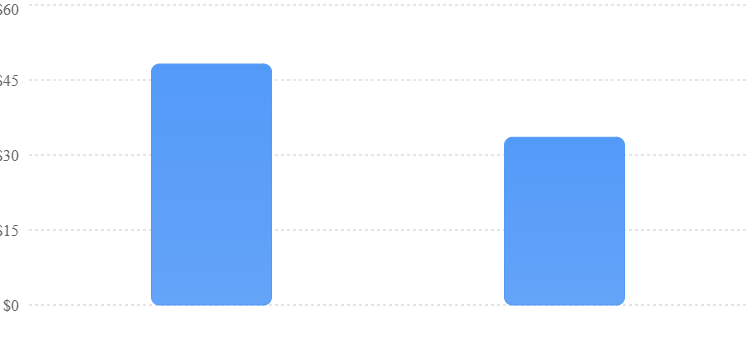
Source: BLS, May 2025 Occupational Employment and Wage Statistics. Wage premium calculated by SFTechScene.
Bureau of Labor Statistics
The difference matters because reducing unnecessary employee time can generate substantial value in a high-wage environment. A company paying engineers, managers, or financial professionals to perform routine administrative tasks has a strong reason to examine whether software can handle some of those activities.
However, hourly wages are not the same as savings. A business still has to pay for AI software, implementation, security, monitoring, and human review. It may also use the time saved to increase output rather than reduce spending.
The strongest business case is therefore not simply that AI is cheaper than labor. It is that employees can stop doing repetitive work and spend more time on tasks requiring experience, relationships, and judgment.
Original Finding #2: Computer and Mathematical Jobs Are Nearly Twice as Concentrated in the Region
The BLS data shows that computer and mathematical occupations accounted for 6.6% of employment in the San Francisco metro area, compared with 3.4% nationally.
That produces an employment concentration ratio of approximately 1.94, meaning these occupations make up almost twice the regional share that they do nationally.
Employment concentration in selected occupations
SF metro occupational employment share divided by U.S. share. A value of 1.0 means equal concentration.
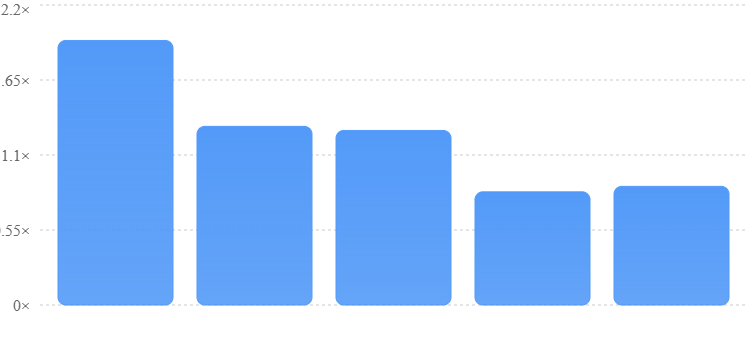
SFTechScene calculations from BLS occupational employment shares, May 2025. Ratios are rounded to two decimal places.
Bureau of Labor Statistics
This is one reason San Francisco may be well positioned to build agent businesses. The local market has a high concentration of workers whose jobs involve software, data, and digital systems.
These are also the people who can build agents, connect them to company software, evaluate their output, and create the controls needed for production use.
But a concentration of technical workers does not prove that San Francisco businesses are adopting agents faster than other regions. That would require separate business-level adoption data.
Original Finding #3: Several High-Value Business Occupations Carry Large Regional Wage Premiums
The difference becomes more useful when examining individual occupational groups.
| Occupational group | SF metro hourly wage | U.S. hourly wage | SF premium, calculated |
|---|---|---|---|
| Management | $93.71 | $69.84 | 34.2% |
| Business and financial operations | $60.95 | $45.78 | 33.1% |
| Computer and mathematical | $80.51 | $57.73 | 39.5% |
| Legal | $91.11 | $67.07 | 35.8% |
| Sales and related | $36.06 | $26.43 | 36.4% |
| Office and administrative support | $32.96 | $24.79 | 33.0% |
Source: BLS, May 2025. Regional wage premiums calculated by SFTechScene using unadjusted published mean hourly wages; rounding may affect the final decimal.
Bureau of Labor Statistics
The results highlight an important business opportunity. Many of the occupations with high regional wages include work that depends on collecting information, preparing documents, checking records, and coordinating decisions.
That does not mean an agent can replace a lawyer, financial manager, or software engineer. It means that even modest improvements to supporting workflows can be valuable when those workflows consume time from highly paid employees.
For example, an AI agent that prepares a complete first version of a financial variance report may reduce the time a finance manager spends gathering figures. The manager still needs to validate the analysis, explain unusual results, and decide what action to recommend.
The value lies in changing how the work gets done, not removing the need for professional expertise.
Original Finding #4: The Best Early Targets Are Often Tasks Inside Expensive Jobs, Not Entire Jobs
The wage analysis points toward a more useful way to think about automation. Instead of asking which occupations an agent can replace, businesses should identify which activities inside those occupations can be completed with clear rules and checked results.
Consider a software engineer whose day includes writing code, reviewing changes, searching documentation, fixing errors, and coordinating with colleagues. An agent might help with a well-defined software bug, but it cannot automatically take responsibility for the entire engineering role.
The same applies to finance, sales, and customer operations. An agent may collect overdue invoices, prepare follow-up messages, and flag unusual transactions. A person still needs to make decisions about important customer relationships and financial risk.
For San Francisco founders, this suggests a practical strategy: identify the repeatable work that sits between valuable human decisions.
A San Francisco-Focused Opportunity Matrix
SFTechScene developed the following framework by combining the wage analysis with the practical characteristics of common business workflows. This is an editorial assessment, not a measured ranking of AI adoption across local firms.
| Business function | Useful first agent task | Main business benefit | Key risk |
|---|---|---|---|
| Software development | Prepare fixes for well-defined issues | Faster engineering cycles | Faulty code |
| Financial operations | Match records and flag differences | Less manual checking | Incorrect financial records |
| Sales operations | Research and prepare account updates | Better coverage of accounts | Incorrect customer information |
| Customer support | Resolve common, low-risk requests | Faster response and handling | Unapproved actions |
| Marketing | Build campaign reports from approved data | Less reporting work | Incorrect attribution |
| Legal operations | Organize documents and extract clauses | Faster document review | Missed legal details |
| Recruiting | Schedule interviews and prepare summaries | Less coordination work | Bias and privacy concerns |
| Business administration | Route requests and maintain records | Fewer manual handoffs | Wrong system changes |
The opportunity should be measured at the task level. A finance team may benefit from an invoice-checking agent while finding that automated financial forecasting still requires too much human correction.
The best starting point is the workflow that has a clear definition of success, reliable input data, and a limited cost when something goes wrong.
Original Research: How Much Time Could an AI Agent Actually Save?
Labor-market figures help explain why automation is attractive. They do not answer whether a specific AI agent will produce positive results.
To examine that question, SFTechScene developed a scenario model for a hypothetical San Francisco business processing 1,000 service cases per month.
This is a calculated model, not the result of a company deployment. Its purpose is to show how agent success rates, human review, and operating costs change the business case.
The Assumptions
Suppose an employee normally spends 15 minutes processing a customer service case. After an agent is introduced, successfully automated cases need three minutes of human work, including any final handling. Unsuccessful cases still require the original 15 minutes because the employee must complete them manually.
We also assume that every case needs an additional two minutes of human checking or supervision, whether the agent succeeds or fails. This makes the model more conservative than assuming that every automated action is free from review.
Three possible successful-completion rates are tested: 50%, 70%, and 90%. These are assumptions for sensitivity testing, not observed OpenAI agent performance.
Calculated Monthly Time Savings
Monthly net hours saved by agent completion rate
Illustrative 1,000-case monthly workflow, including a two-minute review cost per case.
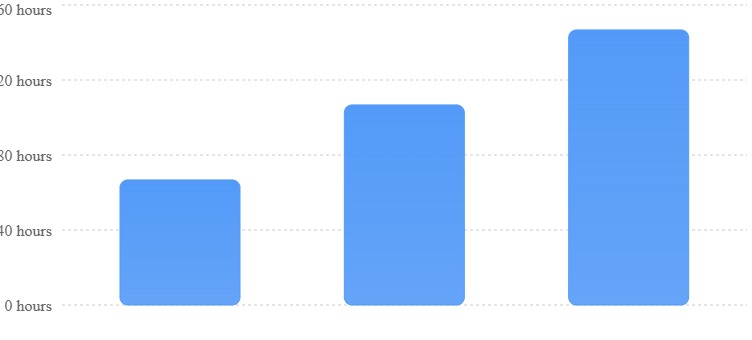
| Measure | 50% success | 70% success | 90% success |
|---|---|---|---|
| Cases processed monthly | 1,000 | 1,000 | 1,000 |
| Baseline work hours | 250 | 250 | 250 |
| Successful cases | 500 | 700 | 900 |
| Agent-assisted work and review hours | 183.3 | 143.3 | 103.3 |
| Net hours saved | 66.7 | 106.7 | 146.7 |
| Reduction in work time | 26.7% | 42.7% | 58.7% |
Source: SFTechScene scenario calculations. All operational inputs are hypothetical. Values are rounded to one decimal place.
The difference is substantial. Improving the agent from 50% to 90% successful completion more than doubles the estimated time savings, even though the number of incoming cases remains unchanged.
This is an important lesson for startups selling AI automation. Improving how often an agent completes a task correctly may matter more than adding more features or making its written responses sound better.
The Break-Even Point
The model also gives founders a way to measure cost.
AI Agent ROI Calculator
Adjust a hypothetical workflow using the same 15-minute baseline, three-minute successful case, and two-minute review assumptions.Monthly cases
1,000Successful agent completion
70%Value of one hour saved
$60Agent operating cost per case
$1.00
Estimated hours saved / month
106.7
Net monthly capacity value
$5,400
The model subtracts agent running costs from the value of estimated time saved. It excludes setup, training, additional supervision, security, and maintenance costs. It measures potential capacity value, not guaranteed cash savings.
At the default settings, the model produces approximately 106.7 hours of monthly savings. Valuing each hour at an assumed $60 gives $6,400 in gross monthly capacity value. Subtracting $1,000 in assumed monthly agent running costs leaves $5,400 before setup and other expenses.
The distinction between capacity and cash is important. If employees use those saved hours to improve customer service or build a better product, the company may gain additional output without reducing payroll. That is a real operational benefit, but it should not be reported as an actual reduction in cash spending.
Why Businesses Should Measure Complete Tasks Instead of AI Activity
An agent may generate hundreds of messages, use dozens of software tools, and appear very active without completing much valuable work.
A better measurement is how many tasks reach the correct final state with acceptable human effort.
For a customer service agent, this means checking whether the customer’s problem was resolved according to policy. For a finance agent, it means checking whether the correct records were updated. For a software agent, it means checking whether the code works, passes the required tests, and meets the original request.
Founders should measure accuracy, task completion, review effort, operating cost, and customer outcomes together. A system that is fast but wrong will rarely remain profitable once correction costs are included.
Where San Francisco Startups Can Find the Biggest Opportunities
The most attractive opportunities are not necessarily the ones that look impressive in a product demonstration. They are workflows with frequent demand, expensive manual work, and measurable results.

San Francisco has many businesses that depend on software and digital operations. That makes certain agent applications especially relevant.
AI Agents for Software Development
Software development is one of the clearest markets for AI agents because the work already happens inside digital systems. Agents can inspect code, read documentation, prepare changes, run tests, and help engineers investigate errors.
For a San Francisco startup, the practical starting point is not asking an agent to build an entire business application without oversight. It is identifying well-defined development tasks that can be tested automatically.
An agent could inspect a reported bug, find the relevant section of code, prepare a proposed fix, and run the test suite. An engineer would review the change before it reaches production.
The Competitive Advantage Is Faster Learning
A small startup may have limited engineering capacity. If agents reduce the time spent on routine fixes and test preparation, engineers can spend more time speaking with users and improving the product.
This can shorten the period between discovering a customer problem and releasing a solution. However, the improvement depends on strong software tests, code review, and reliable product requirements.
An agent that creates more bugs than it fixes is not accelerating development. It is moving the workload from coding to debugging.
AI Agents for Customer Support
Customer support is attractive because many interactions follow known processes. Customers ask about account access, payments, shipping, refunds, subscriptions, and product features.
An agent with access to approved company information can identify the issue, look up the relevant policy, and prepare a response. In suitable cases, it can also complete the requested action.
The most important distinction is between answering a question and resolving a problem.
A customer does not want a polished explanation of a billing error if the account remains incorrect. The customer wants the issue fixed.
Start With Narrow Resolution Paths
A San Francisco SaaS company could begin with password-related support, basic subscription questions, or known technical issues. These workflows often have documented rules and identifiable outcomes.
More sensitive actions, such as issuing large refunds, changing ownership, or deleting customer information, should require stronger controls and human approval.
The company should also track repeated contacts. If an agent closes many tickets but customers return because problems were not resolved, the apparent efficiency may be misleading.
AI Agents for Sales and Revenue Operations
Sales teams often spend time researching prospects, updating customer records, preparing meeting notes, and organizing follow-up tasks.
These activities are useful candidates for agents because they involve multiple sources of information and repeated steps. A system might gather public company information, compare it with the firm’s target customer profile, and prepare account summaries for salespeople.
However, automated outreach carries reputational risks. Agents should not invent customer details, falsely claim personal familiarity, or send large volumes of poorly targeted messages.
The strongest application is likely to help a salesperson understand a customer better, not simply produce more emails.
Measure Revenue Quality, Not Email Volume
A sales agent should be judged by qualified meetings, useful account research, accurate records, and opportunities that progress through the sales process.
Sending more messages is not an economic result by itself. A higher number of low-quality messages can damage relationships and make future outreach less effective.
For early-stage founders, a narrow agent that improves preparation for important sales conversations may create more value than a broad system that tries to automate the whole selling process.
AI Agents for Financial Operations
Finance teams frequently work with invoices, payment records, expenses, contracts, forecasts, and financial reports. Much of this information lives in structured systems, although the documents and exceptions can be messy.
An agent could compare invoices with purchase orders, identify missing information, flag duplicate entries, and prepare supporting evidence for review.
The opportunity is to reduce time spent searching for differences while maintaining financial controls.
The Most Valuable Agent May Be the One That Finds Mistakes
Not every useful finance agent needs permission to make changes. An agent that reliably finds errors before they affect financial records can generate meaningful value.
For example, a system could review monthly billing records and identify unusual changes in customer charges. A finance employee could then investigate the flagged cases and decide whether corrections are needed.
This approach provides benefits without giving the agent unrestricted control over payments, bank details, or accounting entries.
AI Agents for Marketing and Growth
Marketing teams can use agents to analyze campaign performance, prepare reports, review content, and identify changes in customer behavior.
OpenAI’s September 2026 Data agent launch is relevant here. The company described a system that can connect to approved business data, investigate performance changes, and generate interactive reports.
OpenAI
For a San Francisco startup spending money across several marketing channels, an agent could collect campaign figures and highlight changes that deserve attention.
But marketing agents need more than access to dashboards. They must understand which metrics represent real business outcomes.
A rise in website traffic may be meaningless if the visitors do not become customers. A reduction in advertising costs may be harmful if it also reduces profitable sales.
The right agent should connect activity to business results and clearly explain uncertainty.
Original Finding #5: The Most Attractive Business Agent Is Not Always the Most Autonomous
A common assumption is that greater independence always makes an AI agent more valuable. In practice, the relationship is more complicated.
An agent that can independently make purchases, delete records, or contact customers may complete work faster. But it also creates greater risk when it misunderstands instructions.
SFTechScene proposes evaluating autonomy through two separate questions: how much time the agent saves and how much damage an incorrect action could cause.
Agent autonomy decision matrix
Low risk, high repeat use
Allow bounded automation after tests. Examples: sorting requests, preparing standard reports.
High risk, high repeat use
Automate preparation; approve actions. Examples: refunds, account changes, payment updates.
Low risk, low repeat use
Use assisted workflows rather than costly custom automation. Example: occasional research.
High risk, low repeat use
Keep human-led decisions with AI support. Examples: unusual legal or financial decisions.
SFTechScene decision framework. Risk and repeat-use categories are qualitative, not measured market statistics.
For an early-stage startup, a narrowly defined agent with a high success rate may be more profitable than a general-purpose agent handling dozens of unpredictable tasks.
A founder should first aim for a workflow that delivers a consistent business result. Additional independence should be introduced only when the team can measure and control the added risk.
The Hidden Risks of OpenAI Agents That San Francisco Businesses Must Understand
As AI agents gain access to more applications, their mistakes can have more serious consequences. A chatbot that incorrectly summarizes a policy may confuse a user. An agent that incorrectly applies that policy could change an account, send confidential information, or authorize an improper transaction.
This makes security and operational control central to the business case.
Prompt Injection: When Outside Information Tries to Control an Agent
One major risk is prompt injection. This happens when an agent encounters instructions hidden in a document, email, website, or other source and treats those instructions as something it should follow.
For example, a customer might submit a support message containing directions intended to make an agent ignore company policy. A malicious document could attempt to trick an agent into sending private information to an outside address.
OpenAI published research in March 2026 explaining that these attacks increasingly resemble social engineering. The company also emphasized that defenses must limit what a compromised or confused agent can do, rather than relying entirely on the model recognizing every attack.
OpenAI
For San Francisco businesses, this means permissions should be built around specific tasks. A support agent that only needs to review customer orders should not have access to payroll information or private business contracts.
An agent that drafts messages should not automatically receive permission to send them to unlimited recipients.
Why Approval Controls Are Essential
Human approval should be required when an agent attempts actions that could create a significant financial, legal, privacy, or customer impact.
A business could allow an agent to update internal task statuses automatically while requiring approval for changing bank details, making payments, issuing unusual refunds, or deleting records.
OpenAI’s published security guidance recommends limiting access to the information and tools an agent needs and carefully reviewing consequential actions.
OpenAI
A founder should also consider how the company will reverse a mistake. If an agent changes 100 customer records incorrectly, there should be a reliable way to identify the affected records and restore them.
Agents Need an Audit Trail
A business should know what an agent attempted, which systems it accessed, what information it used, and what changes it made.
This information helps teams investigate errors and improve performance. It also makes it easier to understand whether an agent actually completed its assigned task or merely reported that it had.
A useful audit trail connects each action to the original request and records the outcome. Logs containing sensitive information should themselves be protected with appropriate access and retention rules.
Avoid Giving Agents More Access Than They Need
Businesses should create separate identities and permissions for agents whenever their software environment supports that approach.
A sales research agent may need access to approved prospect records and public websites. It usually does not need permission to edit invoices or view employee compensation.
This separation reduces the potential damage from both model errors and malicious instructions. It also makes security reviews easier because each agent has a defined purpose.
How San Francisco Founders Can Build Their First AI Agent in 90 Days
Building an agent should begin with an operational problem, not with the technology itself. A founder who starts by asking what the newest model can do may end up building an impressive demonstration with no lasting customer value.

A better approach begins with a workflow that already consumes significant time and has a clear definition of success.
Days 1–15: Find the Right Workflow
Begin by observing how employees complete a repeat task. Record every step, including the information they need, the systems they open, the decisions they make, and the problems that interrupt the process.
Measure how long the task takes without AI. Collect representative examples, including difficult cases and exceptions. Avoid choosing a task only because it looks easy in a demonstration.
Calculate the Existing Cost
Suppose a process takes 20 minutes and occurs 600 times per month. That represents 200 hours of work.
If a business values those hours at $50 each, the existing monthly labor capacity devoted to the process is approximately $10,000. This does not mean an agent can recover the entire amount.
The calculation provides a starting point for estimating whether automation is worth investigating.
Days 16–30: Build a Controlled Prototype
Choose the simplest product that fits the task. A team may be able to create an internal workflow using workspace agents or ChatGPT Work. A software company creating a product for customers may need the Agents SDK or Agents API.
Give the agent a narrow goal and a limited set of tools. Start with read-only access wherever possible and avoid connecting sensitive production systems before the workflow has been tested.
The prototype should produce an output that employees can verify against known results.
For example, an invoice-review agent could compare documents and identify possible differences without making accounting changes.
Days 31–45: Test Against Realistic Cases
A successful demonstration is not enough. The agent needs to be evaluated on examples that reflect actual business conditions.
Prepare a test collection containing normal cases, incomplete information, contradictory records, unusual customer requests, and situations in which the agent should refuse or request help.
For each case, define the correct result before running the test. This reduces the risk of deciding that an incorrect output is acceptable simply because it sounds convincing.
Measure whether the task was completed correctly, how long it took, whether the agent used approved information, and whether it performed any unauthorized action.
Days 46–60: Introduce Human-Supervised Work
Once the agent performs consistently in testing, introduce it into a limited workflow with human review.
Choose a small group of employees who understand the original process. Ask them to record mistakes, missing information, unusual behavior, and the time needed to correct agent output.
This stage helps reveal costs that a prototype often hides. An agent might complete 80% of cases successfully but require extensive supervision on the remaining 20%.
The goal is to understand the total workload after automation, not merely the percentage of cases in which the agent produces an answer.
Days 61–75: Improve Reliability and Operating Costs
Review the cases where the agent failed. Separate failures into categories such as missing information, incorrect reasoning, software errors, unclear instructions, and permission problems.
Different failures require different solutions. A missing customer record may require a better system connection. A wrong policy decision may require clearer rules and tests. A software timeout may require changes to the execution process.
Track the operating cost of each completed task, including retries and human correction. A cheaper model may not be cheaper overall if it fails more frequently.
Days 76–90: Decide Whether to Expand
At the end of the pilot, compare the original workflow with the agent-assisted process.
The evaluation should include task completion, net employee time saved, total operating expenses, customer impact, and the severity of errors.
90-Day AI Agent Deployment Checklist
Days 1–15
Map the workflow, collect baseline timing, and define success.
Days 16–30
Build a limited prototype with controlled access.
Days 31–45
Test normal, unusual, and deliberately difficult cases.
Days 46–60
Run a human-supervised pilot and measure corrections.
Days 61–75
Improve reliability, security, and cost per completed task.
Days 76–90
Compare results with the baseline and make a deployment decision.
0 of 6 stages completed Copy checklist
A successful pilot does not automatically justify full independence. If the agent performs well but has not been tested on rare, high-risk situations, a business should expand its scope gradually.
The right result after 90 days may be full deployment, continued human review, a smaller scope, or a decision not to proceed.
How AI Agents Will Change the Economics of San Francisco Startups
OpenAI’s agent technology could change how startups allocate money and organize early teams.
Historically, a growing startup often needed to hire additional people as customer demand increased. More customers created more support requests, more operational reporting, more documentation, and more administrative work.
Agents offer a possible way to reduce how quickly those supporting workloads grow. But the economics depend on which activities can be automated and what happens when the technology fails.
Smaller Teams May Be Able to Support Larger Operations
Consider a startup with a small engineering team and a rapidly growing customer base. Without automation, employees may divide their time between product development, support, sales preparation, reporting, and administration.
An agent that handles predictable support tasks can give the team more time to work on the product. An agent that prepares financial reports can reduce the time spent gathering information before investor meetings.
These improvements can make a small team more productive. They do not eliminate the need for employees who understand customers, resolve difficult problems, and make business decisions.
Startups Will Need to Redefine Unit Economics
Founders often calculate costs using employee salaries, software subscriptions, and infrastructure expenses. Agent-based businesses need a more detailed understanding of work performed by software.
A useful metric is the total cost per correctly completed task.
That includes model usage, connected software, retries, monitoring, human review, and corrections. A business should also account for implementation and ongoing maintenance.
The lowest advertised AI price does not necessarily produce the lowest cost per completed task.
An agent that costs $0.50 per attempt and succeeds half the time may be less attractive than an agent that costs $0.80 and succeeds almost every time. The correct comparison depends on the actual failure costs and the value of the task.
AI-Native Products Will Compete on Results
Many traditional software products charge for access to features. Agent-based startups may increasingly sell a completed result instead.
An accounting product might charge for invoices processed. A support product might price by correctly resolved cases. A sales operations tool might charge for qualified research outputs or verified records.
These models can align pricing more closely with customer value, but they also transfer some operating risk to the vendor.
If the startup promises a completed outcome, it must account for failures, exceptions, customer disputes, and quality assurance.
That makes deep knowledge of one business process a valuable competitive advantage.
Will OpenAI’s Agents Threaten Existing San Francisco SaaS Companies?
OpenAI’s expansion into agent infrastructure creates both opportunities and competitive pressure for software-as-a-service businesses.
Some SaaS products primarily help users move through a series of screens to complete a task. If an agent can interact with underlying systems and perform that task directly, customers may spend less time inside those interfaces.
However, the software holding business records, enforcing permissions, processing transactions, and maintaining reliable data remains important.
An AI agent needs trustworthy systems in which to operate.
SaaS Companies Should Focus on the Record and the Result
A CRM system does more than display customer information. It stores relationships, permissions, activity history, and sales data.
An agent may change how employees interact with that CRM, but the underlying data still needs a reliable home.
The most defensible SaaS companies may be those that combine trustworthy business records with safe actions and measurable outcomes.
A company that simply adds a chat window to its existing product is unlikely to gain the full benefit of agent technology.
The API Opportunity Creates New Competitors
The Agents API and developer tools can reduce the amount of technical infrastructure that startups must build themselves.
This may lower the barrier to creating software for narrow industries or specialized business tasks.
A new startup could focus on a specific process inside property management, construction, professional services, or healthcare administration without needing to invent a general-purpose AI platform.
Established SaaS vendors should therefore examine whether their most valuable workflows could be delivered through simpler, agent-led products.
What San Francisco Investors Should Look for in AI Agent Startups
AI agents create a challenge for investors because product demonstrations can look much stronger than the underlying businesses.
A founder may show an agent completing a complex task once. That does not prove it will perform reliably across thousands of customers or remain profitable under real operating conditions.
Investors should evaluate agent companies through both software economics and operational reliability.
Evidence of Repeatable Customer Value
The first question is whether customers have a frequent, expensive problem. An agent that automates a rare task may struggle to justify its cost, even if the technology works well.
The next question is whether the startup can prove that its product improves the customer’s workflow.
Useful evidence includes reduced handling time, improved accuracy, fewer unresolved cases, faster completion, and stronger customer retention.
These results should be measured against a baseline, not merely reported as a percentage without context.
Evidence That the Startup Controls Something Valuable
Using a powerful AI model is not enough to create a lasting competitive advantage. Competitors may gain access to similar model capabilities.
A stronger company may develop deep workflow knowledge, trusted customer relationships, carefully tested integrations, and data that helps it improve specific tasks.
For example, an agent startup serving a specialized industry may understand unusual cases, regulatory boundaries, and customer expectations better than a general-purpose product.
Those strengths can remain useful even as underlying AI models improve.
Evidence of Sustainable Gross Margins
Investors should ask how much it costs to deliver the promised result. A product that appears profitable at low usage may become expensive when customers run thousands of long tasks.
Costs should include model calls, computing time, third-party services, retries, monitoring, and human intervention.
Founders should also show how margins change as success rates improve or decline.
A company that can explain its operating economics at the task level is easier to evaluate than one that only reports how many agents it has deployed.
The Skills San Francisco Employees Will Need in an Agent-Driven Workplace
As agents become more capable, employees may spend less time carrying out routine steps and more time defining problems, checking results, and handling exceptions.
This does not mean technical skills will become irrelevant. It means people will need to understand how AI systems interact with real business processes.
Business Process Design Will Become More Valuable
A person who understands how a workflow operates can identify where an agent is likely to help and where it may fail.
For example, a customer support manager who knows the reasons behind common escalations can design better automation rules than someone who only understands the AI interface.
The ability to describe a task clearly, define success, and recognize exceptions may become increasingly valuable.
Quality Control Will Matter More
When agents generate more work, companies need ways to verify it efficiently.
Software engineers will continue to need reliable tests and code review. Finance employees will need to check important figures. Marketing teams will need to understand whether reports reflect actual customer behavior.
The best employees will be able to use AI output without treating it as automatically correct.
Employees Will Need to Understand Permission Boundaries
Workers responsible for AI-powered processes should know which information an agent may access, which actions it may perform, and when a person must intervene.
That knowledge is not limited to cybersecurity teams. It matters in customer support, sales, finance, operations, and management.
A company that invests in employee training may be better prepared to use agents safely than one that simply distributes access to new tools.
Five Questions Every San Francisco Business Should Answer Before Buying an AI Agent
The agent market is becoming crowded, and businesses may struggle to compare products that make similar claims.
Rather than beginning with model names or technical features, buyers should evaluate how a product operates inside their own business.
First, what exact task does the agent complete? A vendor should be able to describe the starting information, required actions, and measurable final result. Broad promises about transforming productivity are not enough.
Second, how is success measured? The company should explain what counts as a correctly completed case and how failures are detected. A task should not be considered successful merely because the agent produced a confident response.
Third, what happens when something goes wrong? Buyers should understand whether the agent stops, retries, requests assistance, or continues working. The vendor should explain how incorrect actions can be identified and reversed.
Fourth, what business information does the agent need? Buyers should examine data access, retention, security controls, and connections to outside services. Sensitive information should be shared only when necessary for the task.
Fifth, what is the full cost per useful result? The answer should include subscriptions or API usage, integration costs, employee review, correction work, and ongoing maintenance.
These questions help businesses compare an agent with other options, including traditional automation, better internal software, or improvements to the existing process.
Sometimes a simple rule-based workflow will be cheaper, more reliable, and easier to maintain than an AI agent. Using AI should be a business decision, not a requirement.
What SFTechScene’s Research Can and Cannot Tell Us
The analysis in this article points to a strong economic reason for San Francisco businesses to evaluate agents. Regional wages are high, technical employment is concentrated, and many business functions depend on digital processes.
The scenario calculations also show why successful completion and human review are central to agent economics.
However, these findings have limits.
The BLS data describes occupational employment and wages, not the number of employees whose jobs can be automated. It covers the five-county metropolitan region rather than San Francisco alone, and its underlying estimates are from May 2025.
The ROI calculations are hypothetical. They demonstrate how changing assumptions affects business outcomes, but they do not establish the actual performance of OpenAI’s products or any San Francisco startup.
The research also does not measure local agent adoption, production deployment rates, funding totals, or company-specific revenue effects. Those claims would require additional primary research, reliable company disclosures, or transaction-level datasets.
What a Stronger Local Research Program Should Measure Next
The next useful step would be a structured study of San Francisco companies deploying agents in real business processes.
Such a study should use consistent definitions of successful completion, failed tasks, intervention time, operating costs, and customer outcomes. It should separate demonstrations from paid production deployments and distinguish software vendors’ claims from independently verified results.
A particularly valuable dataset would compare the same business workflows before and after agent deployment while recording workload, quality, and employee time.
That evidence could help founders and business leaders understand not just whether agents are being used, but whether they are creating measurable economic value.
Final Takeaway: OpenAI’s AI Agents Could Reshape San Francisco Business, but Reliability Will Decide the Winners
OpenAI’s newer agents represent a meaningful change in how businesses may use artificial intelligence. The technology is moving beyond writing assistance and simple question answering toward completing work across software, files, and business systems.
For San Francisco, this shift is especially relevant because the region has high labor costs, strong technical talent, and a large ecosystem of software businesses. SFTechScene’s analysis of federal wage data found that average hourly wages in the broader San Francisco metropolitan area were approximately 43.7% above the national average in May 2025.
That difference creates a strong reason to investigate tools that make employees more productive. But it does not guarantee that AI automation will save money or improve business performance.
The original scenario model in this article illustrates the real issue. Under one set of assumptions, an agent processing 1,000 monthly cases could save approximately 67 hours at a 50% successful completion rate or 147 hours at a 90% rate. That difference shows why reliability matters so much.
For startups, the opportunity is to create products that solve specific business problems and deliver results customers can verify. For established companies, the opportunity is to improve existing processes without sacrificing security, quality, or human judgment.
The businesses that benefit most are unlikely to be those that deploy the largest number of agents. They will be the ones that understand exactly what their agents should do, measure whether the work is completed correctly, and maintain clear controls over important decisions.
San Francisco has the talent, customers, and software ecosystem to play a major role in this transition. The next stage will be decided less by impressive demonstrations and more by what happens when agents are expected to work reliably every day.
The central opportunity is not to create companies where AI appears to do everything. It is to build businesses where people and AI systems complete valuable work together, with better results and less wasted effort.
Research Sources and Methodology Notes
The article uses OpenAI’s official product announcements and developer materials to establish the status of its agent products as of October 12, 2026. The original regional calculations use the U.S. Bureau of Labor Statistics Occupational Employment and Wage Statistics release published July 9, 2026, covering May 2025.
For transparency, the labor findings are derived from public government statistics, while the agent ROI analysis is an original hypothetical sensitivity model. Neither is presented as a proprietary survey or as measured business deployment performance.
Key sources include the BLS San Francisco occupational wages report, OpenAI Agents API announcement, Workspace agents announcement, ChatGPT Work announcement, and OpenAI’s agent security research.
For future updates, San Francisco’s Registered Business Locations dataset provides another potential foundation for industry-focused research. Its rows represent registered locations rather than unique, currently operating companies, so business counts and industry comparisons require careful filtering and validation.