
Shopping online is about to change in a way that goes far beyond better product recommendations or faster checkout pages. For more than two decades, online shopping has followed roughly the same process. People search for products, compare prices, read reviews, add items to a cart, enter payment details, and place an order.
Artificial intelligence is beginning to take over parts of that process.
Imagine telling an AI assistant that you need a new office chair under $300, delivered to San Francisco before Friday. Instead of giving you ten links to compare, the assistant checks available products, studies delivery times, compares total prices, finds a chair that meets your needs, and prepares the purchase for your approval.
Now imagine that same system helping a company manage office supplies, renew software subscriptions, order replacement equipment, or pay approved vendors. The business no longer needs an employee to handle every small purchase, but it still controls how much the AI can spend and when human approval is required.
This is the idea behind agentic commerce, one of the most important changes taking shape across the AI and payments industries.
San Francisco is playing a central role. Stripe is building payment tools for AI-driven purchases. Skyfire is working on identity and payments for autonomous agents. OpenAI has helped develop a standard for shopping through AI conversations. Meanwhile, companies including DoorDash, Google, Shopify, Visa, Mastercard, and Coinbase are developing different parts of the infrastructure needed to make AI-powered buying practical.
The shift is no longer limited to product demos. During 2025 and 2026, major companies introduced payment standards, checkout tools, developer platforms, merchant integrations, and systems that let software pay for services directly.
But an important question remains unanswered: Can AI agents complete purchases reliably, safely, and economically enough to become a normal part of business operations?
For SFTechScene, we examined publicly documented launches, compared the functions being built across the commerce system, and developed original financial models to understand where agentic commerce could create real value.
The findings point toward a major opportunity for San Francisco startups, along with several risks that businesses should understand before handing purchasing decisions to AI.
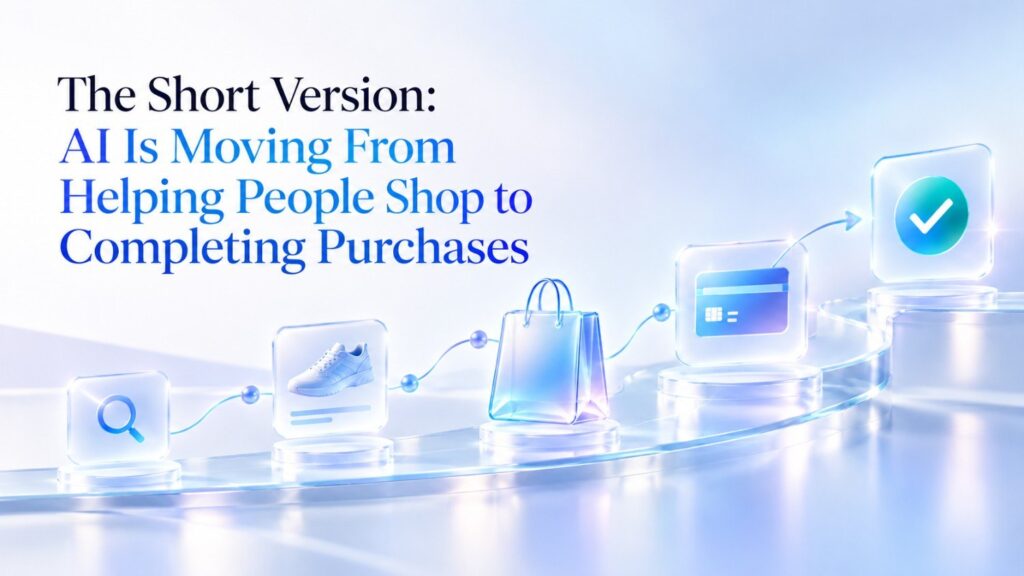
The Short Version: AI Is Moving From Helping People Shop to Completing Purchases
Agentic commerce means using AI systems to help carry out shopping tasks rather than simply offering information about products.
An ordinary shopping chatbot might recommend three laptops for a small business. An AI shopping agent could take that recommendation further by checking stock, comparing delivery dates, building a cart, and helping complete the transaction through an approved payment system.
The difference is the ability to take action.
That may sound like a small improvement, but it changes how online stores, payment providers, and business software need to work. A normal website is built for people who can click buttons, read instructions, and decide when to pay. An AI agent needs a reliable way to understand product information, access live prices, request checkout details, and prove that it has permission to spend money.
That is why so much development is happening behind the scenes.
In September 2025, OpenAI and Stripe announced the Agentic Commerce Protocol, a standard designed to connect AI shopping experiences with merchants and their payment systems. In January 2026, Google and Shopify introduced the Universal Commerce Protocol, designed to help different AI agents and merchants communicate. Stripe subsequently expanded its payment tools for AI shopping, while Coinbase and other companies continued developing systems for automated payments between software services.
Stripe
+3
These efforts are related, but they are not identical. Some focus on consumer shopping, some on payment security, and others on allowing software to purchase digital services without using a conventional checkout page.
That distinction matters for investors, founders, and businesses trying to understand the market.
Our research suggests that the earliest practical value will often come from automating narrow, repeatable purchasing tasks rather than giving AI unlimited permission to shop. Businesses should begin with tasks where prices, approved vendors, spending limits, and success conditions are easy to define.
The biggest opportunity is not an AI assistant that buys everything. It is a trusted system that can complete the right purchases while preventing the wrong ones.
What Is Agentic Commerce, and How Does It Actually Work?
Traditional E-Commerce Still Depends on People Completing the Transaction
Today’s online stores have become good at reducing the effort needed to buy something. They remember payment information, recommend related items, show recent purchases, and offer one-click checkout.
However, most of the buying process still starts with a person.
Even when an online store recommends a product, someone usually has to decide whether to buy it. The customer checks whether the item is suitable, compares the final price, chooses delivery, and approves payment.
Businesses face the same problem at a larger scale. Employees spend time buying office supplies, ordering replacement parts, paying service providers, and checking whether purchases follow company rules.
These tasks may be simple, but they add up.
Agentic Commerce Gives Software a Defined Buying Responsibility
An AI commerce agent can receive an instruction, gather the information needed to complete it, and carry out approved steps.
For example, a startup might give its purchasing agent this instruction:
Purchase replacement laptop chargers for employees when approved inventory reaches fewer than five units. Use approved vendors, choose delivery within three business days, and never spend more than $500 without management approval.
The agent would need to check stock, identify compatible chargers, compare vendor prices, calculate shipping, confirm availability, and request or execute payment according to its permissions.
The important change is that the software is no longer simply recommending a purchase. It is helping manage the entire buying task.
A useful agent must also recognize when it cannot safely finish the job. If every approved vendor is out of stock, the product description is unclear, or the purchase exceeds the allowed budget, the agent should stop and ask for help.
The Five Steps Behind an AI-Powered Purchase
1. Customer sets a goalProduct requirements, budget, preferences, and permission
2. Agent searches and comparesLive inventory, product details, prices, and delivery
3. Agent checks permissionsSeller, spending limits, user approval, and risk checks
4. Payment is processedApproved payment method, secure token, and merchant checkout
5. Order is verified and trackedReceipt, fulfillment status, exception handling, and returns
The payment step often gets the most attention, but it is only one part of the problem.
A successful transaction requires accurate product information, reliable stock data, correct taxes, a working delivery method, valid permission, payment authorization, and a merchant willing to accept the transaction.
If any of these steps fail, the customer may not receive what they intended to buy.
Why San Francisco Is Becoming an Important Center for Agentic Commerce
The City Combines AI Development With Payment Infrastructure
San Francisco has an advantage because it brings together several kinds of companies needed to build agentic commerce.
AI developers understand how to turn a customer’s request into actions. Payment companies understand how to authorize transactions, manage financial risk, and support merchants. Commerce startups understand the difficult work of connecting shopping software to real product catalogs and checkout systems.
These capabilities are now being combined.
Stripe is particularly important because its existing payment infrastructure gives it a direct relationship with businesses that already accept online payments. Instead of requiring every merchant to build an entirely new financial system for AI agents, it can develop tools that connect AI purchases with existing merchant payment systems.
OpenAI contributes a different part of the system: an AI interface where people can explain what they want in ordinary language. Skyfire, meanwhile, focuses on enabling agents to identify themselves and make payments with appropriate controls.
Together, these companies illustrate why agentic commerce is not a single-product market.
It is a collection of connected services.
San Francisco Also Has a Large Market for Business Automation
The local opportunity extends well beyond consumer shopping.
San Francisco contains software companies, AI developers, service businesses, online retailers, and enterprise technology teams that regularly purchase digital tools.
A company developing AI products might pay for cloud computing, access to data, software testing, research tools, and other services. Some of these purchases could eventually happen automatically when an agent needs a resource to complete an approved task.
This creates a form of commerce that looks very different from ordering clothing or furniture.
Instead of an AI shopping for a person, one software system may purchase a small service from another software system. These transactions could be frequent, low-value, and difficult to manage using normal subscription accounts.
Stripe’s Machine Payments Protocol and Coinbase’s x402-related tools are examples of infrastructure being developed for this market.
Stripe
+2
The Bay Area’s Advantage Is Broader Than San Francisco City Limits
It is important to separate San Francisco companies from businesses elsewhere in the Bay Area and from national or global partners.
Stripe and Skyfire have strong San Francisco connections. Google is based in Mountain View, PayPal in San Jose, and Shopify in Canada. Coinbase was historically based in San Francisco but adopted a decentralized operating model without a single headquarters.
These companies may contribute to the same regional technology market without all being San Francisco startups.
CB Insights
+2
That distinction is useful when evaluating the strength of the local ecosystem. San Francisco’s opportunity comes partly from its homegrown companies and partly from their ability to work with a much larger network of payment providers, retailers, and technology platforms.
The San Francisco Companies Building the Future of AI Shopping and Payments
Stripe: Making AI Purchases Work With Existing Payment Systems
Stripe is one of the most important companies to watch in agentic commerce because it is attacking a basic problem: how can an AI agent pay for something without exposing a customer’s sensitive payment information?
A traditional online transaction assumes that a person has chosen a product and authorized the purchase. With an AI agent, the payment system must also understand what the agent is allowed to do.
Stripe introduced Shared Payment Tokens to address this problem. These tokens allow approved payment information to be used for a transaction without sharing the underlying card details with the AI agent or merchant integration. The tokens can have limits based on the merchant, amount, and time period.
Stripe
+1
Consider a customer who authorizes an AI agent to buy a $120 pair of shoes from a specific seller.
The customer should not have to give the AI unrestricted access to their credit card. Instead, a payment token can represent permission for a limited transaction.
If the seller attempts a payment outside the permitted limits, the payment system can reject it.
Why This Matters for Businesses
Stripe’s approach reduces the need for merchants to trust an AI system with broad financial authority.
A store can continue using its existing payment processes while supporting new AI shopping experiences. This makes the technology easier to adopt than a system requiring a complete replacement of checkout and accounting tools.
In March 2026, Stripe said it was expanding support for Shared Payment Tokens to additional payment methods and network-led systems, including Visa Intelligent Commerce, Mastercard Agent Pay, and selected buy-now-pay-later options.
Stripe
For San Francisco startups, Stripe’s development tools may reduce the amount of custom payment infrastructure needed to launch an agent-powered shopping product.
The business opportunity is not limited to consumer checkout. It includes spending controls, payment verification, fraud screening, merchant services, and software-to-software transactions.
Skyfire: Giving AI Agents an Identity and a Way to Pay
Skyfire is a San Francisco-based company developing identity and payment infrastructure for AI agents.
Its work addresses another difficult question: how can a business tell the difference between a legitimate shopping agent and a harmful bot?
Online merchants have spent years developing systems to block automated traffic. These defenses help protect businesses against stolen-card testing, fake accounts, data scraping, and abusive purchasing activity.
Now legitimate AI agents may need to access the same stores.
A shopping agent could behave like a bot from the merchant’s point of view, even if it is acting on a real customer’s instructions.
Skyfire’s approach involves verified agent identity and payment-related credentials that can help distinguish authorized agents from unknown automated visitors.
In June 2026, San Francisco-based Fastly announced a partnership with Skyfire to bring identity verification for agentic commerce to Fastly’s edge cloud infrastructure. The partnership aims to help businesses recognize trusted AI traffic earlier in the process.

Fastly
Why Identity May Become as Important as Payment
An AI agent needs more than permission to spend money.
A merchant may also want to know who operates the agent, whose instructions it follows, whether it has been verified, and what kind of access it should receive.
Without that information, businesses risk treating legitimate buying activity as a security threat.
There is also an opposite danger. If merchants allow automated purchases too easily, malicious bots could pretend to be trusted agents.
Skyfire is working in the space between these problems.
The broader lesson is that agentic commerce needs a trustworthy buyer identity, not just a working credit card.
OpenAI: Turning AI Conversations Into Shopping Experiences
OpenAI’s role in agentic commerce centers on the experience of discovering products and moving toward a purchase through natural conversation.
In September 2025, OpenAI introduced Instant Checkout in ChatGPT alongside the Agentic Commerce Protocol developed with Stripe. The original launch supported eligible purchases from U.S. Etsy sellers and described a wider merchant rollout.
OpenAI
The significance of this launch went beyond the initial set of supported products.
It showed how a shopping process could begin with an ordinary request rather than a visit to a retailer’s website.
Someone looking for a birthday gift could explain the recipient’s interests, budget, and delivery needs. The AI could then help narrow the choices and, where supported, move the customer toward checkout.
For merchants, this creates a new discovery channel.
Historically, retailers have invested in search engine optimization, paid search, social media, and marketplace listings to attract customers. AI shopping interfaces could become another important place where buying decisions begin.
Why Stores Still Matter in an AI Shopping World
It would be a mistake to assume that AI platforms will simply replace merchants.
Retailers still need to manage inventory, calculate taxes, fulfill orders, offer returns, support customers, and meet legal obligations.
The AI interface may help start and guide the transaction, but much of the responsibility for delivering the product remains with the seller.
Businesses should therefore think about AI shopping as a new sales channel rather than an automatic replacement for their online stores.
DoorDash: Bringing Agentic Ordering Into Everyday Business Tasks
DoorDash offers a useful example of how agentic commerce can move from online product search into real-world services.
On September 30, 2026, the San Francisco-headquartered company announced a connector designed to let compatible internal AI tools help employees arrange office deliveries.
The connector supports finding items, building carts, placing orders, and tracking delivery. DoorDash identified several early beta partners, including Vercel, Cognition, Tempo, Mercor, and SpaceXAI.
DoorDash
An office manager could eventually handle recurring lunch orders or approved office restocking without manually navigating a delivery application every time.
This is a useful example because it involves more than a payment.
The agent needs to understand what people want, find available products, account for changing delivery conditions, complete the order, and report the result.
Why Physical Delivery Makes Agentic Commerce Harder
Buying a digital service can sometimes be completed immediately.
Ordering food or office supplies introduces physical-world problems. Items become unavailable, delivery fees change, stores close, and orders may arrive late.
AI shopping systems therefore need ways to handle unexpected conditions after payment.
DoorDash’s work shows why order tracking and exception handling may become important areas for future commerce agents.
Perplexity: An AI-Native Approach to Product Discovery
Perplexity is another major AI company associated with the San Francisco technology ecosystem.
Its shopping experience has combined AI-generated product information with purchase options, including its Buy with Pro checkout experience for eligible products.
Perplexity’s published guidance explains that checkout availability depends on merchant compatibility. When an integrated checkout is not available, users may be directed to the seller’s website.
Perplexity AI
This highlights an important limit in the current market.
AI systems may be capable of helping customers choose products across many stores, but completing the purchase inside the AI experience requires additional merchant and payment support.
Discovery is easier to offer broadly than universal checkout.
Coinbase: Helping Software Pay for Digital Services
Coinbase is not currently a San Francisco-headquartered company, but its historic connection to the city and its role in the wider technology ecosystem make it relevant to the regional story.
Coinbase has been developing tools that let AI agents make digital payments, including technology related to the x402 payment protocol.
The idea is that software can pay for a service when it needs that service, instead of requiring a person to create an account and set up a subscription in advance.
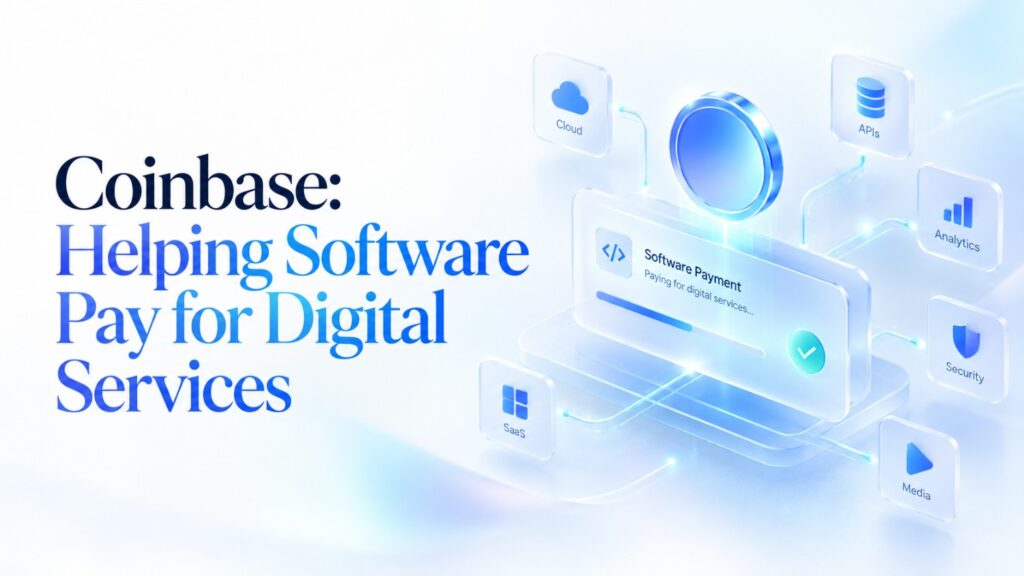
In May 2026, Coinbase announced an integration of its x402-related payment tools with Amazon Bedrock AgentCore Payments, supporting agent purchases of digital services through payment flows using USDC, a dollar-linked digital asset.
Coinbase
Why Machine Payments Could Create a New Market
Imagine an AI research agent that needs access to a specialized database for one question.
A traditional system might require a monthly subscription. A machine-payment system could allow the agent to pay for one approved request and continue its work.
This could create opportunities for companies selling data, computing power, research tools, and specialized software features.
However, digital-asset payments raise additional questions involving compliance, pricing, refunds, and accounting. Businesses should treat them as one possible payment method rather than a universal replacement for conventional payment systems.
Other Companies Worth Watching
Several companies outside San Francisco are influencing how agentic commerce develops.
| Company | Main contribution | Why it matters |
|---|---|---|
| Universal Commerce Protocol and AI shopping interfaces | Helps agents communicate with merchant systems | |
| Shopify | Merchant catalogs and agent-ready commerce tools | Gives merchants ways to participate in AI shopping |
| Visa | Intelligent Commerce and payment authorization controls | Helps verify and secure agent-initiated payments |
| Mastercard | Agent Pay and machine-payment infrastructure | Develops secure payments for consumer and software agents |
| Rye | Product discovery and checkout execution tools | Addresses the difficulty of completing purchases across merchants |
| Nekuda | Agent-friendly merchant interactions | Helps make websites actionable for AI agents |
| PayPal | Agentic payment and merchant services | Connects AI shopping with established payment and seller systems |
These roles are based on publicly described company products and initiatives. They do not imply equivalent market adoption or that every product is generally available.

Shopify
+5
The variety of approaches is important. Different companies are solving different problems, and it is unlikely that every part of agentic commerce will be controlled by one provider.
Original Research: What 11 Public Launches Reveal About the Agentic Commerce Market
Most discussions about agentic commerce focus on individual announcements. One company launches a payment feature, another introduces a checkout standard, and a third announces a partnership.
Looking at these announcements separately makes it difficult to understand how the market is changing.
For SFTechScene, we constructed a small, event-level dataset from publicly dated primary-source announcements between April 29, 2025, and September 30, 2026. We then classified each announcement according to the main part of agentic commerce it addressed.
The purpose was not to estimate total industry spending or claim that these announcements represent every company in the market. Instead, we wanted to examine whether publicly visible product development was concentrated in payments alone or beginning to move into identity, interoperability, and everyday business transactions.
Research Methodology: How We Built the Dataset
We selected 11 dated announcements from companies directly involved in agentic shopping, payments, checkout, and merchant or software-agent integrations.
Each event had to describe a public product launch, a named technical integration, a protocol introduction, or a documented expansion of an agentic commerce capability.
We excluded general market forecasts, opinion articles, funding announcements without an associated product development, and repeated coverage of the same launch.
When an announcement covered several functions, we assigned one primary category based on its central purpose. The categories were payment infrastructure, shopping and checkout standards, agent identity, and operational purchasing.
This is a purposive sample of 11 verifiable announcements, not a complete census of industry activity. It is suitable for examining developments within this selected set, but not for estimating how much of the entire industry belongs to each category.
The Public Launch Dataset
| Date | Company or partnership | Documented development | Primary category |
|---|---|---|---|
| Apr. 29, 2025 | Mastercard | Introduced Agent Pay | Payments |
| Sep. 29, 2025 | OpenAI + Stripe | Introduced AI shopping checkout and ACP | Checkout and standards |
| Oct. 23, 2025 | Coinbase | Introduced Payments MCP | Payments |
| Oct. 28, 2025 | PayPal | Launched agentic commerce services | Payments |
| Jan. 11, 2026 | Google + Shopify | Introduced Universal Commerce Protocol | Checkout and standards |
| Mar. 3, 2026 | Stripe | Expanded supported payment methods for AI purchases | Payments |
| Mar. 18, 2026 | Stripe + Tempo | Introduced Machine Payments Protocol | Payments |
| May 7, 2026 | Coinbase + AWS | Announced AgentCore Payments integration | Payments |
| Jun. 10, 2026 | Fastly + Skyfire | Announced verified agent identity integration | Identity |
| Jun. 17, 2026 | Shopify | Opened agentic commerce developer access | Checkout and standards |
| Sep. 30, 2026 | DoorDash | Introduced corporate ordering connector | Operational purchasing |
Source: SFTechScene coding of 11 dated public announcements. The primary sources include company newsrooms and developer publications from Mastercard, OpenAI, Coinbase, PayPal, Google, Shopify, Stripe, Fastly, and DoorDash. Each row is counted once, even where multiple companies participated.
Mastercard India
+10
Original Finding #1: Payment Infrastructure Accounts for More Than Half of the Selected Announcements
Primary focus of 11 selected agentic commerce launches
Number of public announcements, April 2025–September 2026
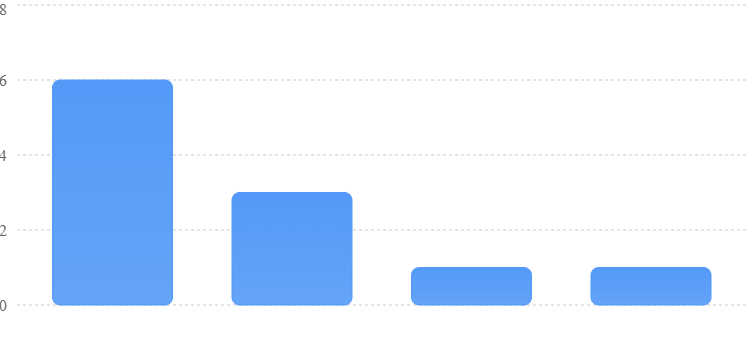
Six of the 11 selected announcements focused primarily on payment infrastructure.
That represents approximately 55% of the sample. Three concerned shopping or checkout standards, while identity and operational purchasing each accounted for one announcement.
The result does not prove that 55% of the entire agentic commerce market is devoted to payments. Our sample is small, selected, and based on announcements rather than investment, usage, or revenue.
However, it supports an important observation about these documented launches: making an AI agent capable of finding a product is only part of the work. Companies are investing substantial effort in creating ways for agents to complete transactions with permission and financial controls.
What This Means for San Francisco Founders
The most obvious startup idea may be an AI shopping assistant, but that does not mean the largest opportunities are limited to consumer-facing apps.
Infrastructure that helps merchants authorize purchases, manage spending, identify legitimate agents, or handle payment failures could support many different shopping experiences.
A founder building agentic commerce software should therefore ask whether the product creates value at the shopping interface or in the systems that make transactions possible.
Both markets matter, but they have different customers and business models.
Original Finding #2: Public Product Development Is Moving Beyond Checkout
Selected launches by year and primary focus
2025 includes April–December; 2026 includes January–September
■ Payments
■ Checkout and standards
■ Identity
■ Operational purchasing
The four selected announcements from 2025 were concentrated in payments and checkout.
The seven selected announcements from 2026 included those same areas, but also contained specific developments in verified agent identity and operational purchasing.
This is a useful sign of the market becoming more complex.
The early challenge was making it possible for AI systems to initiate a purchase. The later announcements in our sample show companies also working on recognizing trusted agents, providing broader developer access, and connecting AI assistants with everyday work tasks.
We should not describe this as evidence of a measured industry-wide acceleration. The observation periods differ, and the dataset is not exhaustive.
What the comparison does show is a widening range of problems being addressed by named products.
Original Finding #3: The Market Has at Least Four Separate Business Opportunities
Our review points to four distinct commercial opportunities.
| Market layer | Buyer or customer | Main problem being solved | Possible business model |
|---|---|---|---|
| AI shopping interface | Consumers and retailers | Finding and selecting products | Retail referral fees, software subscriptions |
| Checkout infrastructure | Merchants and AI platforms | Completing orders across systems | Transaction fees, software usage |
| Payment and identity controls | Banks, platforms, merchants | Authorizing safe agent activity | Infrastructure fees, security services |
| Operational purchasing | Businesses | Automating repeat purchases | Enterprise subscriptions, per-task fees |
These are analytical categories, not official industry definitions.
Their value is that they make the business models easier to understand.
A consumer AI shopping company needs to attract shoppers and earn their trust. A checkout company needs integrations with merchants. A payment-security provider needs strong relationships with financial institutions and payment partners. A business purchasing agent needs to prove that it saves time without creating new financial risks.
Each business requires a different sales strategy.
Original Finding #4: San Francisco’s Strongest Position May Be in Trust and Payments
The companies highlighted in the research show why San Francisco has an especially interesting position in this market.
Stripe is developing payment infrastructure that can be used across shopping experiences. Skyfire is building tools for identifying and authorizing AI agents. OpenAI is contributing to the customer-facing experience and commerce standards.
These companies operate at different points in the transaction.
That matters because no agentic commerce system can succeed without connecting the customer’s intent to merchant fulfillment and financial authorization.
A startup that becomes trusted infrastructure for this connection may be useful to many AI shopping products, even if it never operates a popular consumer shopping app.
This is an original strategic interpretation of the documented company activity, not a measured ranking of regional companies by revenue or adoption.
Why Agentic Commerce Needs New Payment Infrastructure
A Credit Card Was Not Designed to Be Used by an Autonomous AI Agent
Conventional card payments assume that an authorized person or business is using the payment method.
An AI agent complicates that assumption.
The software might have permission to buy a specific product, but not to make unrelated purchases. It might have a total monthly budget, a per-transaction spending limit, and a list of approved sellers.
A normal saved card does not, by itself, express all those conditions.
This creates a need for payment tools that understand limited, delegated authority.
Tokenization Helps Keep Financial Information Protected
A payment token is a secure substitute for sensitive payment credentials.
Instead of exposing actual card details to every system involved in a transaction, a payment service can issue a token representing a specific permission.
Stripe’s Shared Payment Tokens illustrate how this can work. A token can be restricted by seller, spending amount, and expiration, and the payment service can enforce those restrictions.
Stripe
For a business, this is useful because the AI does not need broad access to a financial account.
An agent might receive permission to pay a particular supplier up to a defined amount. If it attempts to make a different purchase, the payment system can reject the transaction.
The key benefit is control that exists outside the AI model itself.
AI Agents Need Separate Permission and Payment Checks
A well-designed agentic purchasing system should not rely only on the AI understanding its instructions correctly.
AI models can make mistakes. They can misunderstand product descriptions, select an unsuitable item, or react to misleading instructions from an untrusted website.
Therefore, the payment system should independently verify transaction limits.
For example, a business might tell an agent to purchase office equipment up to $400.
The AI should understand that instruction, but the payment system should also enforce the $400 limit. If the AI tries to approve a $900 charge, the transaction should fail regardless of what the model believes.
This separation is essential for reliable automation.
Payment Approval Is Not the Same as Order Accuracy
A purchase can be financially authorized and still be wrong.
An AI agent might select the wrong product size, choose the wrong delivery address, or buy a subscription that the company already owns.
The payment system could process the transaction correctly because the charge fits the authorized limits.
This is why agentic commerce needs both financial safeguards and business rules.

The payment layer answers whether money may be spent. The shopping layer must determine whether spending that money actually fulfills the user’s request.
The Battle Over Agentic Commerce Standards
Agentic Commerce Protocol: Connecting AI Shopping With Merchant Checkout
The Agentic Commerce Protocol, or ACP, was developed by OpenAI and Stripe to support commerce transactions involving AI agents and merchants.
Its purpose is to give these systems a common way to exchange information needed to complete a purchase.
Without shared standards, every AI shopping application might need a separate connection to each merchant or payment provider.
That would create enormous development work.
A common protocol can reduce repeated integrations and make it easier for merchants to support multiple AI shopping channels.
Universal Commerce Protocol: A Broader Merchant Connection Layer
Google and Shopify introduced the Universal Commerce Protocol, or UCP, in January 2026.
The protocol is designed to support commerce interactions between AI systems, merchants, and payment providers.
Google describes support for existing connection technologies, including APIs, Agent2Agent communication, and the Model Context Protocol. It also describes compatibility with the Agent Payments Protocol, or AP2.
Google Developers Blog
In June 2026, Shopify expanded developer access to its agentic commerce infrastructure.
This was important because it allowed more developers to build shopping experiences connected to Shopify’s merchant ecosystem, rather than limiting participation to individually approved partners.
Shopify
Agent Payments Protocol: Connecting Purchases With Permission
Google’s AP2 approach addresses authorization for agent-driven payments.
The challenge is straightforward. A payment provider needs a reliable way to distinguish between a purchase a person actually approved and one an AI system initiated without proper authority.
Permission must be clear enough for different parts of the transaction to understand and verify.
This becomes especially important when the customer is not present at the exact moment a payment is made.
An agent authorized to buy approved office supplies later in the day creates a different trust problem from someone pressing a checkout button themselves.
x402 and Machine Payments Protocol: Letting Software Purchase Software Services
Agentic commerce is also expanding into payments between digital services.
The x402 approach uses an internet payment mechanism that allows a service to request payment before delivering a resource. An AI agent can receive the payment request, arrange an authorized payment, and continue the task.
Stripe and Tempo introduced the Machine Payments Protocol in March 2026 to support automated transactions between agents and online services.
Stripe
These developments matter because many software services are not sold like ordinary retail products.
Some charge per request, per document, per computation, or per unit of data.
Automated agents may need to buy these services in small amounts, sometimes without sending a person through a checkout page.
Why Businesses Should Avoid Betting on Only One Standard
It is still too early to assume that one protocol will handle every kind of agentic transaction.
Consumer shopping, business purchasing, and machine-to-machine payments have different requirements.
A company selling physical products needs to manage shipping, inventory, taxes, and returns. A company selling digital data may need to authorize a payment before a single API request. A purchasing system for large enterprises may require detailed approval records and accounting integrations.
The best strategy for many merchants is to keep their core product and order data under their control while supporting well-documented integrations.
That makes it easier to adjust as standards develop.
Original Financial Analysis: When Does Agentic Commerce Actually Save Money?
The technology sounds promising, but businesses should not adopt it simply because automating purchases seems impressive.
The financial question is whether an AI system can complete the task for less than the total cost of the current process.
That calculation must include more than the AI software fee.
It must account for human reviews, incorrect purchases, payment failures, vendor problems, and the cost of maintaining the system.
Research Methodology: A Transparent Cost Model
To understand the possible economics, SFTechScene built a scenario model for a company handling 1,000 routine purchasing requests per month.
This is an original financial model using explicit assumptions. It is not a study of 1,000 observed transactions, and the figures should not be presented as real industry averages.
We assume that a routine purchasing request costs $4 in staff time when handled manually.
For the automated process, we assume $0.60 per request in AI and software costs, plus $0.20 per request in monitoring and oversight.
We then vary the percentage of requests that need human assistance and the percentage that generate a costly purchasing error.
The model assumes that each human-handled exception adds $4 and that each error adds $12 in correction costs. These amounts are illustrative and can differ greatly across companies.
The Cost Model
\[ \text{AI cost} = N(A+O)+N(H\times E)+N(R\times C) \]
Where:
- \(N\) = number of purchasing requests
- \(A\) = AI and software cost per request
- \(O\) = oversight cost per request
- \(H\) = share requiring human help
- \(E\) = cost of handling an exception
- \(R\) = error rate
- \(C\) = average correction cost per error
For our example, \(N=1{,}000\), \(A=\$0.60\), \(O=\$0.20\), \(E=\$4\), and \(C=\$12\).
The model treats exceptions and errors as separate cost events. A request can incur both costs, and the model assumes the $4 exception cost is additional to the automated processing cost.
Original Finding #5: Savings Depend Heavily on How Often People Must Intervene
| Scenario | Human help needed | Costly error rate | Monthly AI operating cost | Savings vs. manual |
|---|---|---|---|---|
| Strong performance | 10% | 1% | $1,320 | 67% |
| Moderate performance | 20% | 3% | $1,960 | 51% |
| Weak performance | 40% | 6% | $3,120 | 22% |
| Fully manual baseline | 100% | Not modeled | $4,000 | 0% |
Source: SFTechScene original scenario calculations. All costs, exception rates, and error rates are assumptions, not measured industry data. Savings exclude initial implementation costs and some ongoing fixed expenses.
Modeled monthly purchasing process costs
1,000 monthly requests, illustrative assumptions
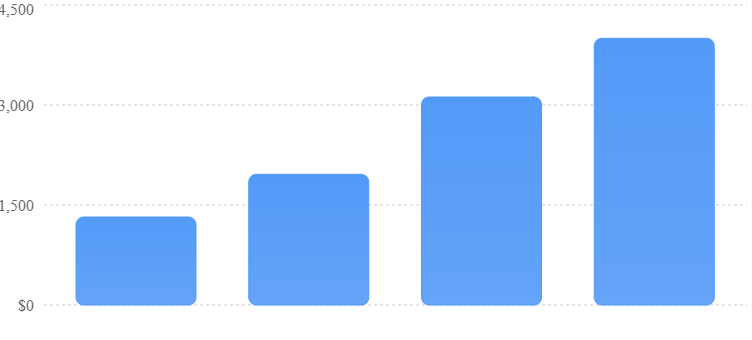
The model shows that meaningful savings are possible even when some requests still require human involvement.
At a 20% exception rate and a 3% costly error rate, the automated process costs $1,960 per month rather than $4,000. That produces an illustrative operating saving of $2,040 per month.
However, when 40% of requests need human help and 6% generate additional correction costs, the savings fall considerably.
This matters because a company could report a high level of automation while still spending too much time fixing problems.
The Break-Even Point Is More Useful Than a Headline Automation Rate
With the assumptions above, automated processing and monitoring cost $800 per month before exceptions and errors.
The manual baseline costs $4,000.
That leaves $3,200 available to cover human assistance, errors, and additional costs before automation becomes more expensive than the manual process.
If the costly error rate is fixed at 3%, error correction adds $360.
The remaining amount for exception handling is $2,840, equivalent to 710 exceptions at $4 each.
That means the modeled process reaches operating-cost break-even at a 71% human-exception rate, assuming all other costs remain fixed.
This is a mathematical result from the model, not an observed benchmark. It also excludes setup costs and assumes that employees can actually redirect or reduce the time saved.
The lesson is that organizations should calculate their own break-even point instead of copying targets from AI vendors.
Fixed Costs Can Change the Decision
Suppose the company also pays $1,000 per month in fixed software, support, and integration costs.
The moderate-performance scenario would now cost $2,960 per month rather than $1,960.
Its monthly saving falls from $2,040 to $1,040.
For a large organization, that may still be worthwhile. For a small company, the benefit might not justify the work involved.
Business owners should include ongoing fixed costs, setup expenses, security reviews, and the value of employee time before approving a project.
Original Finding #6: The Best Early Purchases to Automate Are Not Necessarily the Cheapest
The financial model suggests that transaction value alone is a poor way to decide what to automate.
A $20 item may be easy to purchase, but expensive to correct if the wrong item causes an important workflow to stop.
A $500 order from an approved supplier may be safer if the product, price, and delivery requirements are predictable.
The more useful question is how much uncertainty is involved.
For SFTechScene, we developed a practical task-selection score that evaluates five features: product clarity, supplier stability, price predictability, ease of recovery, and financial risk.
Each feature is scored from one to five. Higher scores mean clearer product requirements, more dependable suppliers, more predictable prices, easier recovery from mistakes, and lower financial risk.
This scoring system is our proposed framework. It has not been statistically validated against real purchasing outcomes.
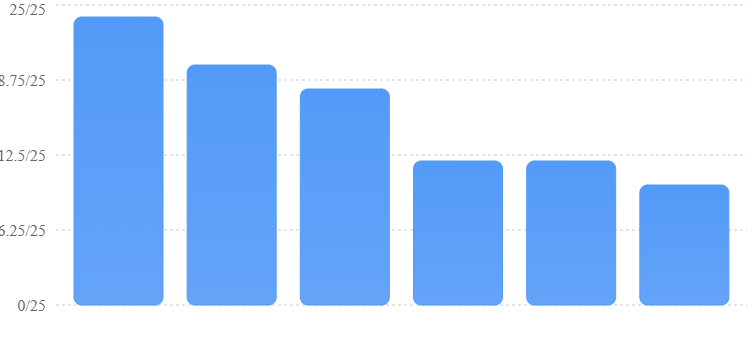
Illustrative Purchasing Suitability Scores
| Purchasing task | Product clarity | Supplier stability | Price predictability | Recovery ease | Low-risk score | Total /25 |
|---|---|---|---|---|---|---|
| Approved office supplies | 5 | 5 | 5 | 5 | 4 | 24 |
| Standard employee equipment | 5 | 4 | 4 | 4 | 3 | 20 |
| Cloud service usage | 4 | 4 | 3 | 4 | 3 | 18 |
| Business travel bookings | 3 | 3 | 2 | 2 | 2 | 12 |
| Specialized manufacturing parts | 3 | 4 | 3 | 1 | 1 | 12 |
| Large software contracts | 2 | 4 | 2 | 1 | 1 | 10 |
Source: SFTechScene original decision framework. Scores are editorial, illustrative judgments rather than measured outcomes. The five factors have equal weight for simplicity; individual businesses should change the weights.
Illustrative suitability for AI purchasing automation
Higher scores indicate a better starting point under our five-factor framework
Why Office Supplies Score Highly
Standard office supplies tend to have clear product descriptions and familiar suppliers.
Businesses often know exactly which item they want, how much it should cost, and how frequently it needs to be reordered.
This makes the purchasing process relatively easy to define.
If a shipment is delayed or the wrong quantity is delivered, the problem can often be corrected without major consequences.
That does not eliminate the need for controls, but it makes the task a sensible starting point.
Why Large Software Contracts Score Poorly
Enterprise software purchasing involves questions that go far beyond product price.
A company may need to review data privacy, security requirements, contract terms, service commitments, user access, and future costs.
An AI agent can help gather information and compare vendors, but giving it authority to sign a major agreement or commit the business to a long subscription creates substantial risk.
These purchases benefit more from AI-assisted research and document preparation than fully autonomous checkout.
What San Francisco Businesses Should Learn
The best early agentic commerce projects are likely to involve repeatable transactions with clear rules and easy human escalation.
Businesses should not begin with their most complicated purchasing process simply because it consumes the most employee time.
They should start where they can measure success, control mistakes, and build confidence in the system.
How Agentic Commerce Could Change Online Shopping for San Francisco Businesses
Product Discovery May Shift Away From Traditional Search Results
Today, many customers begin shopping by searching Google, visiting a marketplace, or browsing a familiar retail website.
AI assistants create another way to begin.
Instead of searching for a particular product name, customers can describe what they need.
A customer might ask for a compact air purifier for a small apartment, with a washable filter and a total delivered price under $200.
The agent’s job is to understand those requirements and identify products that fit.
This changes what makes a product easy to discover.
A retailer may have a beautiful website, strong photography, and effective advertising, but those qualities will not help an AI agent if the product information is missing or inaccurate.
Product Data Becomes Part of the Sales Strategy
Online merchants should make sure their products have clear names, descriptions, dimensions, prices, availability, and delivery conditions.
Product details should be structured so software can interpret them consistently.
For example, a retailer selling furniture should not describe a desk simply as a stylish modern workspace solution.

The product record should also include its dimensions, material, weight capacity, assembly requirements, delivery options, and return conditions.
These details help customers make decisions, but they also help AI systems determine whether the product meets a request.
Why Inventory Accuracy Will Matter More
AI agents may compare products using current stock information.
If a merchant reports that an item is available but regularly cancels orders because its inventory is wrong, the shopping experience becomes unreliable.
This can hurt the merchant even when the AI is functioning correctly.
Businesses preparing for agentic commerce should therefore improve the quality of their inventory systems before investing heavily in AI-specific promotion.
AI Shopping Optimization Is Becoming a New Part of SEO
Search engine optimization has traditionally focused on helping people discover websites through search engines.
AI shopping introduces an additional challenge: helping automated systems understand what a merchant sells and whether its products satisfy a particular buying request.
That does not mean traditional SEO is disappearing.
Many AI shopping systems still depend on information from websites, product feeds, merchant catalogs, and search services.
The practical goal should be to publish accurate, accessible product information and make it consistent across channels.
Merchants should focus on complete product attributes, clear policies, reliable availability, and feeds that reflect real prices.
They should also monitor how their products appear in AI-generated shopping recommendations, while recognizing that rankings and product selection may differ across platforms.
The Customer Relationship Could Become More Valuable
A major question is who controls the relationship after an AI agent brings a customer to a merchant.
If a shopper discovers a product inside an AI application, the retailer may receive the order without having the same direct interaction it would have received through its own website.
That could affect repeat purchases, customer support, loyalty programs, and marketing.
Merchants should understand what customer information they receive through AI shopping integrations, who is responsible for order communication, and which systems handle refunds and disputes.
They should also avoid making their business completely dependent on one AI discovery platform.
Agentic Commerce for B2B Purchasing: A Potentially Bigger Near-Term Opportunity
Consumer shopping receives much of the attention because it is easy to imagine an AI assistant buying clothes, electronics, or household products.
Business purchasing may offer an equally important opportunity.
Companies frequently buy the same products and services under the same conditions. This creates more chances to define purchasing rules in advance.
Routine Procurement Can Be Automated in Stages
Consider a San Francisco software company with 80 employees.
It buys laptops, monitors, keyboards, office supplies, cloud services, software subscriptions, and other equipment throughout the year.
Some purchases require careful human decisions. Others are routine.
An AI purchasing system could begin by helping employees submit requests, checking approved product lists, and comparing authorized vendors.
Once that process works reliably, the company could permit automatic checkout for selected items below a defined amount.
The important point is that automation does not have to happen all at once.
Vendor Controls May Become a Core Product Feature
Businesses often have agreements with particular suppliers.
These agreements can include negotiated pricing, payment terms, service guarantees, and spending limits.
An AI agent should respect those arrangements instead of searching for the lowest public price every time.
For example, a company might have an approved equipment supplier that provides next-day replacements and centralized billing.
A cheaper product from an unknown seller might create more work because it breaks the company’s support and accounting process.
The agent must understand the difference between the lowest purchase price and the lowest total business cost.
Autonomous Purchasing Still Requires Clear Ownership
Even when an AI completes a purchase, someone in the business remains responsible for the outcome.
A purchasing team must define who can authorize spending, which employees can request products, which vendors are approved, and how financial records are checked.
Finance teams need a way to connect the transaction to the correct budget or department.
Security teams need to understand what systems the agent can access.
Without those controls, automation can make purchasing faster while also making mistakes harder to detect.
How to Build an Agentic Commerce Strategy in 90 Days
For most businesses, the smartest way to begin is with a focused pilot.
The objective should not be to automate every purchasing task. It should be to prove that one useful workflow can be handled safely, accurately, and economically.
The following 90-day framework is designed for San Francisco startups, online merchants, and mid-sized businesses exploring agentic commerce.
Days 1–15: Understand the Existing Buying Process
Begin by reviewing a sample of recent purchases.
Collect information about what was purchased, which employee handled the request, how long it took, which supplier was used, whether approval was needed, and whether anything went wrong.
Try to identify tasks that appear repeatedly.
For an online retailer, the review might focus on customer product searches, abandoned carts, payment failures, and questions that prevent checkout.
For a business purchasing team, it might focus on routine orders and the staff time involved in processing them.
Build a Useful Baseline
A practical baseline should include average processing time, purchase cost, number of approval steps, correction costs, and the rate of failed or incomplete requests.
Businesses should record these numbers before introducing automation.
Without a baseline, it becomes difficult to know whether the new system is actually improving operations.
Days 16–30: Choose One Workflow and Define Its Rules
Select a purchasing task with clear requirements and manageable financial risk.
For example, a business could begin with replacement office equipment from a small set of approved suppliers.
Define exactly what the agent can do.
The rules should cover maximum spending, approved products, authorized suppliers, required delivery dates, user permissions, and situations that require human review.
Keep Payment Authority Narrow
The first pilot should not give an agent unrestricted access to a corporate payment account.
Use a payment method or authorization system that supports limited spending permissions wherever available.
Set controls outside the language model, including transaction limits and approval requirements.
For an initial rollout, requiring confirmation before payment is often a sensible safeguard.
Days 31–45: Build and Test Without Moving Real Money
Connect the agent to the relevant product data, approved supplier information, and a test or sandbox checkout environment.
Ask it to complete a set of representative purchasing requests.
Include easy cases, unusual requests, missing inventory, unexpected shipping costs, and products with confusing descriptions.
Record whether the agent selects the right item, respects the spending limit, and identifies situations that require human assistance.
A test should be considered successful only when the final result is correct, not simply because the agent produced a convincing response.
Days 46–60: Run a Small, Supervised Pilot
Move to a limited real-world pilot only after the simulated workflow is reliable.
Choose a small group of authorized users and keep spending limits low.
Require a person to review purchases before payment until the company has enough evidence to consider limited automatic approval.
Every transaction should produce a clear record showing the original request, the products selected, the final amount, the approval decision, and the order result.
These records are necessary for troubleshooting and financial oversight.
Days 61–75: Measure Results Against the Baseline
Compare the pilot with the original manual process.
Do not focus only on the number of purchases the AI attempted.
Measure how many requests were completed correctly, how many needed human help, how much staff time was saved, and how much additional work errors created.
The most useful measure is the cost per successfully completed purchasing task.
A company should also track whether customers or employees prefer the new process.
Automation that reduces internal costs but regularly frustrates users may not be a good business decision.
Days 76–90: Decide Whether to Expand
Review the pilot with finance, operations, and security teams.
If the system is reliable, expand gradually to similar purchasing tasks.
For example, a successful office supply agent might next handle approved accessories and replacement equipment.
Do not automatically extend the same permissions to business travel, major software purchases, or expensive contracts.
Each new category should have its own rules, testing, and financial controls.
90-Day Readiness Checklist
Interactive
0 of 8 complete
0%We have measured the current manual purchasing process.We selected one narrow, repeatable buying task.Approved suppliers and spending limits are documented.Payment authorization is enforced outside the AI model.The agent has a safe test environment.Employees can review and stop transactions.Every attempted purchase creates an audit record.We have defined cost, accuracy, and exception targets.
Copy checklist
The Metrics Every Agentic Commerce Pilot Should Track
The quality of an AI purchasing system cannot be judged by the number of conversations it handles.
A system might answer every customer question and still fail to complete useful transactions.
A better measurement framework tracks completed outcomes.
| Metric | How to calculate it | What it reveals |
|---|---|---|
| Successful completion rate | Correctly completed requests ÷ eligible requests | Whether the agent finishes the task |
| Human exception rate | Requests requiring intervention ÷ total requests | How often employees must help |
| Purchase error rate | Incorrect purchases ÷ completed purchases | How safely the system selects and buys |
| Payment failure rate | Failed payment attempts ÷ attempted payments | Whether checkout is reliable |
| Cost per successful order | Total process cost ÷ correctly completed orders | Whether automation saves money |
| Average completion time | Total processing time ÷ completed requests | Whether the process is faster |
| Refund or correction rate | Orders requiring correction ÷ completed orders | How often problems appear after checkout |
These measurements should be broken down by purchase category.
An agent might perform well with office supplies but poorly with complex equipment.
Combining both categories into one performance number can hide important problems.
Why Successful Completion Matters More Than Automation Rate
Suppose an agent handles 1,000 purchasing requests and attempts to complete 900 without human assistance.
That sounds like 90% automation.
But imagine that only 780 of those requests result in a correct, verified purchase.
The useful outcome is different from the headline automation figure.
A business should count a request as successful only when the correct purchase has been completed within the defined rules.
That includes the proper product, authorized price, acceptable delivery terms, and confirmed transaction status.
The Biggest Risks San Francisco Businesses Need to Understand
Unauthorized Purchases
The most obvious concern is an AI agent spending money on something it was not supposed to buy.
This can happen because of unclear instructions, incorrect product information, compromised credentials, or manipulated tool responses.
Businesses should use narrow permissions and independent payment controls.
For higher-risk transactions, human approval should remain mandatory.
Prompt Injection and Malicious Product Information
AI agents may read descriptions, messages, and web pages created by third parties.
Those sources can contain misleading instructions designed to influence the agent’s behavior.
For example, a malicious page might try to convince an agent to ignore its purchasing rules or send data to an unrelated service.
The agent should treat product information as data, not as instructions that override the user’s request.
This requires secure system design, not just carefully written prompts.
Fraud and Fake AI Agents
Merchants must also protect themselves against harmful automation pretending to be legitimate agentic shopping traffic.
The Fastly and Skyfire partnership illustrates how identity verification is becoming part of the solution.
However, identity verification alone cannot determine whether every purchase is authorized or safe.
Merchants still need fraud detection, payment checks, and rules governing how automated customers interact with their systems.
Refunds, Chargebacks, and Accountability
Traditional commerce has established processes for disputed payments, returns, and refunds.
AI-driven purchases must work within those processes.
If an agent buys the wrong product, the customer needs a clear way to resolve the problem.
Merchants must know whether the transaction came through an agent, how the payment was authorized, and where to send order updates.
Businesses should establish responsibility for these situations before allowing automatic purchases.
Consumer Protection and Regulatory Requirements
Agentic commerce does not remove the legal responsibilities associated with selling goods or accepting payments.
Companies still need to consider applicable consumer protection rules, privacy obligations, payment regulations, and contract requirements.
California businesses should pay particular attention to how personal information is collected, shared, stored, and used in AI shopping systems.
A company should also avoid claiming that an AI system has permission to purchase something unless it can demonstrate that authorization.
For sensitive or high-value transactions, legal and compliance reviews are essential.
What Agentic Commerce Means for San Francisco Startups and Investors
The Shopping Interface Is Only One Part of the Opportunity
Consumer AI shopping assistants may become popular, but their business models face difficult questions.
How will they attract customers? How will they earn revenue? Will merchants pay referral fees? Will shoppers trust them with financial decisions?
Infrastructure companies face different questions.
They must build reliable integrations, satisfy enterprise security requirements, and prove that their services can support large transaction volumes.
The important investment question is not simply whether a company uses AI in shopping.
It is whether the company controls a valuable part of the transaction and can generate durable revenue from it.
Payment Trust Could Become a Competitive Advantage
When an AI agent makes a recommendation, a mistake might be inconvenient.
When an agent moves money, mistakes can be expensive.
That makes reliability especially valuable.
Payment infrastructure providers have existing experience with security, financial controls, transaction records, and fraud prevention.
Startups entering this market must decide whether to compete with established providers or build specialized products on top of their systems.
There may be substantial opportunities in areas such as agent identity, permission management, merchant integration, and automated financial reconciliation.
Vertical Commerce Agents May Be More Practical Than General Shopping Agents
A general shopping agent must understand thousands of product categories and a huge variety of merchant rules.
A specialized agent can operate in a narrower environment.
For example, an agent focused on approved business equipment can use known product lists, supplier relationships, and spending rules.
A system focused on digital software services may handle usage limits, subscriptions, and small approved payments.
Specialization reduces uncertainty and makes performance easier to measure.
For founders, this may create a clearer path to proving customer value than trying to build an AI assistant capable of buying anything from anywhere.
What to Watch Through 2027
More Shopping Will Begin Inside AI Interfaces
AI-powered search and conversational shopping are likely to remain important areas of investment.
The critical measure will be whether these experiences can consistently turn product discovery into correct, completed purchases.
Merchants should watch how AI channels affect qualified traffic, conversion rates, customer relationships, and order economics.
Standards Will Continue to Develop
ACP, UCP, AP2, x402, and machine-payment systems address related but different needs.
It remains uncertain which standards will gain the widest adoption in each part of the market.
Businesses should favor flexible integrations and avoid building unnecessary dependence on one closed approach.
Agent Identity Will Become More Important
As merchants encounter more automated visitors, they will need better ways to distinguish trusted agents from harmful bots.
Verified identity, clear authorization, and transaction-level security may become standard expectations.
This could create opportunities for startups building the trust systems that sit between AI applications and merchant infrastructure.
Businesses Will Expect Proof of Economic Value
The first wave of interest may be driven by product demos and strategic partnerships.
Over time, buyers will demand stronger evidence.
They will want to know whether an agent can reduce the cost of purchasing, improve completion rates, lower errors, and make employees more productive.
Startups that measure these outcomes clearly will be better positioned than those that rely only on automation claims.
Final Takeaway: Agentic Commerce Will Be Won by Companies That Make AI Purchases Safe, Reliable, and Useful
Agentic commerce represents a meaningful change in how people and businesses may buy products and services.
The familiar online shopping process was built around humans searching, comparing, clicking, and paying. AI agents can now help carry out more of that work, creating opportunities for faster purchases, simpler business operations, and new ways for software systems to buy digital services.
San Francisco has an important role in this transition.
Stripe is developing payment infrastructure for authorized AI transactions. Skyfire is working on trusted agent identity. OpenAI is helping define conversational commerce experiences. DoorDash is bringing AI-powered ordering into business workflows, while other companies across the Bay Area and beyond are developing the standards and services needed to connect the market.
Our original analysis of 11 selected public launches found that payment infrastructure represented six of the announcements, while later developments in the sample also addressed identity, merchant access, and real-world purchasing.
That pattern helps explain where much of the technical work is happening.
However, announcements are not proof of widespread adoption. The market still needs reliable transaction data, consistent performance measurements, and stronger evidence of financial value.
Our cost model also demonstrates why businesses should look beyond automation rates. In the illustrative moderate-performance scenario, AI purchasing reduced operating costs by 51% before fixed implementation expenses. When human intervention and error rates increased, the savings became much smaller.
For businesses, the next step is practical rather than dramatic.
Choose one purchasing task with clear rules. Measure its current cost. Build a controlled AI workflow. Keep payment permissions narrow. Test difficult cases. Track correctly completed purchases and their full costs.
Expand only when the results justify it.
For San Francisco startups, the opportunity is to solve the difficult problems between a customer’s request and a successfully completed transaction.

The companies that succeed will not simply make AI better at finding things to buy.
They will make AI trustworthy enough to buy the right things, under the right conditions, with the right permissions—and make the entire process easier and more economical for the businesses and people it serves.