

SFTechScene | October 2026 | Original Research and Business Cost Analysis
An AI agent can answer customer questions, update sales records, process invoices, research prospects, and prepare financial reports. Some agents can even complete these tasks without waiting for a person to tell them what to do next.
For San Francisco businesses, this raises an important financial question. How much would it actually cost to run a team of AI agents, and would that team be cheaper than having people complete the same work?
The answer is more complicated than the prices shown on AI companies‘ websites.
An AI model might cost less than one cent to complete part of a task. But businesses also pay for software connections, cloud services, human reviews, security, monitoring, and fixing mistakes. These extra costs can become much larger than the AI model bill.
To understand the economics, SFTechScene analyzed public AI pricing from OpenAI, Anthropic, and Google, along with the latest available wage and employer compensation data from the U.S. Bureau of Labor Statistics. We then built three original financial models covering simple, medium, and complex AI workflows.
Our findings show that AI can be inexpensive to operate, but cheap AI does not automatically produce cheap business results. The businesses that benefit most will be the ones that measure successful work, limit expensive mistakes, and turn saved employee time into real economic value.
The Short Version: An AI Workforce Can Be Cheap to Run, but Expensive to Manage
An AI workforce is not a collection of digital employees receiving monthly salaries. It is a group of software systems that use AI models, company data, and connected business applications to complete assigned tasks.
Each task creates costs. Some costs increase every time an agent works, while others continue even when the system is idle.
SFTechScene’s original calculations suggest that the costs of using an AI model can be extremely small compared with the cost of human review. In our three modeled workflows, human oversight was a much larger expense than the model itself.
ORIGINAL SFTECHSCENE RESEARCH · ILLUSTRATIVE SCENARIOS
Simple workflow
$0.14
Per successful task
Medium workflow
$1.18
Per successful task
Complex workflow
$6.81
Per successful task
These are modeled operating costs, not measured market averages or vendor quotes. They include AI usage, assumed external tool fees, and expected human review, adjusted for successful completion. They exclude fixed setup and ongoing infrastructure costs, which we analyze separately.
The difference matters. A business processing 1,000 tasks per month cannot simply multiply a model’s advertised token price by 1,000 and call that its AI workforce budget.
The most useful financial measure is the fully loaded cost per correctly completed business task. It allows owners to compare AI systems with existing workflows without confusing cheap software with genuine savings.
Why San Francisco Is One of the Most Interesting Markets for AI Workforce Economics
San Francisco has a combination of high labor costs, strong demand for software, and businesses that handle large amounts of digital work. That combination makes the economics of AI automation especially important.
A business operating in the Bay Area may pay significantly more for skilled employees than a similar business elsewhere. At the same time, the region has many startups, professional services companies, software businesses, and financial firms whose daily work takes place inside digital systems.
This creates an opportunity to use AI to handle repeatable work. However, the opportunity is not simply to replace employees with cheaper software.
What the Latest San Francisco Wage Data Tell Us
The U.S. Bureau of Labor Statistics released its May 2025 occupational wage data for the San Francisco-Oakland-Fremont metropolitan area on July 9, 2026.
The average hourly wage across all occupations was $48.19, compared with $33.54 nationally. That means the regional average was approximately 44% higher than the national average.
Office and administrative support workers earned an average of $32.96 per hour. Business and financial operations workers averaged $60.95, while computer and mathematical occupations averaged $80.51.
These figures reflect a wider metropolitan area, not San Francisco city alone. They are occupational averages rather than actual salaries at a particular startup.
Bureau of Labor Statistics
Average hourly wages: San Francisco metro vs. United States
May 2025 occupational wage data, in US dollars per hour.
■ San Francisco metro
■ United States
Source: U.S. Bureau of Labor Statistics, May 2025 Occupational Employment and Wage Statistics. Published July 2026.
For a local business owner, these figures provide a useful starting point. An agent that reduces an hour of administrative work may have a different economic value than an agent that reduces an hour of specialized financial analysis.
The right comparison depends on which employee’s time is actually affected.
Salary Is Not the Full Cost of an Employee
Wages are only part of employer compensation. Businesses also pay for benefits such as health insurance, retirement contributions, paid leave, and legally required programs.
In June 2026, BLS reported that private employers across the western United States paid an average of $36.02 per hour in wages and $15.64 in benefits. Total compensation was $51.66 per hour.
Bureau of Labor Statistics
This means total compensation was approximately 1.434 times wages.
SFTechScene applied that regional ratio to the San Francisco metropolitan wage figures to create a standardized comparison. This is an estimate, not a measured Bay Area employer cost by occupation, because benefits differ across industries, employers, and workers.
| Occupational group | Published hourly wage | Estimated hourly compensation |
|---|---|---|
| Office and administrative support | $32.96 | $47.27 |
| All occupations | $48.19 | $69.11 |
| Business and financial operations | $60.95 | $87.41 |
| Computer and mathematical | $80.51 | $115.47 |
These figures are helpful for planning, but they should not be treated as the cash savings a business will automatically receive from adopting AI.
If an employee spends two fewer hours preparing reports but continues receiving the same salary, the company has not saved two hours of payroll. It has created two hours of potential capacity.
That capacity becomes financially valuable when the employee uses it to serve more customers, complete additional work, avoid overtime, eliminate contractor spending, or help the business grow without adding another position.
This distinction is central to understanding AI return on investment.
What Does an AI Workforce Actually Cost?
AI workforce spending falls into two broad categories: costs that vary with usage and costs that remain relatively stable.
Usage costs include model requests, searches, tool calls, and other activities that happen when agents execute tasks. Fixed or semi-fixed costs include platform subscriptions, engineering support, monitoring, security, and software maintenance.
A business needs to understand both.
1. AI Model Costs
Most AI models used through developer APIs are priced according to tokens.
A token is a small unit of text processed or generated by a model. Input tokens represent information sent to the AI, including instructions and documents. Output tokens represent the response or other generated content, including any billable reasoning tokens.
The cost depends on the model, how much information it reads, how much it generates, and whether it uses discounted caching or other pricing options.
For example, a simple customer support agent might read a short message and prepare a response. A financial analysis agent may need to examine several reports, compare numbers, use tools, and generate a detailed explanation.
Even when both agents complete one task, their token consumption may be very different.
2. External Tools and Business Software
AI agents often need access to software outside the AI provider.
A sales agent may need to search a customer database, update a CRM system, enrich a lead, and send an approved email. A financial agent might need to read accounting records, retrieve invoices, or check a payment status.
Some software connections are included within existing subscriptions. Others charge per request, per record, per user, or according to monthly usage.
These charges matter because an inexpensive AI model can still trigger expensive actions.
An agent that searches a paid data provider ten times while researching one prospect could cost much more than the model that decided to perform those searches.
3. Infrastructure and Storage
An AI workforce needs systems to run tasks, maintain connections, store approved information, and recover from interruptions.
Small companies can often use managed services to avoid operating complex infrastructure. Larger businesses may need dedicated cloud environments, additional databases, logging systems, and secure access controls.
Infrastructure costs do not always rise in proportion to the number of agents. A business might support several low-volume agents using the same platform, while one heavily used agent might require substantial computing and storage capacity.
This is why agent count is a poor measure of total expense.
4. Monitoring and Error Recovery
AI systems make mistakes. They can misunderstand instructions, use the wrong information, or fail to complete a connected software action.
A well-designed business system needs to detect those problems.
Monitoring tools can record what an agent did, which information it used, whether it reached the required result, and how much the process cost.
But monitoring is not free. Someone must configure it, review unusual activity, investigate failures, and improve the process when problems appear.
5. Human Approval and Review
Human oversight can be the largest operating expense in some AI workflows.
A business might require employees to approve outgoing payments, check financial classifications, review important customer responses, or confirm changes to sensitive records.
The more time people spend checking AI work, the less labor the system may actually save.
This creates a difficult tradeoff. Removing too much review increases risk, while requiring approval for every simple action can eliminate much of the economic benefit.
The solution is to use risk-based review rather than treating every task as equally dangerous.
6. Initial Development and Ongoing Maintenance
Businesses must also budget for building the workflow.
Initial work may include connecting applications, defining permissions, cleaning company data, creating instructions, testing common failure cases, and training employees.
A custom financial operations agent will usually require more work than a basic agent that prepares internal summaries.
After launch, someone must maintain those connections and keep the system working when software interfaces, business rules, or AI models change.
Development is not a one-time expense if the underlying business process continues to evolve.
How Much Do Leading AI Models Cost in 2026?
AI model prices provide the foundation for estimating usage expenses. They are not enough to calculate the full cost of an AI workforce, but they help businesses understand the range of options.
The following comparison uses publicly listed standard text-token pricing available in October 2026.
| AI model | Input per 1M tokens | Output per 1M tokens |
|---|---|---|
| OpenAI GPT-5.6 Luna | $0.20 | $1.20 |
| OpenAI GPT-5.6 Terra | $2.00 | $12.00 |
| Anthropic Claude Sonnet 5 | $2.00 | $10.00 |
| Google Gemini 2.5 Flash | $0.30 | $2.50 |
Sources: OpenAI model documentation, Anthropic’s Claude Sonnet 5 announcement, and Google’s Gemini API pricing documentation.
OpenAI API
+3
These are reference models, not a complete ranking of every model available in October 2026. Some models have special long-context charges, caching rules, discounts, additional tool fees, or access restrictions. Gemini 2.5 Flash, for example, has access limitations for some new projects, so its inclusion does not imply every business can adopt it immediately.
A company’s actual contract may also have different rates.
Why the Cheapest Model Is Not Always the Best Financial Choice
Suppose a company uses a low-cost AI model to process customer requests.
The model handles straightforward cases successfully but makes frequent mistakes when customers ask complicated questions. Employees must spend time correcting the output, and some customers need to contact support again.
A more expensive model may complete the same tasks with fewer errors and less human assistance.
Even if its API bill is higher, its total business cost could be lower.
This is why comparing models only by token prices can produce the wrong decision.
Original SFTechScene Research #1: The Cost of Three Different AI Workloads
To examine model pricing more closely, SFTechScene created three hypothetical workload profiles.
The first represents a short administrative task, such as classifying and summarizing an email. The second represents a task involving several records and business decisions. The third represents a larger workflow involving extensive information, multiple steps, and detailed output.
All token totals represent an entire attempted task, including its model interactions. They are not tokens per individual model call.
| Workload | Total input tokens | Total output tokens |
|---|---|---|
| Simple | 3,000 | 500 |
| Medium | 12,000 | 2,000 |
| Complex | 50,000 | 8,000 |
We multiplied the input and output volumes by each model’s public pricing.
The comparison assumes standard uncached token rates and no extra fees. It does not assume that every model would produce work of equal quality.
Modeled AI token cost per attempted task
USD per task, using identical token totals across models. Excludes tools, review and infrastructure.
■ GPT-5.6 Luna
■ Gemini 2.5 Flash
■ Claude Sonnet 5
■ GPT-5.6 Terra
Source: SFTechScene calculations using the published API prices above. Token counts are research assumptions, not observed agent usage.
The most interesting finding is how small the direct model charge can be.
Even the complex workload in this example has a modeled model-only cost of just $0.18 on Claude Sonnet 5, provided the entire task stays within the assumed token budget and applicable pricing tier.
That does not mean a complex business task costs $0.18 to complete.
The model still needs reliable information, tool access, verification, appropriate approvals, and a way to recover when something goes wrong.
The next part of our analysis adds these operating expenses.
Original SFTechScene Research #2: What Does One Successfully Completed AI Task Really Cost?
The most important question for a business is not how much it pays an AI model.
It is how much the company spends to obtain one correct, usable business result.
To estimate that amount, SFTechScene built three economic scenarios using public model pricing, San Francisco wage data, and explicit assumptions about review time, external tool fees, and successful completion.

These are transparent financial simulations, not observations of live customer deployments. Their value comes from showing how different cost drivers affect the result.
Our Research Methodology
We used the following inputs:
- May 2025 San Francisco metro wage data, released July 2026.
- June 2026 western U.S. private employer compensation data.
- Published October 2026 API reference prices.
- Defined token volumes for three types of work.
- Explicit assumptions for paid tools, human oversight, and successful completion.
For review labor, we used an estimated loaded hourly compensation of $47.27 for office and administrative support work. This applies the regional employer compensation ratio to the San Francisco metro wage estimate.
We also assumed that an unsuccessful attempt consumes the same expected resources as a successful one. This is a simplifying assumption. Real failed tasks may stop early or may consume substantially more resources.
The task-success rate is the probability that an attempted task produces an accepted result. We do not assume that an incorrect output becomes usable simply because an employee reviewed it. All additional work must be accounted for.
Three AI Workforce Scenarios
| Assumption | Simple workflow | Medium workflow | Complex workflow |
|---|---|---|---|
| Model used | GPT-5.6 Luna | Claude Sonnet 5 | Claude Sonnet 5 |
| Input tokens per attempt | 3,000 | 12,000 | 50,000 |
| Output tokens per attempt | 500 | 2,000 | 8,000 |
| External tools per attempt | $0.01 | $0.05 | $0.20 |
| Probability of human review | 5% | 20% | 50% |
| Minutes per reviewed attempt | 3 | 6 | 12 |
| Successful completion rate | 95% | 88% | 75% |
These assumptions are designed to test how task complexity changes costs. The success rates, review rates, and tool fees are not presented as industry benchmarks.
For each task type, the calculation follows a consistent formula.
\[ \text{Attempt cost} = \text{Model cost}+\text{Tool cost}+\text{Expected review cost} \]
Expected review cost equals the probability of review multiplied by review minutes and the loaded hourly wage.
\[ \text{Cost per successful task} = \frac{\text{Attempt cost}}{\text{Success rate}} \]
This formula represents the expected cost when independent attempts continue until an acceptable result is produced. It assumes repeated attempts have the same cost and probability of success. If a business limits retries, it must also account for unresolved tasks and manual fallback costs.
The Results: Simple AI Workflows Can Be Inexpensive
Modeled cost per successful task
Simple workflow
$0.14
Medium workflow
$1.18
Complex workflow
$6.81
Calculated from published model prices and SFTechScene’s scenario assumptions. Fixed operating costs are excluded.
The results are $0.1362 for a simple task, $1.1812 for a medium task, and $6.8095 for a complex task.
The difference is not mainly caused by model prices.
It is caused by the extra software expenses, higher failure rates, and greater employee review time assumed for more complex work.
Why Human Review Changes the Economics
In our complex workflow, half of all attempts require human review lasting 12 minutes.
That equals an expected six minutes of employee time per attempted task.
At $47.27 per hour, the expected human review expense is approximately $4.73 per attempt. By comparison, the AI model costs only $0.18 per attempt.
The review cost is more than 26 times the direct model charge.
What drives the complex AI workflow’s cost?
Modeled per-attempt expense, before adjustment for unsuccessful attempts.
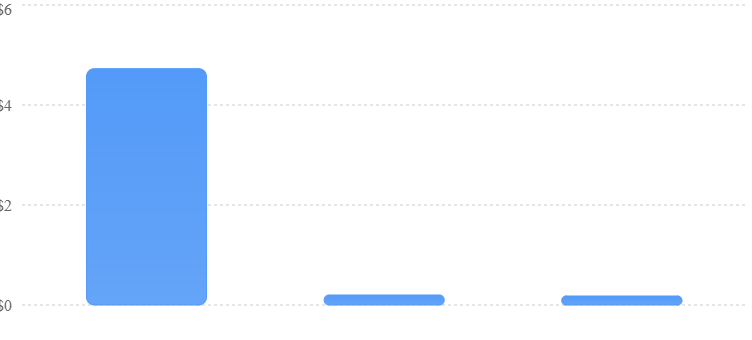
This is one of the most important findings of the entire analysis.
A business could reduce its AI model spending by 50% and barely change its total cost if the workflow still needs substantial human attention.
But reducing unnecessary review time, while keeping the same quality and safety level, could produce a much larger financial improvement.
That does not mean removing approval from sensitive tasks. It means designing better controls so people focus on the cases where their judgment is genuinely needed.
Original SFTechScene Research #3: How Does an AI Workforce Compare With Human Labor in San Francisco?
The next question is whether these AI operating costs are lower than the cost of completing the same tasks manually.
To make the comparison, we used the estimated $47.27 hourly compensation for office and administrative support workers in the San Francisco metro area.
For simplicity, the research assumes that a human employee would need eight minutes for a simple task, 15 minutes for a medium task, and 30 minutes for a complex task.
These manual completion times are modeled assumptions, not measured productivity data. Businesses should replace them with real task timings before making investment decisions.
The Cost of Completing 10,000 Tasks
| Metric | Simple | Medium | Complex |
|---|---|---|---|
| Human time per task | 8 min | 15 min | 30 min |
| Estimated human cost per task | $6.30 | $11.82 | $23.64 |
| AI cost per successful task | $0.14 | $1.18 | $6.81 |
| Human cost for 10,000 tasks | $63,028 | $118,178 | $236,357 |
| AI variable cost for 10,000 successful tasks | $1,362 | $11,812 | $68,095 |
| Modeled cost reduction | 97.8% | 90.0% | 71.2% |
The table shows a substantial difference between the modeled cost of manual work and the variable cost of automated work.
However, these reductions are not predictions of payroll savings. They exclude fixed AI operating expenses and assume that the work being compared has the same acceptable output standard. They also do not establish that all the manual labor hours will disappear from the company’s payroll.
The simple workflow appears especially attractive because it requires little human review. The complex workflow has a smaller advantage because humans remain more involved.
A business could also discover that its complex workflow requires more than 12 minutes of review, or that the AI needs repeated attempts to produce an acceptable result. Either outcome would make the economics less attractive.
What This Means for San Francisco Businesses
Consider a small professional services company that processes thousands of client documents each month.
An AI agent might extract key information, assign categories, and prepare a summary for an employee to approve. The tool could reduce repetitive work without replacing the professional judgment required for the final decision.
That is a strong use case when the incoming documents follow common patterns, errors are easy to detect, and exceptions can be sent to employees.
Now consider an agent asked to investigate complex disputes between customers and vendors.
Each case may require different information, multiple conversations, and careful interpretation of contracts. The agent might still help, but the amount of work that can be safely automated could be much smaller.
The two systems should not be evaluated using the same assumptions.
Original SFTechScene Research #4: The Hidden Difference Between Theoretical Savings and Real Savings
Many AI return-on-investment calculations make a costly mistake.
They treat every hour of work avoided as an hour of money saved.
For a business owner, this can make an otherwise reasonable AI investment appear much more profitable than it actually is.
Suppose an AI system eliminates 20 hours of document preparation each week. Employees may use the extra time to improve customer service, complete more projects, or manage a growing workload.
Those outcomes can be valuable. But if employee pay, overtime, contractor spending, output, and revenue all stay unchanged, the business has not yet turned the extra time into measurable financial savings.
A More Realistic Monthly Cost Model
SFTechScene created a second scenario using 1,000 successfully completed tasks per month.
To represent costs missing from the earlier variable-cost analysis, we assumed $1,500 in monthly platform, monitoring, and support expenses, plus an initial $12,000 implementation cost spread evenly across 12 months.
That produces $2,500 in fixed monthly accounting costs.
We also introduced a realization rate. This represents the share of manual work value that the business can actually convert into avoided spending or measurable additional economic output.
In our example, the realization rates are 25% for simple work, 50% for medium work, and 75% for complex work. These are sensitivity assumptions, not observed results.
| Monthly metric | Simple | Medium | Complex |
|---|---|---|---|
| Successful tasks | 1,000 | 1,000 | 1,000 |
| AI variable spending | $136 | $1,181 | $6,810 |
| Fixed operating and setup allocation | $2,500 | $2,500 | $2,500 |
| Total modeled AI cost | $2,636 | $3,681 | $9,310 |
| Full manual work value | $6,303 | $11,818 | $23,636 |
| Assumed realized value | 25% | 50% | 75% |
| Realized monthly value | $1,576 | $5,909 | $17,727 |
| Net monthly economic benefit | -$1,060 | +$2,228 | +$8,417 |
The simple workflow looks extremely attractive when comparing only variable costs. But in this particular scenario, the fixed operating costs and low realized value create a monthly loss.
That does not make simple automation a bad investment.
It means that an agent saving a few minutes per task may need sufficient task volume, shared infrastructure, or a clearer path to financial value before the investment pays off.
The Break-Even Point Matters More Than the Demo
A business should determine how much work an agent must complete before its realized value covers its costs.
For our three scenarios, the monthly break-even number is calculated by dividing $2,500 in fixed costs by the realized manual value per successful task minus the AI variable cost per successful task.
Successful tasks needed per month to break even
1,737
Simple workflow
529
Medium workflow
230
Complex workflow
Break-even thresholds rounded upward to whole successful tasks, using the fixed costs and realization assumptions in the preceding table.
A company handling only 300 simple requests each month might struggle to justify a dedicated custom-built AI workflow.
A company handling 20,000 similar requests could have a much stronger case, because the fixed costs are spread across far more completed tasks.
This is an important reason why the size of a business’s workload can matter more than the number of agents it operates.
Interactive AI Workforce Cost Calculator
The following calculator uses the same model assumptions as our simple, medium, and complex scenarios. You can change monthly task volume, fixed costs, and the share of human work value that your business can actually recover.
AI workforce ROI estimator
Monthly scenario calculator · USDWorkflow typeSimple administrationMulti-step business workComplex operationsSuccessful tasks per month
1,000
10010,000Fixed monthly costs
$2,500Realized work value
50%
Percent of manual task value converted into actual savings or measurable added output.
Monthly AI spending
$3,681
Realized monthly value
$5,909
Estimated net monthly benefit
+$2,228
Break-even volume: 529 successful tasks per month.
Illustrative calculations, not a quote or forecast. Actual results depend on measured success rates, tool costs, wages, and realized business value.
How Much Would a 10-Agent, 50-Agent, or 100-Agent AI Workforce Cost?
Businesses often describe their AI plans in terms of the number of digital workers they want to deploy.
A founder might want ten agents to manage internal operations. An established business might imagine 50 specialized agents handling customer support, sales administration, reporting, and financial processes.
But a team of 50 agents does not necessarily cost five times as much as a team of ten.
The actual cost depends on what each agent does and how frequently it works.
Model the Workload, Not the Number of Agent Names
Imagine ten agents that each complete 100 simple tasks per month.
Together, they process 1,000 successful tasks. Using our simple-workflow model, their combined variable operating cost is about $136.
Now imagine a single complex agent completing 1,000 successful tasks per month.
Its variable operating cost is about $6,810 in our model.
The single agent is much more expensive to operate because it handles more difficult work, requires more oversight, and has a lower assumed success rate.
Agent count by itself tells a business almost nothing about its budget.
What a Growing AI Workforce Budget Could Look Like
Consider a company deploying a mixed AI workforce containing customer support agents, sales research agents, finance assistants, and internal operations agents.
The following is a separate planning example, not a provider price estimate.
| Expense | Small deployment | Growing deployment | Large deployment |
|---|---|---|---|
| Agents | 10 | 50 | 100 |
| Successful tasks per month | 5,000 | 30,000 | 100,000 |
| Blended variable cost per task | $0.75 | $1.00 | $1.25 |
| Monthly variable cost | $3,750 | $30,000 | $125,000 |
| Fixed monthly operating cost | $2,500 | $10,000 | $30,000 |
| Total monthly cost | $6,250 | $40,000 | $155,000 |
| Annualized operating cost | $75,000 | $480,000 | $1,860,000 |
The blended costs and fixed spending are explicitly assumed for this illustration. They are not calculated from a vendor’s published agent-seat price.
These scenarios show why large-scale agent adoption should be treated as an operating budget rather than a minor software expense.
A 100-agent deployment can cost millions of dollars annually when the system processes large volumes of work and requires substantial operational support.
The business question is whether that spending creates more value than the alternatives.
AI Agents Do Not Need to Work Around the Clock to Be Valuable
One advantage of software agents is that they can process work outside normal office hours when systems and services are available.
A support agent can prepare responses overnight. An accounting agent can reconcile eligible transactions before employees arrive. A sales operations agent can organize data between customer meetings.
But around-the-clock availability does not mean every agent should continuously execute tasks.
An idle agent may generate very little usage spending, while an agent running unnecessary checks every few minutes may waste money.
Good systems activate agents when work arrives, when information changes, or when a defined business event occurs.
For many companies, event-based execution is more economical than keeping agents constantly busy.
Why Agentic AI Can Become More Expensive as It Gets Smarter
Traditional business software usually follows defined rules.
An employee presses a button, and the software performs a predictable operation.
AI agents can work differently. They may examine a problem, decide which tools to use, evaluate the result, and perform additional steps.
This flexibility creates useful capabilities, but also introduces uncertainty in how much work a task will require.
Every Extra Reasoning Step Can Increase Spending
Consider a sales research agent that receives a prospect’s company name.
A basic version searches the company website and prepares a short profile.
A more advanced version might inspect several sources, identify executives, compare recent company announcements, check the CRM, and decide whether the prospect fits the sales team’s target market.
The advanced agent performs more valuable work, but it consumes more tokens and may trigger more paid external requests.
It might also revisit previous steps when information appears inconsistent.
The final task cost depends on the entire sequence, not merely the first request.
Long Context Can Quietly Increase Costs
AI models often receive information about the current task, earlier steps, and relevant company documents.
This information is called context.
As a task grows, the amount of information the model reads may increase. A workflow that repeatedly sends large documents or lengthy histories to the model can use far more tokens than expected.
Businesses can reduce unnecessary spending by giving an agent only the information needed for the current decision.
For example, an invoice agent usually needs the invoice details, supplier records, approval rules, and relevant purchase order. It does not need access to every accounting document the company has ever stored.
Better context management can improve speed, cost, and accuracy at the same time.
Multi-Agent Systems Introduce Coordination Costs
A business may divide work between several agents rather than asking one model to do everything.
A research agent collects information. An analysis agent evaluates it. A writing agent prepares the report. A checking agent looks for errors.
This structure can improve reliability when tasks require different skills.
However, each handoff can create additional model calls, shared context, and opportunities for mistakes.
A four-agent process is not automatically more effective than a single-agent process.
The company should compare both approaches using the same real tasks and the same quality standards.
Original SFTechScene Research #5: When Does Paying for a Better AI Model Make Financial Sense?
The cheapest AI model is not necessarily the cheapest way to complete a task.
To explore this, SFTechScene built a hypothetical comparison between two AI systems performing the same business workflow.
Both systems process 1,000 successful tasks. One uses a cheaper model but needs more human correction. The other uses a more expensive model but performs better.
For this experiment, we assume:
| Variable | Cheaper AI system | More capable AI system |
|---|---|---|
| Model cost per attempt | $0.01 | $0.10 |
| Tool cost per attempt | $0.05 | $0.05 |
| Success rate | 85% | 95% |
| Human review probability | 40% | 10% |
| Review time when required | 5 min | 5 min |
Using the same estimated loaded review rate of $47.27 per hour produces the following results.
A cheaper model can produce a more expensive completed task
Hypothetical cost per successful task, including tools, expected human review and unsuccessful attempts.
■ Model
■ Tools
■ Human review
The cheaper system costs approximately $1.92 per successful task. The more capable system costs approximately $0.57.
Even though the more capable model is ten times as expensive per attempt, the total task cost is roughly 70% lower in this illustrative case.
The reason is straightforward. Human oversight costs much more than the additional model usage.
This is not evidence that a particular commercial model has these success rates. It is a controlled scenario showing how quality and review time can change the economics.
How to Apply This Finding
A San Francisco company evaluating models should run a test containing a representative sample of its real work.
For each model, it should record whether the final result is acceptable, how much model usage costs, which paid tools were called, how much employee attention was required, and whether errors caused additional work.
The model with the lowest combined cost for an acceptable result is often the stronger financial choice.
A cheaper model may still be ideal for classification, routing, or routine summaries. A more capable model may be justified for complicated work where mistakes are expensive.
The best AI workforce may use several models rather than assigning every task to one.
Which San Francisco Businesses Have the Strongest Economic Case for AI Agents?
Not every type of business will benefit equally from an AI workforce.
The best opportunities tend to involve repeatable digital tasks, enough monthly volume to spread fixed costs, clear definitions of success, and problems that can be detected without extensive human investigation.
Customer Support: High Volume Creates an Advantage
Customer support is one of the clearest places to study AI workforce economics.
A business might receive thousands of questions about invoices, subscriptions, appointments, and account settings. Many requests follow familiar patterns and can be resolved using reliable company information.
An AI agent can answer straightforward questions, retrieve approved account information, and complete limited actions such as preparing a refund request.
The economic benefit depends on more than how many conversations the AI handles.
A company must measure how many customer problems are actually resolved, whether customers need to contact support again, and how much employee time is required to correct mistakes.
For example, a low-cost agent that answers 90% of inquiries but resolves only 50% may be less valuable than a more expensive agent that resolves 80% correctly.
A good customer support system should also recognize uncertainty and transfer difficult cases to a person before making an expensive mistake.
Sales Operations: Time Saved Can Become Additional Revenue
San Francisco software startups often spend substantial time researching prospects, managing CRM records, drafting outreach, and preparing sales meetings.
AI agents can reduce some of this work.
The biggest financial benefit may not come from cutting sales staff. It may come from allowing representatives to spend more time speaking with potential customers.
A useful sales automation analysis should measure qualified meetings booked, CRM accuracy, accepted sales opportunities, and additional revenue generated.
Simply counting the number of emails drafted by an agent does not demonstrate economic success.
Businesses should also account for the costs of paid lead data, CRM access, outreach platforms, and human approval.
Accounting and Finance: Strong Potential, Higher Risk
Accounting processes often contain clear rules and recurring work.
Agents can help collect invoices, match records, identify missing information, prepare reports, and investigate routine differences.
These tasks may be good candidates for partial automation because the required output can often be checked against existing records.
But the cost of an error can be significant.
An incorrect payment, unsupported financial statement, or mishandled customer record may create losses far larger than the cost of performing the work manually.
Financial agents therefore need stronger access controls, approval rules, and audit records.
The most attractive early use cases are generally those that reduce preparation and investigation time while keeping important financial decisions under authorized human control.
Professional Services: AI Can Increase Capacity
Consulting firms, legal support teams, agencies, and other professional services businesses handle large volumes of documents and research.
AI can prepare first drafts, organize evidence, summarize meetings, and compare information across sources.
These activities may reduce the time required to deliver certain services.
For a San Francisco agency, the benefit could be the ability to manage more client projects without increasing headcount at the same rate.
For a consulting business, it could mean spending less time preparing routine reports and more time advising clients.
However, quality and professional responsibility remain important. The economics only work when the time spent checking AI output is lower than the work being avoided, or when the system creates measurable additional value.
The Biggest Hidden Costs of an AI Workforce
The strongest AI business cases can still fail when companies overlook expenses that are difficult to see during an early demonstration.
Failed Tasks and Repeated Work
An agent may complete a task on the first attempt or require several retries.
Those retries consume resources.
If a company budgets only for successful attempts, it will underestimate expenses when tasks regularly fail.
Businesses should track how many attempts are made before a task is accepted and how much each attempt costs.
Repeated failures should not continue indefinitely. A system needs clear limits and a way to transfer unresolved work to employees.
Wrong Actions Can Cost More Than Software
An agent that sends the wrong customer email creates an inconvenience.
An agent that makes an unauthorized payment could create a financial loss.
These risks should not be treated as ordinary token expenses.
Companies need to identify actions with serious consequences and prevent agents from performing them without appropriate permission.
Financial savings from automation should never depend on removing controls needed to protect customers, employees, or company funds.
Data Access and Security
AI agents may need access to customer records, internal messages, invoices, contracts, or financial systems.
Giving agents more access than necessary can create security and privacy problems.
Businesses should provide the minimum permissions required for each workflow and keep records of important actions.
Additional security systems and reviews increase operating costs, but they are part of making automation suitable for real business use.
Software Changes and Maintenance
Connected business software changes over time.
An API may introduce new requirements. A company may change its approval policy. A vendor may modify pricing or access permissions.
Agents that worked correctly last month may need updates.
Companies should include ongoing testing and maintenance in their budgets, especially when agents depend on several third-party platforms.
Unused Automation
Another hidden cost is building agents that employees rarely use.
A company might spend thousands developing a workflow that handles only a few tasks each month.
The system may be technically impressive but financially unnecessary.
Before building anything, businesses should measure how frequently the work occurs and how much time it consumes.
The best place to start is usually a task that already creates measurable operational pressure.
How San Francisco Startups Can Build an Economical AI Workforce in 90 Days
A company does not need to automate every department to understand whether agentic AI makes financial sense.
A focused 90-day pilot can provide a clearer answer than an expensive company-wide rollout.

The goal should be to prove that one well-defined workflow produces acceptable results at a cost the business can justify.
Days 1–15: Measure the Current Work
Begin by selecting one recurring task with enough volume to analyze.
The task should have a clear beginning and end, an identifiable owner, and a result that can be checked.
Record how many times the task occurs each week. Measure how much employee time it requires and how often errors or exceptions happen.
Also identify the systems employees use and the cost of those systems.
Avoid estimating labor savings from memory alone. A small sample of actual task timings will provide a stronger baseline.
Days 16–30: Build a Limited Agent
Create an agent that handles a narrow version of the workflow.
If the goal is invoice processing, begin with extracting information and preparing a reviewable record rather than allowing the agent to send payments.
If the goal is customer support, start with common requests supported by approved company information.
Use existing software connections where practical, and avoid building unnecessary infrastructure.
The initial system should make it easy to see what the agent did and whether it completed the task correctly.
Days 31–45: Run a Controlled Test
Test the agent against examples of real work that represent normal cases, difficult cases, and common errors.
For every attempt, record model usage, paid tool calls, completion status, review time, and corrections.
Do not evaluate the system only by whether its output sounds convincing.
An invoice task is successful when the required information is accurate and accepted. A customer support task is successful when the customer’s problem is correctly resolved within the permitted workflow.
Days 46–60: Calculate the Real Cost Per Task
Use the collected data to calculate total costs.
Include all model requests, unsuccessful attempts, paid tools, and human review.
Then divide spending by the number of accepted results.
This produces a much more useful cost measure than the price of one model response.
Compare the result with the company’s current task cost. Include fixed expenses and the realistic financial value of the time being recovered.
Days 61–75: Improve the Most Expensive Part
Examine which part of the workflow drives spending.
If human review dominates the cost, improve the information presented to reviewers and reduce unnecessary checks where doing so is safe.
If model usage is expensive, shorten irrelevant context, use caching where appropriate, or route straightforward tasks to less expensive models.
If failures are common, improve validation, instructions, data quality, or tool connections.
Change one major factor at a time so the business can determine what actually improved the result.
Days 76–90: Decide Whether to Scale
At the end of the pilot, management should have enough information to make a grounded decision.
The system should demonstrate acceptable quality, reasonable operating costs, and a clear way to convert saved time into financial value.
A successful pilot does not automatically justify deploying 100 agents.
Expand only when the company understands how additional volume will affect costs, oversight, reliability, and infrastructure requirements.
The AI Workforce Metrics Every CFO Should Track
Traditional software budgets often focus on subscriptions, users, and cloud spending.
Agentic AI requires more direct attention to the work being performed.
A company should measure both spending and business outcomes.
| Metric | What it tells the business |
|---|---|
| Cost per successful task | Total cost of producing one accepted result |
| First-attempt success rate | How often the agent works without retries |
| Human review minutes | How much employee attention automation requires |
| Tool spending per task | Cost of external software actions |
| Model spending per task | Direct AI processing expense |
| Completion time | How quickly usable work is delivered |
| Error and rework rate | How often additional corrections are needed |
| Realized hours saved | Time converted into measurable value |
| Net monthly benefit | Economic value after AI operating costs |
| Fixed-cost break-even volume | Workload needed to justify the system |
The most important measure is cost per successful task, but it should never be viewed alone.
A financial agent that completes tasks cheaply but makes serious errors is not economically efficient.
Likewise, an agent that saves employees time but creates no measurable improvement may not justify a major investment.
The strongest financial dashboard connects AI activity directly to business performance.
What Happens When AI Model Prices Fall?
AI model prices can change quickly as providers compete, release new systems, and introduce different service tiers.
Lower model prices generally help businesses that use large numbers of tokens.
But the impact on total workforce spending depends on the importance of model charges within each workflow.
For example, our complex workflow spends about $0.18 on the AI model per attempted task, compared with approximately $4.73 in expected human review.
If the model price falls by half, model spending drops to $0.09 per attempt.
That is useful, but it reduces the total attempted-task cost by only about 1.8%, assuming all other expenses remain unchanged.
By contrast, reducing unnecessary human review without increasing errors could deliver a much larger improvement.
This leads to an important conclusion about the next stage of the AI market.
The greatest economic gains may increasingly come from better workflow design rather than cheaper model access alone.
Better Reliability May Matter More Than Lower Token Prices
A reliable AI system can reduce the need for correction, repeated requests, and employee intervention.
That improves the cost of finished work.
Businesses should therefore evaluate new models based on their ability to complete real tasks, not only their advertised intelligence or pricing.
Better models may justify higher usage costs when they reduce expensive operational problems.
The financial winner is the system that creates the best combination of quality, speed, risk control, and total cost.
Original SFTechScene Research #6: The Economic Opportunity Is Bigger Than Replacing Administrative Labor
The most common argument for AI workers is that they will perform tasks once handled by people.
But labor savings represent only one possible source of value.
AI systems can also allow businesses to process more work, serve customers faster, improve response times, and offer services that were previously too expensive to provide.
These benefits can become more important than direct payroll reductions.
A Capacity Example for a San Francisco Business
Imagine a San Francisco professional services company that handles 500 client requests per month.
Each request requires 20 minutes of administrative preparation, giving the team approximately 167 hours of preparation work every month.
Suppose a well-designed agent reduces the human preparation requirement to five minutes per request.
That would reduce the monthly human workload to about 42 hours and release approximately 125 hours of employee capacity.
If the business cannot use those hours productively, the immediate economic benefit may be limited.
But if employees can use the extra capacity to serve additional paying clients, the impact could be significant.
For illustration, assume that one hour of recovered capacity can produce $50 in additional contribution after associated variable costs.
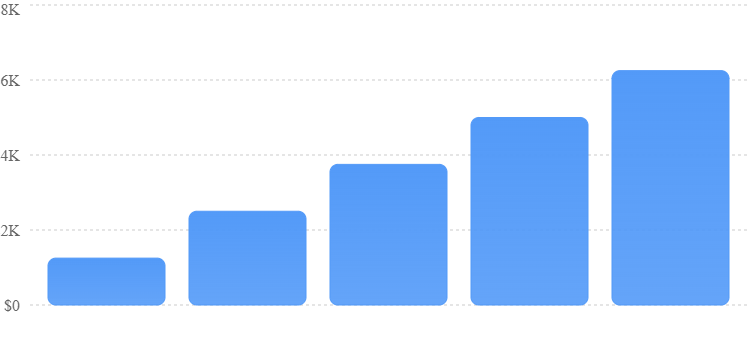
At full utilization, 125 recovered hours would create $6,250 in monthly contribution. At 40% utilization, the contribution would be $2,500.
These figures are scenario assumptions, not observed financial results. The value depends on actual customer demand, staffing, pricing, and the company’s ability to convert capacity into profitable work.
Monthly value of 125 recovered hours
Hypothetical $50 contribution per productively used hour.
The key factor is not simply how many hours an AI system frees.
It is how much additional economic value the company can create with those hours.
For businesses already struggling with customer demand, automation may create capacity that can quickly be put to use.
For businesses with limited demand, releasing employee time may not produce the same return.
This is why AI strategy should be connected to the company’s growth plans rather than treated only as a cost-cutting exercise.
Should San Francisco Businesses Buy AI Agents or Build Their Own?
One of the biggest financial decisions is whether to purchase a ready-made agent product or build a custom system.
Both approaches can make sense, depending on the business.
When Buying Is Usually More Practical
An established agent platform may be the better choice when the workflow is common, software connections already exist, and the vendor provides useful security and monitoring features.
Buying can reduce initial engineering work and help the company test automation sooner.
However, businesses should examine pricing carefully.
Some vendors charge per user, some per conversation, and others per completed action or consumption unit.
A low starting subscription may become expensive when usage rises.
The company should ask exactly what counts as billable activity and whether unsuccessful attempts create additional charges.
When Custom Development May Be Worthwhile
Custom systems may be attractive when a workflow is unusual, commercially important, or deeply connected to proprietary company processes.
A financial services company might need specialized approval rules. A software company may want agents connected to internal systems that commercial products do not support.
Building a system creates greater control, but the business also takes responsibility for reliability, maintenance, security, and operational support.
The relevant comparison is total cost over time, not just the price of building the first version.
A Practical Build-versus-Buy Calculation
Suppose a ready-made product costs $3,000 per month and satisfies the business’s requirements.
A custom alternative requires $30,000 in initial development plus $1,500 per month in ongoing operation.
Ignoring differences in quality, capability, and risk, the custom system saves $1,500 in monthly operating costs.
The initial development investment would therefore take 20 months to recover.
If the company expects to change its workflow significantly within a year, buying could be the more sensible decision.
If the workflow is stable, heavily used, and strategically important, custom development may become more attractive over a longer period.
The break-even calculation should also consider upgrades, compliance costs, vendor pricing changes, and the financial impact of downtime.
Why the Future AI Workforce Will Probably Mix Humans and Agents
The strongest business case for AI may not involve fully replacing entire roles.
Many jobs contain a mixture of repeatable actions, unusual problems, customer interactions, and decisions that require professional judgment.
AI systems can handle some of these activities more effectively than others.
A finance employee might use agents to gather records and prepare reconciliations while retaining responsibility for approvals.
A customer support representative might receive AI-generated case summaries before speaking with a customer.
A sales employee might rely on agents for research and CRM updates but handle important negotiations personally.
This type of collaboration can reduce operational effort without requiring the technology to perform every part of a job.
It also makes gradual adoption possible.
Businesses can automate lower-risk activities first, measure the results, and expand as the systems become more reliable.
The Best AI Workforce Is Not Necessarily the Largest
A company running 100 poorly managed agents could spend more money and create more confusion than a company operating five carefully designed agents.
The number of agents is a technical detail.
What matters is the amount of useful work completed, the quality of the results, and the total cost of delivering those results.
A well-designed AI workforce should therefore be organized around specific business outcomes.
Each agent should have a defined responsibility, clear permissions, measurable performance standards, and an appropriate escalation process.
That makes its value easier to evaluate and its risks easier to control.
Research Methodology, Limitations, and Reproducibility
SFTechScene’s original analysis is a transparent financial simulation based on publicly available wage, compensation, and AI pricing data.
It is not a survey of companies using agents, a controlled trial of model performance, or evidence of realized savings at a particular business.
The purpose is to give San Francisco businesses a repeatable framework for estimating their own costs.
Public Data Used
| Source | Data used | Reference period |
|---|---|---|
| U.S. Bureau of Labor Statistics | San Francisco metro occupational wages | May 2025; published July 2026 |
| U.S. Bureau of Labor Statistics | Western U.S. private employer compensation | June 2026 |
| OpenAI | Published GPT-5.6 Luna and Terra token prices | Checked October 2026 |
| Anthropic | Published Claude Sonnet 5 token prices | Checked October 2026 |
| Published Gemini 2.5 Flash token prices | Checked October 2026 |
Primary sources include the BLS San Francisco occupational wage release, BLS regional employer compensation release, OpenAI Luna pricing, OpenAI Terra pricing, Anthropic Sonnet 5 pricing, and Google Gemini API pricing.
Bureau of Labor Statistics
+5
How the Calculations Were Made
All calculations used U.S. dollars.
Hourly wage comparisons applied the western U.S. employer compensation multiplier of approximately 1.434 to the published San Francisco metro occupational averages.
Task costs were calculated from model input and output tokens, assumed tool charges, and expected human review time. These costs were divided by the modeled success probability to estimate spending per successful task.
Monthly financial scenarios added fixed operating costs and allocated implementation costs.
Where we estimated economic benefits, we distinguished the theoretical value of manual work from the share of that value a company could realistically recover.
What the Research Does Not Prove
The simulations do not establish that a specific AI vendor provides better performance than another.
They also do not establish that San Francisco businesses can eliminate a particular percentage of payroll spending through AI agents.
The analysis excludes taxes on purchased services, financing costs, unusual incident losses, and other company-specific expenses unless explicitly included in a scenario. It also assumes that task definitions and acceptable quality remain consistent between human and AI workflows.
Most importantly, the assumed success rates and review requirements are not measured performance benchmarks.
Businesses should treat the numbers as starting scenarios and replace them with actual workload measurements before investing significant money.
Final Takeaway: The Real Cost of an AI Workforce Is the Cost of Getting Work Done Correctly
The economics of agentic AI are changing how San Francisco businesses think about labor, software, and productivity.
AI models can process many simple tasks at remarkably low direct usage costs. Even complex tasks may have modest model expenses compared with the cost of employee time.
But an AI workforce is not free after the model has been purchased.
Businesses still need tools, infrastructure, security, monitoring, human judgment, and systems that recover from mistakes.
SFTechScene’s original analysis found modeled variable costs of approximately $0.14 for a simple successful task, $1.18 for a medium task, and $6.81 for a complex task. Those figures show how the economics change when workflows require more tools, more review, and more attempts.
Our monthly scenarios also demonstrate why inexpensive automation does not always guarantee a positive financial return. Fixed operating costs, workload volume, and the ability to turn saved time into measurable value can change the answer completely.
For San Francisco founders and business leaders, the smartest next step is not to ask how many digital employees their company can deploy.
It is to identify work that is expensive, repetitive, measurable, and suitable for controlled automation.
Measure what the work costs today. Test what it costs with AI. Include unsuccessful attempts and human oversight. Then calculate whether the time saved becomes lower spending, additional profitable output, or better customer outcomes.
The most successful AI workforce will not be the one with the most agents or the cheapest model. It will be the one that delivers the most reliable business value for every dollar spent.