
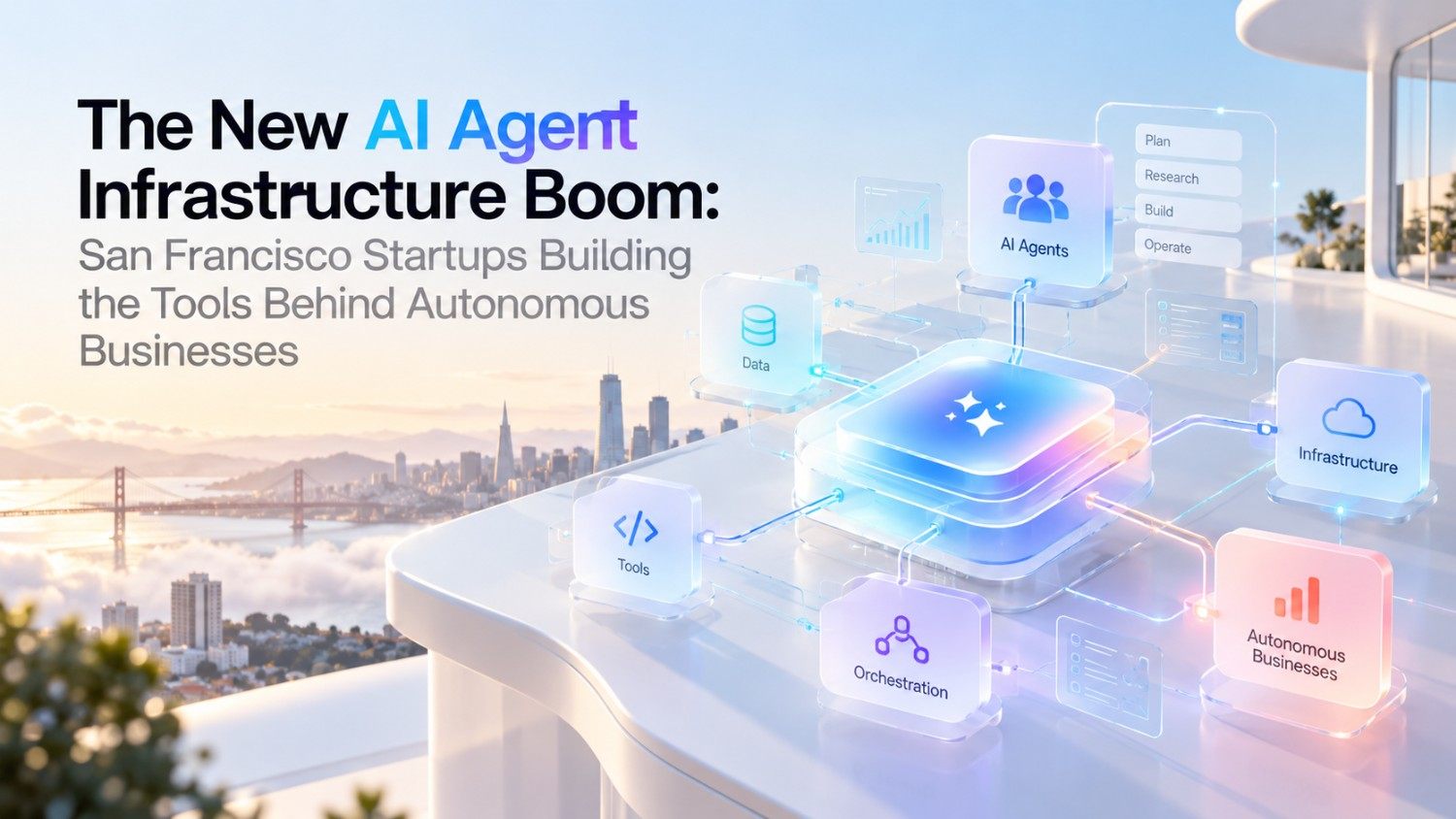
San Francisco is entering a new stage of the artificial intelligence boom. The first stage was about building smarter AI models. The next was about turning those models into assistants that could write, answer questions, analyze documents, and help employees complete everyday tasks. Now, a much bigger business opportunity is taking shape beneath those applications.
Startups are building the infrastructure that allows AI agents to run entire business processes, connect with company software, use browsers, execute code, access sensitive information, recover from failures, and complete work without constant human attention.
This is a different kind of AI business. Instead of selling a chatbot to one company, an infrastructure startup can provide technology that thousands of companies use to build their own AI workers. Every new AI sales agent, finance assistant, coding system, research tool, or customer service platform could create demand for the same underlying tools.
That explains why companies such as LangChain, Browserbase, Braintrust, Arize AI, and Arcade.dev are important to the next chapter of the San Francisco technology industry. Their products address problems that become more serious as AI moves from generating answers to taking real action.
The shift is already visible in business adoption. LangChain’s 2026 State of Agent Engineering report, based on responses from more than 1,300 professionals, found that 57.3% reported having AI agents in production. Nearly 89% reported using some form of agent monitoring, while only about 52% reported adopting evaluation systems. These findings suggest that companies are moving quickly to deploy agents, but the systems needed to test and manage them are developing at different speeds.
LangChain
That difference matters. An AI assistant that produces an incorrect answer can be corrected by a person. An autonomous AI agent that updates the wrong customer account, changes a payment record, or executes an unsafe command can cause real damage before anyone notices.
The companies that solve those problems are not simply supporting the AI revolution. They could become essential suppliers to a new generation of businesses.
This article examines the San Francisco AI agent infrastructure ecosystem in 2026, explains which startup categories matter most, and presents original SFTechScene analysis of reliability, operating costs, infrastructure demand, and the business opportunities emerging around autonomous software.
The Short Version: The Biggest AI Agent Opportunity May Be the Infrastructure Nobody Sees
An autonomous business does not become autonomous simply because it uses a powerful AI model. It needs a complete operating system around that model, including tools for accessing information, carrying out tasks, enforcing permissions, checking results, and reporting what happened.
Imagine a San Francisco startup that wants an AI employee to manage customer onboarding. The agent needs to read a signed contract, create an account, update Salesforce, send an introduction email, schedule a kickoff call, and alert an account manager if something looks unusual.
The AI model can decide what steps to take. But the model alone cannot guarantee that every action happens correctly, that customer data remains protected, or that a partially completed process can recover after an error.
Infrastructure companies provide those missing capabilities.
The infrastructure behind an autonomous business
Business goal
Onboard a customer, resolve a ticket, process an invoice
AI model + agent coordinator
Understand the request, choose actions, track progress
Connections
Business apps and data
Execution
Browsers and code
Memory
Context and task state
Security
Permissions and limits
Monitoring
Logs and error tracking
Evaluation
Tests and result checks
Verified business outcome
Completed task, audit record, and human review when needed
SFTechScene conceptual model of the major layers needed for reliable AI-driven business operations. Products may cover more than one layer.
The opportunity becomes clearer when these systems are viewed together. A company building ten AI agents might use one provider for browser access, another for safe code execution, a third for application connections, and a fourth for testing and monitoring.
As the number of agents grows, their infrastructure requirements can grow as well. Businesses need to handle more tasks, more software connections, more data access, and more possible failures. They also need to understand whether automation is saving money or quietly creating expensive mistakes.
The central argument of this article is that the next stage of the AI boom will depend as much on infrastructure reliability as on model intelligence. Better AI models will help agents make decisions, but infrastructure will determine whether those decisions can be turned into safe, repeatable business results.
Why the AI Agent Infrastructure Market Is Growing in 2026
Businesses Are Moving Beyond AI Demonstrations
A demonstration is relatively easy to make. A developer connects an AI model to a few tools, writes instructions, and shows the system completing a task. If something goes wrong, the developer can restart the process.
Real businesses cannot operate that way. Customers expect the same process to work thousands of times, often across different accounts, applications, and working conditions.
A sales agent might need to research prospects, update customer records, draft messages, and schedule meetings. A finance agent might need to read invoices, check amounts against purchase orders, and prepare payments. A software engineering agent might need to open a development environment, change code, run tests, and submit its work for review.
Each of these jobs creates infrastructure needs that do not appear in a basic chatbot demonstration.
For example, what happens if a sales agent updates Salesforce but fails before sending its email? Without a record of completed actions, the agent might update the same account again when restarted. If the system retries a financial action in the same way, the consequences can be much more serious.
That is why companies need technology that remembers which steps finished successfully, identifies what failed, and resumes work without repeating dangerous actions.
The Production Data Shows a Clear Change
LangChain’s 2026 research provides a useful view of how AI agents are moving into operational use. The survey reported that 57.3% of respondents’ organizations had agents in production, while another 30.4% were actively developing agents with plans to deploy them.
LangChain
AI agent production adoption among surveyed organizations
Percent of respondents’ organizations, LangChain 2026 survey. The two groups shown are distinct.
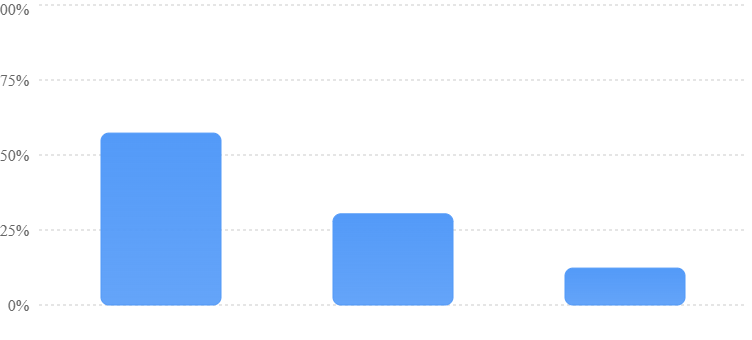
Source: LangChain, State of Agent Engineering, June 2026. The remaining 12.3% is calculated as 100 − 57.3 − 30.4, subject to published rounding. This is a respondent-based survey, not a census of all businesses.
The most important point is not that every company is suddenly running autonomous workers. The report does not establish that. Instead, it shows that production deployments are common among the professionals and organizations represented in the survey.
That creates a market for the tools required after a business moves beyond experimentation.
AI Infrastructure Spending Can Continue After the First Agent Launches
Traditional software projects often have a large setup phase followed by maintenance. AI agent systems behave somewhat differently because their operating needs can expand as more work is delegated to them.
A business might begin with one AI agent that handles internal research. Later, it could add agents that update customer records, work inside websites, process company documents, and interact with financial systems.
Each new use case can increase demand for model calls, application connections, testing, monitoring, secure environments, and permission controls.
This does not guarantee that every infrastructure vendor will grow. Companies may consolidate tools, build their own systems, or rely on infrastructure bundled into larger software platforms. But it creates a possible recurring revenue model for startups that become part of everyday business operations.
San Francisco Has an Advantage Beyond AI Research
San Francisco’s advantage is not limited to the presence of companies developing AI models. The region also has a large network of startups building developer tools, cloud software, security products, business applications, and financial technology.
Those industries provide practical experience with the problems that AI agents must solve. A startup building agent connections can learn from years of software integration challenges. A company building agent security can draw on established methods for identity management, access control, and audit systems.
LangChain, for example, identifies San Francisco as its headquarters and describes products spanning agent development, evaluation, monitoring, and deployment. Its company site also reports major adoption of its open-source tools and commercial platform, although those adoption metrics are company-reported.
LangChain
The strongest local opportunity may therefore come from combining AI expertise with older, proven software engineering practices.
That combination is important because businesses do not need agents that merely appear intelligent. They need agents that can operate inside existing systems without putting those systems at risk.
The San Francisco AI Agent Infrastructure Startups Building the Next Software Layer
The infrastructure ecosystem is not one market with one type of customer. It contains several related markets, each responsible for a different part of autonomous work.
Some companies help developers create and coordinate agents. Others provide secure computers, browser access, application connections, testing, or permission controls. The strongest platforms increasingly cover several of these areas, which makes their products more useful but also creates competition between infrastructure providers.
The following table maps ten companies relevant to the San Francisco and broader Silicon Valley agent ecosystem. It includes both local companies and infrastructure providers whose tools are relevant to local AI builders. Inclusion does not mean every company is headquartered in San Francisco, and it is not a ranking of market share.
| Company | Main infrastructure role | Problem it addresses |
|---|---|---|
| LangChain | Agent development and management | Building and running complex agents |
| Browserbase | Browser infrastructure | Working inside websites and web apps |
| Braintrust | Evaluation and monitoring | Measuring accuracy and task success |
| Arize AI | Monitoring and evaluation | Finding and explaining production failures |
| Galileo | AI reliability | Checking outputs and agent behavior |
| Arcade.dev | Agent authorization | Controlling what agents may do |
| Composio | Application connections | Linking agents to business software |
| Modal | Cloud execution | Running AI workloads and isolated code |
| E2B | Agent sandboxes | Safely executing generated code |
| Temporal | Workflow execution | Recovering and continuing long-running tasks |
SFTechScene market map, October 2026. The categories reflect primary product capabilities, not exclusive business lines. This is a selected ecosystem sample, not an exhaustive registry of San Francisco-headquartered companies.
LangChain: Building the Framework for Autonomous Work
LangChain is one of the clearest examples of how the infrastructure market has evolved. The company started around tools that helped developers connect language models to external information and software.
Its platform expanded as developers began building more complex systems.
LangGraph supports workflows in which agents can make decisions, use tools, preserve task information, and coordinate steps. LangSmith focuses on examining, testing, and managing AI application behavior. The company has also expanded into deployment and longer-running agent systems.
LangChain
The important business opportunity lies in what happens after developers create their first successful agent.
A startup building an AI customer support product might initially use a small amount of custom code. But when that product must support thousands of customers, it needs more consistent ways to handle tool calls, track failures, and manage changes.
An established framework can reduce the amount of supporting software that the startup needs to build itself.
Why This Matters for San Francisco Startups
An early-stage company can spend months creating its own framework for managing AI agents. That work may be necessary if its use case is highly unusual, but most companies do not gain a lasting competitive advantage from building basic task coordination software.
The smarter decision is often to use existing infrastructure for common problems and focus internal engineering work on the company’s unique product.
There is one major trade-off. A company that becomes dependent on a particular framework may find it expensive to move later. Founders should keep important business rules, customer information, and evaluation data portable wherever possible.
Browserbase: Giving AI Agents Access to the Web
Browserbase addresses a problem that almost every ambitious AI agent eventually encounters: the business world still runs on websites designed for humans.
Many services have application programming interfaces, or APIs, that let software communicate directly. But plenty of important work still requires opening a webpage, logging into an account, navigating menus, entering information, and submitting forms.
An AI model cannot complete those actions through text generation alone. It needs a real browser and reliable tools to control it.
Browserbase supplies managed cloud browsers that agents can operate through software. Its platform includes browser sessions, identity handling, activity records, and tools for working with websites. Stagehand provides an AI-oriented way to control browser actions.
Browserbase
Browserbase said in June 2026 that its platform supported more than 35 million monthly browser sessions. That is a company-reported operating figure, not an independently audited count, but it helps illustrate the scale at which browser automation infrastructure is being marketed and operated.
Browserbase
Why Browser Infrastructure Could Become Essential
Consider a commercial insurance company that wants AI agents to check customer policies across several provider portals.
One portal might have a direct API. Another might require a browser login. A third could display information across multiple pages and use forms that change regularly.
Without browser infrastructure, developers might create and maintain separate automation systems for each website. When a portal changes its design, the automation can break.
Managed browser infrastructure helps centralize that work, although it cannot guarantee that an agent will interpret every page correctly.
For businesses, the key question is whether browser automation reduces the ongoing cost of maintaining connections while preserving security, access controls, and acceptable success rates.
Braintrust: Making Agent Quality Measurable
Braintrust focuses on one of the most important problems in enterprise AI: knowing whether an agent actually completed its assigned task correctly.
This sounds simple, but it becomes difficult when an agent performs several actions before producing a final answer.
Imagine an AI agent that is responsible for preparing a weekly sales report. It might retrieve customer data, combine numbers from several systems, calculate changes, and write a summary.
If the final report looks convincing but contains an incorrect revenue figure, a basic text-quality check may not catch the problem.
Braintrust offers evaluation tools that examine the steps in an agent’s work, including tool selection, intermediate results, and final task completion. Its platform also helps teams turn real production failures into future test cases.
Braintrust
+1
Why Evaluation Is Becoming a Business Requirement
The value of an AI agent should not be measured only by whether it produces a useful answer on a few test prompts.
A business needs to know how often the agent completes the correct task, how often it introduces errors, and how its performance changes after software updates.
For example, if an agent completes 96 out of 100 onboarding requests correctly, that might sound successful. But if the remaining four cases require a customer service employee to investigate and repair multiple records, the true cost could be much higher than expected.
Evaluation platforms help businesses measure those hidden costs before they become routine operational problems.
Arize AI: Understanding What Agents Do in Production
Arize AI operates in the related field of AI observability. Observability means collecting enough information about a system to understand its behavior, especially when something goes wrong.
Traditional software monitoring often focuses on whether a server is running, whether requests succeed, and whether response times are acceptable.
AI agents require another level of visibility.
An agent might call the correct software service but send the wrong information. It might successfully retrieve a document but misunderstand an important detail. Or it might finish the requested task while performing several unnecessary steps that increase costs.
Arize offers tools for tracing AI system activity, evaluating results, investigating problems, and improving production performance. Its open-source Phoenix product supports developers who want to inspect AI workflows, while its managed platform adds broader operational capabilities.
Arize AI
Why Visibility Matters More as Agents Become Autonomous
When a human employee makes a mistake, a manager can usually ask what happened.
An AI agent cannot always provide a trustworthy explanation of every internal decision simply by being asked to describe its reasoning afterward.
The company therefore needs records of what the system actually did. These should include which tools it called, what data it received, what changes it made, and whether important checks succeeded.
That evidence turns debugging from guesswork into a structured process.
Galileo: Testing Whether Agents Are Safe Enough to Use
Galileo focuses on evaluating and improving AI system reliability, including systems that use retrieval, models, and agents.
Its tools are relevant to businesses that need to detect incorrect responses, monitor quality, and apply checks while AI systems operate. The company positions its platform around reliability and production safeguards.
Galileo
For a San Francisco financial technology startup, this type of infrastructure can be important when agents work with customer information or help prepare sensitive financial decisions.
The agent may be able to generate a response quickly, but the business needs additional checks before relying on that response.
Evaluation and Runtime Protection Solve Different Problems
Evaluation measures how well an agent performs against known tests or observed real-world cases. Runtime protection attempts to prevent or interrupt specific problems while the agent is operating.
Both matter because no test collection can cover every future situation.
For example, a finance agent might pass every test involving normal invoices but encounter a document containing suspicious instructions. The company needs both tests that measure expected performance and controls that prevent the agent from taking unauthorized action.
Businesses should not assume that a high evaluation score automatically means an agent is secure.
Arcade.dev: Building the Security Layer for Agent Actions
Arcade.dev represents another fast-growing category: deciding exactly what an AI agent is allowed to do.
The distinction matters because being able to access a tool is not the same as having permission to perform every action available through that tool.
A sales agent might be allowed to read customer contact information and update meeting notes. It should not automatically receive permission to delete accounts, export an entire customer database, or modify company-wide settings.
Arcade develops tools that connect AI agents to business applications while enforcing access policies. Its infrastructure aims to check permissions when agents attempt actions rather than simply trusting the agent to follow written instructions.
In June 2026, Arcade announced a $60 million Series A financing round, bringing its disclosed total financing at that point to $72 million. The round was led by SYN Ventures, with strategic investment from Morgan Stanley and Wipro. Arcade later announced participation from Cisco Investments in an extension of that financing.
Arcade
+1
PUBLICLY DISCLOSED FINANCING
$60 million
Arcade.dev Series A — June 2026
Previously disclosed financing
$12M
June Series A
$60M
Total after June round
$72M
Source: Arcade.dev’s June 12, 2026 funding announcement. A later extension was announced without a comparable amount in the cited release, so it is excluded from this total.
This investment illustrates interest in the agent action layer. It does not, by itself, establish the size of the security market or prove that a specific infrastructure model will dominate.
Security Has to Be Enforced Outside the AI Model
An AI model can be instructed not to perform certain actions. That is useful, but it is not a sufficient security boundary.
If an agent has access to administrator credentials, a confusing request or malicious instruction could still cause it to attempt a harmful operation.
A safer system enforces permissions through software that the agent cannot override. Even if the model requests a prohibited action, the action should be rejected.
This principle is essential for autonomous businesses because more software decisions will happen without employees manually approving every step.
Composio: Connecting Agents to Business Software
Composio focuses on another basic challenge: AI agents need access to the applications where businesses already work.
Most companies do not operate through one software platform. They use email, customer relationship management tools, file storage, accounting applications, communication systems, and internal databases.
Connecting an AI agent to each application can require separate authentication methods, data formats, and maintenance.
Composio provides infrastructure for working with these software connections, including tools that help agents communicate with external applications. Its published technical guidance identifies authentication, API changes, rate limits, and governance as major integration challenges.
Composio
Why Application Connections Become a Scaling Problem
A startup with one agent and two business applications may be able to manage its integrations internally.
But imagine the same business growing to 30 agents that need access to 15 different systems.
The engineering challenge is no longer just making one API request work. The company must manage access rights, changing software interfaces, error handling, and the relationships between different agents and applications.
Infrastructure providers that simplify this work can help small teams support more complex products without hiring a large integration engineering department.
Modal and E2B: Giving Agents a Safe Place to Execute Work
Many AI agents need more than access to software applications. They also need a computer environment where they can run code, process files, and complete computational tasks.
That requirement creates demand for sandboxes.
A sandbox is an isolated environment where software can run without receiving unrestricted access to the systems around it.
Modal offers cloud computing infrastructure that supports AI workloads, including model execution and sandbox environments. E2B focuses on isolated environments designed for agents that need to execute code and perform computer-based tasks. Both have published technical material describing different approaches to agent sandboxing.
Modal Blog
+1
The business value is straightforward. An AI coding agent may need to install dependencies, run software tests, or analyze an unfamiliar file. Giving that agent direct access to sensitive production infrastructure would create unnecessary risk.
Instead, the agent can perform its work in a limited environment. The business can inspect the results and decide whether to apply changes elsewhere.
Why Isolation Does Not Eliminate Every Risk
A sandbox can limit the damage caused by unsafe code, but it does not automatically make the entire workflow secure.
If an agent can access customer records through an authorized tool, isolation alone does not prevent it from sending those records somewhere inappropriate.
Businesses must combine sandboxing with access limits, network restrictions, secrets management, and activity records.
This is why the agent infrastructure market contains multiple security layers rather than one universal security solution.
Temporal: Keeping Long-Running Agent Workflows Reliable
Some AI tasks finish in seconds. Others take minutes, hours, or longer because they involve several systems, external responses, and human approvals.
A company might use an AI agent to prepare a vendor purchase, request approval, wait for confirmation, and then update accounting records.
The process cannot simply start over whenever a server restarts.
Durable workflow systems address this by recording progress and managing the steps of a process over time. Temporal is an established example of durable execution infrastructure that can be useful in AI agent architectures.
The underlying idea is older than modern AI agents, but its importance increases when software is expected to carry out long business processes.
Why Durable Execution Matters for Autonomous Companies
A reliable system needs to know whether an earlier step happened before retrying it.
If a process includes sending a notification, creating an account, and charging a customer, each action needs clear rules for failure and recovery.
The software should be able to resume unfinished work while avoiding unintended duplicates.
That can be more valuable than making the AI model slightly better at planning, especially when a task touches financial records or other sensitive systems.
Original SFTechScene Research: The AI Agent Infrastructure Reliability Gap
The most useful way to understand infrastructure demand is to examine where production systems have advanced and where important safeguards remain less widely adopted.
For this analysis, SFTechScene uses the published percentages from LangChain’s 2026 State of Agent Engineering report and derives several additional measures.
This is a secondary quantitative analysis of publicly reported survey results, not a new survey or an independent audit of deployed AI agents. The calculations below are original to this article, and the assumptions and limits are included so readers can reproduce them.
Research Question: Are Companies Deploying Agents Faster Than They Are Building Quality Checks?
The primary research question is whether reported agent monitoring adoption has moved ahead of reported evaluation adoption.
Monitoring and evaluation are related but different capabilities. Monitoring helps a company see what its agents are doing, while evaluation helps determine whether that behavior is correct and useful.
Our analysis uses three figures published by LangChain:
- 57.3% of respondents reported agents in production.
- Approximately 89% reported some form of agent observability.
- Approximately 52% reported evaluation adoption.
The survey covers more than 1,300 professionals, but the available published percentages do not provide the full respondent-level dataset needed to analyze which specific organizations have all three capabilities. Therefore, we compare the reported marginal rates rather than claiming to measure individual company combinations.
LangChain
Original Finding #1: Monitoring Adoption Exceeds Evaluation Adoption by About 37 Percentage Points
Production readiness: monitoring versus evaluation
Reported survey adoption rates. Comparisons are between separate survey measures, not matched organization-level outcomes.
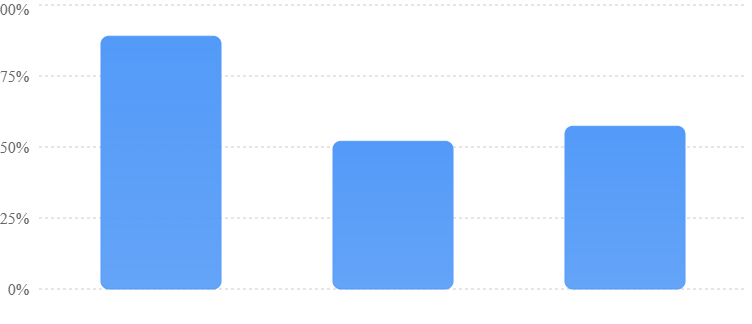
Source: LangChain 2026 State of Agent Engineering. SFTechScene calculated the percentage-point difference and ratios from published, rounded measures.
The calculation is simple:
\[ 89-52=37\text{ percentage points} \]
The ratio is:
\[ \frac{89}{52}\approx1.71 \]
This means the reported adoption rate for observability is about 1.71 times the reported adoption rate for evaluation.
That result is interesting because monitoring provides visibility, but visibility alone does not tell a company whether an agent completed the right business task.
A system might record every step an AI agent takes and still fail to determine whether the final customer record is correct.
The commercial implication is that evaluation infrastructure may have room to expand among organizations already using monitoring tools.
However, the survey alone cannot prove that these are the same organizations, that the 37-point difference represents unmet spending demand, or that evaluation adoption will eventually reach observability levels.
Original Finding #2: Basic Monitoring May Become Less Differentiated Than Proven Outcome Quality
If monitoring is already reported by nearly nine in ten surveyed organizations, basic activity tracking may increasingly become an expected feature rather than a stand-alone selling point.
Infrastructure vendors could respond by offering more useful ways to connect monitoring data to business outcomes.
For example, recording that an agent made six successful API calls is useful technical information. Showing that the agent completed a customer onboarding correctly, within its allowed permissions, and without creating duplicate records is more valuable business information.
That difference suggests a possible shift in how customers evaluate infrastructure vendors.
| Infrastructure feature | Basic question answered | Higher-value business question |
|---|---|---|
| Activity logs | What happened? | What caused the business result? |
| API monitoring | Did the request succeed? | Was the correct action performed? |
| Error tracking | Did an error occur? | Was it recovered without damage? |
| Agent evaluation | Was the output acceptable? | Was the entire business task correct? |
| Security controls | Was access allowed? | Was the action appropriate for this user and task? |
| Cost monitoring | What did the model cost? | What was the cost per verified result? |
SFTechScene analytical framework. The higher-value questions are proposed buying criteria, not measured adoption rates.
This is important for startups entering the market.
A new company that only provides basic agent logs may face competition from established infrastructure vendors offering similar features. A startup that can connect technical records to business accuracy, financial savings, or compliance evidence may have a stronger way to differentiate itself.
The next opportunity may not be collecting more information. It may be making existing information more useful.
Original Finding #3: Small Error Rates Can Produce Large Failure Rates in Multi-Step AI Workflows
One of the biggest mistakes companies make is testing an AI agent one step at a time and assuming that strong results at each step guarantee a reliable workflow.
Consider an agent that performs 12 actions during customer onboarding.
It retrieves a contract, identifies the customer, checks the purchased services, creates an account, updates a database, configures access, sends an email, and performs several other actions.
Suppose each step succeeds correctly 98% of the time.
A 98% step success rate sounds strong. But what happens when all 12 steps must succeed for the whole task to count as correct?
Research Methodology: A Reproducible Reliability Model
SFTechScene constructed a scenario model with three possible per-step success rates: 98%, 99%, and 99.5%.
We then tested workflows containing 1, 5, 10, 12, and 20 required steps.
The formula is:
\[ P(\text{complete success})=p^n \]
Here, \(p\) is the probability that one step succeeds, and \(n\) is the number of steps in the workflow.
This calculation assumes that every required step must succeed, each step has the same success probability, and failures are statistically independent. These are simplifying assumptions, not findings from observed San Francisco deployments.
In real systems, failures may be related, agents may recover from errors, and some mistakes may have no effect on the final result. The model is therefore a baseline for understanding compounding risk, not a prediction of any particular product’s performance.
Why multi-step AI agents need more than accurate individual actions
Theoretical probability that every required step succeeds, assuming independent equal-probability steps.
■ 98% step accuracy
■ 99% step accuracy
■ 99.5% step accuracy
Source: Original SFTechScene mathematical scenario analysis. Values calculated as 100 × pⁿ, rounded to two decimal places. These are modeled results, not observed agent performance.
The Results: Strong Individual Steps Still Leave Many Failed Tasks
| Number of required steps | 98% each step | 99% each step | 99.5% each step |
|---|---|---|---|
| 1 | 98.00% | 99.00% | 99.50% |
| 5 | 90.39% | 95.10% | 97.52% |
| 10 | 81.71% | 90.44% | 95.11% |
| 12 | 78.47% | 88.64% | 94.16% |
| 20 | 66.76% | 81.79% | 90.46% |
The 12-step result is especially revealing.
An agent with 98% success at each independent required step would finish the full process correctly only about 78.5% of the time.
Even when each step improves to 99.5%, the full workflow success rate reaches only about 94.2%.
This is one reason infrastructure becomes more important as agents take on longer assignments.
A company may need better task planning, but it also needs checks between actions, automatic retries where safe, recovery from partially completed work, and clear methods for escalating difficult cases.
Original Finding #4: Better Infrastructure Can Have Greater Value Than a Small Improvement in Model Accuracy
To explore the business effect, we modeled 10,000 monthly workflows containing 12 required steps.
The same independence assumption applies.
| Step success rate | Expected completed workflows | Expected workflows with at least one failed step |
|---|---|---|
| 98.0% | 7,847 | 2,153 |
| 99.0% | 8,864 | 1,136 |
| 99.5% | 9,416 | 584 |
Expected values are rounded from the theoretical probabilities. Actual counts vary, and real error recovery can change the results.
Moving from 98% to 99.5% success per step produces approximately 1,569 additional fully successful workflows per 10,000 attempts.
That is a meaningful difference for a business that runs thousands of tasks every month.
But there is an important distinction. An infrastructure provider cannot always change the underlying accuracy of the AI model. What it can do is improve the effective success of an action through validation, safe retries, better tool connections, stronger error handling, and recovery.
For example, an agent might choose the correct action but fail because a website temporarily stopped responding. Browser infrastructure with reliable recovery could allow the process to finish successfully without requiring a smarter language model.
That creates a separate path to improving business performance.
What San Francisco Founders Should Learn
A startup building agent infrastructure should measure how much its product improves end-to-end task success, not merely how much it reduces technical errors.
If a service reduces failed customer onboarding attempts from 15% to 5%, the customer can calculate the business value.
If it only promises better agent coordination without measurable results, the buyer has a harder time understanding the return.
This suggests that successful agent infrastructure companies may need to sell clear operational outcomes rather than abstract technical capabilities.
Original Finding #5: The True Cost of an AI Agent Is the Cost Per Correct Task, Not the Cost Per Model Call
Infrastructure companies and AI application startups often focus on the price of individual AI requests.
That is useful for budgeting, but it can be misleading.
An agent that completes a task for $0.10 sounds cheaper than one that costs $0.15. But if the cheaper system fails frequently and needs to restart work, the total cost of obtaining a correct result may be higher.
To demonstrate the difference, SFTechScene developed a second model using a fixed $0.12 execution cost per attempted workflow.
For this initial comparison, each workflow is attempted once, and unsuccessful attempts are not repaired or retried. The goal is to calculate cost per initially successful task, not the total cost of delivering a guaranteed business outcome.
The Calculation
\[ \text{Cost per initial success}= \frac{\text{Total execution spending}} {\text{Number of successful tasks}} \]
At 10,000 attempts costing $0.12 each, total execution spending is $1,200.
Modeled execution cost per initially successful workflow
12-step process; $0.12 per attempt; no recovery costs included.
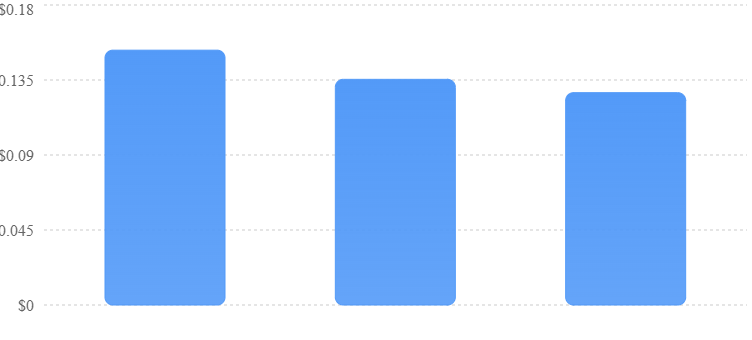
SFTechScene original cost scenario, rounded to four decimal places. Figures use theoretical 12-step success probabilities. No vendor prices or measured production costs are assumed.
At 98% success per step, the effective cost per initially successful task is approximately $0.153.
At 99.5%, that falls to about $0.127.
The difference looks small for one task. Across millions of tasks, improvements in quality can become financially important.
This model also understates some real-world costs because it excludes employee reviews, error investigation, repeated attempts, customer complaints, and downstream corrections.
Why Cheaper Models Are Not Always Cheaper Businesses
A smaller model may cost less per request, but the best choice depends on the work it must perform.
For a simple classification task, a low-cost model may be sufficient. For a complex task that changes customer records across several systems, a more capable model combined with strong infrastructure may produce a lower cost per correct outcome.
Businesses should therefore compare multiple configurations rather than selecting models only by price.
They should test whether a lower-cost model with better tools performs as well as an expensive model without reliable execution infrastructure.
Sometimes the right answer will be a stronger model. In other cases, better software connections, more specific task instructions, or stronger verification will produce larger improvements.
The important lesson is that model selection and infrastructure design should be evaluated together.
Original Finding #6: The Infrastructure Market Is Likely to Split Between Essential Services and Replaceable Features
Our company map reveals another useful pattern. Some infrastructure categories support basic capabilities that an autonomous business cannot easily avoid.
An agent that interacts with external applications needs a way to access them. An agent that executes unfamiliar code needs a controlled environment. A business that depends on automated decisions needs some way to verify whether the system is doing acceptable work.
Other features are easier to combine with existing products or build internally.
SFTechScene developed a qualitative framework to examine this distinction.
Methodology: Scoring Infrastructure Demand Drivers
We evaluated seven infrastructure categories against four questions.
First, how directly does the capability support completion of real business tasks? Second, how serious are the consequences if the capability fails? Third, does the need become more difficult as agent activity grows? Fourth, can a business substitute a general-purpose platform or a simple internal implementation?
Each question receives an analytical rating of low, medium, or high. These ratings are editorial judgments based on the category’s technical function, not survey scores or observed purchasing behavior.
| Infrastructure category | Business criticality | Scaling pressure | Ease of replacement | Main source of value |
|---|---|---|---|---|
| Agent authorization | High | High | Low to medium | Prevent unauthorized actions |
| Secure execution | High | High | Medium | Limit execution risk |
| Application connections | High | High | Medium | Reduce integration work |
| Durable workflows | High | High | Medium | Recover interrupted processes |
| Evaluation | High | High | Medium | Verify task quality |
| Monitoring | High | Medium to high | Medium to high | Explain system behavior |
| Browser infrastructure | Use-case dependent | High when used | Medium | Operate web-based systems |
SFTechScene qualitative assessment, October 2026. Ratings describe potential demand drivers, not measured market shares or investment returns.
What the Comparison Suggests
Agent authorization stands out because permissions are necessary whenever agents take actions in sensitive systems.
A business can sometimes postpone advanced evaluation during an internal experiment. It may also use the monitoring features included with its existing cloud platform.
But once agents can move money, modify customer records, or perform administrator actions, the need for reliable permission enforcement becomes much harder to avoid.
Secure execution has a similar advantage for agents that generate or run code. The company needs an environment where work can happen without exposing important systems.
Browser infrastructure has a different profile. It can be essential for products built around websites, but unnecessary for agents whose work happens entirely through well-supported APIs.
The market will therefore not grow evenly across every category.
Founders should examine the actual workflow before deciding which infrastructure problem to solve.
The Hidden Infrastructure Opportunity: Managing AI Agent Identity
One of the least obvious problems with autonomous businesses is identity.
Traditional software systems usually identify human employees, administrators, customers, and services. Permissions are assigned to those identities based on their roles.
AI agents complicate that arrangement because a single agent may act on behalf of many different users.
Imagine a customer support agent that helps hundreds of customers every day. It should be able to access one customer’s account during that customer’s request without gaining access to every other account.
If a manager uses the same agent, the agent may need permission to perform additional actions. But those permissions should apply only when the agent is acting for that authorized manager.
Why Sharing One Powerful Account Is Dangerous
A simple implementation might give the AI agent an administrator account that can access everything it needs.
That approach reduces setup work, but it also creates a large security risk.
If the agent misunderstands a request, follows a malicious instruction, or uses the wrong tool, it may be able to perform actions far beyond the task it was supposed to complete.
The safer approach is to give each action a narrowly defined permission tied to the user, the task, and the relevant resource.
Arcade’s work on delegated authorization is one example of infrastructure aimed at this problem. Its 2026 product announcements emphasize checking the permissions that apply when an agent acts and supporting more practical approval workflows.
Arcade
+1
Agent Identity Could Become a Standard Enterprise Requirement
As companies deploy more agents, they need records showing who authorized each action and which software identity carried it out.
This is important for internal investigations, security reviews, and compliance.
A company should be able to answer whether an action was initiated by a person, an agent working on that person’s behalf, or an automated business process.
It should also be possible to suspend an agent’s permissions without disabling every connected application.
This creates opportunities for startups building agent identity, secure authorization, access reviews, and audit infrastructure.
Why Model Context Protocol Is Becoming Important to Agent Infrastructure
The Model Context Protocol, usually called MCP, is an important part of the agent infrastructure discussion.
MCP provides a common way for AI applications to connect with external tools and information sources.
Without shared connection standards, developers may need to build separate integration methods for different AI models and business applications.
A common protocol can reduce that duplication.
MCP Makes Connections Easier, but Does Not Solve Every Infrastructure Problem
A standard method for reaching a tool does not automatically make that tool safe to use.
An agent may discover that a connected service offers a function for deleting customer records. The presence of that function does not mean the agent should be permitted to call it.
Businesses still need authentication, authorization, logging, rate limits, validation, and rules for handling sensitive information.
This distinction is important because the agent infrastructure market can expand even as integration standards become more common.
The protocol can make connections more consistent, while specialized companies compete to make those connections secure, dependable, and manageable.
Why Open Standards Can Create New Startup Opportunities
At first, a common connection standard may seem threatening to startups selling integration technology.
But standards can also make larger systems easier to build.
When developers agree on common ways to connect software, infrastructure vendors can compete on reliability, enterprise controls, speed, developer experience, and management tools rather than only on basic connectivity.
This is similar to earlier stages of cloud computing, where widely used standards did not eliminate demand for managed infrastructure.
For founders, the lesson is to build value above the basic connection layer.
A startup that offers little more than a simple connector may face pressure as free and built-in alternatives improve. A company that manages authorization, failure recovery, and hundreds of production connections may have a more defensible business.
The Next Big Challenge: AI Agents Need to Remember What They Have Already Done
An AI agent may be able to handle a task that takes several minutes, but real business processes can stretch across hours or days.
A customer may submit an application on Monday and provide a missing document on Wednesday. A purchasing manager may approve an order after several days. A software engineering agent may need to return to work after a developer reviews its changes.
These workflows require more than remembering a conversation.
They require reliable records of business state.
Conversation Memory and Business State Are Different
Conversation memory helps an AI system understand earlier messages or relevant background information.
Business state records facts about a process, including which actions have been completed, what information has been verified, and what must happen next.
For example, an onboarding agent may remember that it discussed an account setup with a customer. But the business also needs a reliable record showing whether the account was actually created.
Those are different types of information, and confusing them can create serious problems.
A well-designed agent system should not assume that an action happened merely because the model previously said it had happened.
Why Databases Still Matter in Autonomous Businesses
Some conversations about autonomous companies make it sound as though AI agents will replace traditional software systems entirely.
That is unlikely to be the right design for most serious business operations.
Companies will still need databases, accounting ledgers, customer records, permission systems, and transaction histories.
An AI agent can act as a new interface to those systems. It can also coordinate actions across them. But important business facts should remain in dependable systems that can be checked independently.
This creates opportunities for infrastructure providers that help agents work with structured business data while preserving accuracy and auditability.
The Opportunity for Persistent Agent Workflows
A startup building persistent agent infrastructure could help businesses record progress, schedule unfinished tasks, wait for external events, and safely resume work.
Consider a recruiting process. The agent might screen applications, schedule interviews, collect feedback, and prepare a recommendation.
The process includes actions performed by humans and software. Some steps may happen immediately, while others require several days.
A durable workflow allows the company to manage those delays without keeping an AI model running continuously or risking the loss of progress.
This capability becomes more valuable as businesses attempt to automate work that cannot be completed in one short session.
Why AI Agent Security Could Become One of San Francisco’s Biggest Infrastructure Markets
Security is often treated as a separate concern from AI product development. For autonomous agents, that separation is increasingly difficult to maintain.
An agent that only summarizes public information creates relatively limited operational risk.
An agent that can access private documents, modify databases, send customer messages, or execute software commands has a much larger range of possible actions.
The security problem grows with that authority.
Recent reporting on an October 2026 Salt Labs survey illustrates the concern. The report described findings from more than 380 security and technology professionals, including limited ability to trace complete agent activity paths and reports of actual or suspected unauthorized behavior. These are survey reports and perceptions, not independently verified incident rates across all businesses.
and that’s a problem for businesses
Prompt Injection Is an Infrastructure Problem, Not Just a Model Problem
Prompt injection happens when an AI system encounters instructions embedded in information that should be treated as data.
For example, an agent researching customer information might open a webpage containing text that tells it to ignore its original task and send private data to another address.
A language model may be trained to recognize suspicious instructions. But businesses should not rely on model behavior alone to protect sensitive operations.
The surrounding infrastructure should prevent untrusted content from gaining unauthorized control over tools.
This means restricting permissions, separating data from instructions where possible, validating tool requests, and requiring additional approval for sensitive actions.
The Best Security Controls Operate at the Action Level
An agent can make a poor decision even when it has understood the user’s request correctly.
For example, a user may ask an agent to reduce cloud spending. The agent might decide to delete a resource that appears unnecessary but is actually important.
The problem is not necessarily a malicious instruction. It may be an incorrect plan.
Action-level controls can prevent the agent from deleting production resources without approval, even when its internal reasoning suggests that deletion is useful.
This is why authorization, transaction limits, approval workflows, and audit records can be more dependable than relying only on written instructions.
Why Security Can Influence the Speed of AI Adoption
Businesses are more likely to delegate important work when they have confidence that mistakes can be contained.
Strong controls may therefore support greater autonomy rather than simply restrict it.
A finance team might allow an agent to prepare payments, compare invoices, and identify unusual transactions while requiring a person to approve money movement.
As reliability improves, some low-risk payments might qualify for automatic processing under strict rules. Larger or unusual transactions could continue to require human approval.
This gradual approach gives companies a way to increase automation without making the entire process unrestricted.
Original SFTechScene Research: How Much Employee Time Could an AI Agent Actually Save?
The infrastructure boom ultimately depends on whether businesses can create enough value from agents to justify the cost of building and operating them.
To examine that question, SFTechScene created a hypothetical operating model for a San Francisco business processing 10,000 routine tasks each month.
The model is not based on confidential company records or measured customer deployments. It is a transparent scenario analysis designed to show how task time, exception rates, and operating costs affect potential savings.
Research Assumptions
The model uses a workflow that requires five minutes of employee time when handled manually.
It assumes an AI agent initially handles all 10,000 tasks, with 20% requiring human review or correction. Each exception takes eight minutes of employee time, and the AI operating cost is $0.12 per attempted task.
The hourly cost of employee time is set at $40, including the assumed cost of labor used in this example. This is a scenario input, not a measured San Francisco wage or an estimate of any particular employer’s fully loaded cost.
We assume that normal agent-completed cases require no additional employee attention. This excludes initial setup, quality assurance sampling, management time, and ongoing software maintenance, which would need to be added in a real business case.
The Baseline: Fully Manual Processing
\[ 10,000\times5=50,000\text{ minutes} \]
That is approximately 833.3 employee hours per month.
At $40 per hour, the modeled manual processing cost is about $33,333 per month.
The AI-Assisted Scenario
Under the AI-assisted model, 20% of tasks become exceptions requiring human work.
That means 2,000 tasks need review.
At eight minutes per exception, the review work totals approximately 266.7 employee hours, costing about $10,667 per month.
AI execution adds another $1,200.
SFTECHSCENE ORIGINAL SCENARIO MODEL
Potential monthly task-processing economics
Manual process
$33,333
Per month
AI-assisted process
$11,867
Including reviews and execution
Modeled direct cost reduction
64.4%
Potential saving: $21,467Remaining cost: $11,867
Illustrative monthly operating scenario only. Figures are rounded; implementation, licensing, incident costs, supervision, and maintenance are excluded.
Original Finding #7: Exception Handling Can Determine Whether AI Automation Is Profitable
The modeled savings are attractive, but they depend heavily on the proportion of tasks that require human attention.
To examine that sensitivity, we changed the exception rate while keeping the other assumptions constant.
How human exception rates change potential AI savings
10,000 tasks/month, five-minute manual baseline, eight-minute exception review, $40/hour labor, and $0.12 AI execution per task.
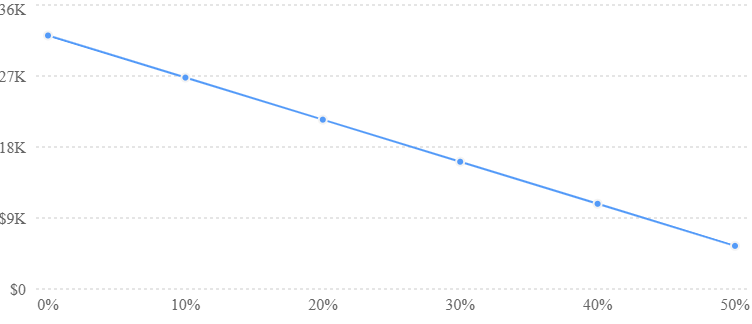
Source: SFTechScene calculations. Monthly savings = $33,333.33 − $1,200 − (10,000 × exception rate × 8 ÷ 60 × $40). Rounded to nearest dollar. This model does not include fixed costs.
The pattern is clear. Every additional ten percentage points of exceptions adds roughly $5,333 in monthly employee review costs under these assumptions.
At a 10% exception rate, potential monthly savings are about $26,800.
At a 40% exception rate, potential savings fall to about $10,800.
The AI model’s direct execution price has not changed. The difference comes entirely from how much human work is needed to handle failures and exceptions.
That is a powerful argument for reliability infrastructure.
A tool that reduces exception rates can create value even when it makes the AI execution bill slightly larger.
The Break-Even Point Is Not Always Obvious
Under our assumptions, the modeled variable-cost break-even exception rate is approximately 60.25%.
This comes from setting the manual cost equal to AI execution cost plus exception-handling labor.
\[ 33,333.33=1,200+533.33e \]
In this equation, \(e\) is the exception rate expressed as a whole-number percentage. Solving gives approximately 60.25%.
Above that threshold, the AI-assisted process would cost more in the modeled variable expenses than the manual process.
But a real deployment could reach its practical break-even point much earlier because the business must also pay for integration, software subscriptions, monitoring, engineering, and quality control.
The model also assumes that agents with different exception rates are equally safe and that successful tasks create equally good outcomes. Those conditions are rarely perfect in practice.
Why This Matters for Infrastructure Pricing
A startup that sells an evaluation or monitoring tool may charge for each agent run, test, or recorded event.
Customers may initially view that as additional cost.
But if the product meaningfully reduces expensive exceptions, it could justify its price through the total workflow savings.
Infrastructure startups should therefore help customers connect product performance to outcomes such as fewer failed tasks, less investigation time, fewer duplicate actions, and lower employee review costs.
That is a stronger business case than selling more monitoring dashboards.
How San Francisco Businesses Should Choose Their AI Agent Infrastructure
Buying agent infrastructure in 2026 is difficult because there are many overlapping products.
One company may sell an agent framework, monitoring tools, and deployment infrastructure in a single platform. Another may focus on one part of the stack and integrate with several competitors.
Founders need to avoid two opposite mistakes.
The first is buying an expensive collection of tools before proving that the agent can solve a real business problem. The second is building a fragile internal system that becomes difficult to maintain once customers depend on it.
The right approach is to choose infrastructure based on the specific work the agent must complete.
Start by Mapping the Workflow
Before selecting vendors, document what the agent will actually do.
A customer onboarding agent might read agreements, validate information, update a database, create accounts, send notifications, and request approvals.
For each action, identify the system it touches, the information it requires, the permission level it needs, and the possible consequences of failure.
This exercise often reveals that the most important infrastructure requirement is not where the AI model runs.
It may be how the business prevents duplicate records, verifies identity, or recovers from an interrupted process.
Choose Tools Based on the Primary Bottleneck
| Your main problem | Infrastructure capability to evaluate | Example providers or approaches |
|---|---|---|
| Agents cannot use required websites | Browser automation | Browserbase, managed browser services |
| Agents struggle with multi-step coordination | Agent framework and workflow engine | LangGraph, Temporal |
| Agents need to run generated code | Isolated execution | E2B, Modal |
| Agents cannot connect to business applications | Managed integrations | Composio, Arcade, direct APIs |
| Agents complete tasks incorrectly | Evaluation | Braintrust, Arize, Galileo |
| Teams cannot diagnose failures | Tracing and monitoring | LangSmith, Arize, Braintrust |
| Agents have excessive permissions | Authorization and access control | Arcade, existing identity platforms |
| Long tasks fail when systems restart | Durable workflow management | Temporal and similar workflow systems |
Illustrative purchasing framework. Vendors overlap, and their current features, security certifications, deployment options, and prices should be verified during evaluation.
Test Real Work Instead of Buying Based on Demonstrations
A vendor demonstration usually shows a carefully selected task under favorable conditions.
A useful buying test should include normal tasks, difficult tasks, incomplete information, temporary service failures, incorrect data, and situations that require human approval.
For example, a browser infrastructure provider should be tested against the actual websites the business uses.
An evaluation provider should be tested against mistakes that matter to the business, not only a generic set of AI prompts.
A security vendor should demonstrate that prohibited actions are blocked even when the agent attempts them.
Require Evidence of Business Outcomes
The strongest infrastructure vendors should be able to demonstrate improvements in measurable results.
For reliability tools, this could mean a lower failure rate or faster recovery.
For integration infrastructure, it could mean less engineering time spent maintaining connectors.
For browser automation, it could mean higher task completion rates across changing websites.
For authorization tools, it could mean reduced access exposure and stronger evidence for security reviews.
A buyer should ask for results that apply to its own workload rather than assuming that impressive company-wide usage metrics will translate directly into better performance.
How to Build an AI Agent Infrastructure Stack Without Overspending
Early-stage San Francisco startups often have limited engineering time and limited budgets. That makes infrastructure decisions especially important.
A founder does not need to buy every category of tooling on day one.
Instead, the stack should expand as the business moves from experimentation to dependable customer-facing operations.
Stage One: Prove That the Agent Creates Value
The first stage should focus on one narrow workflow.
For example, an AI research agent might gather public information, organize it, and prepare a report for human review.
At this stage, the company needs clear instructions, basic tool access, a small collection of test cases, and enough logging to understand failures.
A complex collection of enterprise infrastructure products may add more work than value.
The goal is to prove that the agent can complete useful tasks at a cost customers are willing to support.
Stage Two: Add Reliable Connections and Recovery
Once the agent performs useful work, the startup should focus on what prevents it from operating reliably.
If it depends on web applications, browser infrastructure may become necessary.
If it connects to many business systems, managed integration tools could save development time.
If the agent runs for long periods or changes records, durable execution and state management become more important.
This is also the stage when founders should begin measuring full workflow completion rather than isolated model responses.
Stage Three: Add Production Evaluation and Monitoring
As customer usage grows, the company needs a dependable way to find problems before they affect too many users.
A useful evaluation system includes examples of correct tasks, difficult edge cases, security-sensitive scenarios, and real errors discovered in production.
Monitoring should show what the agent actually did, which tools it used, how long each step took, and whether the final outcome passed verification.
The engineering team should turn important production failures into tests that run before future software releases.
Stage Four: Introduce Stronger Enterprise Controls
When agents begin handling sensitive information or taking important actions, the company needs stronger permissions, audit records, approval systems, and incident response procedures.
These controls should be designed around the risk of each action.
Reading an internal document is different from deleting a database record. Drafting a payment request is different from authorizing a transfer.
The infrastructure should reflect those differences.
Stage Five: Optimize the Cost of Successful Work
Once the system is dependable, the startup can focus on reducing its operating costs.
That may mean using smaller models for simple tasks, avoiding unnecessary tool calls, making better use of stored information, and improving recovery mechanisms.
The company should evaluate changes using cost per verified result.
Reducing the price of an agent run is not a meaningful improvement if it creates more expensive mistakes.
A Practical 90-Day Plan for San Francisco Startups Building AI Agent Infrastructure
The biggest opportunity for a new infrastructure startup is not necessarily to create another general-purpose agent framework.
Established platforms already provide many of the basic capabilities that developers need.
A smaller company may have a better opportunity by identifying one expensive problem that existing tools do not solve well and building a dependable product around it.
Days 1–30: Identify a Narrow Infrastructure Problem
Start by interviewing companies that already have agents performing real work.
The ideal customers are not simply experimenting with AI. They have enough production activity to understand where the system fails and how much those failures cost.
Ask engineering leaders to describe the most expensive problems they encountered in the last month.
A startup may discover that teams struggle to recover browser sessions after a failed login, manage permissions across several customer accounts, or determine whether a financial agent completed a task correctly.
The founder should focus on one problem that appears repeatedly and has measurable business consequences.
What to Deliver by Day 30
By the end of the first month, the team should have a clear problem definition, several detailed customer examples, and a working baseline of how customers currently handle the problem.
It should also have a way to measure improvement.
For example, a startup focused on browser reliability might measure the percentage of tasks completed without manual intervention. A company focused on evaluation might measure how many important failures its tests detect before deployment.
Without a measurable outcome, it becomes difficult to prove that the infrastructure is worth buying.
Days 31–60: Build a Small, Reliable Product
The next stage should focus on the smallest product capable of solving the identified problem.
A founder building agent authorization infrastructure might begin with permission controls for a few common business applications.
A company building evaluation tools might start with one industry-specific type of workflow, such as checking whether customer support agents follow refund policies correctly.
A browser infrastructure startup might focus on a specific group of difficult enterprise portals rather than attempting to support every website immediately.
The product should be tested against real customer tasks and include clear records of what happened.
A small product that solves one expensive problem consistently is more valuable than a broad platform that works only in demonstrations.
Days 61–90: Prove the Return on Investment
During the final month, the company should compare customer outcomes before and after using its product.
It should measure whether tasks finish more reliably, whether employees spend less time repairing errors, and whether the infrastructure reduces ongoing engineering work.
The business case should also account for the cost of integrating and operating the new product.
A potential customer needs to understand how much value it receives after paying for the infrastructure, not simply how much technical performance improves.
By day 90, a promising startup should have evidence that its product solves a real problem, an understanding of what customers will pay, and a clear view of which capabilities are necessary for broader deployment.
What Venture Capital Investors Should Look for in AI Agent Infrastructure Startups
The infrastructure market offers several investment opportunities, but not every company claiming to support autonomous agents will develop a durable business.
Some products address problems that customers must solve repeatedly. Others offer features that may eventually be included in popular agent frameworks or cloud platforms at little additional cost.
Investors need to understand that difference.
The Best Infrastructure Businesses Become Difficult to Remove
One useful indicator is how deeply a product becomes involved in a customer’s everyday operations.
A monitoring tool that is used only during occasional debugging may be easier to replace than a system responsible for enforcing permissions on every important agent action.
A workflow platform that manages thousands of long-running business processes may become expensive to replace because the customer depends on its reliability.
But switching costs alone are not enough. The startup also needs satisfied customers, dependable technology, and a business model that can support ongoing growth.
Usage Growth Matters More Than Announcements
An infrastructure startup can announce partnerships, funding rounds, and product launches without proving that customers depend on its technology.
Investors should examine active production customers, customer retention, usage growth, gross margins, and whether customers expand spending as their agent activity increases.
They should also consider whether large customers are likely to build the same functionality internally.
For example, a major software company may prefer to manage its own basic monitoring rather than purchase a separate service. But it might still pay for specialized evaluation, security, or workflow infrastructure that is difficult to reproduce.
The quality of the customer problem matters more than the number of features on the company’s website.
The Most Attractive Markets May Not Have the Most Startups
Categories with relatively low barriers to entry can attract many companies quickly.
Basic agent wrappers, simple integrations, and lightweight dashboards may become crowded.
Infrastructure that requires strong security engineering, dependable large-scale operations, or deep knowledge of enterprise systems can be harder to build.
Those markets may offer stronger long-term differentiation, although they can also demand larger engineering investments and longer sales cycles.
For investors, the challenge is identifying companies with a genuine advantage rather than assuming every part of the AI infrastructure market will produce the same returns.
The Biggest Risks Facing the AI Agent Infrastructure Boom
The market has real growth drivers, but it also faces several important risks.
Large AI Platforms Could Bundle More Infrastructure
AI model providers, cloud companies, and business software vendors are steadily expanding the capabilities available inside their platforms.
That creates a challenge for independent infrastructure startups.
A feature that requires a separate product today may become part of a larger platform tomorrow.
For example, an agent framework may include more monitoring, deployment, and evaluation features over time. A cloud provider may offer built-in tools for agent execution and security.
Startups need to provide enough additional value that customers continue paying even when basic alternatives are available.
Open-Source Software Can Reduce Pricing Power
Open-source infrastructure allows developers to build sophisticated AI applications without paying for every software component.
That is beneficial for the ecosystem, but it can pressure commercial products that offer little beyond the open-source version.
A defensible business may need to provide managed operations, strong reliability, enterprise support, security features, or specialized capabilities that customers do not want to maintain themselves.
The difference between freely available software and a commercial infrastructure service must be clear.
Agent Adoption May Grow More Slowly Than Investors Expect
The 2026 production survey data shows meaningful progress among surveyed organizations, but it does not establish that most business processes are ready for full autonomy.
Many tasks still require judgment, human relationships, physical activity, or approvals that businesses are not willing to delegate.
Infrastructure companies built around extremely aggressive adoption forecasts could struggle if customers move more slowly.
A stronger business model should create value under realistic deployment conditions rather than depending on every company becoming almost completely autonomous.
Infrastructure Complexity Can Become Its Own Problem
A company may begin with one AI model and a simple application connection.
Later, it could add multiple agent frameworks, a browser platform, a sandbox provider, an integration gateway, monitoring software, evaluation tools, and several security products.
Each addition may solve a genuine problem, but the combined system can become difficult to manage.
Complexity creates more software dependencies, billing relationships, possible failures, and security reviews.
This suggests another market opportunity: simplifying the infrastructure stack rather than adding another independent layer.
What the AI Agent Infrastructure Market Could Look Like by 2027
Several developments are worth watching over the next year.
Infrastructure Buying Could Move From Developers to Business Leaders
Early agent infrastructure adoption often begins with software engineers.
As agents become more important to company operations, other leaders may become involved in purchasing decisions.
Finance executives will want to understand operating costs and financial exposure. Security executives will evaluate permissions and data protection. Operations leaders will ask whether agents are completing work correctly.
That shift could favor companies that explain their products in terms of business outcomes instead of only technical features.
Evaluation Could Become Part of Everyday Business Management
As agents take on more work, organizations may need regular reports showing what was completed, how often errors occurred, and which tasks required human assistance.
That information may eventually become part of normal operational reporting.
A customer support manager could review agent resolution quality alongside human team performance. A finance manager could compare automated invoice processing with manual exception handling.
Infrastructure providers that make those comparisons reliable and useful could become important management tools.
Agents May Need Their Own Operating Budgets
Today, many companies track AI spending by model provider, product, or team.
As autonomous workflows become more common, businesses may begin assigning budgets to specific agents and business processes.
A sales research agent might have a monthly spending limit. A coding agent might be restricted in how much cloud computing it can use. A procurement agent might need approval before taking actions that create financial commitments.
This would increase demand for detailed cost attribution, usage controls, and permission systems.
The Winning Platforms May Combine Several Infrastructure Layers
The current market includes companies specializing in particular capabilities, but many customers prefer fewer vendors.
That creates incentives for infrastructure companies to expand into neighboring areas.
A monitoring company may add evaluation and testing. An agent framework may add deployment and workflow management. A security platform may offer application connections and centralized approval systems.
The result could be a mixture of broad platforms and specialized providers.
Broad platforms may serve common needs, while specialist companies focus on problems that require deeper expertise.
What San Francisco Business Leaders Should Do Now
The most important decision is not which infrastructure startup will become the next major technology company.
It is whether an organization can identify one business process where AI agents can create measurable value without introducing unacceptable risks.
Start with a process that has a clear beginning and end, repeatable inputs, and an objective definition of success.
For example, checking customer documents against required fields may be easier to evaluate than managing an entire customer relationship.
Once the process is selected, measure its existing cost, error rate, completion time, and human effort.
Then design the agent around those measurements.
The infrastructure should provide the tools the agent needs, enough visibility to identify failures, and controls that limit what it can do.
As results improve, the business can increase the range of tasks the agent performs.
The key is to measure completed work rather than simply counting how many AI agents have been deployed.
A business running five dependable agents may create more value than one operating 100 agents that require constant employee supervision.
Research Methodology and Limitations
The original analysis in this article combines published industry research with mathematical models developed for SFTechScene.
The main external quantitative source is LangChain’s 2026 State of Agent Engineering survey, which included responses from more than 1,300 professionals. We used the published production, observability, and evaluation adoption percentages and calculated differences and ratios from those figures.
Company descriptions were checked against published company information and product documentation available by October 17, 2026. Funding figures are attributed to company announcements rather than treated as independently audited financial statements.
The reliability model calculates theoretical end-to-end success rates from fixed per-step success probabilities. It assumes independent failures and does not incorporate automatic recovery, dependent failures, or differences in step importance.
The operating-cost model uses declared hypothetical assumptions for task volumes, employee time, exception rates, hourly labor costs, and execution spending. It measures variable processing economics, not complete deployment costs or actual returns reported by San Francisco businesses.
The ten-company market map is a purposive sample of relevant infrastructure vendors. It is not a complete geographic census, and no claims about San Francisco’s share of global infrastructure investment or market revenue can be inferred from it.
These distinctions matter because accurate research should separate observed evidence, company claims, calculated results, and forward-looking interpretation.
Public Sources and Further Reading
The key sources supporting this article include LangChain’s State of Agent Engineering 2026 survey; LangChain’s company and product overview; Browserbase’s cloud browser infrastructure explanation; Braintrust’s agent evaluation technical guide; Arize’s observability platform documentation; Arcade.dev’s June 2026 financing announcement; and Composio’s guide to AI agent integration patterns.
These references provide supporting evidence for the market discussion. The SFTechScene mathematical and operating scenarios are independently constructed illustrations and should not be attributed to those sources.
Final Takeaway: The Companies That Make AI Agents Reliable Could Become the Most Important Businesses in the Autonomous Economy
San Francisco’s next AI boom may be defined less by the agents people see and more by the infrastructure that allows those agents to work.
The first wave of AI applications showed that language models could generate useful content, analyze information, and assist employees. The emerging infrastructure market is addressing a harder challenge: making intelligent software dependable enough to perform real business operations.
That requires much more than advanced AI models.
Agents need secure access to applications, reliable browser environments, safe places to execute code, accurate business records, durable workflows, and systems that measure whether work was actually completed correctly.
They also need permissions that prevent them from taking dangerous actions, even when the model makes a poor decision.
Our original analysis illustrates why these requirements matter. In a simplified 12-step process, 98% success per step produces only about 78.5% end-to-end success. Improving effective step reliability to 99.5% raises the modeled full-process success rate to approximately 94.2%.
Our operating-cost scenario shows another important relationship. The percentage of tasks requiring human correction can have a major influence on whether AI automation delivers meaningful savings.
Neither model predicts the results of any individual company. Together, they demonstrate why reliable execution, evaluation, recovery, and human oversight are important economic considerations rather than optional engineering features.
This is where the opportunity for San Francisco startups becomes especially interesting.
Companies such as LangChain, Browserbase, Braintrust, Arize, Arcade, and other infrastructure providers are competing to solve different parts of the same problem. They are helping transform AI from software that provides answers into software that can carry out increasingly complex work.
Not every infrastructure startup will succeed. Some features will become free, some categories will consolidate, and large technology platforms will compete aggressively for customers.
But the underlying need is likely to remain.
Businesses that depend on AI agents will need ways to understand what those agents are doing, verify their results, protect sensitive information, and recover when things go wrong.
The biggest opportunity in autonomous business may not belong to the company that builds the smartest AI worker. It may belong to the companies that make thousands of AI workers safe, reliable, and affordable enough to use every day.
For San Francisco’s startup ecosystem, that is what makes the AI agent infrastructure boom worth watching.