
San Francisco has always been a city where startups rethink how businesses operate, and now they are bringing that same approach to recruiting, hiring, and human resources. Finding the right employees has become increasingly challenging as companies deal with hundreds of applications, rising hiring costs, lengthy interview processes, and growing pressure to build strong teams quickly.
AI agents are emerging as a practical solution, helping businesses search for qualified candidates, review applications, schedule interviews, manage employee onboarding, and handle everyday HR tasks with less manual effort. Unlike traditional recruiting software that simply stores information or automates basic steps, these intelligent systems can carry out connected tasks, work across different business tools, and help recruiters make better-informed decisions.
For San Francisco startups, the opportunity goes beyond saving time or cutting administrative costs. It is about building a faster, more organized, and more effective hiring process without losing the human judgment that good recruitment requires. As AI recruiting technology develops, understanding where these agents deliver real value, where they fall short, and how to implement them responsibly is becoming essential for founders, recruiters, and HR leaders across the Bay Area.
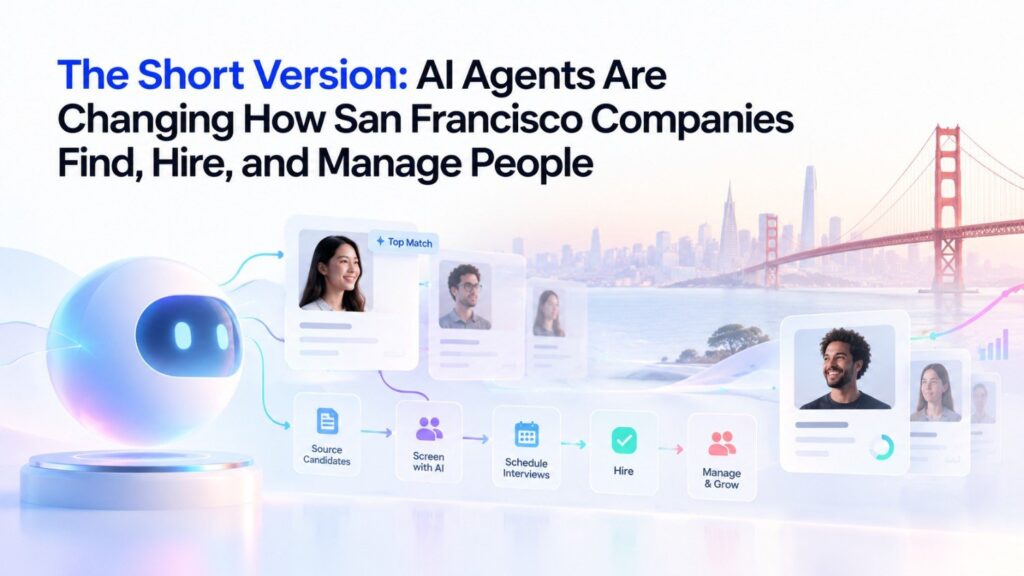
The Short Version: AI Agents Are Changing How San Francisco Companies Find, Hire, and Manage People
A San Francisco startup needs to hire a senior software engineer. The hiring manager writes a job description, the recruiter searches for candidates, hundreds of applications arrive, and the team spends weeks reviewing resumes, scheduling interviews, collecting feedback, and preparing an offer.
Now imagine a different process.
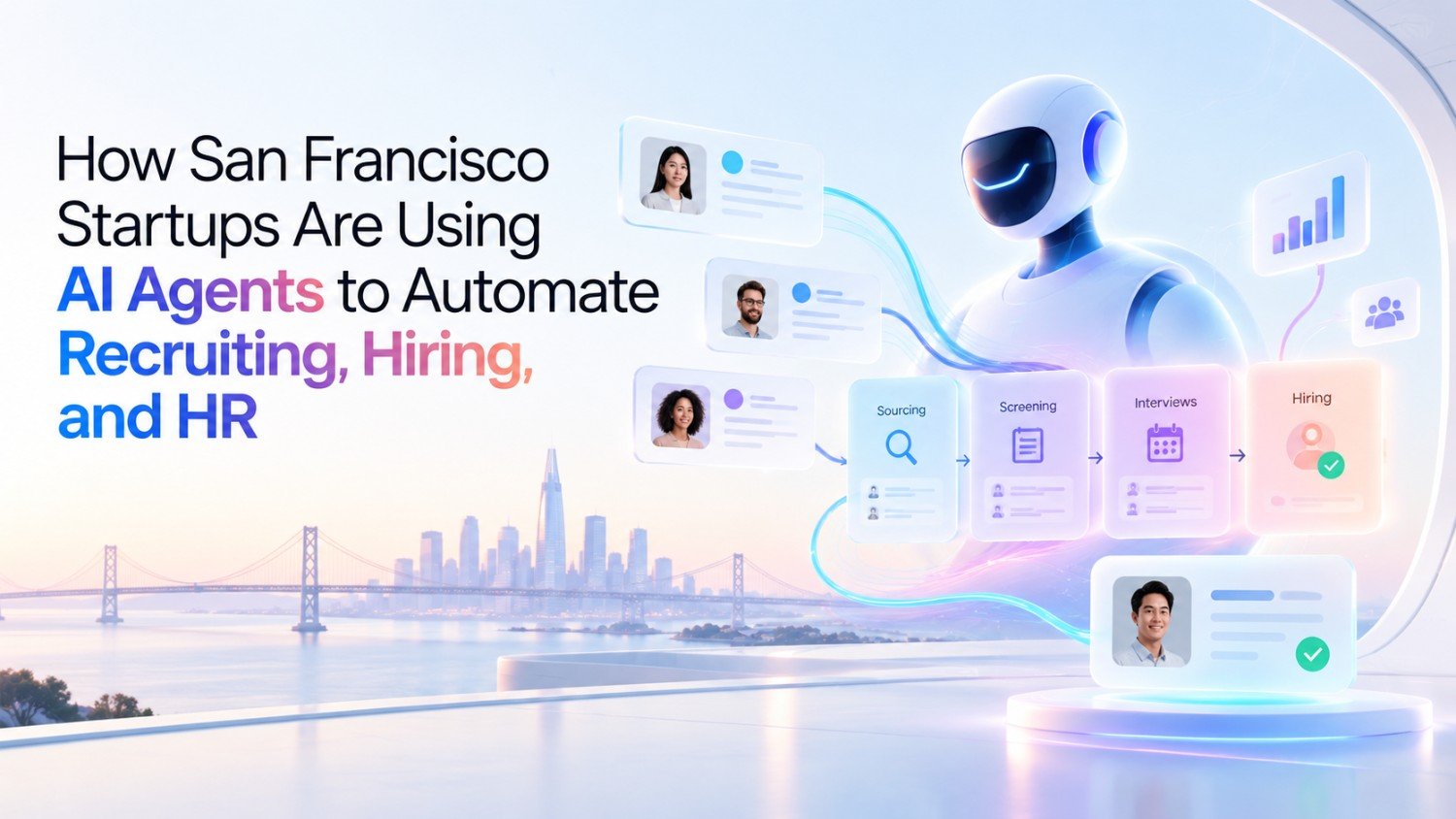
An AI agent reads the job requirements, searches for suitable candidates, prepares personalized outreach, responds to common questions, and helps schedule interviews. Another agent organizes interview notes and identifies missing feedback. A third helps the HR team prepare onboarding tasks once the company makes a hiring decision.
The recruiter still decides whom to advance. The hiring manager still judges the candidate’s skills. The company remains responsible for fair hiring, salary decisions, privacy, and employee treatment.
But much of the work between those decisions can happen automatically.
This is the opportunity San Francisco startups are pursuing. Companies such as Paraform, Ashby, Findem, and Pave are approaching different parts of recruiting and HR, from finding candidates to managing compensation.
About Paraform
+3
The timing matters because hiring has become more difficult to manage, even for companies that are not hiring aggressively.
Greenhouse’s March 2026 hiring benchmark analyzed more than 640 million applications across more than 6,000 companies. Its published figures show that annual applications per recruiter increased from 1,610 in 2022 to 4,890 in 2025, while the average number of recruiters per organization fell considerably.
Greenhouse
Applications per recruiter, 2025
4,890
Greenhouse benchmark
Growth since 2022
203.7%
Calculated from published data
Applications per job, 2025
244
Greenhouse benchmark
For SFTechScene, we reconstructed those hiring trends and combined them with published San Francisco metro wage information to model the possible value of AI-assisted application review.
Our central illustrative scenario suggests that a company handling 244 applications for one opening could recover approximately 4.27 hours of recruiter time when AI-assisted review reduces manual work on 70% of applications, after allowing for human checks. This is a calculated scenario, not a measured result from an actual San Francisco employer.
The larger finding is that the best AI recruiting products may not be the ones that make hiring decisions automatically. They may be the ones that remove repetitive work while making human hiring decisions more informed, consistent, and accountable.
Original SFTechScene Research: The Hiring Workload Has Changed Faster Than Recruiting Teams
We used Greenhouse’s publicly published March 2026 hiring benchmark as the primary source for our historical analysis. We then modeled a San Francisco employer’s potential labor savings using regional wage data from the U.S. Department of Labor.
The Greenhouse dataset is a multi-company benchmark, not a San Francisco-only sample. This distinction matters: its numbers establish a broad industry trend, while our wage-based calculations illustrate how that trend could affect a business operating in the San Francisco metro area.
Research Finding #1: Applications per Recruiter More Than Tripled in Three Years
Annual applications handled per recruiter
Published Greenhouse benchmark, 2022–2025. Values are applications per recruiter, not San Francisco-only observations.

Source: Greenhouse, The Hire Standard, March 2026.
Greenhouse
Greenhouse’s figures show an increase of 3,280 annual applications per recruiter between 2022 and 2025. Dividing that difference by the 2022 baseline gives a 203.7% increase.
That does not mean every recruiter personally opened and evaluated every one of those applications. It does show how much application volume is now associated with recruiting teams relative to their staffing.
Research Finding #2: More Applications Have Not Produced Faster Hiring
| Metric | 2022 | 2025 | Change |
|---|---|---|---|
| Applications per job | 116 | 244 | +110.3% |
| Applications per recruiter annually | 1,610 | 4,890 | +203.7% |
| Recruiters per organization | 10.43 | 4.62 | −55.7% |
| Monthly hires per recruiter | 2.2 | 4.9 | +122.7% |
| Time to fill a role, days | 43.64 | 59.67 | +36.7% |
SFTechScene calculations from the rounded values in Greenhouse’s 2026 report. Changes may differ slightly from the publisher’s displayed percentages because of rounding. These are pooled benchmarks, not matched-company causal estimates.
Greenhouse
Hiring became slower despite higher recruiter output
Comparison of Greenhouse time-to-fill figures, measured in days.

The relationship is important. Recruiters are associated with more applications and more hires per month, but the average time needed to fill a position has also risen.
The data cannot prove that application volume caused longer hiring cycles. Changes in job mix, employer behavior, market conditions, and which companies appear in the benchmark could all contribute. However, the figures challenge a simple assumption that more candidates automatically produce quicker hires.
Research Finding #3: The Economic Opportunity Is in Repetitive Work, Not Automatic Rejection
For the next stage of the analysis, we use the Greenhouse benchmark of 244 applications per opening and an illustrative review process.
Our model assumes three minutes of manual review per application. For AI-assisted applications, it assumes one minute of recruiter review plus another half-minute of quality checking. These time assumptions are research scenarios, not values measured by Greenhouse.
Manual-only review
12.2 hours
244 applications × 3 minutes
AI-assisted review
7.93 hours
70% assisted, with human QA
Modeled review time per 244-application opening
Illustrative scenario, not observed employer performance. Total includes human oversight.
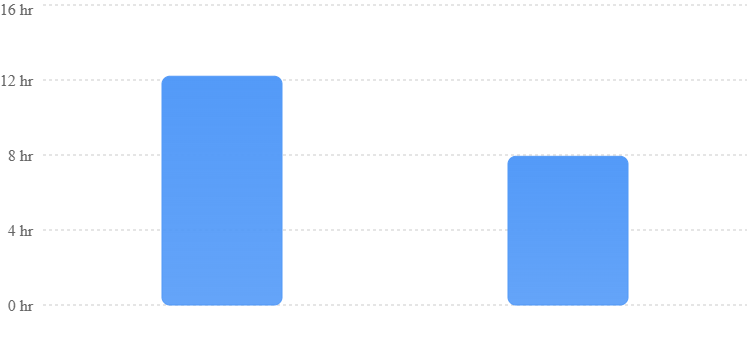
The projected time recovered is 4.27 hours, or 35% of the original review time. Whether that time turns into a financial saving depends on actual work patterns, software costs, the quality of AI output, and how the business uses the hours recovered.
This model is especially relevant to a high-cost labor market like San Francisco. But its purpose is to show which assumptions a local employer should measure before buying a product, not to claim that AI tools have already delivered this result across the city.
Why San Francisco Is Becoming an Important Market for AI Recruiting Agents
San Francisco has a combination of conditions that make recruiting automation commercially attractive. Technology companies need skilled employees, many positions require specialized experience, and recruiting teams often work with complex compensation packages and demanding interview schedules.
At the same time, San Francisco is home to companies building AI products specifically for these problems. Their presence creates a market where hiring teams can experiment with new tools and software builders can learn from customers operating nearby.
High Salaries Make Wasted Recruiting Time Expensive
According to the Bureau of Labor Statistics’ May 2025 estimates, the median annual wage for human resources specialists in the San Francisco-Oakland-Fremont metro area was $103,140, or $49.59 per hour. That figure refers to the broader metro area, not the City and County of San Francisco alone.
Bureau of Labor Statistics
+1
This makes recruiting time a valuable resource. A recruiter spending several hours reviewing unsuitable applications cannot spend that time building relationships with strong candidates or helping managers improve their hiring decisions.
But expensive labor does not automatically make AI a good investment. A recruiting agent is valuable only if it reduces useful work, improves outcomes, or both.
Specialized Hiring Creates Difficult Search Problems
Imagine a startup looking for an engineer who has worked on production AI systems, understands cloud infrastructure, and can guide a small technical team.
Searching for broad terms such as “software engineer” or “machine learning” may produce hundreds of people who are not appropriate for the position. A recruiter needs to understand which projects matter, what comparable experience looks like, and why a candidate might consider moving.
AI sourcing agents can help expand searches beyond exact keywords. They can also organize candidate information and suggest questions for the recruiter to investigate.
However, understanding a resume is not the same as verifying a person’s abilities. The company still needs to determine whether the candidate can do the job.
Hiring Teams Often Operate With Incomplete Information
A founder may know that the engineering team needs help without knowing exactly which skills should be required. The finance team may have approved a budget that the recruiter has not seen. An interviewer may be unavailable while another has yet to submit feedback.
Many delays come from these small gaps between people and systems.
An agent connected to an approved recruiting workflow can identify missing information, ask the right person for it, and prepare the next action. This is more useful than simply producing another automated candidate summary.
The San Francisco Startups Building AI Recruiting and HR Products
The local market includes companies with very different approaches. Some help recruiters search for talent. Others organize the recruiting process, combine human recruiters with AI, or support the compensation and employee operations that surround hiring.
These companies should not be treated as interchangeable. Their products solve different problems, and their capabilities are often described in vendor documentation rather than independent performance studies.

Paraform
AI-assisted recruiting marketplace
Paraform combines specialized human recruiters with AI agents and matching tools. The San Francisco company reports that it was founded in 2023 and that its system helps employers and recruiters coordinate hiring work.
About Paraform

Ashby
Recruiting operations and AI workflow automation
Ashby offers AI-assisted application review, candidate assistance, interview summaries, reporting, and agents that can work with recruiting data. Its documentation emphasizes human control over hiring decisions.
Ashby

Findem
Talent discovery and relationship management
Findem develops AI-supported sourcing and talent relationship tools. Its Talent CRM is designed to help companies rediscover candidates, maintain relationships, and prepare for future hiring needs.
Findem
+1

Juicebox
AI candidate search and sourcing agents
Juicebox develops AI agents that gather recruiting context, search for candidates, and support outbound sourcing. Its product description highlights the ability to use prior searches and recruiting system information.
Juicebox (PeopleGPT)

Pave
AI compensation analysis and planning
Pave Agent helps compensation teams analyze salary bands, market pay, internal equity, and compensation planning. The San Francisco company announced an expansion of its agent in August 2026.
Pave
+1
Paraform: Combining Human Recruiters With AI Agents
Paraform offers a useful example of a business model in which AI does not replace the recruiting professional. Instead, it helps organize sourcing, matching, and recruiting activity across a network of specialists.
The business challenge is straightforward. Employers want access to good candidates, while many recruiters already have valuable professional networks and knowledge of specific industries.
AI can help connect those two sides by processing job requirements, finding potential matches, and organizing activity. Human recruiters remain important because they understand candidate motivations, handle sensitive conversations, and help close difficult hires.
For a San Francisco founder, the practical lesson is that recruiting automation can be purchased as a service rather than built internally. A company may not need its own complex sourcing system if a specialized provider can manage the early pipeline.
The important evaluation is whether the provider produces qualified candidates who progress through interviews. A large number of submissions is not enough.
Ashby: Bringing AI Into the Recruiting System
Ashby’s approach highlights the value of connecting AI to the system where recruiting activity already happens.
Its AI product includes application assistance, candidate information summaries, interview scheduling, reporting support, and workflow agents. Its application review features can identify whether submitted information matches criteria set for a role, while the company’s documentation states that humans remain responsible for decisions.
Ashby
That distinction makes a major operational difference.
An independent AI tool might write a useful summary, but the recruiter then needs to copy it into the hiring system. An integrated agent can help with work surrounding the summary, such as finding missing feedback or preparing an approved message.
For businesses that already use a recruiting system, this suggests an important buying rule: investigate the automation available in the existing platform before adding another vendor.
Findem: Turning Old Candidate Records Into Future Hiring Opportunities
Many companies spend money finding candidates they have already encountered.
Someone interviewed for a role last year but lacked one required skill. Six months later, the candidate may have gained that experience. Another applicant may have been strong but unable to relocate at the time.
Those records can become valuable when hiring needs change.
Findem’s AI talent acquisition products focus on searching, organizing, rediscovering, and engaging talent across hiring channels. Its 2025 Talent CRM announcement emphasized ongoing candidate relationships rather than treating each open position as an isolated search.
Findem
The underlying opportunity is larger than candidate search. A company can gradually build a more useful internal talent network instead of repeatedly starting from zero.
However, old records must be handled carefully. Companies need appropriate retention periods, accurate consent records, and procedures for removing outdated or improperly collected candidate data.
Juicebox: AI Agents That Work on Candidate Sourcing
Juicebox offers another illustration of how recruiting search is changing.
Its sourcing agents use information from recruiting systems, documents, earlier searches, and role discussions to develop a better picture of what a team needs. The company positions its agents as continuous sourcing partners rather than simple keyword-search tools.
Juicebox (PeopleGPT)
Consider a business looking for its first enterprise sales leader. A conventional search might rely on job titles such as “VP of Sales.”
A more detailed sourcing process could explore whether the candidate has sold to large customers, managed long purchasing cycles, built a team, and worked at a comparable company stage.
These are useful search signals, but they are not proof of performance. Recruiters should verify claims, question incomplete profiles, and avoid treating an AI-generated match score as a reliable measure of future success.
Pave: Bringing AI Into Compensation Decisions
Recruiting is not finished when a company finds a strong candidate. The business must also decide what to offer.
In San Francisco, compensation decisions can involve base salary, bonuses, equity, job levels, internal fairness, and geographic differences. An attractive offer must fit the company’s budget while remaining fair to existing employees.
Pave Agent combines compensation information with company-specific context to help teams examine pay ranges and prepare recommendations. Its August 2026 expansion added more compensation history, job-posting information, and internal documents to its analysis capabilities.
PR Newswire
The opportunity is not simply to calculate a number more quickly. It is to give decision-makers clearer information about the tradeoffs involved.
An agent might identify that a proposed offer would create a large gap between a new hire and an existing employee performing comparable work. It can present that finding for review before the company creates a problem.
An authorized manager, HR leader, or compensation committee should still approve the offer.
How AI Recruiting Agents Actually Work
The phrase “AI agent” is often used too loosely. Not every recruiting product that includes AI is capable of carrying out a workflow.
A system that writes a job description is an AI writing assistant. A system that reads approved role requirements, prepares candidate outreach, monitors replies, and asks a recruiter to approve the next step is moving toward agent-based automation.
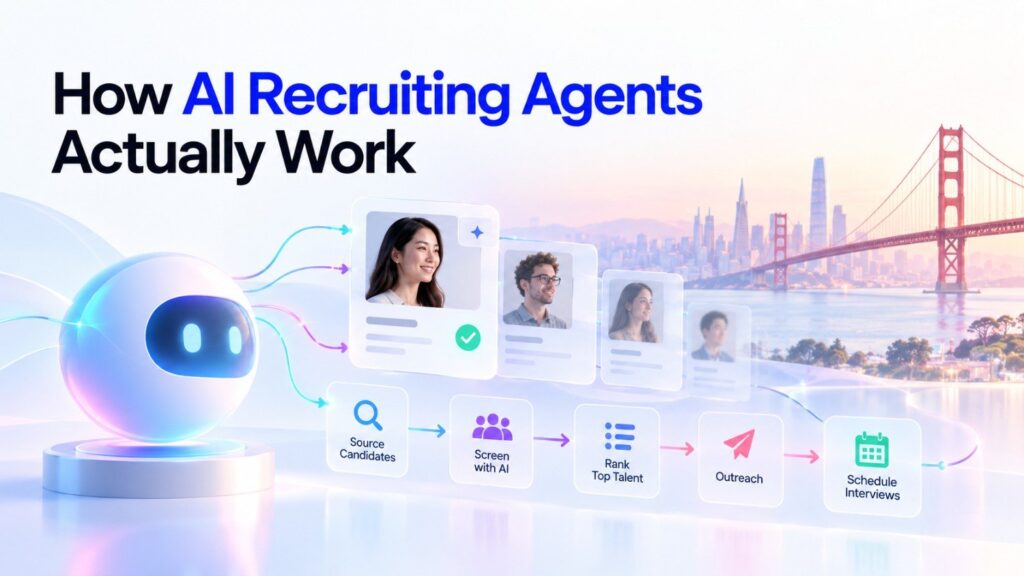
The difference is the ability to handle several connected actions while following instructions and limits.
The Four Parts of a Useful Recruiting Agent
A practical recruiting agent needs four foundations.
First, it needs context. The system should understand the position, essential skills, reporting structure, salary range, work location, and hiring process.
Second, it needs permissioned access to information. This may include the applicant tracking system, approved calendars, candidate communications, and job descriptions.
Third, it needs clear rules about what it can do. Preparing an interview invitation is different from sending it, and both are different from rejecting an applicant.
Finally, it needs a record of its work. Recruiters should be able to see what information the agent used, what it proposed, what actions it completed, and which person approved sensitive decisions.
Without these safeguards, a recruiting agent may create more problems than it solves.
A Practical AI Recruiting Workflow
Hiring manager defines the role
Requirements, pay range, approved criteria
AI sourcing and application assistance
Search, organize, surface evidence and gaps
Human review and interview selection
Recruiter checks evidence and approves progression
AI coordination and interview support
Scheduling, reminders, feedback collection
Human hiring and compensation decision
Authorized decision-makers review final evidence
AI-assisted onboarding
Approved tasks, reminders, policy guidance
The process can begin with one approved job description and end with a completed onboarding checklist. AI handles much of the coordination, while people retain authority over the important employment decisions.
The key is not removing humans from the process. It is removing avoidable delays between human decisions.
How AI Agents Are Automating Candidate Sourcing
Candidate sourcing is one of the most promising areas for recruiting automation because searching for potential employees involves large amounts of repetitive research.
Recruiters look through professional profiles, company histories, job titles, portfolios, and public project records. They then decide which people could be suitable and worth contacting.
A sourcing agent can assist with the research stage, but it needs much better instructions than a list of keywords.
From Job Titles to Evidence of Relevant Work
Suppose a San Francisco cybersecurity startup needs an engineer who can build secure systems for large business customers.
Searching only for people with “security engineer” in their title may miss software developers who have performed relevant security work without holding that formal title.
An AI sourcing agent can help discover profiles that contain evidence of suitable projects. It can also suggest alternative titles and adjacent skills for the recruiter to consider.
The recruiter should then investigate whether those projects are genuine, recent, and relevant to the actual job.
This matters because online professional profiles are incomplete. Some excellent candidates have limited public information, while others have very detailed profiles that do not accurately represent their abilities.
Personalized Outreach Without Automated Spam
AI can also help prepare messages for people who may be interested in a role.
A useful message explains why the company contacted the person, what the opportunity involves, and what makes the role relevant to their background.
A poor message simply inserts a candidate’s name into a generic sales pitch.
The difference becomes especially important when AI makes sending large volumes of messages inexpensive. If every employer begins contacting thousands of people, candidates may respond by ignoring outreach entirely.
A practical approach is to use AI for research and drafting while applying human-approved outreach rules. The company can set contact limits, remove irrelevant candidates, respect opt-outs, and monitor response quality.
The Better Metric Is Qualified Conversations
Recruiters should not judge sourcing agents primarily by the number of profiles found or messages sent.
The more useful questions are whether contacted candidates are relevant, whether they respond positively, and whether those conversations lead to successful interviews.
A sourcing campaign that reaches 100 carefully selected people may be more valuable than one that reaches 2,000 people with weak relevance.
For example, if 100 messages produce 20 interested replies and 10 qualified conversations, the interested-reply rate is 20% and the qualified-conversation rate is 10%.
Those are hypothetical values. A business should measure its own rates and compare similar roles over time.
How AI Agents Are Changing Application Review
Application review is where the biggest efficiency opportunity meets one of the biggest risks.
A company may receive hundreds of applications for one position. It needs a method for identifying evidence of relevant skills without overlooking strong people or introducing unfair barriers.
AI can make that work easier. It can also make mistakes at a much larger scale if the company gives it too much authority.
Separating Clear Requirements From Preferences
Before using AI to assist with application review, the employer should define what the position actually requires.
For a software engineering role, an essential requirement might be experience building a particular type of production system. Familiarity with one optional framework could be a preference rather than a requirement.
The distinction matters because a candidate who lacks a preferred tool may still be able to perform the job well.
A properly designed system should preserve that difference. It should identify documented evidence of relevant experience, highlight uncertainty, and send incomplete cases for human assessment.
It should not quietly turn every preference into an automatic rejection rule.
The Risk of AI-Generated Resumes
Recruiters face another challenge: candidates are also using AI.
Greenhouse’s 2025 workforce report found that 22% of surveyed job seekers used bots to apply for roles automatically. In its separate November 2025 research, Greenhouse reported growing distrust and friction around AI-driven hiring.
Greenhouse
+1
This creates a difficult environment for everyone.
Candidates can submit more polished applications, while recruiters receive more material to review. Employers may become suspicious of legitimate applicants, especially when resumes use similar wording or follow common AI-generated formats.
The answer is not to assume that an AI-written application is dishonest. Candidates may use writing assistance for entirely reasonable purposes, including improving clarity or communicating in a second language.
Employers should focus on evidence of job-related skills. Carefully designed work samples, structured interviews, and verified experience are more useful than attempting to guess whether a particular sentence was written by AI.
Human Review Is More Than a Final Approval Button
Keeping a human involved only after an automated system has already filtered out most applicants may provide little real protection.
The human should be able to see the criteria, examine the underlying application, question the system’s conclusions, and correct mistakes.
Companies also need a process for applicants who need accommodations or whose experience does not fit conventional resume formats.
The U.S. Equal Employment Opportunity Commission warns that selection procedures can violate employment discrimination laws when they disproportionately exclude protected groups without sufficient job-related justification. Employers remain responsible for the procedures they use, even when software vendors supply them.
U.S. Equal Employment Opportunity Commission
For an SF employer, the practical rule is simple: use AI to organize evidence and support review, not to create an unchallengeable hiring decision.
Original Finding #4: How Much Recruiter Time Could AI Application Review Save in San Francisco?
The next analysis estimates the financial value of reviewing applications with AI assistance. It combines a public recruiting benchmark with local wage information and explicitly stated operational assumptions.
This is a transparent scenario model, not a field experiment. We have not observed application-level review times or error rates at the companies discussed in this article.
Step 1: Establish a Real Application-Volume Baseline
We use Greenhouse’s 2025 benchmark of 244 applications per job as a starting point.
The number provides a broad published reference, but an individual San Francisco employer may receive far fewer or far more applications. Every business should replace the benchmark with its own application count before making a buying decision.
Step 2: Define the Manual Process
In our model, a recruiter spends an average of three minutes reviewing each application.
This includes opening the record, examining relevant experience, identifying missing information, and recording a preliminary review.
For 244 applications, the modeled workload is:
\[ 244 \times 3 = 732\text{ minutes} \]
That equals 12.2 hours per opening.
Step 3: Define the AI-Assisted Process
We assume AI assistance is useful for 70% of applications. These applications still receive one minute of human review and an additional half-minute allowance for checking AI output, corrections, and record review.
The remaining 30% receive the full three-minute manual review.
The model therefore has two groups:
| Application group | Count* | Minutes each | Total minutes |
|---|---|---|---|
| AI-assisted reviews | 170.8 | 1.5 | 256.2 |
| Full manual reviews | 73.2 | 3.0 | 219.6 |
| Total | 244 | — | 475.8 |
*Fractional application counts are expected values for modeling; actual applications are indivisible. The time saved includes the modeled cost of checking AI-assisted work.
The AI-assisted process takes 475.8 minutes, or 7.93 hours.
The difference is:
\[ 732-475.8=256.2\text{ minutes} \]
That is 4.27 hours saved per position, equivalent to a 35% reduction in initial review time under these assumptions.
Step 4: Apply a San Francisco Labor-Cost Reference
The May 2025 BLS estimate places the San Francisco metro median hourly wage for HR specialists at $49.59. Using that wage as a labor-time reference gives:
\[ 4.27 \times \$49.59 = \$211.75 \]
The modeled labor-time value is approximately $212 for one opening.
This is not a fully loaded employer cost. It excludes benefits, payroll taxes, overhead, software expenses, implementation, training, and other costs. It also does not mean that the employer saves $212 in cash whenever a recruiter gains four hours.
The more immediate benefit may be additional capacity. A recruiter can spend the recovered time on interviews, sourcing, candidate communication, or other valuable tasks.
Step 5: Test Different Levels of AI Adoption
The strongest investment decisions rarely come from one optimistic scenario. Businesses need to understand what happens when the technology works less often than expected.
In the following model, the share of applications receiving useful AI assistance varies while the underlying review-time assumptions remain constant.
Hours recovered per opening at different AI-assistance levels
SFTechScene scenario analysis based on 244 applications per role and an assumed net saving of 1.5 minutes per AI-assisted application.
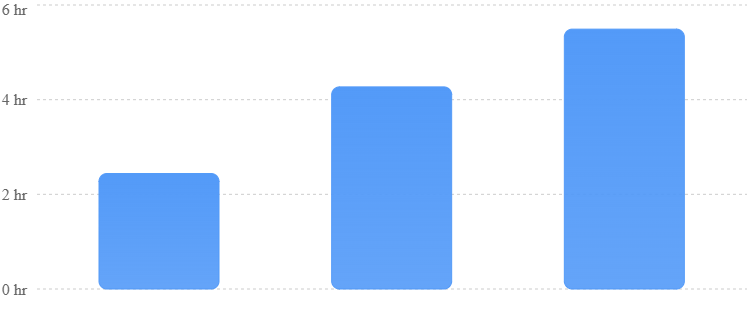
| Share effectively AI-assisted | Hours saved per opening | Labor-time value at $49.59/hr |
|---|---|---|
| 40% | 2.44 | $121 |
| 70% | 4.27 | $212 |
| 90% | 5.49 | $272 |
Calculated, rounded scenario values. These percentages are assumptions about effective assistance, not vendor accuracy measurements or predictions of screening quality.
Even at 90% effective assistance, the model does not remove the need for human review.
It also does not include the downstream cost of reviewing an unsuitable candidate or overlooking a suitable one. These errors can outweigh administrative time savings.
Step 6: Model the Break-Even Point
Imagine a growing San Francisco company considering recruiting AI software costing $2,000 per month.
That price is an illustrative budget assumption, not a quoted vendor price.
Using the central estimate of $211.75 in recovered labor-time value per position, the company would need roughly 10 openings processed each month to cover the monthly software cost on labor-time value alone.
| Openings processed per month | Gross modeled labor-time value | After $2,000 software cost |
|---|---|---|
| 5 | $1,059 | −$941 |
| 10 | $2,118 | +$118 |
| 20 | $4,235 | +$2,235 |
| 30 | $6,353 | +$4,353 |
Illustrative monthly model with rounded values. The final column is not accounting profit or guaranteed cash savings. It excludes other implementation costs and the value of hiring outcomes.
The calculations suggest that high-volume hiring teams may find the same software more financially attractive than teams filling only a few positions.
They also show why a small startup should be careful about buying expensive recruiting automation before it has enough activity to use the product consistently.
What the Research Actually Establishes
This analysis supports three conclusions.
First, publicly reported application volume has risen rapidly relative to recruiting headcount, creating a clear reason for businesses to investigate automation.
Second, at San Francisco-area wage levels, even moderate time savings can have meaningful labor-time value when repeated across many openings.
Third, a software purchase only makes sense if the employer can verify that the agent saves time without reducing hiring quality, fairness, privacy, or candidate trust.
Our model does not establish causal effectiveness for any vendor. To do that, employers need live trials that compare similar recruiting workflows, measure actual work time, and assess both mistakes and hiring outcomes.
How AI Agents Are Automating Interview Scheduling
Interview scheduling is a simpler automation problem than evaluating candidates, but it can still consume substantial time.
A recruiter may need to coordinate a candidate, a hiring manager, two technical interviewers, and a senior executive. Each person has different calendar availability, and the candidate may live in another time zone.
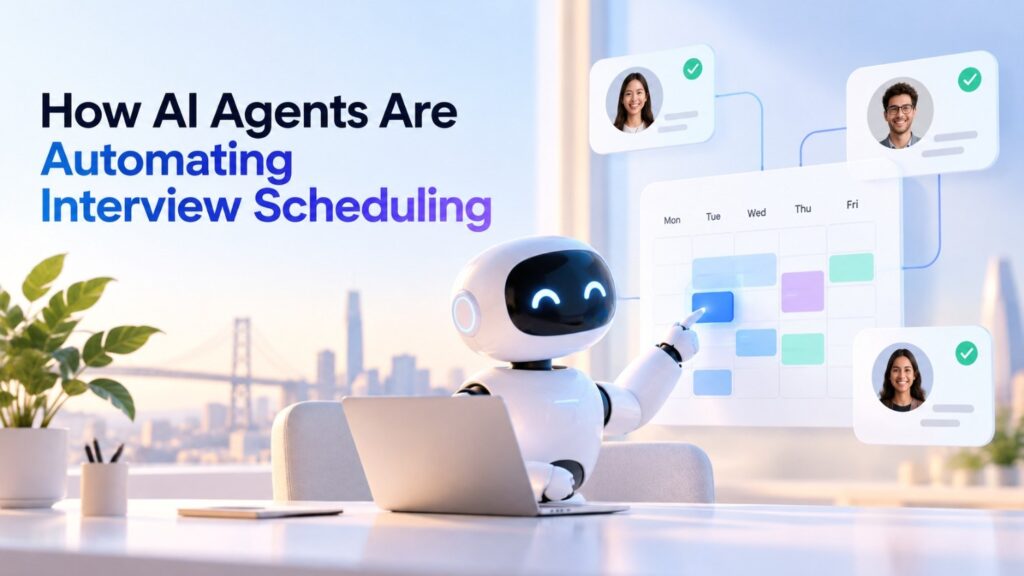
Even after agreeing on a time, the team needs reminders, meeting links, and sometimes rescheduling.
Agents Can Manage the Coordination
An approved scheduling agent can check available calendar slots, prepare options, send invitations, and update records when a candidate confirms.
It can also recognize when an interviewer cancels and prepare alternative times.
Ashby, for example, documents automated interview scheduling as part of its recruiting platform. This allows teams to reduce repetitive coordination without outsourcing candidate evaluation.
Ashby
Measuring Scheduling Performance
Businesses should measure scheduling from the moment a candidate becomes ready for an interview until the meeting is confirmed.
The best metrics are confirmation time, recruiter touch time, error rate, candidate satisfaction, and the number of reschedules.
A fast agent is not useful if it frequently books the wrong interviewer or overlooks a candidate’s time zone. Teams should also offer a straightforward human contact for candidates who have difficulty using automated scheduling.
AI Interview Agents: Where Automation Helps and Where It Can Harm
AI is increasingly used to assist with interviews. The category includes systems that prepare questions, take notes, summarize answers, organize feedback, and conduct structured conversations.
These uses carry different risks.
Preparing an interview guide is not the same as having an AI system independently judge a person’s suitability for employment.
Structured Interviews Can Improve Consistency
A structured interview asks candidates similar job-related questions and evaluates answers using a clearly defined standard.
For a technical role, the company might assess how candidates investigate a production failure, communicate technical tradeoffs, or explain previous work.
AI can help create draft questions and organize feedback against those criteria.
A human hiring manager should review the questions before they are used. The team should also check whether each question measures a skill genuinely needed for the job.
Interview Summaries Need Verification
AI note-taking can help interviewers focus on the conversation instead of typing constantly.
However, transcripts and summaries may contain mistakes. They can misunderstand technical language, lose context, or place too much emphasis on one comment.
A candidate’s answer may also be difficult to transcribe accurately because of audio quality, accent differences, or overlapping speech.
The interviewer should be able to correct the record before the summary contributes to a hiring decision.
Avoid Judging Personality From Weak Signals
Employers should be particularly cautious about tools that claim to infer personality, honesty, enthusiasm, or future job performance from voice characteristics, facial movement, or speaking style.
These systems can introduce serious fairness and accessibility risks, especially when claims are not supported by strong, relevant validation.
The safest practical approach is to evaluate demonstrated job-related skills rather than making unsupported assumptions about personal traits.
Companies also need to account for consent, recording laws, accessibility requirements, and the handling of sensitive interview data.
How AI Agents Are Automating New-Employee Onboarding
Recruiting automation creates the most immediate value before a hiring decision, but HR agents can remain useful after a candidate joins the company.
Onboarding involves many repeated activities. Employees need information, accounts, equipment, payroll instructions, policy documents, and introductions to their teams.
For a small business, these tasks may be spread across HR, IT, finance, security, and the hiring manager.
Coordinating Tasks Across Departments
A new employee’s start date can trigger an approved onboarding workflow.
The system can create a checklist, prepare IT access requests, notify the hiring manager, and schedule orientation sessions.
The agent may identify that the employee has not completed a required form or that a laptop request is still pending.
It should not independently grant sensitive access without appropriate authorization. The goal is to coordinate approved work, not bypass security procedures.
Helping Employees Find Answers
A new hire may ask how to enroll in benefits, request leave, find an expense policy, or contact payroll.
An HR agent connected to approved internal documents can answer routine questions and point employees toward the right process.
If the answer depends on personal circumstances, the system should make that clear and offer a way to contact a qualified HR professional.
A company should never allow a chatbot to invent employment policy simply because it cannot find an answer.
A Better Onboarding Metric
Completing onboarding tasks quickly is useful, but it does not automatically mean the employee had a good experience.
Businesses should measure whether employees receive everything they need, understand their responsibilities, feel comfortable asking questions, and can become productive.
An agent that closes every checklist item while leaving new employees confused has not succeeded.
How AI Is Changing HR Operations Beyond Hiring
Recruiting may attract the most attention, but employee operations provide many additional opportunities for automation.
Some work is administrative and repetitive. Other work involves sensitive personal information and decisions that affect employees’ careers.
The second category needs stronger controls.
Payroll and Employee Records
AI agents can help identify incomplete employee information, explain payroll procedures, or prepare reports for authorized staff.
They can also check whether records are consistent between systems and flag items requiring investigation.
Payroll changes, tax information, banking details, and personal identity records require strict access controls.
An agent should not be allowed to modify a bank account or salary record based solely on an unverified message. Sensitive actions need clear authentication and approval.
Employee Leave and Benefits
Employees frequently ask questions about leave balances, healthcare enrollment, expense policies, and benefits eligibility.
An HR assistant can retrieve approved information and guide employees toward the correct forms.
The system should avoid making unsupported legal or benefits determinations, especially when different rules apply to workers in different locations.
For businesses with staff in multiple states, the agent must account for local policy differences rather than presenting one generic answer to everyone.
Performance Reviews and Employee Development
AI can help managers organize accomplishments, prepare discussion notes, and identify whether feedback is missing.
These tools can reduce paperwork, but they should not become hidden employee-rating systems.
Managers need to review evidence, discuss results directly with employees, and remain responsible for decisions involving promotions, performance improvement, or termination.
Performance records can affect a person’s career for years. Errors in automated summaries therefore deserve more attention than mistakes in routine administrative documents.
Original Finding #5: Recruiting Automation Is Likely to Create Different Levels of Value Across the Hiring Process
The economic model above examines application review. But employers have many recruiting activities to choose from, and not all are equally suitable for AI.
To help San Francisco businesses set priorities, SFTechScene developed a structured task-level assessment.
This is an editorial scoring framework, not an industry survey or a claim that vendors have achieved particular accuracy levels.
We score five dimensions conceptually: task repetition, clarity of completion, need for human judgment, possible harm from error, and ease of checking the result.
Research-Based Workflow Prioritization Matrix
| Workflow | Likely automation fit | Main limitation | Recommended control |
|---|---|---|---|
| Interview scheduling | High | Wrong calendar or time zone | Confirmation and correction |
| Routine candidate updates | High | Inaccurate status | Approved templates and verified data |
| Job description drafting | High | Missing or biased criteria | Hiring manager approval |
| Candidate sourcing | Medium–high | Incomplete profiles | Recruiter verification |
| Resume evidence extraction | Medium | Missed or distorted experience | Human review |
| Interview notes | Medium | Summary errors | Interviewer correction |
| Compensation analysis | Medium | Market and internal equity errors | Authorized approval |
| Employee policy questions | Medium–high | Outdated policy | Approved knowledge base |
| Candidate rejection decisions | Low | Discrimination and false negatives | Human-controlled decisions |
| Promotion or termination decisions | Low | Serious employment consequences | Human-led process |
SFTechScene qualitative classification, October 2026. This matrix is an analytical recommendation, not measured product performance.
The pattern suggests a practical rollout order.
Tasks with clear, easily checked outputs are generally better initial automation targets. Scheduling, status messages, and information retrieval are easier to verify than predictions about future employee performance.
An employer should establish trust in smaller workflows before expanding the system into work that influences important decisions.
Why Reliable Completion Matters More Than Total Automation
An agent may automate 90% of a workflow but create additional problems in the remaining 10%.
For example, a scheduling system that books meetings correctly most of the time can still be costly if the errors cause senior executives to miss interviews.
A more useful measure is cost per correctly completed task, including the time spent fixing mistakes.
This changes the product evaluation from “How much can the agent do?” to “How much useful work does the agent finish correctly?”
It also helps explain why some simpler automation products may outperform more impressive-looking autonomous systems.
The Biggest Risk: AI Hiring Systems Can Scale Unfair Decisions
Recruiting technology has one important difference from most business software.
A mistake in a marketing report might waste money. A mistake in recruiting may unfairly prevent someone from getting a job, a promotion, or an opportunity to support their family.
When software handles thousands of applications, a flawed decision rule can affect a large number of people before anyone notices.
California’s AI Employment Rules Matter to SF Startups
California’s Civil Rights Council regulations concerning automated decision systems in employment took effect on October 1, 2025.
The rules clarify how existing discrimination protections apply to automated systems used in workplace decisions. They also address employment record retention, including automated-decision information, and risks involving disability-related inquiries.
CRD
For San Francisco employers, these regulations make responsible procurement especially important.
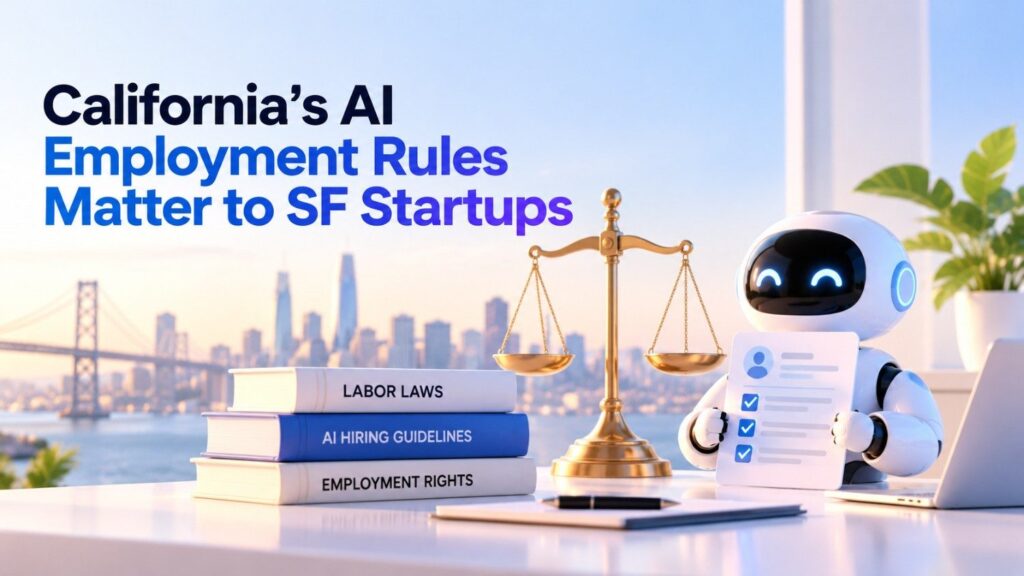
A business cannot assume that buying software transfers all legal responsibility to the provider. It must understand how a tool is used, which decisions it influences, and what evidence supports its suitability.
For multistate employers, other rules may also apply. New York City’s Local Law 144, for instance, establishes bias-audit and notice requirements for covered automated employment decision tools. Its applicability depends on the tool and employment circumstances, not simply whether the software contains AI.
DCWP
These are not reasons to avoid useful automation. They are reasons to build compliance into the product selection and rollout process.
Questions Every SF Employer Should Ask an AI Hiring Vendor
Before purchasing an agent that affects hiring or employment decisions, companies should obtain clear answers about how the system works.
| Area | Vendor question | Why it matters |
|---|---|---|
| Candidate data | What information is collected and retained? | Privacy and lawful processing |
| AI model use | Is customer information used to train models? | Confidentiality and control |
| Fairness | How has the system been tested for unequal outcomes? | Discrimination risk |
| Accuracy | What errors occur in real recruiting workflows? | Hiring quality |
| Human control | Can recruiters challenge and override results? | Accountability |
| Accessibility | How are accommodations supported? | Candidate access |
| Security | Which actions can the agent perform? | Unauthorized changes |
| Audit records | Can every important action be traced? | Investigation and compliance |
| Data deletion | How are records removed when required? | Retention obligations |
A vendor with an attractive demonstration but poor answers to these questions may create more risk than value.
A company should also seek appropriate legal advice before deploying tools that screen, rank, reject, or otherwise substantially influence employment decisions.
Why Human Oversight Must Be Measurable
Simply describing a product as “human-in-the-loop” is not enough.
The employer should know how many decisions people actually review, how often they disagree with the system, and what happens when they discover an error.
A review process also needs enough time and information to be meaningful.
If a recruiter receives hundreds of AI recommendations with no supporting evidence, the human may become an approval button rather than an independent decision-maker.
The safer design is one in which the agent identifies relevant information and explains uncertainty, while people retain genuine control.
How San Francisco Startups Can Build Their First AI Recruiting Agent in 90 Days
For most small businesses, the best starting point is not a fully autonomous recruiting operation.
It is one repeated workflow with a clear business problem, a reliable baseline, and an outcome that the team can measure.
A 90-day pilot gives employers time to test the technology without immediately giving it broad access to sensitive information.
Days 1–15: Measure How Recruiting Works Today
Start by documenting the existing process.
Choose one role category, such as software engineers or account executives, and measure the work from application to hiring decision.
Record application volume, time spent on review, candidate response times, interview scheduling delays, and recruiter workload.
Separate tasks that require judgment from those that are primarily administrative.
The goal is to identify where delays occur, rather than assuming that automation is the answer to every problem.
Days 16–30: Choose One Low-Risk Use Case
Interview scheduling, candidate communication drafts, and internal recruiting reports are reasonable first candidates.
Application review assistance can also be evaluated, but it needs stronger validation and safeguards.
Create written rules defining what the agent may access, what it may prepare, and what it may complete without additional approval.
For example, the system may prepare an interview invitation while a recruiter approves sending it during the first stage of the pilot.
Days 31–45: Test With Historical or Synthetic Cases
Before relying on live recruiting activity, test the system using properly authorized historical records or realistic synthetic examples.
Check ordinary situations as well as difficult ones.
Include incomplete resumes, unconventional career paths, candidate requests for accommodations, duplicate profiles, and communication errors.
Measure whether the system makes correct suggestions and whether humans can identify and correct mistakes.
Do not treat a high overall accuracy percentage as proof that the system is fair or effective. Examine important error types and subgroup outcomes where lawful and appropriate.
Days 46–60: Run a Controlled Live Pilot
Introduce the agent to a limited workflow and maintain meaningful human review.
Keep a comparison baseline. If possible, compare similar openings and recruiting teams while documenting differences in role difficulty and application volume.
Measure the actual time spent, not simply the number of actions performed by the software.
Track candidate complaints, recruiter corrections, and any incidents involving personal information.
The team should be able to stop the pilot quickly if the system behaves unexpectedly.
Days 61–75: Evaluate Business Value
Compare the pilot against the original workflow.
The review should cover time savings, software costs, oversight requirements, candidate experience, and signs of unequal outcomes.
Calculate cost per correctly completed task.
If the system saves administrative time but creates frequent errors, the business should fix those problems before expanding its use.
If the system performs well, the employer can investigate whether it can handle a larger volume without losing reliability.
Days 76–90: Expand Carefully or Stop
At the end of the pilot, leadership should have enough evidence to make a practical decision.
The team can expand the agent to another role category, improve the current setup, change vendors, or stop using the tool.
Document the final decision and the evidence behind it.
This creates a repeatable process for future automation instead of allowing individual departments to adopt sensitive tools without common standards.
The 90-Day Scorecard
| Metric | How to measure it | Desired direction |
|---|---|---|
| Recruiter handling time | Actual logged minutes | Lower |
| Correct task completion | Correct outcomes ÷ completed tasks | Higher |
| Candidate response time | Median time to useful response | Lower |
| Scheduling errors | Incorrect bookings ÷ bookings | Lower |
| Qualified interview rate | Qualified interviews ÷ candidates reviewed | Stable or higher |
| Human correction rate | Corrected agent outputs ÷ reviewed outputs | Lower |
| Candidate experience | Consistent survey or complaint measure | Stable or higher |
| Fairness indicators | Appropriate selection and error-rate analysis | No unexplained harmful gaps |
| Effective cost per task | Full pilot costs ÷ correct tasks | Lower |
These measures should be tracked together.
A recruiting agent that saves time but produces weaker candidate outcomes should not automatically be considered successful. The purpose of automation is to improve the complete hiring process, not just one metric.
What the Best AI Recruiting Startups Will Need to Get Right
The first generation of AI recruiting products has demonstrated how much administrative work can be assisted by software.
The next challenge is proving that these systems can operate reliably across real organizations, changing roles, imperfect information, and sensitive employment decisions.
Better Data Will Matter More Than Bigger Candidate Lists
Candidate information is frequently incomplete or outdated.
A large database does not automatically help a company find the right employee. The system needs current information, relevant evidence, and ways to recognize uncertainty.
Products that combine useful candidate history with accurate workflow context may offer more value than those that simply advertise access to more profiles.
The same principle applies to internal recruiting data. A smaller, well-organized talent database can be more useful than a large collection of records nobody trusts.
Integration Will Become a Competitive Advantage
Recruiting information often sits in several places.
Applications are stored in a recruiting system, interviews are arranged through calendars, messages arrive through email, and compensation decisions live in separate tools.
An agent that cannot access the right approved information may need constant manual assistance.
This makes secure integrations an important product feature. However, each integration also creates additional privacy and security responsibilities.
The strongest systems will make it easy to connect useful information without providing unrestricted access to every employee record.
Candidate Trust Could Become a Selling Point
Applicants want to know that a real opportunity exists and that their application will receive meaningful consideration.
As automated outreach and screening become more common, companies that communicate clearly may stand out.
A candidate should understand when AI is being used in a consequential part of the process, what information is relevant, and how to request help when something goes wrong.
Fast replies and automated scheduling can improve the experience, but respectful treatment matters more than speed alone.
Specialized Agents May Outperform Broad HR Automation
A product designed specifically for technical candidate sourcing can focus on one difficult job.
A compensation agent can specialize in pay ranges, internal equity, and salary planning.
A recruiting operations agent can focus on scheduling, pipeline records, and interview coordination.
These specialized systems may be easier to evaluate than a broad agent that claims it can manage an entire HR department.
Over time, employers may connect several specialized agents through approved workflows rather than rely on one system to make every decision.
What This Means for San Francisco Founders, Recruiters, and HR Leaders
The opportunity looks different depending on the size and hiring needs of the organization.
For Founders With Fewer Than 25 Employees
A small startup may hire only a handful of people each year.
Its founder or operations leader may handle recruiting alongside many other responsibilities. A large automated recruiting platform could be difficult to justify financially.
The better approach is often to improve job descriptions, use simple scheduling automation, maintain candidate records carefully, and consider specialized sourcing help when needed.
The founder should invest first in defining roles clearly and evaluating candidates consistently. Poorly defined hiring requirements cannot be fixed merely by adding an AI agent.
For Growing Startups With 25–200 Employees
Growing companies may begin to experience recurring bottlenecks.
They are hiring across several functions, coordinating many interviewers, and managing more candidate information.
This is where integrated recruiting automation becomes more attractive.
A company can use an agent to help organize candidate pipelines, prepare routine communication, find past applicants, and collect feedback.
It should also establish recruiting standards before hiring volume grows further.
For Large Technology Companies
Larger employers may handle thousands of applications and have dedicated recruiting, HR, legal, and security teams.
They can potentially benefit from more sophisticated automation, but they also face greater responsibility for access controls, audit records, and consistent hiring practices.
An enterprise deployment needs formal vendor evaluation, security review, monitoring, and defined ownership.
It may also require separate validation for different job categories because a system that works for one type of position may not be suitable for another.
For Recruiting Agencies
Agencies can use sourcing and workflow agents to improve research, organize candidate information, and serve more clients.
However, their business still depends on trust, accurate representation, and successful placements.
An agency that simply sends more candidates may not improve client outcomes.
The greater opportunity is to give recruiters better information and more time to build relationships with qualified people.
The Strategic Opportunity: HR Software Is Moving From Storing Information to Helping Complete Work
Traditional HR software is often organized around records.
It stores candidate profiles, employee details, leave balances, and compensation information. People then use those records to decide what to do.
Instead of merely displaying information, the system can recognize that a task is incomplete, prepare the next action, and bring it to the right person.
A recruiting system may identify that a hiring manager has not submitted interview feedback. A compensation platform may flag a proposed salary outside an approved range. An onboarding agent may notify IT that an employee’s equipment is not ready.
These are small actions, but they create value when repeated across many employees and hiring cycles.
The most attractive business opportunity may be connecting the records a company already has to the work it needs to complete.
That creates room for new startups and established software providers alike.
It also creates a harder standard for success. A useful agent must do more than generate convincing text. It must help produce a correct, traceable outcome.
Research Methodology, Data Sources, and Limitations
SFTechScene’s original analysis for this article was prepared in October 2026 using publicly available information.
The purpose was to examine changes in recruiting workload and develop a transparent economic model for AI-assisted application review in the San Francisco labor market.
Data Used
| Source | Observation period | Use in the research |
|---|---|---|
| Greenhouse, The Hire Standard | 2022–2025 | Applications, recruiter staffing, hiring and time-to-fill trends |
| U.S. Bureau of Labor Statistics, OEWS | May 2025 | San Francisco metro labor-cost reference |
| California Civil Rights Department | Regulations effective October 2025 | Employment AI compliance context |
| EEOC employment selection guidance | Existing federal guidance | Risks of unfair selection procedures |
| Official startup product documentation | Available through October 2026 | Product and workflow descriptions |
The main recruiting benchmark covers more than 6,000 companies and 640 million applications. It is not a representative sample limited to San Francisco employers, and the public summary does not provide the underlying company-level records needed for a local causal study.
Our comparisons use the published aggregate figures. We did not independently audit Greenhouse’s raw dataset.
Original Calculations
We calculated percentage changes using the usual formula:
\[ \text{Percentage change}=\frac{\text{New value}-\text{Old value}}{\text{Old value}}\times100 \]
For the operational model, manual review time equals applications multiplied by manual minutes per application.
AI-assisted review time equals the share receiving effective assistance multiplied by its review and quality-check time, plus the remaining share multiplied by ordinary manual time.
The estimated value of hours recovered equals hours saved multiplied by the local hourly wage reference.
We then tested different assistance rates and monthly hiring volumes to examine the sensitivity of the result.
Important Limitations
The economic scenarios do not measure actual AI vendor performance. Their review times, assistance rates, and software prices are explicitly modeled assumptions.
The BLS wage information applies to the San Francisco-Oakland-Fremont metropolitan area, not the city alone. The median wage is also not equivalent to an employer’s complete labor cost.
The analysis does not estimate the financial impact of incorrect hiring decisions, discrimination claims, candidate withdrawal, or long-term employee performance.
Finally, published product descriptions are evidence of advertised capabilities, not independent proof of customer outcomes.
These limits are important because a rigorous business case should make uncertainty visible instead of hiding it behind a single ROI figure.
Final Takeaway: The Best AI Hiring Systems Will Make Recruiters More Effective, Not Make Human Judgment Disappear
San Francisco’s AI recruiting market is moving beyond resume-writing tools and basic chatbots.
Startups are building systems that help find candidates, organize recruiting information, coordinate interviews, manage compensation questions, and support employee operations.
The opportunity is substantial because recruiting has become more complex. Greenhouse’s public benchmarks show much greater application volume per recruiter than just a few years earlier, while time to fill positions has also increased.
Our original scenario analysis shows how the economics can work. With clearly stated assumptions, AI-assisted review of 244 applications could recover about 4.27 hours of recruiting time. Across repeated hiring cycles, that capacity may become valuable, particularly in a high-cost labor market.
But time savings are only part of the story.
A hiring system must be evaluated by the quality of its outcomes, the fairness of its procedures, and the trust it builds with candidates and employees.
San Francisco founders should resist the temptation to automate every recruiting decision simply because the technology makes automation possible.
The better strategy is to begin with well-defined tasks, measure real performance, maintain meaningful human oversight, and expand only when the results support doing so.
The future of AI recruiting is not a company where software chooses every employee. It is a company where skilled people spend less time coordinating the hiring process and more time making good hiring decisions.
That is where AI agents can create lasting value for San Francisco businesses.
Primary sources and further reading
- Greenhouse — The Hire Standard, March 2026
- BLS — Occupational Employment and Wages, San Francisco metro, May 2025
- California Civil Rights Department — Employment AI Regulations
- EEOC — Employment Tests and Selection Procedures
- Paraform — Company and Recruiting Platform
- Ashby — AI Recruiting Features
- Findem — Talent CRM
- Juicebox — AI Recruiting Agents
- Pave — AI Compensation Agent