

San Francisco is becoming an important testing ground for a new kind of financial technology. Instead of building software that helps employees manage insurance claims, investigate suspicious payments, and prepare compliance reports, startups are developing AI agents that can complete large parts of this work themselves.
The opportunity is bigger than making paperwork faster. Insurance companies and financial institutions handle thousands of decisions that require information from different systems, careful checks against rules, and clear records of what happened. These decisions affect whether a family receives an insurance payment, whether a business gets financial services, and whether suspicious activity is reported to regulators.
Traditional software has made many of these processes digital, but people still spend hours moving between documents, emails, spreadsheets, and internal systems. AI agents are beginning to change that. They can collect information, compare records, identify missing details, prepare case files, and send difficult decisions to trained employees.
San Francisco startups such as Aegis, Corgi, Bretton AI, Coris, and Denki are approaching different parts of this opportunity. Some focus on insurance claims and appeals. Others help financial institutions investigate risk, prepare audits, or manage the growing amount of work needed to remain compliant with financial rules.
Y Combinator
+2
Yet the biggest question is not whether AI can read an insurance claim or summarize a financial transaction. It is whether businesses can trust these systems to complete important work without introducing new mistakes, unfair decisions, security risks, or regulatory problems.
For this SFTechScene report, we examine the companies building these systems, analyze public financial-regulation data, and develop original economic models to understand where AI automation offers the strongest opportunities. We also explain how San Francisco insurance companies, fintech startups, banks, and financial service providers can introduce AI agents safely and measure whether they actually work.
The Short Version: AI Agents Are Moving Insurance and Financial Compliance From Manual Reviews to Automated Workflows
The next major opportunity in financial AI may not be a chatbot that explains insurance policies or answers banking questions. It may be a system that quietly handles hundreds of steps behind the scenes, leaving employees to focus on difficult decisions.
Consider a health insurance claim that has been denied. A billing employee may need to review the original claim, find the reason for denial, collect medical records, check the payer’s requirements, draft an appeal, and track the response. An AI agent can help organize and prepare much of that work, while a qualified employee reviews the final appeal.
Now consider a financial institution investigating a suspicious payment. An analyst may need to examine transaction history, verify customer information, review earlier alerts, and document the reasons for further investigation. An AI agent can collect and organize that evidence, but the institution still needs appropriate controls over judgment, reporting, and customer treatment.
Three findings help explain why this market deserves attention.
California DFPI, 2024
14,920
Total consumer complaints received
FinCEN, FY2025
4.8M
Suspicious Activity Reports filed nationwide
SFTechScene scenario
850h
Net annual hours potentially saved per 10,000 cases
Sources: California Department of Financial Protection and Innovation and FinCEN. The 850-hour figure is an illustrative calculation, not a measured AI deployment result.
Cal Finance Dept
+1
The first two figures show the scale of regulated work. The third shows how we can translate specific assumptions about automation into a testable business case, rather than accepting broad claims about AI productivity.
Our central finding is that the strongest opportunities are often in preparing, checking, and documenting decisions rather than allowing AI to make every decision itself. This approach can improve speed while preserving the human review that complex claims and financial investigations often require.
Why Insurance Claims and Financial Compliance Are Becoming Major AI Agent Opportunities
Financial Services Still Depend on Complex Manual Work
Many financial institutions have spent years investing in software. Insurance companies use claim management platforms, banks use transaction monitoring systems, and compliance departments use specialized tools to track regulations.
However, these systems often solve only part of a larger problem.
An insurance platform might store the claim, but an employee still needs to read medical records, compare policy terms, and prepare correspondence. A fraud detection system might identify unusual transactions, but an analyst still needs to investigate each alert and decide what it means.
The problem is not necessarily a lack of data. It is that the information needed to complete a task is spread across different places.
A single claim may involve a policy document, customer history, photographs, estimates, medical information, emails, and notes from previous employees. A financial investigation may require transaction records, identity information, account activity, internal policies, and outside research.
AI agents are attractive because they can work across these sources and help complete a defined process.
The Difference Between Traditional Automation and AI Agents
Traditional automation follows clear instructions. If an invoice has a certain value, send it to a specified employee. If a document is missing, display a warning.
That approach works well when information follows a predictable format. It becomes harder when the software must understand emails, interpret documents, or handle unusual situations.
AI agents can add flexibility. They can interpret a request, identify the information needed, call approved software tools, and complete several connected steps.
For example, an insurance claims agent might receive a new claim and determine that the damage estimate is missing. It could check the document system, prepare a request for the missing information, and update the claim record. If the evidence is unclear, it could send the case to a human adjuster.
This is different from giving an AI model a document and asking for a summary. The agent is part of the workflow, with defined permissions and an expected result.
Why San Francisco Has an Advantage
San Francisco brings together AI researchers, software engineers, financial technology founders, investors, and companies accustomed to building products for large businesses.
The city also has a strong ecosystem of startups focused on narrow financial tasks. Instead of attempting to replace an entire bank or insurance company, these businesses are beginning with expensive, repetitive processes that buyers already understand.
Aegis focuses on health insurance denial appeals. Coris works on payment risk and merchant operations. Bretton AI targets regulated financial back-office work. Denki focuses on internal auditing. These are different products, but they share a common strategy: automate a painful business process while retaining the information and records needed to check the work.
Y Combinator
+1
The local advantage is not simply proximity to powerful AI models. It is the ability to combine those models with industry knowledge, software connections, customer feedback, and careful controls.
How AI Agents Are Changing Insurance Claims Processing
The Traditional Insurance Claims Process
Insurance claims are not one task. They are a series of connected decisions that begin when a customer reports a problem and continue until the claim is resolved.
An insurer must establish whether the policy is active, determine what coverage applies, collect supporting information, assess the loss, and calculate the appropriate payment. Some claims require additional review for fraud, legal questions, or policy exclusions.
Many claims also involve communication with customers, repair companies, medical providers, brokers, and outside administrators.
The work becomes particularly difficult when information is incomplete or inconsistent. A missing signature, an unclear invoice, or a conflicting medical code can delay the entire process.
Where AI Agents Fit Into the Claims Workflow
The AI-assisted claims workflow
1. Claim arrives
Email, portal, form, or document upload
2. AI prepares the case
Extracts details, checks files, identifies gaps
3. Policy and evidence review
Retrieves applicable terms and supporting records
4. Human decision gate
Adjuster handles uncertain or consequential decisions
5. Follow-up and recordkeeping
Approved messages, case updates, and full audit trail
Illustrative operating design. It is not a description of a particular company’s product.
Step 1: Collecting and Understanding Claim Information
The first major opportunity is document collection.
Insurance claims often contain unstructured information, meaning data that does not arrive in a neat table. A customer may upload photographs, a handwritten form, and an email explaining what happened. A repair company may send a PDF estimate.
An AI agent can help identify the document types, extract relevant information, and organize them into the insurer’s claim system.
The business value comes from reducing repeated reading and manual entry. However, the agent must also identify information it cannot read confidently. An uncertain number should be flagged rather than silently entered as a fact.
Step 2: Checking Coverage and Policy Details
The next task is determining which policy provisions may apply.
An agent can retrieve the relevant policy wording and compare it with information in the claim. It may identify coverage limits, exclusions, deductibles, waiting periods, or requirements for additional documents.
This is useful preparation, but it is not the same as making a legally sound coverage decision.
Policy wording can depend on endorsements, jurisdiction, dates, and specific circumstances. For that reason, the insurer needs checks that confirm the correct policy version was used and that a qualified person reviews difficult coverage questions.
Step 3: Finding Missing or Conflicting Evidence
Many delays are caused by incomplete information rather than difficult decisions.
An agent might find that a claim includes a repair estimate but no proof of ownership. It might detect different incident dates in two documents or notice that the uploaded invoice belongs to another customer.
Instead of sending the case to an adjuster without explanation, the system can prepare a clear list of missing or conflicting details.
This makes the next action easier for both employees and customers.
Step 4: Preparing Recommendations and Communications
Once the required information is available, the AI system may prepare a case summary and recommended next steps.
The summary should identify what the evidence supports, what remains uncertain, and which policy provisions matter. Every important claim should link to an actual source document.
The agent can also draft customer messages or requests for further evidence. However, sensitive communications, claim denials, disputed settlements, and other significant actions should pass through the insurer’s approval process.
San Francisco Startups Building AI-Powered Insurance Operations
Aegis: Automating Health Insurance Denial Appeals
Aegis is a useful example of how narrow AI products can address difficult insurance workflows.
The company, listed in Y Combinator’s Spring 2025 batch, describes its platform as an automated system for handling denied health insurance claims. It focuses on helping healthcare providers and billing teams prepare and manage appeals.
Y Combinator
A denial appeal can require extensive document review. The billing team may need to confirm why a claim was rejected, gather clinical evidence, compare it with the insurer’s requirements, and prepare an appeal before the relevant deadline.
This creates a natural opportunity for AI assistance because many steps involve finding information and turning it into a structured case.
Aegis illustrates a wider lesson for San Francisco founders: an effective insurance AI product does not need to automate every part of insurance. It can focus on one expensive workflow, become highly reliable within that workflow, and expand only after customers trust the results.
Corgi: Building AI Into the Insurance Carrier
Corgi Insurance approaches the market from a different direction.
In January 2026, the San Francisco company announced $108 million in funding and regulatory approval to launch an insurance carrier focused on startups. Its announcement described AI systems across underwriting, claims, and policy operations.
PR Newswire
The distinction matters because an insurance carrier operates closer to the decisions and financial obligations at the heart of the business.
A carrier built around modern software may have more freedom to design connected workflows from the beginning. It can develop systems that connect customer information, policy records, claims, and operational reporting without relying on as many older software layers.
However, that freedom comes with greater responsibility. The business must meet insurance obligations, maintain appropriate reserves and controls, and ensure automated processes remain consistent with applicable regulations.
Corgi’s public announcement demonstrates an AI-native carrier strategy. It should not be read as independent proof that its entire claims operation is autonomous or that AI has delivered a particular reduction in claim costs.
Verdex: Using Alternative Data in Claims Review
Y Combinator lists San Francisco-based Verdex as an AI insurance adjuster that uses sources such as satellite imagery to verify claims. The company focuses on applying these data streams to insurance processes, including agricultural coverage.
Y Combinator
This approach is particularly interesting because it addresses an evidence problem.
An agricultural insurance claim may depend on events affecting a large area of land. Satellite observations and other data could help an insurer establish what happened without requiring every initial check to be completed manually.
The challenge is translating that information into dependable claim evidence.
Satellite data might show changes in vegetation or land conditions, but those observations do not automatically establish the cause of damage, the policy’s coverage requirements, or the proper payment amount.
The strongest systems will combine these data sources with suitable expert review rather than treating a model’s estimate as a complete insurance decision.
Harper: Automating the Work Around Commercial Insurance
Harper represents another part of the insurance industry.
The Y Combinator Winter 2025 company describes an AI-native brokerage that automates work involved in helping businesses find commercial insurance coverage. Its initial target is businesses with relatively complex coverage needs.
Y Combinator
Harper is not primarily a claims automation example. Its relevance is that insurance contains many related operational processes beyond claims, including gathering customer information, comparing coverage options, preparing submissions, and handling renewals.
These areas share the same fundamental challenge: important information lives in multiple documents and systems.
For founders, brokerage automation may offer a different starting point from claims automation because the initial workflow can center on collecting information and assisting licensed professionals rather than directly determining claim payments.
What These Insurance Startups Reveal
| Company | Main focus | AI opportunity | Key control needed |
|---|---|---|---|
| Aegis | Health claim denial appeals | Case preparation and appeal workflow | Clinical accuracy and appeal review |
| Corgi | AI-native insurance carrier | Connected insurance operations | Insurance governance and claim oversight |
| Verdex | Claims verification | Evidence from imagery and data | Independent evidence validation |
| Harper | Commercial insurance brokerage | Submissions and coverage workflows | Licensed broker review and accuracy |
These are publicly described product positions, not independently verified performance rankings. The companies operate at different points in the insurance value chain, so comparing them by a single automation percentage would be misleading.
Original SFTechScene Research #1: What California’s Financial Complaint Data Reveal About the Automation Opportunity
To understand the market beyond startup announcements, we examined complaint and enforcement figures from California’s Department of Financial Protection and Innovation (DFPI).
The DFPI regulates and supervises important parts of California’s financial services market. Its published reports provide evidence of the volume of consumer complaints and regulatory activity that financial institutions must be prepared to handle.
Our question was straightforward: Is the volume of regulated work changing, and what does that suggest about the need for better financial operations?
Research Methodology
We used the DFPI’s published 2024 report on activities under the California Consumer Financial Protection Law, including its comparisons with 2023.
We extracted the reported complaint counts for both years and calculated the percentage increase using the standard formula:
\[ \text{Growth rate}=\frac{\text{New count}-\text{Old count}}{\text{Old count}}\times100 \]
We also examined the number of investigations and public actions reported under the California Consumer Financial Protection Law.
These numbers measure regulatory and complaint activity. They do not directly measure the number of tasks available for AI automation, the performance of any AI system, or the market size of financial compliance software.
California Financial Consumer Complaints Increased
Consumer complaints received by California DFPI
Reported annual totals for 2023 and 2024; all complaint categories.
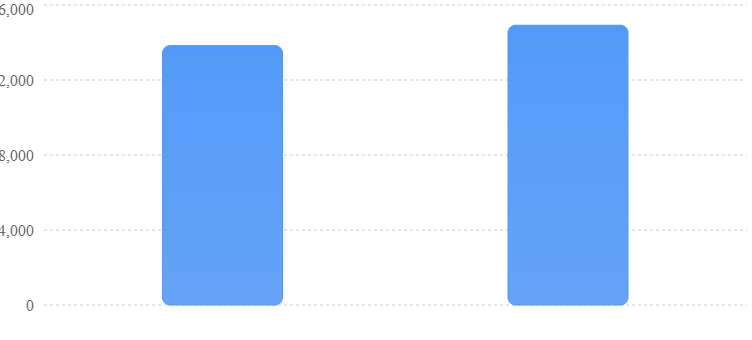
The DFPI reported 13,837 complaints in 2023 and 14,920 in 2024. That is an increase of 1,083 complaints, or approximately 7.83%.
The department also reported that complaints specifically related to the California Consumer Financial Protection Law increased from 2,246 to 2,388. That represents an increase of about 6.32%.
Cal Finance Dept
+1
| Measure | 2023 | 2024 | Calculated change |
|---|---|---|---|
| Total DFPI complaints | 13,837 | 14,920 | +7.83% |
| CCFPL-related complaints | 2,246 | 2,388 | +6.32% |
| CCFPL share of all complaints | 16.23% | 16.01% | −0.22 percentage points |
Source: DFPI annual report. Growth rates and percentage shares independently calculated by SFTechScene from published counts. Shares are based on unrounded values.
The important finding is not simply that complaints increased. It is that complaints linked to the CCFPL remained close to 16% of all complaints in both years.
This suggests that, within this short two-year period, the CCFPL-related share of the department’s complaint workload remained relatively stable even as the overall complaint count rose.
A financial institution cannot assume that every complaint represents an identical amount of work. Some cases are resolved quickly, while others involve detailed investigations. Still, rising counts strengthen the case for measuring how much employee time is spent collecting evidence, writing responses, and tracking outcomes.
What Types of Complaints Were Most Common?
The DFPI reported that crypto assets accounted for approximately 42% of its CCFPL-related complaints in 2024, while debt collectors accounted for approximately 31%.
DFPI
California CCFPL complaints by reported category
Published rounded shares of 2024 CCFPL-related complaints. Other categories are the remainder.
■ Crypto assets
■ Debt collectors
■ Other categories
These percentages are especially relevant to the San Francisco fintech ecosystem.
Crypto platforms, payment companies, debt service providers, and other financial businesses often operate across multiple locations and handle large amounts of digital information.
Some customer complaints require checking transaction records, reviewing account histories, confirming communications, and interpreting company policies. These are precisely the kinds of information-gathering tasks that AI agents may help prepare.
However, it would be a mistake to conclude that 42% of financial compliance spending should target crypto simply because crypto accounted for 42% of complaints in this dataset.
The figures reflect one California regulatory reporting category. They are not a complete measure of the national market, and the proportions can be influenced by consumer awareness, market events, reporting rules, and enforcement priorities.
Original Finding #1: Evidence Preparation May Be a Better First Product Than Automated Complaint Resolution
The complaint figures reveal an important product opportunity, but the value is not necessarily in using AI to answer complaints without human involvement.
Consider a business that receives a complaint about a disputed financial transaction. Before an employee can respond, the business may need to locate account records, compare transaction dates, retrieve previous customer messages, and confirm whether established procedures were followed.
An AI agent can potentially prepare this evidence package without deciding whether the customer is right or wrong.
That distinction creates a more practical route to automation.
An organization could measure whether the AI collected all required records, whether the records belonged to the correct customer, whether dates matched the source documents, and whether the final case summary was accurate.
It can test these outcomes before granting the system permission to take more consequential actions.
For San Francisco startups, this suggests that complaint investigation preparation, record collection, and compliance documentation may provide a safer commercial starting point than fully automated dispute resolution.
Original SFTechScene Research #2: The Growth of Suspicious Activity Reporting Creates a Large Investigation Workload
Insurance claims are only one part of the opportunity. Financial crime monitoring creates another major source of repetitive work.
Banks, certain payment businesses, brokerages, and other covered financial institutions must operate programs designed to identify and report certain suspicious activities.
In the United States, Suspicious Activity Reports, commonly called SARs, are submitted to the Financial Crimes Enforcement Network, or FinCEN.
A SAR is not proof that someone committed a crime. It is a report made under applicable rules when activity meets reporting criteria. Investigations and decisions about reporting therefore require care, sound evidence, and appropriate confidentiality.
Our Research Question
We wanted to understand how the number of these reports changed over time and what that might mean for companies developing AI investigation tools.
We used FinCEN’s published fiscal-year Bank Secrecy Act filing statistics for FY2022 through FY2025.
The reported national figures were 4.3 million SARs in FY2022, 4.6 million in FY2023, 4.7 million in FY2024, and 4.8 million in FY2025.
FinCEN.gov
Suspicious Activity Reports Rose Across the Four-Year Period
U.S. Suspicious Activity Reports filed, FY2022–FY2025
Figures are rounded to the nearest 100,000 in the source.

Across the period, SAR filings increased by approximately 500,000, or 11.63%, using the published rounded figures.
The implied compound annual growth rate is approximately 3.73% over the three fiscal-year intervals. Because FinCEN publishes these summary counts in rounded form, the calculated growth rates should also be treated as approximate.
| Fiscal year | SAR filings | Approximate annual growth |
|---|---|---|
| FY2022 | 4.3 million | — |
| FY2023 | 4.6 million | 6.98% |
| FY2024 | 4.7 million | 2.17% |
| FY2025 | 4.8 million | 2.13% |
This dataset shows a meaningful increase in the number of filings, but the annual growth rate slowed during the period.
That is important because it challenges an easy but misleading story that financial crime reporting is growing at an ever-faster rate.
The actual picture is more measured. Reported volume rose, while the rate of increase became smaller.
It is also important to understand that SAR counts do not equal the total number of alerts, investigations, customers, or financial crimes.
A financial institution may investigate many alerts without filing reports. A single investigation may involve several transactions, and the number of reports can be influenced by regulatory requirements and institutional practices.
Which Financial Institutions Account for the Most Reports?
FinCEN’s FY2025 summary also provides approximate SAR filing counts by institution type.
FY2025 SAR filings by selected institution types
National fiscal-year figures, as published by FinCEN. Values are rounded.
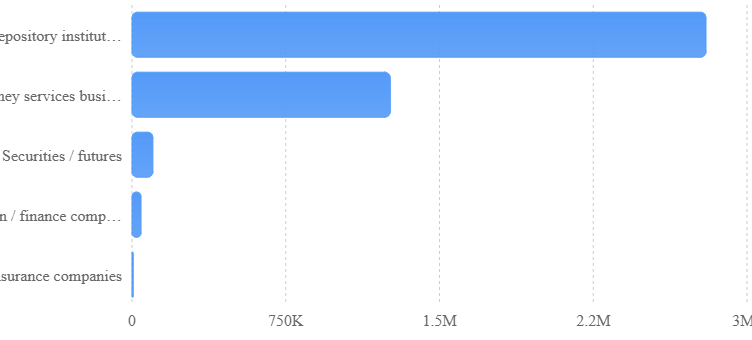
The chart excludes FinCEN’s broad “Other” category and certain institution types for readability. Categories and published figures are national, not San Francisco-specific.
FinCEN.gov
Depository institutions and money services businesses accounted for the largest numbers of reports among these categories.
This is relevant to AI companies because financial investigations often require a similar sequence of tasks across different types of institutions.
The software must identify the alert, collect transaction information, review customer details, compare evidence, and prepare a case record. Human investigators must then assess the findings and follow the institution’s reporting procedures.
Original Finding #2: The Strongest Market Signal Is Repeated Investigation Work, Not the SAR Count Alone
A filing is usually the final output of a much larger process.
Consider a bank that generates an alert after several unusual transfers. An analyst may review the customer’s historical activity, examine the counterparties, look for related transactions, retrieve previous alerts, and prepare a narrative.
If the activity requires additional action, the institution must follow its established procedures and legal obligations.
An AI agent can assist with much of the evidence collection and case preparation. The business opportunity grows when this work is repeated across thousands of alerts.
However, SAR volume is not a reliable standalone estimate of AI software spending. To estimate the actual opportunity, a startup would also need to know how many alerts institutions investigate, how much time each investigation consumes, how often evidence is missing, and what percentage of the process can safely be automated.
For investors evaluating San Francisco financial AI startups, these operational figures are more useful than simply multiplying national SAR filings by an assumed software price.
How AI Agents Are Automating Financial Compliance
Anti-Money-Laundering Investigations
Anti-money-laundering work, often shortened to AML, is a major application area.
Financial institutions use monitoring systems to identify activity that may require additional investigation. These systems can produce alerts based on transaction patterns, customer behavior, or other defined risk factors.
Traditional alert systems may identify a possible problem but leave most of the investigation to an employee.
AI agents can retrieve related transactions, organize customer records, summarize earlier investigations, and prepare evidence for the analyst.
The most useful systems do not simply give an alert a new AI-generated score. They explain which evidence was considered, where the information came from, and what questions remain unresolved.
Know Your Customer and Identity Checks
Know Your Customer, or KYC, refers to procedures used to establish and verify customer identity and understand relevant customer risks.
A business may need to collect identification documents, confirm ownership information, check relevant screening lists, and review changes in customer activity.
AI agents can help organize these checks.
For example, a business customer might submit incorporation documents, ownership records, and identification for several people. An agent can extract the information, compare names across documents, identify gaps, and prepare a structured case for review.
This can be especially useful when a company handles business customers with complex ownership structures.
However, identity decisions need reliable verification methods. An AI model reading a document is not proof that the document is genuine or that the person presenting it is authorized to act.
Payment Fraud Investigations
Payment companies face another demanding problem: deciding which transactions need investigation without unnecessarily delaying legitimate customers.
Fraud detection systems often operate in real time, identifying unusual payment activity and assigning risk signals.
AI agents can add an investigation layer after those signals appear.
A system might retrieve a merchant’s transaction history, compare previous disputes, examine related accounts, and prepare an explanation for a risk analyst.
The challenge is balancing speed with accuracy.
Blocking a legitimate business can cause serious financial harm. Allowing fraudulent activity can also cause losses. For this reason, high-impact actions should have defined decision rules, clear permissions, and review or appeal paths.
Regulatory Reporting and Audit Preparation
Financial compliance teams also spend significant time gathering evidence that their organizations follow required procedures.
An audit may require proof that a control was performed, who performed it, when it happened, and how exceptions were resolved.
An AI agent can retrieve supporting records from approved systems and help organize them into a review package.
This is particularly valuable when evidence must be collected repeatedly across many teams.
The system should preserve the original records and show exactly how each conclusion was reached. If a control failed, the agent should identify the failure rather than generate a polished report that hides the problem.
San Francisco Startups Automating Financial Compliance
Bretton AI: Building AI-Powered Financial Back-Office Operations
Bretton AI focuses on AI-native operations for regulated financial institutions.
The company’s public Y Combinator profile describes tools for compliance, risk, and fraud operations, including traceable outputs and records prepared for audit review. Its positioning emphasizes working with institutions’ own data and policies.
Y Combinator
This approach addresses one of the largest practical challenges in financial AI.
A bank cannot rely on an investigation summary simply because the AI sounds confident. Analysts need to know which transactions were checked, which policy rules applied, and whether the conclusion accurately reflects the underlying evidence.
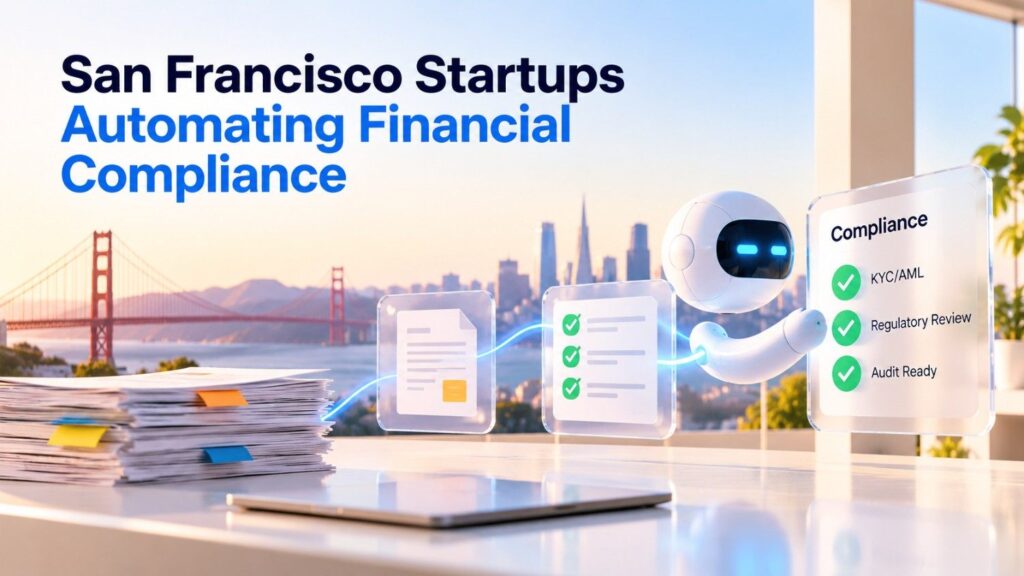
A system that prepares a case with traceable supporting records may be more valuable than a system that produces a fast but difficult-to-check answer.
Coris: AI Agents for Payment Risk Operations
Coris develops technology for merchant onboarding, monitoring, and payment operations.
Its public company description highlights the use of AI agents to automate work in payment risk and operations.
Y Combinator
Merchant onboarding is an attractive application because payments businesses often need to collect information, evaluate risks, verify business details, and monitor ongoing activity.
A traditional process may require employees to compare business registration details, review websites, check ownership information, and investigate unusual transaction behavior.
An AI agent can make these tasks more efficient by assembling relevant information into one review.
The benefit is not just faster onboarding. Better evidence collection may help risk teams understand why a merchant was approved, rejected, or sent for further investigation.
Denki: Automating Internal Financial Audits
Denki focuses on the work required for internal audits and financial compliance.
According to its public Y Combinator profile, the company automates activities such as collecting evidence, documenting control testing, and preparing traceable audit records.
Y Combinator
This is a different form of financial AI from fraud detection.
An audit team might need to verify that payments above a certain threshold received proper approval. A traditional audit could involve collecting records, checking timestamps, identifying approvers, and recording the test results.
An AI-assisted system can help organize the evidence and identify cases that require attention.
However, the testing method must remain clear. An automated audit is valuable only when reviewers can reproduce its findings and distinguish verified evidence from AI-generated explanations.
Payna: Automating Licensing and Regulatory Follow-Ups
San Francisco-based Payna targets licensing work in regulated industries.
The company describes a platform that helps manage filings, renewals, amendments, and regulator follow-ups, initially focusing on financial services categories such as lending, debt collection, and money transmission.
Y Combinator
Licensing is often overlooked in discussions about AI agents.
A growing financial services business may need to maintain permissions across multiple jurisdictions. Each location can have different forms, requirements, renewal dates, and supporting documents.
An AI agent can help track those obligations, prepare information, and identify missing records.
The advantage becomes particularly clear as a fintech expands. Rather than maintaining everything through spreadsheets and email, the business can build a structured process with accountability for each filing.
TovenAI: Financial Compliance Work at Institutional Trading Firms
Y Combinator lists TovenAI as a company building AI agents for data-heavy compliance work at institutional trading firms.
Its October 2026 directory description refers to agents supporting multiple compliance workflows and connections with financial industry software systems.
Y Combinator
This represents a particularly demanding market.
Institutional financial businesses often operate with large amounts of transaction and communication data. Compliance employees may need to gather records across trading, messaging, and surveillance systems.
A product that connects these systems and prepares accurate investigations can reduce work that otherwise requires extensive manual searching.
The central requirement remains traceability. Every reported finding needs to connect to the appropriate records, especially when the result could affect regulatory reporting or an investigation.
Comparing the San Francisco Financial AI Landscape
| Startup | Main product focus | Likely buyer | Main value proposition |
|---|---|---|---|
| Bretton AI | Financial risk and compliance operations | Banks and regulated financial institutions | Traceable investigation workflows |
| Coris | Payment risk and merchant operations | Payment platforms and fintechs | Faster risk reviews and merchant monitoring |
| Denki | Internal auditing | Finance, audit, and compliance teams | Automated evidence gathering and testing |
| Payna | Regulatory licensing | Regulated fintech companies | Better filing and renewal management |
| TovenAI | Trading compliance workflows | Institutional trading firms | Less manual research across systems |
These descriptions are based on public company materials. They are not a measured comparison of performance, pricing, accuracy, or customer outcomes.
Original SFTechScene Research #3: The Economics of AI Agents in Insurance Claims and Compliance
One of the weakest arguments in enterprise AI is that automation automatically produces large savings.
A company might say that AI eliminates half of an employee’s work. But this statement is incomplete unless it accounts for review time, software costs, mistakes, and the extra work created when AI produces incorrect results.
We developed an illustrative operating model to make the economics easier to evaluate.
Research Design: A 10,000-Case Annual Workload
Imagine a San Francisco financial services business processing 10,000 insurance or compliance cases annually.
For the model, we assume employees currently spend an average of 18 minutes preparing and reviewing initial case information.
We then examine three possible levels of labor-time reduction from AI-assisted preparation.
These are scenario assumptions, not results from an observed business or a measured industry average.
| Model input | Assumption |
|---|---|
| Annual case volume | 10,000 |
| Initial staff time per case | 18 minutes |
| Annual baseline labor | 3,000 hours |
| Additional AI review time | 3 minutes per case |
| Fully loaded labor cost | $55 per hour |
| Conservative AI time reduction | 25% |
| Base AI time reduction | 45% |
| Optimistic AI time reduction | 65% |
The three-minute review requirement is treated as additional time, not included in the initial percentage reduction. This conservative approach prevents us from counting the same labor saving twice.
How We Calculated the Results
First, calculate the baseline annual labor:
\[ 10{,}000\times18\div60=3{,}000\text{ hours} \]
Next, calculate time saved by AI at the assumed reduction rate.
Finally, subtract the additional review time:
\[ 10{,}000\times3\div60=500\text{ hours} \]
The formula for net hours saved is:
\[ \text{Net hours saved}=(3{,}000\times r)-500 \]
Here, \(r\) is the assumed percentage of original case labor reduced by the AI system.
Results: Automation Can Create Value Even With Human Review
Potential annual net labor hours saved
Illustrative 10,000-case model after adding three minutes of AI-output review per case. Not measured deployment results.

| Scenario | Gross hours saved | Extra review hours | Net hours saved | Gross labor value |
|---|---|---|---|---|
| Conservative: 25% | 750 | 500 | 250 | $13,750 |
| Base: 45% | 1,350 | 500 | 850 | $46,750 |
| Optimistic: 65% | 1,950 | 500 | 1,450 | $79,750 |
Original SFTechScene calculations. Labor value equals net hours saved multiplied by $55 per hour. The model excludes vendor fees, setup costs, error remediation, and any revenue effects.
The base case produces 850 net hours of potential annual labor savings.
At the assumed fully loaded labor cost of $55 per hour, those hours represent $46,750 in gross labor capacity value.
This does not necessarily mean the company will reduce payroll by $46,750. It could instead use the released time to handle additional cases, reduce overtime, improve customer response times, or allow staff to focus on more difficult investigations.
The distinction matters when evaluating return on investment.
The Break-Even Point
Under these assumptions, the AI system must reduce more than one-sixth of the original case-processing time before accounting for software costs.
That is because the extra three minutes of review equals approximately 16.67% of the original 18-minute case workload.
If the AI saves less time than this, the added review effort outweighs the direct labor reduction.
This provides a useful buying rule.
Before a company spends heavily on AI automation, it should run a small test and measure whether the time saved exceeds the time required to check the output.
What Happens After Software and Implementation Costs?
Suppose the business pays $18,000 per year for AI software, support, and related operating expenses.
Assume it also spends $12,000 on initial setup and integration during the first year.
Under the base scenario:
\[ \$46{,}750-\$18{,}000-\$12{,}000=\$16{,}750 \]
The first-year illustrative net labor-cost benefit would therefore be $16,750.
Base-case first-year financial model
Illustrative annual labor value, AI costs, and remaining net benefit. USD.
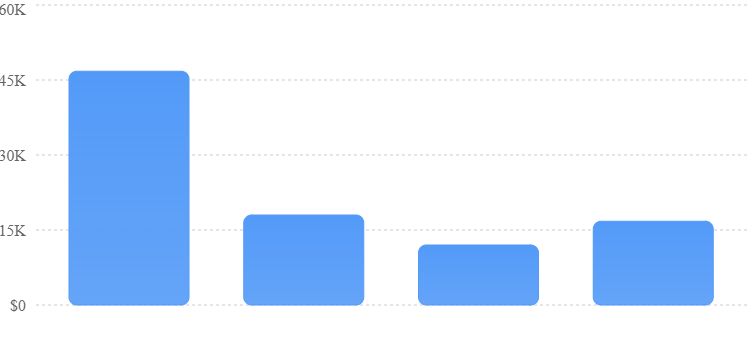
The model produces a positive first-year result, but it depends strongly on the assumptions.
If review takes six minutes rather than three, the base-case gross labor savings are reduced by another 500 hours. At $55 per hour, that removes $27,500 of value and turns the first-year scenario negative.
Similarly, an increase in errors could require further investigation, customer compensation, or additional control work.
Original Finding #3: The Most Important AI Metric Is Net Value per Correct Case
A company should not evaluate an insurance AI agent solely by asking how many cases it touches.
Instead, it should calculate the total cost of completing a correct case.
That means including employee time, AI software spending, review effort, mistakes, and the cost of fixing errors.
A useful formula is:
\[ \text{Cost per correct case}= \frac{\text{Total operating and correction costs}}{\text{Cases completed correctly}} \]
This metric discourages companies from celebrating high automation rates when quality is poor.
For example, an agent that processes 1,000 cases but requires employees to reopen 150 of them may create less value than a slower system that finishes 900 cases correctly.
The second system may also be easier to govern because employees can trust the output.
For San Francisco founders, the lesson is to optimize for accurate completion, not simply the percentage of tasks the AI performs.
Original SFTechScene Research #4: Which Insurance and Compliance Workflows Should Be Automated First?
Not every workflow offers the same combination of financial value and operational safety.
A claim document review and a final claim denial may involve some of the same information, but their consequences are very different.
Similarly, collecting records for a suspicious transaction investigation is not the same as deciding to freeze an account or submit a regulatory report.
We developed a workflow prioritization model to help businesses identify where AI agents may provide value without taking unnecessary risks.
How the Workflow Scoring Model Works
We evaluated 10 representative insurance and financial compliance workflows using five factors.
The factors are repetition, document workload, ease of checking the AI’s output, ease of keeping actions under human control, and the likely reduction in manual preparation work.
Each factor receives a score from 1 to 5. Higher scores are better.
We assigned equal weight to each factor, producing a maximum score of 25.
This is an original editorial assessment based on workflow characteristics. It is not a statistical model fitted to company operating data, and the scores should not be interpreted as measured industry performance.
Workflow Priority Results
| Workflow | Score / 25 | Suggested starting approach |
|---|---|---|
| Claims document extraction | 24 | Automate preparation |
| Audit evidence collection | 24 | Automate collection and checking |
| Missing-document follow-ups | 23 | Automate with communication controls |
| Insurance appeal preparation | 22 | Draft for expert approval |
| Regulatory filing preparation | 21 | Automate drafting and validation |
| KYC document review | 21 | Assist identity teams |
| Fraud investigation preparation | 20 | Prepare evidence for analysts |
| Policy coverage analysis | 17 | Assist qualified reviewers |
| Final insurance claim decisions | 12 | Retain authorized decision controls |
| Account blocking decisions | 10 | Require defined risk authority |
SFTechScene editorial scores. These are comparative planning judgments, not observed outcomes, risk certifications, or regulatory approvals. Requirements vary by institution and jurisdiction.
SFTechScene workflow automation priority scores
Original qualitative scoring model, maximum 25 points. Higher means a more promising starting workflow under the defined criteria.
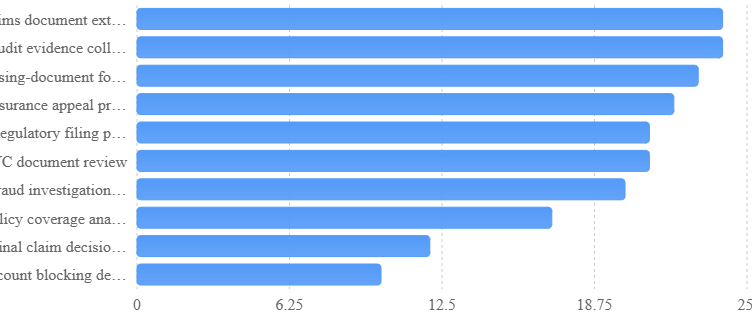
Original Finding #4: Workflows With Clear Evidence and Reversible Actions Are Stronger Starting Points
The highest-scoring workflows share an important characteristic.
They create outputs that people can verify against existing records.
An employee can check whether an AI extracted the correct claim number, collected the right invoice, or identified a missing document. A reviewer can compare an AI-generated audit package with the original evidence.
These checks are relatively straightforward.
By contrast, a final claim denial can require legal judgment, medical expertise, or detailed policy interpretation. An incorrect account restriction can damage a customer’s finances and create further obligations for the institution.
This does not mean AI cannot support these decisions. It means the company should separate information preparation from final authority.
For founders building products in San Francisco, this points toward a practical growth strategy: begin with a workflow where accuracy is easy to test, build trust through repeated performance, and expand permissions only after proving that the system meets the buyer’s standards.
The Biggest Risks of Using AI Agents in Insurance and Financial Compliance
Incorrect Decisions Can Have Serious Consequences
A wrong answer in a casual AI conversation may be inconvenient. A wrong answer in an insurance claim or financial investigation can have much larger effects.
An AI agent might misunderstand a policy exclusion, overlook an important medical record, or combine information from unrelated customer accounts.
If that mistake leads to a denial, delay, or account restriction, the result can affect a person’s access to money or necessary services.
This is why companies should distinguish between automating a task and transferring authority.
An agent may be allowed to retrieve records or prepare a summary without being allowed to approve a claim, deny coverage, or restrict a customer’s account.
AI Systems Can Produce Convincing but Unsupported Explanations
Modern AI models are effective at producing readable summaries. Unfortunately, a readable summary is not always an accurate one.
The National Association of Insurance Commissioners warns that AI-generated information can sound correct even when it is wrong. The organization also emphasizes that insurance companies remain responsible for meeting applicable laws and standards when using AI.
NAIC
This creates a direct product requirement.
A claims agent should not simply say that the customer’s policy excludes certain damage. It should identify the relevant policy document, the applicable section, and the facts supporting the conclusion.
A financial investigation agent should connect unusual-activity findings to actual transaction records rather than generate a narrative based on incomplete information.
Customer Data Must Remain Protected
Insurance and financial compliance systems often work with highly sensitive information.
This may include identification records, health information, transaction history, bank account details, employment information, and private business records.
An AI agent with access to multiple internal systems could potentially expose more information than a traditional single-purpose application.
Companies therefore need tight controls over what the agent can access and what it can do with that access.
An agent preparing a claim should not automatically receive permission to search unrelated customer records. A compliance investigation agent should not be allowed to export an entire customer database simply because it needs information about one account.
The underlying principle is simple: give the agent access only to the information and actions required for its approved task.
Financial Compliance Reporting Requires Special Care
Suspicious Activity Reports involve specific confidentiality and reporting obligations. An AI agent handling these processes needs controls suited to the institution and the data.
The system should not casually disclose whether a report was filed, expose protected investigation information, or make unauthorized submissions.
A safe design separates evidence gathering, analysis, decision approval, and filing.
FinCEN’s published resources explain the regulatory reporting framework, but businesses should assess the exact obligations that apply to their institution before introducing AI into those processes.
FinCEN.gov
Bias and Unfair Treatment Are Major Risks
Financial and insurance decisions can affect different groups of consumers in different ways.
An AI system may rely on historical information containing unfair patterns. It may also use data that appears neutral but indirectly reflects sensitive personal characteristics.
For lenders, federal rules already require accurate and specific explanations for certain adverse credit decisions. The Consumer Financial Protection Bureau has made clear that using complex algorithms does not remove those obligations.
Consumer Financial Protection Bureau
+1
For insurers, applicable state laws and supervisory expectations also matter. The NAIC adopted its Model Bulletin on the Use of Artificial Intelligence Systems by Insurers in December 2023 to establish governance expectations and reinforce that AI-supported activity must comply with existing insurance requirements.
content.naic.org
Companies should test not only whether their agents are accurate overall, but also whether error rates and outcomes differ meaningfully across relevant groups and circumstances.
California’s Regulatory Environment Makes AI Governance a Business Requirement
Why San Francisco Founders Cannot Treat Compliance as a Later Problem
Financial AI startups often begin with the goal of making operations faster and less expensive.
That is reasonable, but insurance and finance are industries where the process is part of the product.
A startup that automates claim reviews may need to explain exactly how the system uses policy data, records evidence, and routes exceptions.
A company serving banks may need to support model testing, security reviews, audit requirements, and ongoing monitoring.
These needs influence the software architecture from the beginning.
A product that cannot produce reliable records may work in an early demonstration but fail during a serious enterprise purchasing review.
Insurance AI Governance in Practice
The NAIC’s AI guidance places emphasis on areas such as accountability, governance, risk management, and regulatory oversight.
Insurance regulators may ask organizations to explain how AI systems operate, what information they use, and how the insurer manages associated risks.
NAIC
For an AI claims product, this means maintaining clear records about the model version, applicable policy rules, retrieved evidence, output, review actions, and final authorized decision.
It also means having a process for handling unexpected behavior.
If the AI begins producing incorrect coverage summaries after a software update, the insurer should be able to detect the problem, pause the affected workflow, identify potentially affected claims, and correct the resulting errors.
Financial Services Need Explainable Decisions
A similar principle applies to lending.
The CFPB’s guidance explains that creditors using complex AI systems must still provide the specific principal reasons for covered adverse actions. They cannot rely on a vague explanation merely because the model is complicated.
Consumer Financial Protection Bureau
That requirement is particularly important for agent developers who want to combine several AI models or external data sources.
If the final decision cannot be explained accurately, the institution may have difficulty meeting its obligations.
Founders should therefore design their systems so important facts and decision reasons can be traced back to approved sources and rules.
This does not require exposing every mathematical detail of an AI model. It requires maintaining enough reliable information for the institution to understand, test, and explain decisions where the law demands it.
How San Francisco Businesses Can Measure AI Agent Reliability
Accuracy Alone Is Not Enough
A company might report that its AI agents achieve 95% accuracy.
That figure sounds impressive, but it leaves several important questions unanswered.
What counts as correct? Was the system tested on ordinary cases or difficult ones? How often did it use the wrong customer information? Did employees need to correct its output?
A model that accurately extracts most invoice fields could still be unsafe if its rare mistakes affect payment amounts or customer identity.
Businesses need measurements that reflect their actual operations.
The AI Agent Performance Scorecard
| Metric | What it measures | Why it matters |
|---|---|---|
| Correct-case rate | Share of cases completed to an approved standard | Measures useful output |
| Evidence accuracy | Whether findings match source records | Reduces unsupported conclusions |
| Human correction time | Minutes spent fixing AI work | Reveals hidden labor |
| Exception rate | Cases requiring additional intervention | Measures operational difficulty |
| Unauthorized action rate | Actions outside granted permissions | Tests safety controls |
| Case completion time | Time from intake to completed workflow | Measures customer and staff impact |
| Cost per correct case | Full cost divided by correct completions | Measures actual efficiency |
| Reopened-case rate | Cases needing further work after completion | Reveals downstream quality problems |
These metrics should be collected before deployment as well as after it.
Without a baseline, a company cannot reliably demonstrate improvement.
Why Small Errors Matter at Scale
Suppose a business processes 100,000 records and an AI agent makes an important error in 0.5% of them.
That would produce 500 potentially incorrect records.
The percentage looks small, but the operational impact could be substantial if those mistakes involve financial amounts, missing identity information, or incorrect claim documents.
An AI system also may make similar mistakes repeatedly. For example, it could consistently misread a document format used by a particular insurance provider.
This means testing should examine patterns of errors, not just average performance.
Companies should maintain evaluation sets that include difficult, incomplete, and unusual cases. They should also examine performance separately for different documents, customers, products, and case types.
How San Francisco Startups Can Build Their First Insurance or Financial Compliance AI Agent in 90 Days
Building a reliable agent does not require automating an entire department from the start.
A smaller, carefully measured project is usually a better way to learn where the technology works and where it creates problems.
The following 90-day plan is designed for an insurer, fintech, claims administrator, or regulated financial services business testing a limited workflow.
Days 1–15: Choose One Workflow and Establish the Baseline
Start by identifying a task that employees repeat frequently and that has a clear, checkable output.
Examples include collecting missing claim documents, preparing insurance appeal files, organizing merchant onboarding records, or assembling evidence for an internal audit.
Avoid beginning with a workflow where the agent would independently deny claims, freeze accounts, or make other difficult-to-reverse decisions.
Measure the current process using real cases.
Record how much staff time each case takes, how often information is missing, how many corrections are required, and how long customers wait for the next action.
Review the proposed scope with the relevant legal, risk, security, and compliance stakeholders. Identify which data the system needs and which actions must remain outside its permissions.
Days 16–30: Build the First Controlled Prototype
The first working agent should perform a small number of tasks.
For example, a claims preparation agent might retrieve documents, extract claim details, identify missing evidence, and generate a summary with references to the source files.
It should not be able to send payments, approve coverage, or alter official claim outcomes.
The system should use approved data connections and maintain records of its actions.
Every extracted fact should be associated with the source that supports it. If information is unclear, the agent should identify the uncertainty instead of inventing an answer.
Days 31–45: Test Against Historical Cases
Create a test set containing examples of the workflow that the organization has already completed and reviewed.
Include routine cases, difficult cases, incomplete documents, and situations that previously produced mistakes.
Where feasible and permitted, use a held-out sample that was not used to design prompts or tune the system.
Compare the agent’s output with verified case records and assess it using clear scoring rules.
Do not treat a fluent explanation as proof of correctness.
A system that produces excellent-looking summaries but frequently attaches the wrong documents is not ready for production.
Days 46–60: Run a Human-Supervised Pilot
Once the agent passes initial tests, introduce it to a limited number of live cases in a controlled environment.
Human employees should continue to perform the final review.
Measure whether the AI reduces total work, including the time spent checking the results.
Track errors, missing evidence, staff satisfaction, and changes to customer response times.
The goal is not to prove that AI can work. It is to discover whether this particular implementation improves the company’s actual process.
Days 61–75: Improve Reliability and Add Controls
Use pilot findings to identify recurring problems.
The system may struggle with certain document formats, policy wording, or incomplete account histories. Fix these issues before expanding its responsibilities.
Add automated tests for known failure cases.
Introduce clear review rules for high-risk situations. These may include unusual claim values, missing identification information, disputed policy provisions, or conflicting financial records.
Make sure employees can see what the AI did, correct mistakes, and stop the workflow when necessary.
Days 76–90: Measure the Business Case and Decide Whether to Expand
At the end of the pilot, compare the AI-assisted workflow with the original process.
Calculate the net reduction in employee time, total implementation and software costs, quality differences, and number of cases completed correctly.
Also examine whether employees trust the system and whether the new workflow meets the organization’s security and compliance requirements.
If the results are positive, expand gradually.
A sensible next step may be supporting another document type or adding one more approved action. It does not necessarily mean allowing the agent to make final decisions independently.
The 90-Day Implementation Scorecard
| Period | Main deliverable | Success test |
|---|---|---|
| Days 1–15 | Workflow baseline and risk assessment | Measurable process and clear scope |
| Days 16–30 | Controlled agent prototype | Correct data access and traceable outputs |
| Days 31–45 | Historical case evaluation | Agreed accuracy and safety thresholds |
| Days 46–60 | Human-supervised pilot | Demonstrated operational improvement |
| Days 61–75 | Reliability improvements | Reduced recurring errors |
| Days 76–90 | Financial and compliance review | Evidence-based expansion decision |
The plan is deliberately focused on one workflow.
Companies that attempt to automate too many processes at once may struggle to identify which parts are producing value and which parts are introducing risk.
Where the Next Big Opportunities Are for San Francisco AI Startups
AI Agents That Work With Existing Financial Software
Many established insurance companies and banks cannot replace their existing technology overnight.
They have years of customer records, customized processes, security requirements, and relationships with outside vendors.
This creates an opportunity for startups that build AI agents capable of working with the software those organizations already use.
An effective product may connect the insurer’s document storage, claim management system, policy records, and customer communications. The agent can then prepare information without forcing the company to move everything to a completely new platform.
The important commercial advantage is easier adoption.
A startup that integrates into existing processes may face fewer barriers than one asking a regulated institution to replace its entire operating system.
Specialized Agents for Different Insurance Products
Insurance is not one uniform market.
Health insurance claims differ from property damage claims. Workers’ compensation involves different evidence and procedures from commercial liability insurance.
An AI agent trained and tested for one category may not perform reliably in another.
This creates room for specialized startups with a deep understanding of particular insurance processes.
For example, a health insurance appeal product needs to understand medical billing documents and payer requirements. An agricultural claim product may depend more heavily on geographic observations and damage evidence.
The underlying AI technology may be similar, but the industry knowledge and verification methods are different.
Continuous Compliance Monitoring
Traditional compliance reviews often happen at scheduled intervals.
A business may gather audit evidence once per quarter or review certain controls periodically.
AI agents may help organizations move toward more frequent monitoring by checking approved records as work happens.
For example, a system could identify transactions missing required approval evidence or detect that an important compliance document has expired.
This does not eliminate the need for audits, independent review, or formal reporting.
It can, however, help teams discover certain problems earlier instead of waiting until the next scheduled review.
AI Agent Governance Could Become Its Own Market
As regulated companies deploy more AI agents, they will need software to manage those agents.
An institution may eventually operate different systems for claims preparation, document reviews, customer service, audit evidence, and fraud investigations.
Someone must control what each agent can access, which actions it can take, and how its performance is monitored.
This creates demand for security, audit logging, testing, permission management, and incident response tools designed specifically for AI systems.
For San Francisco founders, that infrastructure may become just as important as the agents performing the work.
Original Finding #5: The Biggest Opportunity May Be Reducing the Work Between a Warning and a Decision
Our analysis points to a common problem across insurance claims and financial compliance.
Organizations already have systems that identify potential issues.
A claims platform can receive a claim. A fraud system can generate an alert. A financial institution can detect an incomplete customer record.
But after an issue is identified, an employee may still need to spend significant time finding evidence, understanding what happened, and preparing the information required for a decision.
That gap is where AI agents may create substantial value.
Consider three examples.
An insurer already knows a claim is missing information, but someone still needs to determine which documents are missing and contact the customer.
A bank’s fraud monitoring system already detects unusual activity, but someone still needs to gather the supporting transactions and prepare the investigation.
An audit system already stores control records, but employees still need to retrieve evidence from multiple applications and organize it for review.
In each situation, the AI opportunity is not necessarily to replace the final decision-maker.
It is to reduce the time and effort between identifying a problem and presenting a complete, trustworthy case to the person responsible for resolving it.
This leads to a useful market hypothesis: companies that make regulated decisions easier to prepare, verify, and document may build stronger products than companies focused only on automating final decisions.
That hypothesis still needs testing with customer-level operating data. The public regulatory statistics analyzed here demonstrate workload and activity, not a proven relationship between a particular AI architecture and business performance.
What Founders and Investors Should Look for Before Backing an AI Insurance or Compliance Startup
A startup can produce a convincing demonstration without having a dependable product.
For buyers and investors, the first question should be whether the system works repeatedly on real customer cases.
A useful evaluation should include a controlled sample of cases, clearly defined accuracy measures, and evidence of the time employees spend reviewing outputs.
It should also show how the product handles missing information, uncertain results, and mistakes.
Integration matters because a system that works only on documents uploaded manually may be difficult to scale across an enterprise.
Security matters because sensitive customer information is central to many insurance and financial workflows.
And compliance knowledge matters because rules differ across activities and jurisdictions.
The strongest startup teams will likely combine technical expertise with a deep understanding of the work they are automating.
They will also be willing to explain where their product should not be used.
An AI company that clearly identifies its limits may be a more dependable partner than one promising complete autonomy across every regulated business process.
Research Methodology and Limitations
This article includes original SFTechScene calculations and analytical frameworks. For transparency, it is important to distinguish what was measured from what was modeled.
The California complaint analysis uses published DFPI counts for 2023 and 2024. We calculated growth rates and complaint shares directly from those counts. The data do not measure how many complaints could be resolved by AI.
The financial crime reporting analysis uses national FinCEN figures for FY2022 through FY2025. We calculated approximate year-over-year and compound growth rates from the published rounded figures. Because these are national counts, they should not be treated as measurements of San Francisco compliance activity.
The economic model uses explicitly stated assumptions about case volume, handling time, labor costs, review time, and software spending. It is a reproducible scenario analysis, not a result observed at an insurer, bank, or startup.
The workflow priority analysis is an original qualitative scoring framework. Its purpose is to guide pilot selection, not to claim statistically established rankings.
Company descriptions are based on publicly available materials, including Y Combinator profiles and company announcements. They describe product positioning rather than independently audited automation performance.
No proprietary claims dataset, confidential bank transaction dataset, or internal startup customer records were available for this analysis. As a result, the research does not establish real-world AI error rates, achieved customer savings, or causal effects on regulatory outcomes.
The next step for a stronger empirical study would be to obtain anonymized case-level data from participating insurers or financial institutions, conduct a controlled comparison of AI-assisted and manual workflows, and measure speed, corrections, adverse outcomes, and total costs.
These limitations are important because rigorous original research should show exactly where evidence ends and assumptions begin.
Final Takeaway: The Future of AI in Insurance and Finance Is About Completing Work Without Losing Accountability
San Francisco startups are helping move insurance and financial compliance software into a new phase.
Instead of simply displaying records and generating alerts, AI agents can collect evidence, prepare case files, identify missing information, and help employees complete complicated workflows.
The potential benefit is significant. California’s financial complaint figures show a substantial volume of consumer issues. FinCEN’s national reporting data show millions of suspicious activity filings each year. Our economic analysis demonstrates how modest reductions in repetitive preparation work can create meaningful labor capacity when the savings exceed review and software costs.
But these findings do not justify handing every decision to AI.
Insurance claims and financial compliance involve legal obligations, personal information, financial consequences, and consumer trust. A system that is fast but difficult to check can create more problems than it solves.
The most promising companies will understand that distinction.
They will automate work that can be verified, maintain clear records, protect sensitive information, and give trained employees control over decisions that require judgment.
For San Francisco businesses, the opportunity is not simply to buy an AI agent and replace a manual workflow overnight. It is to redesign how information moves through the organization so employees can spend less time collecting records and more time resolving important problems.
For founders, the commercial lesson is equally clear. Start with one painful process, prove accuracy on real cases, demonstrate measurable savings, and expand only when customers trust the results.
The winners in insurance and financial compliance AI may not be the startups that remove the most humans from the process. They may be the companies that make every important decision faster, better supported, and easier to verify.
Research reference points: California DFPI annual reports, FinCEN Year in Review, NAIC artificial intelligence guidance, CFPB guidance on AI credit decisions, and public Y Combinator company profiles. Figures and research commentary are current to October 21, 2026, using the specific historical reporting periods identified above.