

SFTechScene | November 2026 | San Francisco AI and Developer Technology
San Francisco’s AI coding boom is creating a new market that goes far beyond tools that help developers write code. A growing group of startups is building the technology that makes AI coding agents faster, safer, easier to manage, and more useful for real businesses.
These companies are working on a problem that is becoming harder to ignore. AI can generate software in minutes, but businesses still need that software to work correctly, protect customer data, handle growing demand, and remain easy to maintain.
That creates an opportunity for startups building everything around AI-generated code. Cloud environments where agents can work safely, systems that test software, tools that understand large codebases, and platforms that manage thousands of automated coding tasks are becoming important parts of the modern software industry.
The scale of the change is already visible.
GitHub’s 2025 Octoverse report found more than 4.3 million AI-related repositories on its platform. It also reported that developers merged an average of 43.2 million pull requests per month, representing 23% annual growth. The GitHub Blog
Meanwhile, Stack Overflow’s 2026 Developer Survey found that 66% of respondents used AI coding assistants or agents, while 26.2% used automated agent workflows. Those figures show that AI is no longer just an experiment for developers. It is becoming part of their daily work. Stack Overflow
For San Francisco startups, this raises an important question.
If AI makes writing code much easier, which parts of building software will become more valuable?
The answer may shape the next generation of billion-dollar developer tool companies. As AI lowers the effort needed to produce code, the systems that help teams test, secure, run, understand, and deliver that code could become more important.
This article examines the companies building that infrastructure, the problems they are solving, and the business opportunities emerging around them. It also includes original SFTechScene analysis using published developer surveys, GitHub activity, engineering research, and transparent cost models.
The Short Version: The Next AI Coding Boom Is About Everything Around the Code
The first major wave of AI coding products focused on helping developers write software faster. Tools such as Cursor, Claude Code, and OpenAI Codex changed how engineers create, edit, and understand code.
The next wave is tackling a different problem. Once AI can produce large amounts of code, companies need better ways to check it, run it, connect it to existing systems, and deliver it to customers.
That work requires infrastructure. Some of it looks like familiar developer tools, while other parts are being designed specifically for AI agents.
The seven layers of AI coding infrastructure
| Infrastructure layer | What it does | Why it matters |
|---|---|---|
| Code understanding | Helps AI understand files, dependencies, and project history | Reduces mistakes in large projects |
| Model infrastructure | Runs models and makes responses faster | Controls speed and operating costs |
| Agent workspaces | Gives AI a separate environment to write and run code | Limits damage and supports parallel work |
| Agent coordination | Manages tasks, tool access, and multiple agents | Makes automated work easier to control |
| Code review and testing | Checks AI changes for bugs and security problems | Reduces the risk of releasing broken software |
| Deployment infrastructure | Builds, publishes, and runs applications | Turns generated code into usable products |
| Monitoring and evaluation | Measures results, failures, speed, and costs | Helps teams improve reliability over time |
These layers are closely connected. A coding agent might use several of them while completing a single task, even if the developer only sees one editor.
The strongest opportunities may come from reducing the gap between code that looks finished and software that is safe to release.
Why San Francisco has an important role
San Francisco combines AI research, software startups, cloud infrastructure companies, and businesses willing to try new developer tools. This creates opportunities for infrastructure startups to work closely with early customers and learn from real engineering problems.
However, proximity to major AI companies does not guarantee success. Developer tools are sold in a global market, and a company based outside the Bay Area can compete directly with a San Francisco startup.
The real advantage comes from understanding difficult engineering problems early and creating products that solve them better than existing tools.
Why AI Coding Is Creating a New Infrastructure Market
Generating code and delivering software are different jobs
Consider a founder using an AI agent to build a customer management platform.
The agent could create login screens, build a customer database, generate reports, and connect a payment provider. Within a short period, the founder might have a working demonstration that would previously have required considerably more manual development.
But a demonstration is not a finished business product.
What happens when two customers update the same record? Can one customer see another company’s data? What happens if a payment fails halfway through a transaction? Will the application recover when a database connection breaks?
These problems do not disappear because AI wrote the software. They become especially important when code is created faster than people can inspect it.
That is why the infrastructure market matters.
More generated code can create more checking work
AI coding agents make it easier to propose changes across many files at once. A change that once required an engineer to spend hours writing code may now require that engineer to spend more time understanding and reviewing the result.
This changes where work happens.
Instead of spending most of their time creating the first version, developers may spend more time checking behavior, finding hidden risks, and making sure the software works with existing systems.
The market for testing, review, and monitoring tools could therefore grow alongside AI coding adoption.
The hidden challenge is understanding the entire application
An AI agent can make a change that looks correct inside one file but creates problems elsewhere.
For example, an agent might change the way a customer record is stored without realizing that billing, reporting, and customer support tools all depend on the old format. The individual change may pass a simple test while the complete application fails.
This is why code understanding tools are becoming important.
Developers need systems that can map relationships across thousands of files, identify which services depend on a change, and provide useful context before the AI starts editing.
AI agents also need somewhere safe to work
A coding agent is different from a chatbot because it can take action.
It may install packages, run commands, edit files, start development servers, and connect to outside services. These actions need limits, particularly when the agent works with business software or customer data.
An isolated workspace gives the agent a controlled environment. It can complete its task without receiving unrestricted access to the company’s main systems.
This is the opportunity being pursued by companies such as E2B, whose platform provides isolated virtual machines for AI agents. The Enterprise AI Agent Cloud
The broader shift is important: AI coding is moving from generating suggestions toward performing work, and performing work requires infrastructure.
The Startups Building the Next Generation of AI Coding Infrastructure
The AI coding infrastructure market is not controlled by a single type of company. Some startups build technology that coding assistants use behind the scenes, while others create tools that engineering teams use directly.
The companies below illustrate how this market is developing. Their products overlap in certain areas, but they address different problems in the software development process.
1. E2B: Giving AI Agents Their Own Computers
Infrastructure focus: Isolated execution environments
E2B:开源运行时,为 AI 应用提供安全、可扩展的隔离云沙箱代码执行环境。 – MOGE
E2B is building infrastructure that allows AI agents to use separate computing environments. Instead of allowing an agent to run unfamiliar code directly on a company’s main system, developers can give it an isolated virtual machine.
The agent can then run commands, edit files, install software, and test its work. E2B also provides controls for storage, networking, resource monitoring, and the life of each agent session.
Its platform supports different AI models and coding systems. In April 2026, E2B announced support for the OpenAI Agents SDK, allowing developers to connect agents to isolated workspaces through an existing software development framework. The Enterprise AI Agent Cloud+1
Why E2B matters
An agent that can write code is useful. An agent that can safely execute, test, and revise that code is much more powerful.
This distinction matters for businesses running many agents at once. Each agent may need its own files, installed packages, network rules, and computing resources.
Providing those environments individually could become a major infrastructure business as companies automate more engineering work.
2. Daytona: Making Agent Workspaces Fast and Flexible
Infrastructure focus: Programmable developer environments
Introducing Daytona Cloud: The Agent-Native Infrastructure | StartupHub.ai
Daytona is another company building environments where agents can execute code. Its platform provides isolated computing environments that developers can create and manage through software.
Daytona’s documentation describes support for dedicated computing resources, separate file systems, network controls, and programmatic access. It also supports different types of environments for different workloads. Daytona
The important idea is that a developer should not have to set up a new computer manually whenever an agent starts work.
If a software company wants to run hundreds of coding jobs, it needs a reliable way to create those environments, distribute work, and shut them down when tasks finish.
The business opportunity
Daytona competes in a market where startup customers care about both safety and speed.
A coding agent may need to run many short tasks. If creating its environment takes too long, that delay can reduce the value of automation.
The companies that make these environments easy to create and inexpensive to operate could become important suppliers to AI software platforms.
3. Modal: Running AI Workloads Without Managing Every Server
Infrastructure focus: Cloud computing and agent execution
Sandboxes: Isolated environments for reinforcement learning and AI agents | Modal
Modal provides cloud infrastructure that developers can use to run AI and other computing tasks without managing all the underlying servers themselves.
For AI coding, this matters because agents need more than access to a model. They may need to execute commands, install dependencies, process files, and test software in parallel.
In May 2026, Modal announced an integration with Anthropic’s Managed Agents that allows agent tools to run inside Modal Sandboxes. This separates the system managing the AI agent from the computing environment carrying out its actions. Modal
Why this separation matters
Different parts of an AI coding system have different needs.
The model needs to understand a request. The agent needs to decide what to do next. The computing environment needs to execute commands safely and return results.
Separating these functions allows businesses to change one part without rebuilding everything else.
For startups, that flexibility can reduce the risk of becoming dependent on a single AI model or agent provider.
4. Morph: Making Coding Agents Faster Behind the Scenes
Infrastructure focus: Specialized AI models and code editing
Morph: The Fastest AI-Powered Code Editing Solution for Developers | ChatGate
Morph focuses on making parts of the coding process faster.
Its Fast Apply product helps insert AI-generated edits into existing files without rewriting the entire file. Morph also offers specialized tools for code search and handling the large amounts of context used by AI agents.
The company advertises Fast Apply processing above 10,500 tokens per second. That is a vendor-reported product performance figure, not an independently established speed for every customer workload. Morph+1
Why smaller improvements can become valuable
Imagine a coding agent that needs to make 30 edits across a software project.
If every edit requires rewriting a large file, the agent wastes time and processing capacity. A specialized editing system can reduce that repeated work.
One small improvement may not change a developer’s day. But when a company runs thousands of agents, small reductions in delay can add up.
This creates opportunities for infrastructure companies that focus on narrow, repeated tasks rather than building another general-purpose coding assistant.
5. Sourcegraph: Helping AI Understand Large Software Projects
Infrastructure focus: Code search and project understanding
Cross-repository code navigation | Sourcegraph
Sourcegraph addresses a problem that becomes more difficult as software grows.
A developer working on a small application may be able to understand most of the code. In a large company, important information can be spread across thousands of files and several separate services.
Sourcegraph’s code search tools help developers locate definitions, find references, examine changes, and search across multiple repositories. These capabilities can also support AI workflows that need accurate information about existing software. Sourcegraph docs
Why code understanding could be a major market
AI agents need the right information before they can make reliable changes.
If an agent edits a billing function without knowing which other services depend on it, the risk of mistakes increases. A useful code understanding system can help identify those relationships.
The strongest products will need to provide accurate, relevant context without overwhelming agents with unnecessary information.
6. Code Review Platforms: Where AI Changes Meet Engineering Standards
Infrastructure focus: Automated review and safer releases
Making AI code review available to everyone
Graphite represents another important category: tools that help teams review and merge code.
Its platform combines AI-assisted reviews with workflows for managing smaller, connected changes and handling the order in which changes are merged. The goal is to help developers find problems and reduce delays before software is released. Graphite
This category also includes companies such as CodeRabbit and other providers that analyze proposed code changes.
Why automated review is becoming more important
AI can create a large proposed change before a human developer has time to inspect every line.
That makes traditional review harder, especially when several agents work at the same time.
Automated review tools can help identify suspicious changes, missing tests, and possible errors. However, they should not be treated as a guarantee that the software is safe.
Human approval, automated tests, and clear ownership remain important.
7. Vercel: Connecting AI-Generated Code to Real Applications
Infrastructure focus: Deployment, cloud workflows, and isolated execution
Vercel illustrates how established developer infrastructure companies are adapting to AI coding.
Its Sandbox product allows developers to run unfamiliar code inside isolated environments. Vercel also supports connecting agent workflows to the systems used to build and deploy applications.
In September 2026, Vercel announced that Cursor Cloud Agents could run inside Vercel Sandbox. This allowed the coding agent’s work environment to be separated from the system managing the agent. Vercel+1
The larger lesson
Infrastructure companies do not need to build the best coding model to benefit from AI coding.
They can become valuable by making AI-generated software easier to test, publish, monitor, and operate.
This also creates a competitive challenge for smaller startups. Large cloud and developer platform companies already have customers, established infrastructure, and experience operating software at scale.
8. LangSmith: Measuring Whether AI Agents Actually Work
Infrastructure focus: Agent testing, monitoring, and evaluation
LangSmith: Agent & LLM Observability Platform
LangSmith focuses on tracking and evaluating AI systems.
Its tools can record what an agent did, identify failed steps, compare different versions, and measure how systems behave after release. Developers can test agents against prepared examples and monitor their behavior with real users. LangChain
These capabilities are especially useful for agents that complete several steps rather than producing a single answer.
A coding agent might read a file, edit code, run a command, interpret an error, change the code again, and submit a result. If the final output is wrong, developers need to understand which step caused the problem.
Why testing AI agents is different
Traditional software tests often check whether a known input produces an expected result.
AI agents can take different paths to complete the same task. A final answer might look correct even when the agent used the wrong information or skipped an important check.
Testing therefore needs to consider both the result and the process. This could make agent evaluation one of the more durable opportunities in AI infrastructure.
The competitive landscape
| Company or platform | Primary role | Main buyer need | Important buying question |
|---|---|---|---|
| E2B | Agent execution | Isolated workspaces | Can agents run safely at scale? |
| Daytona | Agent environments | Fast workspace creation | How reliable are environments under load? |
| Modal | Cloud compute | Flexible execution | How much does each completed job cost? |
| Morph | Coding inference | Faster code operations | Does the speed gain improve full-task time? |
| Sourcegraph | Code understanding | Reliable project context | Does it find the right information? |
| Graphite | Code review | Faster, safer changes | Does it reduce review and rework? |
| Vercel | Deployment and sandboxes | Reliable application delivery | Does it fit existing operations? |
| LangSmith | Evaluation | Agent performance visibility | Can teams reproduce and fix failures? |
This is an illustrative company map, not a ranking or a complete list of companies in the sector. Several providers offer more than one capability, and product availability can change.
Original SFTechScene Research #1: The 2026 Developer Trust Gap Points to a Major Infrastructure Opportunity
One way to understand the infrastructure opportunity is to examine when developers are willing to trust AI.
SFTechScene analyzed response counts from Stack Overflow’s 2026 Developer Survey, published on October 6, 2026. The trust question received 14,304 responses.
Rather than relying only on a survey headline, we examined the different levels of trust reported by respondents and calculated how strongly those levels favor verifiable AI work. Stack Overflow Developer Survey+1
Research methodology
The analysis uses one published survey question, with its six mutually exclusive response categories. SFTechScene grouped the categories according to the conditions under which respondents said they would trust AI.
We used the published response counts to calculate ratios and grouped percentages. No individual survey records were reconstructed, and no claims are made about San Francisco respondents specifically.
Because this is a worldwide voluntary survey, its findings should not be treated as representative measurements of all SF developers.
Finding #1: Developers are far more comfortable with work they can check
Trust when easily verified
48.0%
6,872 respondents
Trust for important decisions
6.6%
949 respondents
When respondents say they trust AI output
2026 Stack Overflow Developer Survey. Single-choice question; percentages share the same denominator.
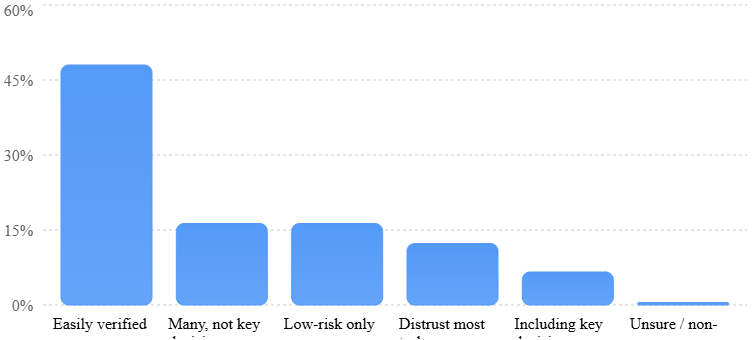
Source: Stack Overflow 2026 Developer Survey, Trust in AI Tools. SFTechScene visualization and calculations. Stack Overflow Developer Survey
The ratio between the first and fifth groups is approximately 7.24 to 1, based on response counts.
In other words, more than seven respondents selected trust conditional on easy verification for every respondent who said they trusted AI with important work decisions.
This does not mean those groups are opposites in every sense. But it shows that the ability to check AI output is a central part of how many developers decide whether to use it.
Finding #2: More than four out of five responses fall outside broad trust in AI
SFTechScene combined three categories that explicitly limit trust: easily verified work, noncritical work, and low-risk work.
Conditional trust in AI output
80.6%
Explicitly conditional trust
11,527
Respondents across three groups
Calculated as (6,872 + 2,329 + 2,326) / 14,304. The remaining 19.4% includes broad trust, distrust, and unsure responses. Rounding explains small differences from published percentages.
This is not the same as saying 80.6% of respondents distrust AI. In fact, these three groups express forms of trust.
The more useful finding is that their trust comes with limits.
For infrastructure startups, that distinction is important. Many developers appear willing to use AI, provided they can understand what it did and check the result before important decisions are made.
What this means for San Francisco startups
The opportunity is not simply to convince developers that AI is reliable.
It is to build products that make reliability easier to establish.
For example, a code review product could show which files an agent changed, explain the reason for each change, identify affected services, and run focused tests.
A sandbox provider could make it easier to test those changes without exposing production systems. An evaluation platform could record failed jobs and compare performance before and after updates.
These products address the conditions developers already associate with trust.
Research limitation
The survey measures stated attitudes, not verified purchasing behavior. It cannot tell us how much developers would pay for review tools, which companies will win, or whether San Francisco has a higher rate of conditional trust.
Those questions require additional local customer and spending data. The study supports a strong product hypothesis, not a precise market-size forecast.
Original SFTechScene Research #2: GitHub Activity Shows Why Developer Infrastructure Faces Growing Pressure
The next question is whether the amount of software activity is large enough to create meaningful demand for new infrastructure.
To explore that question, SFTechScene analyzed two measures from GitHub’s 2025 Octoverse report: merged pull requests and public repositories importing large language model software development kits.
These measures track different activities. Pull requests reflect development changes, while software development kit imports provide a signal of AI model integration.
Methodology
GitHub reported an average of 43.2 million merged pull requests per month in 2025, up 23% year over year. It also reported 1.1 million public repositories importing LLM SDKs, an increase of 178% year over year.
We used those published figures and growth rates to calculate approximate earlier-period baselines. Because GitHub’s published numbers are rounded, the reconstructed values are approximate rather than exact historical totals. The GitHub Blog
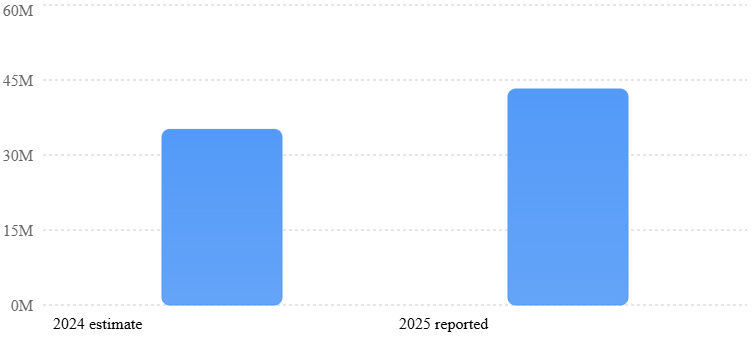
Finding #1: Monthly merged pull requests increased by roughly 8.1 million
Average monthly merged pull requests on GitHub
2024 value reconstructed from the published 2025 total and 23% growth rate. Values in millions.
The calculation is straightforward.
\[ \text{2024 estimate}=\frac{43.2\text{ million}}{1.23} \]
That produces approximately 35.12 million monthly merged pull requests in 2024, compared with 43.2 million in 2025.
The difference is about 8.08 million additional merged pull requests per month.
These figures do not establish how many changes were written by AI. But they show the scale of the systems that review, test, and merge software.
Even small improvements in review cost or reliability could matter when applied to such large workflows.
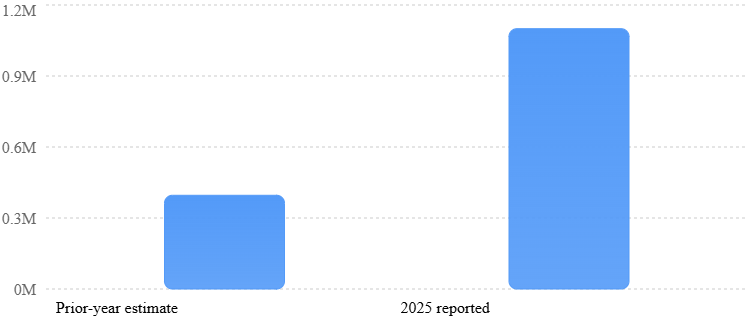
Finding #2: Repositories importing LLM SDKs showed much faster relative growth
Public GitHub repositories importing LLM SDKs
Earlier-period value is inferred from GitHub’s rounded 2025 figure and 178% reported growth. Units: millions of repositories.
Using the reported 178% annual growth rate:
\[ \text{Earlier estimate}=\frac{1.1\text{ million}}{2.78} \]
The result is approximately 396,000 repositories, compared with 1.1 million in 2025.
That suggests an increase of roughly 704,000 repositories in the reported period.
However, importing an LLM SDK does not necessarily mean a repository uses an AI coding agent. The measure may reflect chatbots, search systems, automation tools, or other AI applications.
The original finding: Infrastructure demand has two potential sources
These figures suggest two related but separate sources of demand.
The first is the large existing software development market, where companies want better code reviews, faster tests, simpler deployment, and stronger security.
The second is the growing use of AI inside applications and development workflows, which creates additional needs for model connections, execution environments, evaluation systems, and monitoring.
These demand sources can support the same infrastructure companies.
That matters strategically because a startup selling only to AI coding agents may face a narrower market than a company whose technology also improves ordinary software development.
Why this matters for SF founders
A startup does not need to win the entire AI coding market to build a valuable product.
It can focus on a repeated problem that appears across many development workflows.
For example, a company that reduces the cost of reviewing software changes could sell to teams using AI agents and teams still writing most code manually.
The strongest businesses may be those that benefit from more development activity without requiring every customer to adopt the same AI coding model.
Original SFTechScene Research #3: When Does AI Coding Infrastructure Actually Save Money?
The biggest question for startup founders is not whether AI can produce code faster. It is whether the complete development process becomes less expensive.
A faster coding agent can create financial value, but that value may disappear if engineers spend more time checking its work, fixing errors, or managing failed tasks.
To understand this problem, SFTechScene created a scenario model for a hypothetical San Francisco software startup.
Unlike the earlier analyses, this section does not measure an actual company’s performance. It uses clearly defined assumptions to show how changes in software volume, review time, and error rates affect engineering costs.
The model: A startup processing 600 code changes per month
Our hypothetical company begins with 600 pull requests per month.
Engineers spend an average of 18 minutes reviewing each request. Twenty percent of requests need additional correction work, and each correction takes an average of 45 minutes.
We then model what happens when AI increases the number of proposed changes by 40%.
This increase is an assumption chosen for sensitivity testing, not an observed market growth rate.
Baseline assumptions
| Variable | Before AI expansion | With AI, limited improvement | With stronger infrastructure |
|---|---|---|---|
| Monthly pull requests | 600 | 840 | 840 |
| Review minutes per request | 18 | 13 | 10 |
| Requests needing corrections | 20% | 14% | 14% |
| Minutes per correction | 45 | 45 | 45 |
| Total monthly review and correction hours | 270.0 | 270.2 | 228.2 |
The calculation for each scenario is:
\[ H=\frac{N\times(R+pF)}{60} \]
Where:
- \(H\) is total review and correction hours.
- \(N\) is the number of pull requests.
- \(R\) is review minutes per request.
- \(p\) is the share requiring corrections.
- \(F\) is the average minutes per correction.
The model includes review and correction labor only. It does not include the time spent creating code, running AI models, hosting infrastructure, or maintaining the tools themselves.
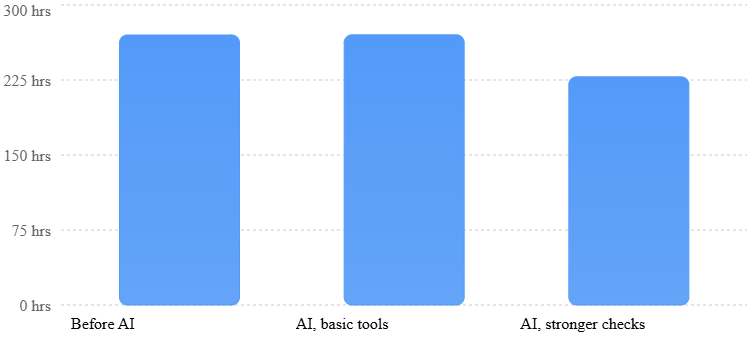
Finding #1: Faster review does not always reduce total work
Monthly engineering review and correction hours
Original SFTechScene scenario model. Illustrative assumptions, not observed startup results.
The middle scenario produces a surprising result.
Even though the average review time falls from 18 to 13 minutes, total review and correction work barely changes. The extra volume cancels out much of the improvement.
In the stronger infrastructure scenario, review time falls to 10 minutes while the correction rate remains at 14%.
That reduces total monthly work to 228.2 hours, saving 41.8 hours compared with the starting point.
The finding is not that infrastructure always creates this saving. It is that a growing volume of AI-generated changes makes review efficiency increasingly important.
Finding #2: Small changes in review time can create large savings
Suppose a San Francisco startup uses AI to generate 840 pull requests each month.
If the company reduces review time by three minutes per request, the calculation is:
\[ 840\times3=2,520\text{ minutes} \]
That equals 42 hours of engineering time per month.
At an illustrative loaded engineering cost of $100 per hour, the gross labor value would be $4,200 per month, or $50,400 per year.
That does not mean the company will automatically save $50,400 in cash. Labor capacity may be redirected rather than eliminated, and the tool may create costs elsewhere.
Nevertheless, it gives founders a useful way to evaluate whether a new code review product is worth testing.
Finding #3: The break-even point depends on volume
The value of saving three minutes per review changes significantly with the number of monthly reviews.
Gross monthly value of saving 3 minutes per code review
SFTechScene scenario analysis using $100 per loaded engineering hour, before infrastructure costs.
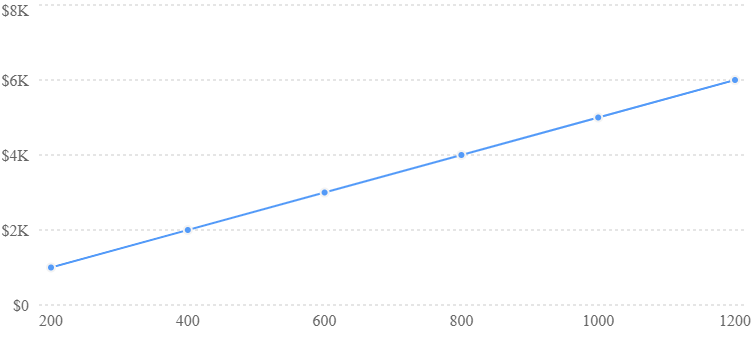
A tool costing $1,500 per month would need to save at least 15 engineering hours monthly to cover its subscription cost under the $100-per-hour assumption.
At three minutes saved per request, that requires 300 reviews per month.
This gives SF founders a simple buying rule: ask vendors to demonstrate time savings on the company’s actual workload, rather than relying on general productivity claims.
Finding #4: Infrastructure costs can also grow quickly
Code review is only one expense. Agent workspaces, model calls, testing, and storage can become significant as companies automate more tasks.
Consider a hypothetical company running 10,000 agent tasks each month.
| Cost input | Low-cost scenario | Medium scenario | High-cost scenario |
|---|---|---|---|
| Tasks per month | 10,000 | 10,000 | 10,000 |
| Model cost per task | $0.10 | $0.50 | $1.50 |
| Compute cost per task | $0.05 | $0.20 | $0.60 |
| Other variable cost per task | $0.02 | $0.10 | $0.30 |
| Monthly variable cost | $1,700 | $8,000 | $24,000 |
These are modeled costs, not market quotations from specific providers.
They illustrate why agent economics deserve attention. A system that appears inexpensive when used a few times per day can become costly when thousands of jobs run automatically.
The metric founders should measure: Cost per accepted change
A coding agent might complete 100 attempts, but only 80 may pass testing and receive approval.
If those 100 attempts cost $200, the cost per attempt is $2. However, the cost per accepted change is $2.50 before human labor and other expenses.
That difference becomes larger when failure rates increase.
A useful metric is:
\[ \text{Cost per accepted change}= \frac{\text{Total agent and infrastructure cost}}{\text{Accepted changes}} \]
For a more complete business calculation, founders should add human review, corrections, and the cost of incidents caused by released changes.
SFTechScene’s conclusion from the model
The most valuable infrastructure may not be the technology that makes agents produce the most code.
It may be technology that reduces the cost of producing each accepted, useful, safe change.
For founders, this changes how infrastructure should be evaluated. The right question is whether a tool reduces the total cost of delivering reliable software, not whether it makes one part of the process look faster.
Original SFTechScene Research #4: Which Infrastructure Layers Could Capture the Most Value?
The next analysis examines where infrastructure startups may have the greatest chance to build strong businesses.
There is no complete public dataset covering the revenue, customer retention, and profit margins of every AI coding infrastructure startup. That means a credible market ranking cannot be created from funding announcements or website claims alone.
Instead, SFTechScene developed a structured opportunity assessment using published adoption signals, product capabilities, switching barriers, and direct connections to customer costs.
Methodology: Five factors that influence infrastructure demand
We assessed seven infrastructure categories using five factors:
- Problem frequency: How often the problem appears in software development.
- Financial importance: Whether solving it can reduce measurable costs or risks.
- AI demand exposure: Whether greater agent use creates more need for the product.
- Integration depth: How closely the product becomes connected to the customer’s workflow.
- Competitive pressure: How easily existing cloud or development platforms could provide something similar.
The assessment is qualitative. It is not a survey, a validated investment forecast, or a measured comparison of startup returns.
SFTechScene infrastructure opportunity assessment
| Category | Main source of value | Market opportunity | Central challenge |
|---|---|---|---|
| Code review and verification | Lower correction and incident costs | Strong demand signal | Competing with built-in reviews |
| Agent sandboxes | Safe, scalable execution | Strong demand signal | Compute cost and cloud competition |
| Code understanding | More accurate changes | Strong demand signal | Quality of project context |
| Agent evaluation | Better measured outcomes | Strong demand signal | Proving business value |
| Specialized inference | Faster and cheaper agent operations | Promising | Model and hardware changes |
| Agent coordination | Easier task management | Promising | Crowded platform market |
| Deployment automation | Faster release of software | Strong existing market | Established provider competition |
These judgments describe product opportunities, not investment recommendations. Companies within the same category may perform very differently.
Finding #1: Verification has a clear connection to customer risk
The verification category benefits from a simple problem.
Every company releasing software needs to establish that its product works. The amount of checking may change, but the need does not disappear.
This creates demand that is not completely dependent on the success of one particular coding model.
A startup that can prove its product reduces serious errors or shortens review cycles has a clearer economic argument than one that only makes an agent’s output more impressive.
Finding #2: Agent sandboxes have broad uses beyond coding
Safe execution environments are useful for many activities.
An AI agent might analyze customer data, process documents, test a website, build a report, or run an experiment. Each activity can involve code execution or access to computing resources.
That creates a broader customer base for sandbox infrastructure providers.
However, the industry also includes large cloud platforms with considerable computing capacity. Smaller providers need advantages in developer experience, isolation, startup speed, reliability, or price.
Finding #3: Code understanding may become more valuable as projects grow
Small software projects are easier for AI agents to navigate.
As companies grow, their applications gain more files, services, business rules, and connections to other systems. A change in one area can affect several others.
Tools that understand these relationships may become more important as companies give AI agents larger tasks.
The difficult part is measuring understanding. A product must improve actual engineering results, not merely retrieve more files or produce longer explanations.
Finding #4: Monitoring becomes essential when agents run without constant supervision
A developer watching an AI agent can stop it when something looks wrong.
A company running automated agents overnight needs another way to detect failures, repeated attempts, excessive spending, and unusual behavior.
Monitoring tools can provide that visibility.
For startups building agent infrastructure, the opportunity is to turn raw records of agent activity into useful decisions. Teams need to know what failed, why it failed, and whether a new version improved the outcome.
The San Francisco AI Coding Infrastructure Stack Is Already Taking Shape
The infrastructure products described above are increasingly being connected into complete workflows.
A developer can start a task inside a project management system, send it to a coding agent, run the agent inside an isolated environment, review the proposed change, and deploy it through a cloud platform.
This is becoming more practical as providers create direct integrations.
In June 2026, Linear announced coding sessions that connect project issues with Claude Code and Codex. Its workflow allows developers to delegate well-defined tasks and bring the resulting changes back for review. Changelog
In September 2026, Vercel announced that Cursor Cloud Agents could use Vercel Sandbox as their execution environment. That is another example of different infrastructure layers working together. Vercel
What a complete AI coding workflow looks like
1. Define the taskProject requirements, expected results, and restrictions
2. Understand the softwareCode search, documents, and dependency information
3. Make and run changesCoding agent working inside a controlled sandbox
4. Test and reviewAutomated checks, security review, and human approval
5. Release and monitorDeployment, performance tracking, and incident detection
The advantage of this approach is that no single AI model needs to handle every responsibility.
A model may be good at writing code without being the best system for checking security. A sandbox provider may be excellent at running tasks without needing to own the coding assistant.
This separation creates room for specialized infrastructure startups.
What San Francisco Founders Should Build in the Next AI Coding Wave
Founders entering this market face a difficult choice. They can build broad platforms that cover several parts of software development, or focus on a smaller problem that existing tools do not solve well.
For most early-stage startups, a focused product offers a clearer starting point.
Opportunity #1: Infrastructure for checking AI-generated software
A founder could build a product that checks proposed code changes against business rules and existing application behavior.
For example, a financial software company might require every payment-related change to preserve transaction records, prevent duplicate charges, and maintain clear audit logs.
A specialized verification product could help enforce those requirements.
The challenge is to produce useful findings without overwhelming developers with false warnings.
A practical starting product
Choose one type of application, such as subscription billing software.
Build checks around common problems, including incorrect access permissions, repeated payments, missing transaction records, and unsafe database updates.
Then measure how often the system catches real problems on historical changes. If it performs well, test it on new changes before they are released.
Opportunity #2: Better agent workspaces for complex software
General-purpose sandboxes already exist, so a new company needs a specific advantage.
One opportunity is serving teams working with complex applications that require several services to run together.
For example, an agent modifying a software product may need access to a test database, a background worker, a message queue, and multiple application services.
Creating that complete environment for every task can be difficult.
A specialized platform could automate the process and make it easier to reproduce problems.
Opportunity #3: Code understanding for businesses with older software
Many companies depend on software written over several years.
These systems often contain business rules that are not fully documented. An AI agent may understand the programming language but miss the reason a particular function behaves in an unusual way.
A startup could focus on helping agents identify those rules.
The product would need to combine code search, project documents, change history, and information supplied by engineers.
This is a particularly useful opportunity for businesses where mistakes can affect payments, security, or customer records.
Opportunity #4: Cost management for autonomous coding
Companies using several coding models and infrastructure providers may struggle to understand how much each completed task costs.
A cost management product could record model usage, computing time, failed attempts, review labor, and accepted results.
This information would help teams compare different workflows.
A developer might discover that a more expensive AI model is cheaper overall because it needs fewer retries. Another team might find that using a smaller model for simple work reduces spending without harming quality.
The important measure is the cost of a successful result rather than the price of one model call.
Opportunity #5: Testing systems for AI-built applications
AI-built applications still need traditional software tests.
However, many early-stage founders using AI have limited engineering experience. They may not know how to create useful tests or interpret failures.
A startup could provide a service that examines an application, creates realistic test cases, and explains problems in plain language.
The product would be especially useful if it connected failures to actual customer risks rather than producing large technical reports.
How SF Startups Can Choose the Right AI Coding Infrastructure
Selecting infrastructure too early can create unnecessary cost and complexity.
A small team building its first product does not need the same tools as a company running hundreds of automated coding tasks each day.
The best approach is to begin with actual operational problems.
Start with the development process, not the product catalog
Founders should first examine how software moves from an idea to a release.
How many changes does the team make every week? How often do changes fail tests? How much time does review take? How frequently does the company have to repair software after customers begin using it?
These questions reveal where infrastructure may create value.
If review is the largest delay, focus on review tools. If agents regularly fail because their environments are inconsistent, investigate sandbox products.
Run a controlled pilot
A startup can test infrastructure without changing its entire engineering system.
Choose a representative set of tasks and record performance before adding the tool. Then repeat the process using comparable tasks with the new product.
For a stronger comparison, randomly assign eligible tasks to the existing workflow or the new workflow. Keep task difficulty, review rules, and acceptance standards consistent.
Measure the complete work, including corrections and review, rather than only the time the AI agent spends generating code.
The metrics that matter
| Metric | What it tells founders |
|---|---|
| Accepted changes per week | Whether the team delivers more useful work |
| Review time per change | Whether engineers spend less time checking |
| Failed test rate | Whether code quality is improving |
| Changes needing correction | How often first attempts are insufficient |
| Production incidents | Whether releases remain reliable |
| Cost per accepted change | Whether automation is economically useful |
| Agent retry rate | Whether tools work consistently |
| Time from task to release | Whether the complete process is faster |
These measures should be examined together.
A product that improves one number while damaging the others may not be a good investment.
Require vendors to demonstrate reliability
Vendor demonstrations often focus on successful examples.
A more useful evaluation includes difficult cases: incomplete requirements, unexpected test failures, complex project dependencies, and conflicting instructions.
Ask what happens when the agent gets stuck. Check whether the infrastructure records failures clearly, controls costs, and allows engineers to recover work.
Before purchasing, teams should also verify data handling, access controls, logging, support arrangements, and the ability to leave the platform.
Avoid building a stack that is difficult to replace
Infrastructure providers change quickly.
A startup that connects every part of its application to one proprietary system may find it expensive to change providers later.
Where practical, use clear interfaces between the coding agent, execution environment, testing system, and deployment tools.
Keep important code and business data in systems the company controls. Document how each infrastructure product is connected, so replacing a vendor does not require rebuilding the entire application.
The Biggest Risks Facing AI Coding Infrastructure Startups
The infrastructure market has strong growth signals, but that does not make every product a good business.
Founders need to understand how quickly the market can change, particularly when large technology companies introduce products that compete with smaller providers.
Risk #1: Major AI platforms may absorb smaller infrastructure products
AI coding companies are adding more capabilities to their platforms.
A coding assistant that originally focused on generating code may later offer cloud execution, testing, review, and deployment. Large cloud providers may also introduce similar services.
This puts pressure on startups selling simple features.
If a product only saves developers a few clicks, a larger platform may be able to copy it. Stronger businesses solve difficult problems that require specialist knowledge, reliable operations, or close integration with customer workflows.
Risk #2: Faster AI models can change which tools are valuable
Some infrastructure products exist because current AI models struggle with specific tasks.
As models improve, certain products may become less necessary. For example, a tool that exists mainly to work around a particular model limitation could lose demand when that limitation disappears.
The safest strategy is to solve a lasting customer problem.
Software will continue to need access controls, testing, monitoring, and reliable deployment even as AI models become more capable. Products built around those requirements may have greater staying power.
Risk #3: Better benchmark results do not guarantee better productivity
Independent engineering research provides an important warning.
In July 2025, METR published a randomized study involving 16 experienced open-source developers completing 246 tasks. The researchers found that access to the AI tools available during the study increased task completion time by approximately 19%. Metr
However, this should not be treated as a permanent measure of AI productivity.
In February 2026, METR reported that later research suggested newer AI tools may be providing larger benefits. The team also explained that participant selection and measurement problems prevented it from making a reliable new estimate. METR
The lesson for founders is straightforward.
A tool’s real-world value must be measured in the environment where customers use it. Performance on a public benchmark is useful evidence, but it cannot replace testing on actual business software.
Risk #4: Security failures could damage customer trust
AI agents may need access to source code, internal files, external services, and computing environments.
That creates security risks if permissions are too broad or untrusted code can interact with important business systems.
Founders should design products around limited access, clear approval rules, and detailed records of agent actions.
Customers should be able to understand which information an agent accessed, which commands it executed, and what changes it proposed.
Risk #5: Infrastructure businesses can have difficult economics
Some AI coding infrastructure companies depend on expensive computing resources.
If a company charges customers a fixed monthly fee while usage grows rapidly, costs can rise faster than revenue.
Founders need to understand the economics of each task, not just customer acquisition or subscription growth.
Usage limits, predictable pricing, efficient resource allocation, and clear cost reporting can help protect margins.
How San Francisco Investors Should Evaluate AI Coding Infrastructure Startups
The appeal of infrastructure investing is that a successful provider can serve many companies across the software industry.
But the investment case should be based on customer economics and competitive strength rather than the number of AI agents a company claims to support.
Look for products embedded in important workflows
A tool used occasionally for experimentation is easier to replace than one that helps a business review, test, or release software every day.
Investors should examine how frequently customers use the product and what happens if it becomes unavailable.
If the product has become essential to delivering reliable software, that may indicate a stronger business.
However, deep integration alone does not guarantee customer retention. Buyers will still compare reliability, price, security, and the quality of alternatives.
Separate technical performance from customer value
A sandbox company may advertise fast startup times. A model infrastructure company may advertise impressive processing speeds.
These numbers matter, but they are not complete measures of value.
Investors should ask whether better technical performance reduces customer costs, improves accepted results, or makes previously difficult workflows possible.
A company that makes a task 20% faster may create less value than another that significantly reduces expensive failures.
Study customer concentration and supplier dependence
Infrastructure startups may depend on major cloud platforms, model providers, or a small number of large customers.
That dependence can create financial risk.
Investors should examine what happens if computing prices change, a model provider changes its API, or a large customer develops the same feature internally.
A durable business needs a reason for customers to continue paying even when the surrounding technology changes.
Measure retention by workload, not just customer count
A company may retain customers while those customers reduce their usage substantially.
For usage-based infrastructure, workload retention can be as important as account retention.
Investors should examine whether existing customers are running more useful tasks, how costs per task are changing, and whether customer activity is growing without excessive discounts.
These measures can reveal business quality earlier than headline revenue growth alone.
A Practical 90-Day Plan for SF Founders Entering the Infrastructure Market
A founder should not begin by building an entire developer platform.
The better approach is to select one expensive, repeated problem and determine whether enough customers will pay to solve it.
Days 1–30: Identify a painful problem and measure its cost
Start by interviewing engineering leaders and developers from different types of software companies.
Ask them to show real examples of delayed releases, failed agent tasks, difficult code reviews, or expensive infrastructure problems.
Avoid relying only on opinions about AI.
A founder needs evidence of actual work being delayed, money being spent, or risks that existing products do not handle well.
At the end of this period, define one measurable problem, one intended customer group, and one clear reason the product should exist.
Days 31–60: Build a narrow product and test real workflows
Create the smallest useful version of the product.
For a code review startup, this might be a tool that detects one class of errors in a specific application type. For a sandbox startup, it might be a reliable way to create and clean up complex test environments.
Test the product against historical examples and real customer workflows.
Keep records of successful results, failures, operating costs, and developer feedback.
A narrow product that performs reliably can be more valuable than a broad demonstration with inconsistent results.
Days 61–90: Prove a measurable economic advantage
Use the product with a small number of design partners.
Measure outcomes against their previous workflows, and establish what improvement is needed to justify the proposed price.
Track cost per accepted result, engineering time saved, reliability, and any additional work created by the product.
If customers receive measurable value and are willing to pay for continued usage, the founder has stronger evidence for expanding the product.
If results remain inconsistent, improve the workflow before building more features.
What the AI Coding Infrastructure Market Could Look Like in 2027
The most important change may be that AI coding becomes less visible as a separate activity.
Developers may increasingly work inside familiar project management, source control, and deployment tools while AI agents complete specific tasks behind the scenes.
This would make infrastructure more important, not less.
AI agents could become normal users of cloud infrastructure
Cloud services have traditionally been designed around applications and human developers.
AI agents introduce different patterns of use. They may create short-lived environments, execute many jobs in parallel, and need precise restrictions on which systems they can access.
Infrastructure companies will need to support those patterns efficiently.
The providers that make agent work predictable and easy to manage may become important suppliers to the broader software industry.
Code review may move toward checking outcomes
Traditional review often focuses on the exact lines of code that changed.
As AI produces more code, teams may increasingly focus on whether a change meets its intended requirements and preserves the rest of the application.
That does not eliminate code inspection. It changes how review time may be divided between examining implementation details and checking behavior.
Tools that connect requirements, tests, affected systems, and actual results could benefit from this shift.
Cost management could become a standard part of development
Companies already monitor cloud spending. AI agents introduce another set of costs that can grow as usage increases.
Engineering leaders may need to track spending by task, product, team, agent, and accepted outcome.
Infrastructure that provides this information clearly could become part of routine software operations.
Small engineering teams may manage larger development workloads
AI coding infrastructure may allow smaller teams to handle more development work.
But this outcome depends on reliability.
If agents produce large amounts of code that require extensive correction, the expected productivity benefits may not appear.
The teams that benefit most will likely combine AI coding with clear requirements, strong automated tests, careful review, and systems that reveal failures early.
Final Takeaway: The Next Big AI Coding Companies May Build the Infrastructure That Makes AI-Generated Software Reliable
The AI coding market is moving beyond the question of whether artificial intelligence can write software.
That capability is becoming widely available. The larger challenge is making AI-generated software dependable enough for real businesses.
This creates opportunities for companies building code understanding systems, agent workspaces, specialized computing infrastructure, automated reviews, testing platforms, and monitoring tools.
The original SFTechScene analysis in this article points to three important conclusions.
First, developer trust is strongly connected to verification. In Stack Overflow’s 2026 survey, respondents were more than seven times as likely to select trust when output was easy to verify as to select trust extending to important work decisions.
Second, software development already operates at an enormous scale. GitHub’s reported growth in pull requests and AI-related development activity helps explain why even narrow infrastructure improvements could have meaningful applications.
Third, speed alone does not guarantee financial value. Our scenario analysis showed that a large increase in code changes could offset faster individual reviews, while stronger review efficiency could create measurable savings.
For San Francisco founders, the opportunity is not necessarily to build another AI coding assistant.
It is to solve the problems that appear when thousands of companies use AI to produce, test, and release software every day.
The next generation of developer infrastructure will be judged less by how much code it helps create and more by how reliably it helps companies deliver working software.
That could become one of the most important business opportunities created by the AI coding boom.
Research Notes and Source Methodology
SFTechScene’s original analysis uses published data available by November 1, 2026. The research draws on the following sources, alongside official company product documentation cited throughout the article.
| Source | Evidence used | How SFTechScene analyzed it |
|---|---|---|
| Stack Overflow 2026 Developer Survey | Six trust response categories, 14,304 responses | Calculated conditional-trust totals and response ratios |
| GitHub Octoverse 2025 | Pull request activity and LLM SDK repository growth | Reconstructed approximate earlier-period baselines using reported growth rates |
| METR productivity research update | Findings and limitations of AI developer productivity experiments | Used as an external check against unsupported productivity assumptions |
| SWE-bench Verified | Coding agent evaluation methodology | Used to distinguish benchmark performance from real-world software delivery |
| Official company documentation | Product capabilities and integrations | Used to classify infrastructure categories and identify practical use cases |
Methodological boundaries: The survey and GitHub calculations are original secondary analyses of publicly released figures, not new field experiments. The cost models are original illustrative scenarios, and the market opportunity assessment is a structured editorial judgment. No San Francisco-only survey sample, company-specific financial data, or independent vendor performance test was available for these analyses.
Reported percentages, growth rates, and response counts retain their original sources and definitions. The findings should be used to develop and test business hypotheses, not as proof of market size, vendor superiority, or guaranteed financial returns.