
SFTechScene Original Research | October 2026
San Francisco has spent decades building software that helps people work faster. Now, some of the city’s most ambitious AI companies are building software that can perform entire parts of a job.
That is a much bigger change.
An AI tool that helps an employee write an email can improve productivity. An AI agent that reads incoming requests, updates customer records, sends follow-ups, and closes routine cases can change how many employees a company needs.
For San Francisco, this raises a difficult question: Which jobs will become more valuable as AI agents improve, and which jobs could become harder to enter or maintain?
The answer is not as simple as saying that programmers, marketers, or customer support workers will disappear. Some tasks inside those jobs are becoming easier to automate. Other tasks still need human judgment, relationships, experience, and responsibility.
The real changes may first appear in smaller hiring plans, fewer entry-level openings, redesigned teams, and higher expectations for each employee.
This matters especially in San Francisco, where expensive technical talent, a large software industry, and easy access to AI startups make automation an attractive business investment.
For this report, SFTechScene examines publicly available employment data from the U.S. Bureau of Labor Statistics, research from Stanford University, and studies of how people use AI at work. We also develop original calculations to explore why San Francisco’s workforce may experience these changes differently from the broader United States.
Our goal is not to predict how many people will lose their jobs. There is not enough reliable evidence to make that prediction.
Instead, we want to identify the work most exposed to AI agents, understand where local employment pressure could appear, and explain what employees, founders, and business leaders should do now.
The Short Version: AI Agents Are More Likely to Change Jobs Before They Eliminate Entire Professions
The biggest near-term employment risk from AI agents is not necessarily mass layoffs. It is the possibility that companies will need fewer people to handle growing amounts of routine digital work.
Customer support, administrative operations, basic software development, sales operations, recruiting coordination, and repetitive marketing production are among the areas worth watching closely.
Jobs that combine technical ability with business judgment, complex problem-solving, customer relationships, and responsibility for important decisions are likely to change differently. AI may remove time-consuming tasks while allowing skilled employees to handle more valuable work.
The latest major Stanford research available for this analysis provides an important warning. In an August 12, 2026 revision of its Canaries in the Coal Mine study, researchers found that employment among workers aged 22–25 in highly AI-exposed occupations was approximately 19% below where it would have been if it had followed the growth of similarly aged workers in less-exposed occupations.
That is a relative employment gap, not evidence that AI directly destroyed 19% of jobs. The researchers found no widespread economy-wide displacement and emphasized that the findings do not establish causation.
Stanford Digital Economy Lab
+1
THE EARLY-CAREER EMPLOYMENT WARNING
19%
Relative employment shortfall
Workers aged 22–25 in highly AI-exposed occupations, through June 2026
Source: Stanford Digital Economy Lab, August 2026 revision. U.S. payroll-data study, not a San Francisco-only estimate and not a causal estimate of AI job losses.
This suggests that the earliest disruption may fall on the traditional path into a technology career. Companies can preserve their experienced staff while reducing the number of junior workers they hire to perform simple tasks.
For San Francisco, that could affect more than individual careers. It could change how startups build teams, how universities prepare graduates, how people gain professional experience, and how the city’s technology economy develops its future leaders.
Why San Francisco Could Experience AI Job Disruption Differently From the Rest of America
San Francisco is an unusual labor market. Many of its businesses create, finance, buy, and use software as a central part of their operations.
That concentration matters because today’s AI agents are especially useful when work takes place inside digital systems.
An agent can read a support ticket, search a database, produce code, update a spreadsheet, and draft a document. These activities fit naturally into many technology businesses.
By contrast, agents that operate mainly through software cannot independently perform the physical parts of nursing, building maintenance, food service, or construction without additional machinery and controls.
This creates an important divide between workers whose jobs involve digital information and workers whose jobs require physical presence.
San Francisco Has a Much Higher Concentration of Computer Jobs
The Bureau of Labor Statistics reported that computer and mathematical occupations represented 7.2% of employment in the San Francisco–Oakland–Fremont metropolitan area in May 2024.
Nationally, the same occupational group represented 3.4% of employment.
That means the local concentration was more than twice the national share. The metro area used here covers a wider labor market than San Francisco city and does not include the separately defined San Jose–Sunnyvale–Santa Clara metropolitan area.
Bureau of Labor Statistics
+1
Computer and mathematical occupations: share of all employment
May 2024, percent of employment
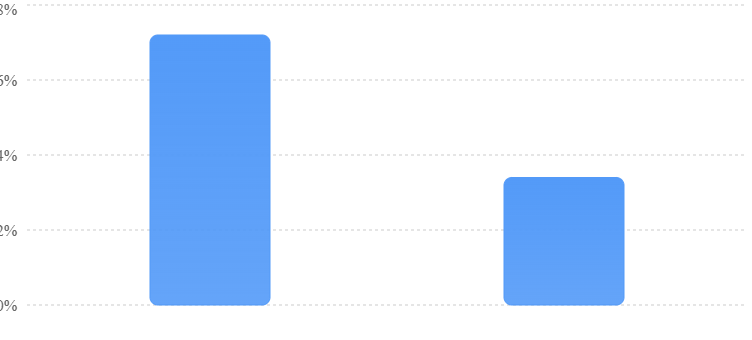
This does not mean local software engineers are twice as likely to lose their jobs. It means a larger share of local employment belongs to an occupational group with considerable exposure to AI-assisted work.
Microsoft’s 2025 research on occupational AI use found high AI applicability in computer and mathematical occupations, alongside office support and other information-heavy roles. However, the researchers measured how relevant AI was to occupational activities, not how many jobs it would eliminate.
Microsoft Research
High Local Salaries Create Strong Incentives to Automate
The San Francisco metropolitan area had an average hourly wage of $48.15 in May 2024, compared with $32.66 nationally.
Computer and mathematical occupations had a local mean hourly wage of $78.40.
These figures do not mean companies can replace that compensation with an inexpensive AI subscription. Reliable agents require software integration, testing, oversight, security, and maintenance. Nevertheless, expensive labor can make productivity improvements especially valuable.
Bureau of Labor Statistics
Imagine two businesses that each spend 1,000 employee hours every month preparing reports and handling routine requests.
One operates in a lower-cost labor market. The other operates in San Francisco, where skilled employees are expensive and office operations may involve substantial overhead.
If both could safely recover 300 hours of routine work, the San Francisco business could potentially save more in labor-related costs or redirect more costly employee time into higher-value activities.
This does not guarantee layoffs. A growing company might use that extra capacity to serve more customers without increasing its staff.
AI Startups Can Also Create New Work
San Francisco is not simply a market where AI takes over existing tasks. It is also a place where companies develop the tools that make those changes possible.
As AI spreads, businesses need people who can connect software systems, protect sensitive information, monitor errors, redesign workflows, and ensure automated decisions meet customer and legal requirements.
Some occupations may therefore see heavy changes to their tasks while still experiencing employment growth.
This distinction is essential. High exposure to AI is not the same as a negative employment outlook.
Original SFTechScene Research #1: How Concentrated Is AI-Relevant Knowledge Work in San Francisco?
To understand San Francisco’s position, we performed an original comparison using the Bureau of Labor Statistics’ May 2024 occupational employment shares.
Rather than estimating future job losses, we calculated how heavily several major occupational groups are represented in the local workforce compared with the national workforce.
This gives us a measurable starting point for understanding where AI-driven changes could have an especially important local effect.
Research Methodology
We used the BLS occupational employment and wage estimates for the San Francisco–Oakland–Fremont metropolitan area and the United States.
For each group, we divided its share of local employment by its national share.
The calculation is:
\[ \text{Local concentration ratio}=\frac{\text{SF metro employment share}}{\text{US employment share}} \]
A ratio above 1 means an occupation group makes up a larger share of the local economy than it does nationally.
A ratio below 1 means the occupation group is less concentrated in the local market.
This calculation measures occupational concentration, not AI exposure or replacement risk. We interpret it alongside external research on AI-relevant tasks, rather than treating the ratio itself as an automation score.
Finding #1: Computer Work Is More Than Twice as Concentrated Locally
| Occupational group | SF metro share | US share | SF/US ratio |
|---|---|---|---|
| Computer and mathematical | 7.2% | 3.4% | 2.12× |
| Business and financial operations | 9.0% | 6.7% | 1.34× |
| Management | 9.7% | 7.1% | 1.37× |
| Arts, design, entertainment and media | 2.1% | 1.4% | 1.50× |
| Legal | 1.1% | 0.8% | 1.38× |
| Office and administrative support | 9.7% | 11.8% | 0.82× |
| Sales and related | 7.4% | 8.7% | 0.85× |
SFTechScene calculations from BLS May 2024 employment shares. Ratios are rounded to two decimal places. The occupational groups are mutually exclusive; the rounded source percentages limit precision.
Bureau of Labor Statistics
San Francisco’s occupational concentration compared with the US
Ratio of local employment share to national share; 1.0 represents equal concentration
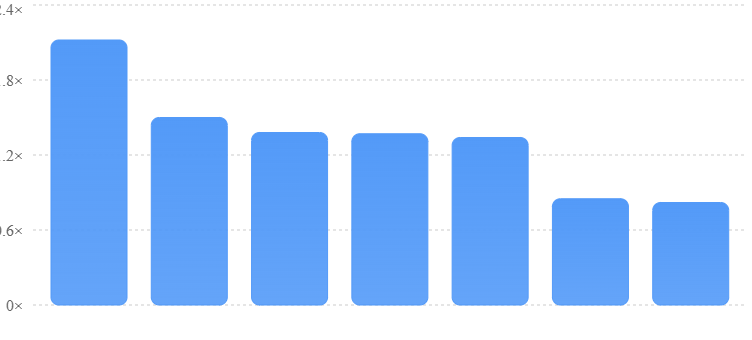
The result is revealing.
San Francisco does not have a higher concentration of every occupation that AI could affect. Office and administrative support jobs are actually less concentrated locally than nationally.
What makes the region different is the unusually high concentration of technical, business, management, and professional work.
These are not identical categories of AI exposure. But many of their day-to-day activities involve information, documents, data, planning, and software systems.
That is precisely where current AI tools have shown considerable usefulness.
Finding #2: Three Major Knowledge-Work Groups Represent 25.9% of Local Employment
We next combined three major occupational groups: computer and mathematical, business and financial operations, and management.
These groups were selected because they represent a broad mix of technology work and professional decision-making that could be affected by AI systems. We excluded other occupations to keep the comparison straightforward.
SFTECHSCENE ORIGINAL CALCULATION
San Francisco metro
25.9%
United States
17.2%
1.51×
As concentrated in the SF metro employment mix
Calculation: (7.2 + 9.0 + 9.7) ÷ (3.4 + 6.7 + 7.1). BLS May 2024 data.
This means approximately one in four workers in the San Francisco metropolitan area belonged to these three broad occupational groups at the time of the survey.
Nationally, the figure was closer to one in six.
That difference is important, but it needs careful interpretation.
A business manager who handles difficult negotiations and leads employees does very different work from a developer who writes simple tests. Combining their occupational groups does not imply that all their tasks face the same automation risk.
What the calculation does show is that San Francisco depends more heavily on several professional categories whose work may be substantially reshaped by AI.
Finding #3: San Francisco’s AI Opportunity Is Bigger Than Simple Job Replacement
The combination of high wages and a heavy concentration of knowledge work creates a particularly strong incentive to use AI for productivity.
It also creates a large market for companies that build, integrate, and manage AI systems.
A startup that sells AI tools to finance teams, developers, recruiters, or sales departments may find many potential customers concentrated within the region.
That commercial advantage could produce conflicting employment effects.
Some businesses may reduce hiring for routine work. Others may grow because they can offer services at lower cost. New companies may create jobs that did not previously exist.
Our analysis therefore supports a narrower conclusion than headlines predicting mass unemployment: San Francisco has an unusually high concentration of work that could be redesigned around AI, but the local employment outcome remains uncertain.
Which San Francisco Tech Jobs Are Most Exposed to AI Agents?
The most useful way to examine AI job exposure is to look inside each profession.
A job title can hide very different types of work. Two people called software engineers may have almost nothing in common in their daily responsibilities.
One might spend most of the week fixing simple bugs and writing routine code. Another might design the systems that keep a bank secure.
The first person’s tasks may be easier to hand over to AI. The second person’s work may become more productive with AI while remaining difficult to automate fully.
The same pattern appears in marketing, finance, support, recruiting, and other office-based professions.
A Practical Exposure Map for San Francisco Employers
The following table is an original SFTechScene task-level assessment, informed by published research on AI usage and occupational activities.
It is not a statistical forecast. The exposure categories are editorial assessments of current technical feasibility and likely operational barriers, rather than measured probabilities of job loss.
| Role or work area | AI exposure of routine tasks | Main activities agents can handle | Work that still needs people |
|---|---|---|---|
| Data entry and records processing | Very high | Extracting, checking, updating records | Exceptions, accuracy control |
| Tier-one customer support | Very high | Common questions, routing, standard refunds | Escalations, sensitive customers |
| Sales development and outreach operations | High | Research, CRM updates, follow-ups | Relationships, persuasion |
| Recruiting coordination | High | Scheduling, tracking, initial information gathering | Candidate trust, hiring judgment |
| Basic marketing production | High | Drafts, reporting, repurposing content | Strategy, original research |
| Routine software testing | High | Test generation, simple checks, bug reports | Complex reliability testing |
| Junior software development | High for routine tasks | Boilerplate code, small fixes, documentation | Architecture, security, accountability |
| Accounts payable processing | High | Invoice extraction, matching, routing | Fraud checks, approvals |
| Business research support | High | Summaries, data gathering, presentations | Verification, original insight |
| Financial analysis | Moderate to high | First-pass models, reporting, comparisons | Forecast judgment, controls |
| Product management | Moderate | Documentation, research summaries, planning support | Tradeoffs, customer priorities |
| Cybersecurity operations | Moderate to high | Alert review, log analysis, initial investigation | Incident response, defense strategy |
| Engineering leadership | Moderate | Reports, coordination, code review assistance | System ownership, people leadership |
| Enterprise sales | Moderate | Preparation, research, routine follow-up | Trust, negotiations, complex deals |
Some of the most important distinctions appear when we examine these occupations in greater detail.
Customer Support: One of the Clearest Areas for AI Agent Automation
Customer support is a strong early candidate for agent-driven workflow automation because companies already measure much of the work in individual requests.
A customer asks a question. A support system records the issue. The company follows a procedure and attempts to resolve it.
That structure makes it easier to define what successful work looks like.
Why Routine Support Work Is Highly Exposed
Consider a customer who wants to know why a delivery has not arrived.
A well-connected AI agent could identify the customer, locate the order, check tracking information, explain the delay, and create an escalation when necessary.
For a straightforward request, the entire interaction might be completed without a support worker.
The same approach can apply to subscription changes, appointment updates, billing questions, password assistance, and product information.
This is a different business model from simply giving support employees an AI writing assistant.
Instead of helping a person answer a ticket, the software attempts to complete the ticket itself.
Why Human Support Will Not Simply Disappear
Not every customer issue follows a clear procedure.
Someone may be angry because the company made a serious mistake. A customer might face financial hardship, an account security incident, or a complicated technical failure.
In these situations, the business may need an experienced person who understands context, makes exceptions, and accepts responsibility for the decision.
Companies also need employees to review automated resolutions, investigate patterns of failure, improve support policies, and handle requests that agents cannot complete safely.
The work can therefore shift from answering repeated questions to overseeing service quality.
What This Means for Hiring
A support team that previously needed new employees whenever ticket volume increased may be able to absorb some growth through automation.
That may reduce demand for entry-level support agents even if the company has more customers.
The national employment outlook is consistent with pressure on this occupation. The BLS projects a 5.5% decline in employment for customer service representatives between 2024 and 2034. That projection reflects multiple economic and technological forces, not an estimate of job losses caused specifically by AI agents.
Bureau of Labor Statistics
Software Engineers: AI Will Change Coding Work, but the Employment Story Is Complicated
Few jobs sit closer to the AI transformation than software engineering.
AI coding systems can produce functions, explain unfamiliar code, suggest tests, investigate bugs, and help developers navigate large projects.
As agents become more capable, they can also attempt sequences of engineering tasks rather than waiting for a new human instruction at every step.
This raises a serious question for San Francisco’s technology workforce.
If a small engineering team can produce much more software, will companies need fewer programmers?
Junior Developers Face a Different Risk From Experienced Engineers
A junior developer is often assigned small, clearly defined tasks.
These may include writing a basic interface, updating an existing function, preparing tests, fixing straightforward bugs, or improving documentation.
Such tasks can be good candidates for AI assistance because the expected output is relatively clear.
An experienced engineer often performs more difficult work. They decide how different systems should fit together, investigate unusual failures, balance performance against cost, and decide whether a technical change creates a security risk.
AI can help with those activities, but completing them reliably requires a deeper understanding of the whole system.
This creates a possible imbalance.
Companies may still need experienced engineers to design and check systems while needing fewer new developers for simple implementation work.
The Research Shows Pressure, Not the End of Software Engineering
The Stanford Digital Economy Lab’s 2026 research identifies software development among occupations showing concerning early-career employment patterns.
It also emphasizes that workers with experience have not shown the same relative employment weakness across highly exposed occupations.
Stanford Digital Economy Lab
+1
At the same time, the BLS projects that software developer employment will grow by 15.8% nationally between 2024 and 2034, adding approximately 267,700 jobs.
These results are not necessarily contradictory.
Bureau of Labor Statistics
Demand for software can grow even while the tasks assigned to individual programmers change.
For example, an AI-native startup might launch a product with a much smaller engineering team than a traditional startup. But cheaper software development could also allow more businesses to build products that were previously too expensive.
The final employment result depends on which effect is stronger.
The Most Valuable Engineering Skills May Shift
San Francisco engineers should pay increasing attention to system design, security, testing, product thinking, and the ability to verify AI-generated changes.
The worker who simply produces code may face more competition from software tools.
The worker who can turn uncertain business requirements into secure, reliable systems may remain highly valuable.
For employers, the challenge will be maintaining a path for new engineers to acquire the experience required for advanced roles.
Sales Development: AI Agents Can Take Over Much of the Administrative Work
Sales teams perform many tasks that are important but repetitive.
They research accounts, identify possible buyers, update customer databases, draft outreach messages, schedule follow-ups, and prepare meeting notes.
These activities are especially relevant for San Francisco’s business-to-business software companies.
The SDR Role Could Be Rebuilt Around Fewer Manual Tasks
A sales development representative traditionally spends considerable time preparing and managing outreach.
An AI agent can help create lists of potential buyers, research companies, find relevant business signals, prepare message drafts, and update customer relationship management systems.
When approved to do so, it may also send messages and coordinate routine responses.
This could allow salespeople to spend more time speaking directly with qualified prospects.
It could also reduce the need for employees whose primary responsibility is handling high volumes of repetitive prospecting tasks.
More Outreach Does Not Automatically Mean More Revenue
There is a major limitation.
AI makes it easier for sellers to send messages, but it also makes it easier for everyone else to send them.
A market flooded with automated outreach may become harder to enter rather than easier.
Buyers may ignore generic messages, tighten communication filters, and become more selective about whom they trust.
This means businesses should measure qualified conversations and actual sales outcomes, not simply the number of messages produced.
The most valuable sales employees may become those who understand a customer’s business well enough to build a meaningful relationship.
Marketing and Content Roles: Production Is Becoming Easier, but Originality Matters More
Marketing teams in San Francisco face a similar divide.
AI can draft articles, prepare email campaigns, create first versions of advertisements, summarize analytics, organize keyword research, and repurpose content across platforms.
These abilities affect agencies, in-house marketing teams, freelance workers, and startups.
Which Marketing Tasks Are Most Exposed?
Work that involves changing the format of existing information is particularly vulnerable to automation.
For example, an agent can turn a product announcement into several social posts, email drafts, ad variations, and internal summaries.
It can also prepare first-pass reports from campaign results and identify straightforward changes in performance.
That may reduce demand for roles built mainly around producing repeated variations of standard material.
Why Strategic Marketing Remains Different
A model can generate a blog post about AI agents. But original reporting requires more than assembling familiar information.
Someone must decide what question matters, find suitable sources, check the data, design a fair analysis, and determine whether the conclusions are actually supported.
Similarly, a marketing leader must decide which customers to target, how to position a product, which channels deserve investment, and what the company should stop doing.
Those decisions require a clear view of the business.
The strongest marketing professionals may increasingly be measured by research quality, positioning, conversion, and commercial results rather than the amount of content they produce.
For SFTechScene’s own publishing category, this difference is particularly relevant. As generic content becomes cheaper to create, original local data, firsthand interviews, and careful verification can become important ways to build trust.
Recruiting and Human Resources: Coordination May Shrink Before Hiring Judgment
Recruiting contains a large amount of digital coordination.
Recruiters search for candidates, review profiles, schedule interviews, send updates, record feedback, and prepare hiring documents.
Many of these activities can be supported by AI agents.
Scheduling and Candidate Administration Are Natural Starting Points
Consider a recruiting coordinator responsible for scheduling interviews across several teams.
An agent with appropriate calendar access can suggest meeting times, send invitations, communicate changes, and update applicant-tracking records.
It can also remind interviewers to submit feedback and prepare routine status reports.
These improvements may reduce the administrative workload associated with each open position.
For a San Francisco startup, that could make it possible for a small recruiting team to support a larger hiring operation.
Hiring Decisions Need Greater Care
Deciding whom to hire is more sensitive than finding an available calendar slot.
A flawed automated decision can unfairly exclude qualified applicants. Hiring tools also create privacy, discrimination, and compliance concerns.
Human recruiters bring value by understanding the role, assessing incomplete information, building relationships, and helping candidates navigate important career decisions.
Employers should therefore distinguish between automating recruiting operations and delegating consequential employment decisions.
AI can help organize information without being given uncontrolled authority over who receives an opportunity.
Finance and Accounting: Repetitive Processing Is Exposed, but Accountability Remains Human
Financial operations offer many clear workflows.
Companies receive invoices, match records, review expenses, prepare reports, and reconcile transactions.
These activities often depend on structured information and established rules.
Accounts Payable Is a Strong Candidate
An AI agent may read an invoice, extract the amount and vendor information, compare it with a purchase order, and flag discrepancies.
If a payment falls within predefined rules, the system could prepare it for approval.
This approach can save time, particularly for companies processing many similar transactions.
However, extracting an invoice is not the same as deciding whether it should be paid.
A document can be fraudulent, a vendor account can be compromised, and a transaction can appear valid while violating company policy.
Finance Roles Could Move Toward Review and Analysis
A bookkeeping employee who mainly enters transactions may see their workload change considerably.
A financial controller who investigates unusual patterns, evaluates risk, and ensures accurate reporting performs a different function.
Even when AI produces a correct calculation, somebody must confirm that the inputs are reliable and the accounting treatment is appropriate.
San Francisco companies should evaluate these processes in stages.
Automating data preparation may be relatively simple. Automating the final movement of money requires stronger controls, approval rules, and audit records.
Product Managers, Designers, and Business Analysts: Some Tasks Are Easy to Automate, but Decisions Are Not
Product managers spend time gathering information, documenting requirements, reviewing usage data, and communicating with engineering teams.
AI can help with much of this work.
An agent might organize customer feedback, identify repeated complaints, prepare an initial product requirement document, and summarize feature requests.
It may also help design teams produce early variations and test possible approaches.
The Difficult Part Is Choosing What Matters
A product team rarely has unlimited time or money.
It must decide which customer problems deserve attention and which requests should be rejected.
That involves understanding commercial goals, technical limitations, customer behavior, and competitive pressure.
AI can provide evidence to inform those decisions. It cannot automatically determine which tradeoff is right for every business.
Design also extends beyond producing attractive screens. Effective designers need to understand user behavior, accessibility, trust, and the way a product behaves in unexpected situations.
Employees who combine research, product judgment, and technical understanding may benefit more from AI than those focused on producing routine documents or simple design variations.
Cybersecurity: AI Could Automate Routine Monitoring While Increasing the Need for Skilled Defenders
Cybersecurity is a useful example of why task exposure does not necessarily imply falling employment.
Security teams handle repetitive alerts, inspect logs, investigate suspicious activity, and prepare incident reports.
AI agents can assist with these tasks.
They may help classify alerts, connect related events, and prepare evidence for human analysts.
But a security error can have serious consequences.
An agent that misses an attack, exposes sensitive data, or takes an unsafe action could create substantial financial damage.
The BLS projects 28.5% employment growth for information security analysts nationally between 2024 and 2034. That is much faster than the overall employment projection.
Bureau of Labor Statistics
The reason is not that cybersecurity is immune to automation.
Instead, the need to defend increasingly complex technology systems may grow alongside improvements in the tools security teams use.
This offers a broader lesson for San Francisco workers: an occupation can experience extensive AI automation and still attract more investment and hiring.
Original SFTechScene Research #2: What Does AI Automation Actually Save After Human Review?
Discussions about AI replacing workers often begin with an attractive assumption.
If AI can complete 60% of a team’s tasks, the company should be able to reduce its human workload by 60%.
That conclusion is usually too simple.
Automated tasks may still require checking. Agents can fail. Exceptions need investigation. Some customers require additional help even after the system provides an answer.
To demonstrate how these factors change the economics, SFTechScene constructed a transparent workload model for a fictional San Francisco support operation.
This is an original scenario analysis, not observed data from an actual support center.
The Baseline: 1,000 Customer Requests
Assume a company handles 1,000 support requests each month.
Each request requires an average of six minutes of active employee time.
The baseline workload is:
\[ 1{,}000 \times 6 \div 60=100\text{ hours} \]
Now suppose the company introduces an AI agent.
The agent attempts 60% of incoming requests. Of those attempts, 80% are completed successfully without full human rework.
Employees still review automated cases, and unsuccessful attempts return to the human team.
The Modeled Monthly Results
| Measurement | Scenario result |
|---|---|
| Incoming requests | 1,000 |
| Baseline employee time | 100 hours |
| Requests attempted by AI | 600 |
| Successfully automated requests | 480 |
| Failed AI attempts requiring full rework | 120 |
| Requests handled manually from the start | 400 |
| Human time spent on manual and failed cases | 52 hours |
| Review time across AI attempts, at 2 minutes each | 20 hours |
| Total human workload after automation | 72 hours |
| Net reduction in human workload | 28 hours |
SFTechScene modeled scenario. All task times, automation rates, and success rates are explicit assumptions, not measured industry averages. The calculation assumes failed cases require the original six minutes of human work and that the two-minute review step applies to every AI attempt.
Human support workload before and after AI
Illustrative monthly hours for 1,000 requests
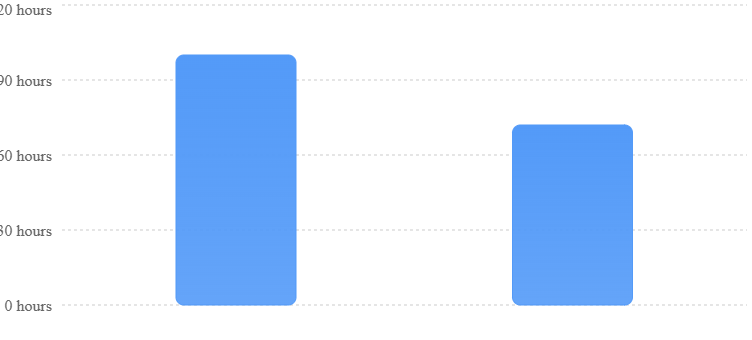
The model produces a 28% reduction in human work, even though AI attempts 60% of incoming requests.
That is a major difference.
A founder who assumes that automating 60% of tickets allows a 60% reduction in staffing could badly underestimate the work still required.
Finding #4: Review Time Can Change the Business Case
We can test how sensitive the result is to the amount of human review needed.
Keep the same baseline, with 600 AI attempts and an 80% success rate. Only change the average review time per attempt.
| Human review per AI attempt | Total human hours | Workload reduction |
|---|---|---|
| 0 minutes | 52 | 48% |
| 1 minute | 62 | 38% |
| 2 minutes | 72 | 28% |
| 3 minutes | 82 | 18% |
| 4 minutes | 92 | 8% |
SFTechScene sensitivity analysis. The scenario holds volumes, task time, attempt rate, and success rate constant. It changes only the assumed review time.
How review time reduces automation savings
Modeled percent reduction in human workload
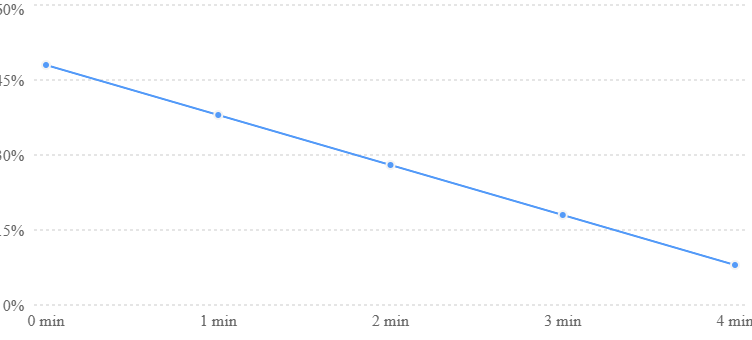
The practical lesson is that AI systems must be judged by the human work they actually remove, not the number of tasks they attempt.
A system that completes many low-value actions but creates a large review burden may produce little useful savings.
A narrower agent that handles fewer tasks with excellent accuracy may create more business value.
Finding #5: Higher AI Accuracy Matters as Much as Wider Automation
We can also hold the attempt rate and review time constant while changing the agent’s success rate.
Under the same model, human workload equals the time spent on the 400 nonautomated requests, plus time spent reworking unsuccessful AI cases, plus 20 hours reviewing AI attempts.
| AI success rate on attempted requests | Human workload | Workload reduction |
|---|---|---|
| 60% | 84 hours | 16% |
| 70% | 78 hours | 22% |
| 80% | 72 hours | 28% |
| 90% | 66 hours | 34% |
| 100% | 60 hours | 40% |
The final row is especially important.
Even with perfect success on all 600 AI attempts, the model still requires 60 human work hours because the other 400 requests remain manual and reviews continue.
This illustrates why the maximum theoretical automation share is different from the amount of actual human work eliminated.
It also explains why trustworthy AI systems may eventually create more employment pressure than unreliable systems that demonstrate impressive capabilities but demand constant supervision.
What Employers Should Learn From the Model
This scenario cannot establish that a real support business will save 28% of labor time. Actual results depend on ticket difficulty, customer behavior, system quality, review policies, and many other factors.
Some businesses may achieve better results. Others could experience little improvement or even extra work during deployment.
The useful research finding is the relationship between automation scope, success rates, and human oversight.
Organizations should measure all three before changing staffing plans.
They should also distinguish saved hours from financial savings. A company does not automatically reduce payroll costs simply because employees have more time available.
That capacity could instead improve response times, reduce backlogs, strengthen service quality, or support growth without additional hiring.
Original SFTechScene Research #3: The Biggest Risk May Be Fewer Entry-Level Jobs, Not Mass Layoffs
One of the most important employment questions in San Francisco is whether AI will change how young people enter professional careers.
Technology companies have traditionally used junior roles to develop future talent.
New engineers fix small bugs. Junior analysts prepare reports. Marketing assistants organize campaigns. Support employees learn to solve common customer problems before handling more difficult cases.
These activities are not always exciting, but they provide experience.
AI agents could weaken parts of that career ladder.
What Stanford’s 2026 Employment Research Actually Found
Stanford researchers Erik Brynjolfsson, Bharat Chandar, and Ruyu Chen examined payroll data covering millions of U.S. workers.
Their August 2026 revision extended the analysis through June 2026.
The researchers found that younger workers in highly AI-exposed occupations were experiencing weaker employment trends relative to comparable workers in less-exposed occupations.
They also found that the divergence appeared to come primarily from reduced hiring rather than increased employee separations.
The researchers cautioned that these are descriptive findings, not proof that AI caused the entire difference.
Stanford Digital Economy Lab
The Employment Gap Has Widened
The Stanford study reported a relative employment shortfall of approximately 15% in its July 2025 data vintage, rising to approximately 19% by June 2026.
Early-career employment gap in highly AI-exposed occupations
Stanford’s reported relative shortfall for workers aged 22–25; percentage below less-exposed peer growth benchmark
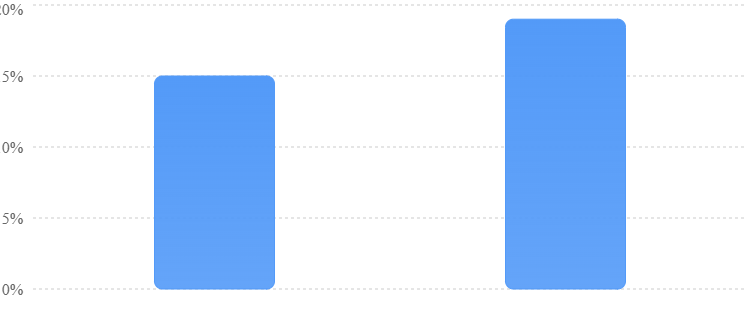
Source: Stanford Digital Economy Lab, August 12, 2026. The values compare employment with a relative growth benchmark, not absolute employment losses. The two readings are reported data vintages, not a controlled estimate of AI’s causal impact.
Stanford Digital Economy Lab
This matters because hiring reductions can be difficult to recognize.
A company may not announce layoffs. It may simply decide to hire three junior analysts instead of five, or delay replacing an employee who leaves.
Over time, these small decisions can change the number of opportunities available to new graduates.
Why This Is Especially Important for San Francisco
San Francisco’s economy has long benefited from a constant flow of new technology workers.
People join startups, learn from experienced colleagues, build networks, and eventually create companies of their own.
If businesses reduce junior hiring without building alternative training paths, the region could face a future skills problem.
Experienced engineers, finance leaders, security specialists, and product managers do not appear fully trained.
They develop judgment through years of work.
Companies that remove too much entry-level experience may enjoy short-term efficiency but struggle to find skilled leaders later.
This creates a strategic challenge for founders.
AI can help a small team become more productive. But a business still needs a plan for developing the people who will eventually take responsibility for its systems.
Original SFTechScene Research #4: A Career Exposure Test Based on Four Types of Work
A useful assessment of AI exposure should go beyond occupational titles.
For SFTechScene, we developed a four-part framework to help employees and managers examine actual responsibilities.
The framework is based on the practical limits of task automation. It is a qualitative decision tool, not a validated statistical model or a percentage forecast of job displacement.
Factor 1: How Much of the Work Follows Repeated Rules?
Repetitive work is easier to standardize.
A task that follows the same steps every day is generally easier to describe, test, and automate than one that requires an entirely new approach for each situation.
Processing standard invoices, categorizing tickets, and generating routine reports are examples.
However, even rule-based work can contain difficult exceptions.
Factor 2: Is the Information Already Available Digitally?
Agents work best when the information they need can be accessed through approved software systems.
If every task begins with structured information inside a database, an agent may be able to work efficiently.
If success depends on physical inspection, informal conversations, or observations that are not recorded, automation becomes harder.
Digitally accessible work is not automatically safe to automate. Data quality and access controls still matter.
Factor 3: Can Success Be Checked Reliably?
An agent that produces code can be tested, although passing tests does not guarantee the code is safe or correct.
An agent that prepares an invoice can be checked against purchase records.
But judging whether a customer relationship has improved or a business strategy is correct is much harder.
Tasks with clear and reliable verification methods are often better starting points for automation.
Factor 4: How Much Human Trust or Responsibility Is Required?
Some work depends on relationships, negotiation, personal judgment, and legal accountability.
A system may prepare a recommendation without having the authority to make the final decision.
This is particularly relevant in finance, hiring, healthcare, security, and high-value business transactions.
The more serious the consequences of an error, the stronger the need for controls.
Applying the Four-Factor Test
| Type of work | Repeated rules | Digital information | Easy to verify | Human judgment needed |
|---|---|---|---|---|
| Standard data entry | High | High | High | Usually low |
| Routine support request | High | High | Often high | Low to moderate |
| Basic test generation | High | High | Often high | Moderate |
| Candidate scheduling | High | High | High | Usually low |
| Financial exception review | Moderate | High | Variable | High |
| Complex software architecture | Low | High | Difficult | High |
| Enterprise negotiation | Low | Moderate | Difficult | Very high |
| Cybersecurity incident leadership | Low | High | Difficult | Very high |
SFTechScene qualitative framework. Ratings are analytical judgments about typical tasks. Specific jobs may differ substantially depending on the employer, industry, software access, and responsibilities.
The most exposed work generally combines repeated rules, digital information, and results that can be checked easily.
The least straightforward work involves unusual situations, uncertain outcomes, personal relationships, or significant responsibility for mistakes.
This framework also helps explain why employees should not think only about whether AI can perform their current tasks.
They should examine which responsibilities they can develop that require more judgment, trust, and ownership.
Which Jobs Could Become More Valuable as AI Agents Spread?
The rise of AI agents does not only create pressure on existing jobs.
It also increases the need for people who can design, integrate, secure, and evaluate automated systems.
Some of these opportunities will appear inside existing professions rather than as completely new job titles.
AI Systems Engineers
AI systems engineers connect models to the applications, databases, and tools a company already uses.
Their work involves building reliable connections, managing access permissions, handling failures, and ensuring agents perform the intended actions.
The valuable skill is not simply writing prompts.
It is understanding how the entire process works and ensuring that automated behavior remains dependable.
AI Evaluation and Quality Specialists
As companies delegate more work to AI, they need better ways to test the results.
An evaluation specialist can design realistic test cases, measure success rates, investigate errors, and check whether an agent behaves safely under unusual conditions.
This work may become especially important in customer support, finance, engineering, and regulated industries.
The challenge is defining what a correct result means and designing a fair method to measure it.
Cybersecurity and AI Security Professionals
Agents can receive access to private information and business systems.
That creates security risks when systems have overly broad permissions or follow harmful instructions.
Security professionals who understand AI workflows can help companies reduce these risks.
Their value comes from combining technical knowledge with practical understanding of business operations.
Workflow Designers and Automation Leaders
A company may own excellent AI tools while still having poor internal processes.
Someone needs to understand how work moves between employees, software systems, and customers.
Workflow designers can map those processes, identify repetitive steps, establish review rules, and determine where automation is appropriate.
This creates opportunities for people who understand both business operations and technology.
Domain Specialists Who Know How to Use AI
A finance specialist who understands AI workflows can be more valuable than someone who understands only generic automation.
The same applies to legal professionals, marketers, customer success leaders, and healthcare administrators.
The strongest employees may combine knowledge of a specific field with the ability to supervise AI tools and verify their output.
Businesses still need people who understand what good work looks like.
What the National Employment Forecast Says About the Future
Long-term projections provide another way to understand the changing labor market.
They should not be treated as precise forecasts of AI-driven employment changes, but they help place individual occupations in context.
The BLS 2024–2034 projections show that several technology occupations are expected to grow while some routine administrative and customer service occupations decline.
| Occupation | Projected US employment change, 2024–2034 |
|---|---|
| Data scientists | +33.5% |
| Information security analysts | +28.5% |
| Software developers | +15.8% |
| Customer service representatives | −5.5% |
| Claims adjusters, examiners and investigators | −5.1% |
| Procurement clerks | −8.7% |
| Secretaries and administrative assistants, excluding legal, medical and executive | −1.6% |
Source: U.S. Bureau of Labor Statistics, national occupational projections for 2024–2034. These are not San Francisco-specific forecasts and cannot be attributed solely to AI.
Bureau of Labor Statistics
+1
Employment outlook: selected US occupations
BLS projected percentage employment change, 2024–2034
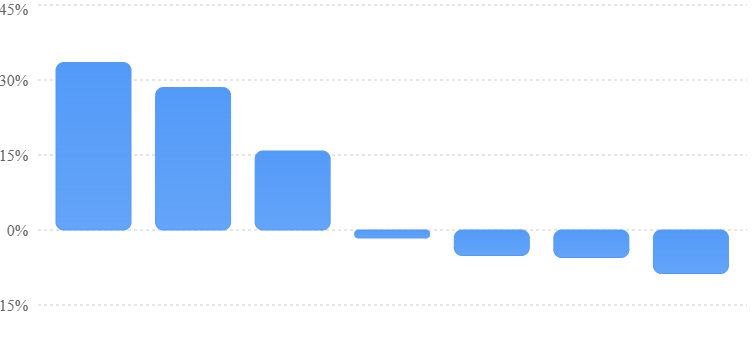
One of the most interesting findings is that software development is expected to grow strongly despite being highly relevant to AI-assisted work.
This is evidence against a simple claim that the most AI-exposed occupations must have the weakest employment outlook.
Technology can increase demand for an occupation even as it changes the work that employees perform.
The challenge for San Francisco workers is to identify which skills will become more valuable inside those changing occupations.
What San Francisco Startups Should Do Before Replacing Work With AI
For founders, the goal should not be to automate as many jobs as possible.
It should be to improve business results without creating unacceptable errors, security problems, or hidden operational costs.
A company that focuses only on replacing workers may misunderstand where AI creates its greatest value.
Start With Workflows, Not Job Titles
Instead of deciding to replace an entire customer service position, identify the activities employees perform.
Measure how much time goes into simple requests, difficult cases, customer follow-ups, and internal reporting.
Some of those activities may be highly suitable for automation.
Others may be important sources of customer trust.
A workflow-level analysis makes it possible to automate selectively while protecting service quality.
Measure Successful Work, Not AI Activity
An AI agent that generates 500 reports creates little value if the information is wrong.
A sales agent that sends thousands of messages may harm the company’s reputation if the outreach is irrelevant.
A coding agent that produces many changes may create additional work if engineers must spend hours fixing them.
Businesses should track completed outcomes, errors, human review time, customer satisfaction, and total operating cost.
These measurements are far more useful than counting prompts or agent actions.
Preserve Human Accountability
High-risk decisions should have clear ownership.
Employees must know when they can override an agent, when an issue requires escalation, and who investigates unexpected behavior.
Businesses should also document which systems an agent can access and what actions it can take.
These controls are particularly important when agents handle money, private records, security settings, or decisions affecting employment.
Protect the Talent Pipeline
Startups should think carefully before eliminating all junior responsibilities.
A small, experienced team supported by AI can be highly productive. But the company still needs future engineers, managers, and specialists.
One approach is to redesign junior roles around AI-assisted work and active learning.
New employees can be trained to test generated code, review data quality, investigate failures, and understand how systems operate.
This allows companies to benefit from automation without removing every opportunity for employees to develop essential judgment.
A 90-Day Plan for San Francisco Businesses to Prepare Their Workforce for AI Agents
A useful workforce strategy does not require a company to predict employment conditions ten years into the future.
Businesses can begin by studying their current workflows and testing where AI actually improves results.
The following plan is designed for small and medium-sized San Francisco technology companies.
Days 1–30: Map the Work and Establish a Baseline
During the first month, identify one or two departments with substantial repetitive digital work.
Customer support, finance operations, sales administration, and internal reporting are reasonable places to investigate.
Document the steps employees take to complete common tasks.
Measure the time required, frequency of exceptions, error rates, customer impact, and level of decision-making involved.
Interview the employees performing the work. Their knowledge of unusual situations is essential to understanding where automation may fail.
By the end of the month, the company should have a clear view of the work being performed and an initial shortlist of tasks worth testing.
Days 31–60: Test Agents Without Removing Human Review
Select a limited number of tasks and introduce an agent in a controlled environment.
Use historical cases or approved test data wherever possible before giving the system access to live operations.
Have employees compare the agent’s results with the existing process.
Track accuracy, completion time, unexpected behavior, review effort, and the cost of each successful outcome.
Do not judge performance using only the easiest cases.
The test should include missing information, conflicting records, unusual customer requests, and situations where the correct response is to stop and ask for human help.
At the end of this phase, the business should know whether the agent creates measurable value.
Days 61–90: Redesign Responsibilities Around the Evidence
If testing demonstrates reliable gains, expand the workflow carefully.
Decide which activities can be automated, which need routine checking, and which must remain under direct human control.
Update employee responsibilities so people spend less time repeating simple tasks and more time managing exceptions, improving processes, or working directly with customers.
Establish regular quality checks and clear rules for stopping automation if performance deteriorates.
The final result should be a redesigned process supported by measurable evidence.
It should not simply be an announcement that the company plans to operate with fewer employees.
What San Francisco Workers Can Do to Protect Their Careers
Employees cannot control every hiring decision or technology change.
They can, however, make informed decisions about the skills they develop and the type of work they seek.
The most useful response is not to avoid AI.
It is to become better at the work that AI cannot reliably complete on its own.
Move Beyond Basic Task Execution
If most of your day involves producing routine drafts, updating records, or following repeated instructions, examine how much of that work can already be assisted by AI.
Learn the tools that affect your field.
Then build skills that involve interpreting results, solving unusual problems, communicating with customers, and making sound decisions.
A marketing employee might move from producing simple content to designing experiments and analyzing customer behavior.
A junior developer might focus on understanding system architecture, writing meaningful tests, and investigating difficult failures.
The goal is to contribute more than the initial output of a software tool.
Learn to Check AI Work
Verification may become one of the most widely useful professional skills.
Employees who can identify incorrect answers, poor assumptions, security problems, and misleading analysis can help businesses use automation more safely.
This skill requires knowledge of the underlying field.
Someone evaluating an AI-generated financial report must understand accounting. Someone reviewing AI-written software must understand programming and software quality.
Learning to use an AI tool is valuable. Learning to judge its output is often more valuable.
Build Skills Around Business Outcomes
Employers ultimately care about results.
Customers want their problems solved. Businesses want products that work, revenue that grows, costs they can control, and risks they understand.
Employees who can connect their work to these outcomes may be in a stronger position than workers whose value is measured mainly by the volume of routine tasks they complete.
This does not mean everyone must become a manager or entrepreneur.
It means understanding why your work matters and developing the ability to improve the results it produces.
Maintain Evidence of Your Work
Create a record of useful projects and measurable improvements.
For example, document how you helped reduce support errors, improved a reporting process, strengthened a software test, or solved an operational problem.
Explain what you personally contributed and what tools you used.
A clear record of problem-solving can be more persuasive than a broad claim that you are familiar with AI.
How Universities and Training Programs in San Francisco Should Respond
The challenge extends beyond companies and individual employees.
Universities, coding programs, and professional training organizations must prepare people for a workplace where some beginner tasks can be performed by machines.
Teaching students to produce basic outputs may no longer be sufficient.
Students need experience with messy information, incomplete instructions, conflicting requirements, and practical judgment.
Make AI Verification Part of Technical Education
Students should learn to test AI-generated work rather than simply accept it.
In programming, this could mean finding security problems in generated code or improving unreliable tests.
In business programs, it could involve checking financial assumptions, investigating misleading charts, and defending recommendations.
In marketing, students could compare generic AI-produced content with reporting supported by original evidence.
These exercises develop critical thinking alongside technical ability.
Create Practical Experience Without Depending Only on Traditional Internships
If companies reduce junior hiring, education providers may need new ways to help students acquire professional experience.
Partnerships with local businesses could provide structured projects involving real operational problems.
Students could work under supervision to evaluate AI-supported workflows, investigate errors, and recommend improvements.
Such projects would not fully replace the experience gained through employment.
But they could give new workers better evidence of their ability to handle practical responsibilities.
Three Possible Futures for San Francisco’s Tech Workforce
No single employment outcome is guaranteed.
The future will depend on how quickly AI reliability improves, how businesses respond to productivity gains, and whether lower operating costs create new demand.
Three broad scenarios help illustrate the uncertainty.
Scenario One: AI Makes Existing Teams More Productive
In this scenario, companies use agents to remove repetitive activities while keeping most of their existing employees.
A support team handles more tickets. Developers release software faster. Analysts spend less time preparing reports.
Businesses use their additional capacity to improve service and grow revenue.
Employment continues to evolve, but automation does not translate directly into large staffing reductions.
This is a plausible outcome when demand is growing and human judgment remains important.
Scenario Two: Hiring Slows in Routine Professional Roles
In the second scenario, businesses retain experienced employees but reduce new hiring for simpler work.
Junior support, administration, routine coding, and coordination positions become more difficult to enter.
Companies may still expand, but their employee counts grow more slowly than their output.
This scenario is consistent with some of the early-career hiring concerns highlighted by Stanford’s research.
However, national findings cannot establish how strongly this pattern will affect San Francisco or how long it will continue.
Scenario Three: AI-Native Companies Redesign Entire Departments
A more dramatic scenario emerges if agents become substantially better at handling complicated, multi-step work.
Small companies could manage large customer bases, maintain complex operations, and develop products with far fewer employees than comparable businesses once required.
Some existing positions could disappear or merge into broader roles.
At the same time, lower costs could support new services, startups, and markets.
The employment result would depend on whether these new activities create enough opportunities to offset reduced demand elsewhere.
There is currently insufficient evidence to select one of these scenarios as the certain outcome for San Francisco.
Original SFTechScene Research #5: The Local Workforce Risk Is Not Evenly Distributed
Our combined analysis points to an important conclusion.
San Francisco’s AI employment story should not be understood as one uniform level of exposure across the city’s technology workforce.
Different risks operate at different levels.
The city’s unusually large computer and professional workforce creates substantial opportunities for AI-assisted work.
Within those professions, routine digital tasks tend to be more straightforward to automate than complex decisions.
Entry-level workers may be especially vulnerable when the tasks that once helped them gain experience become cheaper to perform with software.
Meanwhile, specialized employees who can oversee systems, solve difficult problems, and manage risk may see their responsibilities expand.
A Summary of the Evidence
| SFTechScene finding | What the evidence supports | What it does not prove |
|---|---|---|
| Computer jobs are 2.12× as concentrated in the SF metro as nationally | Unusually high local employment concentration | Twice the job-loss risk |
| Three selected knowledge-work groups account for 25.9% of metro employment | Significant reliance on professional and technical employment | That 25.9% of jobs can be automated |
| Modeled support workload falls 28% | Human review changes automation economics | That real support teams will save 28% |
| Stanford finds a 19% relative early-career employment shortfall | Concerning national employment patterns in exposed occupations | That AI caused 19% job losses |
| BLS projects growth in software and security employment | Strong national demand expectations for selected technical professions | Guaranteed local job growth |
The table highlights why careful analysis matters.
It is tempting to turn every AI capability into a prediction about layoffs.
But labor markets are influenced by far more than technology alone.
Interest rates, company growth, demand for products, changes in investment, outsourcing, and broader economic conditions all affect hiring decisions.
The strongest conclusion is that AI agents are changing the nature of work and increasing pressure on tasks that are digital, repetitive, and straightforward to verify.
The amount of actual employment displacement remains uncertain.
Final Takeaway: San Francisco’s Future Jobs Will Depend on Who Can Work With AI, Not Just Who Can Be Replaced by It
San Francisco is likely to remain one of the most important places to watch the relationship between AI agents and employment.
The region has a high concentration of technical and professional workers, expensive skilled labor, and a powerful network of companies building automation technology.
Those conditions create strong incentives to experiment with agents.
Customer support, software development, recruiting coordination, sales operations, finance processing, and marketing production are all likely to experience meaningful changes.
But they will not necessarily change in the same way.
Some companies may reduce hiring. Others may become more productive without shrinking their teams. New businesses may create jobs that barely exist today.
The most immediate concern is the future of entry-level employment.
If AI increasingly handles the routine work traditionally assigned to junior employees, companies will need new approaches to training their next generation of skilled workers.
For employees, the practical response is to strengthen the abilities that remain difficult to automate: judgment, verification, complex problem-solving, customer understanding, and responsibility for outcomes.
For businesses, the priority is to measure real improvements rather than assume that every automated task represents a worker who is no longer needed.
For San Francisco’s technology economy, the deeper opportunity is to build a workforce that can use powerful AI systems while preserving the human expertise needed to make those systems reliable.
The most important question is not simply which jobs AI agents can perform. It is how San Francisco can use those agents to create more valuable work, stronger companies, and sustainable career opportunities.
That is the challenge that will help define the city’s next chapter.
Research Sources and Methodology
This article uses the following public sources for its numerical findings and research context.
1. U.S. Bureau of Labor Statistics — May 2024 San Francisco–Oakland–Fremont occupational employment and wages. Used for local and national occupational shares, wages, and SFTechScene’s original concentration calculations.
Bureau of Labor Statistics
2. Stanford Digital Economy Lab — Canaries in the Coal Mine? Six Facts About the Recent Employment Effects of Artificial Intelligence, revised August 12, 2026. Used for findings on early-career employment, relative hiring trends, and the limits of causal interpretation.
Stanford Digital Economy Lab
3. Microsoft Research — Working with AI: Measuring the Applicability of Generative AI to Occupations, July 2025. Used to understand which kinds of occupational activities have high applicability to generative AI.
Microsoft Research
4. Anthropic — Labor Market Impacts of AI: A New Measure and Early Evidence, March 2026. Used for the distinction between theoretical exposure, observed AI use, and automation versus assistance.
CCNews
5. U.S. Bureau of Labor Statistics — 2024–2034 Occupational Employment Projections. Used for national outlooks for software development, cybersecurity, customer service, and selected administrative professions.
Bureau of Labor Statistics
+1
6. Stanford Digital Economy Lab — AI Economic Indicators, June 2026. Used for additional evidence on early-career employment and differences between AI use that automates tasks and AI use that assists workers.
Stanford Digital Economy Lab
Original Research Limitations
The local concentration analysis uses published occupational shares and independently calculates relative concentrations. The workload models use explicit, hypothetical assumptions and mathematical sensitivity tests.
The career exposure framework applies qualitative judgment informed by the research sources. It has not been independently validated as a predictive scoring system.
No employer-level payroll microdata, San Francisco-specific AI adoption survey, or original worker interviews were collected for this article. Therefore, its analysis should be read as an original synthesis, regional calculation, and scenario study—not as a causal estimate of AI-driven job losses.
The central distinction throughout is between AI task exposure, changes in labor demand, and observed job displacement. Those three outcomes are related, but they cannot be treated as interchangeable.